
Why High-Net-Worth Men Are Investing in Professional Wardrobe Styling
When appearance becomes a strategic asset, dressing well is no longer a personal preference — it's a professional decision.

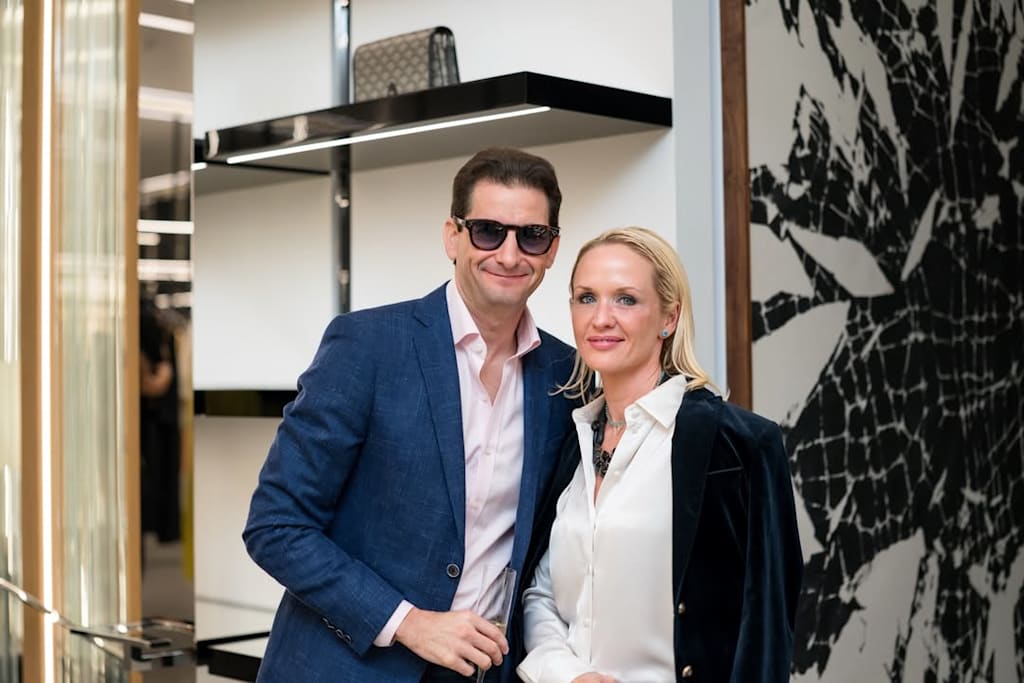
There is a quiet but unmistakable shift happening in how affluent men approach their wardrobes. Where previous generations of wealthy professionals leaned on bespoke tailoring and brand recognition as their primary signals of status, today's high-net-worth individuals are taking a more deliberate, systems-based approach. They are engaging professional men's wardrobe stylists — not as a luxury indulgence, but as a calculated investment in how they present themselves across every dimension of their lives.
This isn't about fashion in the traditional sense. It isn't about following trends or accumulating designer labels. It's about building a coherent, intentional visual identity that supports the way these men lead, negotiate, network, and operate. The decision to work with a men's wardrobe stylist reflects a broader truth about how high-performing individuals think: everything that touches their public presence deserves expert attention.
Understanding why this shift is happening requires looking at what has changed — not just in menswear, but in how image and identity intersect with professional credibility, personal branding, and the evolving expectations of the circles in which these men move.
The New Definition of Professional Image
For decades, professional dressing for men followed a relatively simple set of rules. A well-fitted suit, a quality watch, polished shoes — these were the reliable signals of success and authority. The formula was predictable, and in many industries, it still carries weight. But the landscape has become considerably more complex.
Modern professional environments span everything from boardrooms and private equity meetings to venture-backed startups, creative industries, international business travel, and high-profile social events. The man who moves fluidly across these settings faces a genuine wardrobe challenge: each context demands a different register of dress, and getting it wrong — in either direction — carries real costs.
Overdressing in the wrong setting signals a lack of cultural intelligence. Underdressing in a high-stakes environment can undermine perceived authority before a single word is spoken. And dressing in a way that feels visually inconsistent from one setting to the next suggests a lack of intention — which, for men whose personal brand is inseparable from their professional identity, is a problem worth solving.
Professional men's wardrobe styling addresses this complexity directly. A skilled stylist doesn't simply curate clothing. They map the full range of a client's lifestyle and professional obligations, identify the gaps and inconsistencies in how that client currently presents, and build a coherent wardrobe system designed to perform across every scenario. For high-net-worth men who operate at a certain level of visibility, that kind of systematic thinking about appearance is increasingly seen as essential rather than optional.
Why Affluent Men Are Outsourcing This Particular Decision
There's an economic logic that runs through much of how successful men manage their time. The same reasoning that leads a high-net-worth individual to delegate legal strategy to counsel, financial management to a wealth advisor, or physical training to a performance coach applies, increasingly, to how they think about personal presentation.
Time is the scarcest resource at the top. Hours spent navigating a fragmented luxury market, researching fit and fabric, or second-guessing whether a wardrobe is actually working — these are hours not spent on the activities that generate the most value. The appeal of working with a men's wardrobe stylist, at this level, is partly about efficiency. It's about collapsing a complex, time-consuming problem into a managed solution.
But there's something more nuanced happening beyond simple delegation. Many high-net-worth men are genuinely aware of the limits of their own knowledge in this area. They may be world-class in their field — deal-making, technology, finance, creative entrepreneurship — without having developed the visual literacy or wardrobe infrastructure to match. The gap between where they operate professionally and how their wardrobe supports that operation can be significant, and it's often invisible to the person experiencing it.
A professional wardrobe stylist brings an outside perspective that is difficult to replicate. They see what clients cannot see about themselves — the patterns that aren't working, the quality signals being missed, the way a silhouette undermines or amplifies physical presence. That external, trained eye has genuine value in a way that mirrors every other professional advisory relationship these men rely on.
The Intersection of Personal Branding and Men's Wardrobe Styling
In the current business environment, personal brand is no longer a concept reserved for public figures, media personalities, or influencers. For entrepreneurs, executives, and investors operating at scale, personal brand is a real and consequential asset. It shapes how potential partners perceive reliability, how investors read confidence and competence, and how clients and counterparts frame the relationship before any transaction takes place.
Appearance is not the entirety of personal brand, but it is among its most immediate expressions. In the first moments of any professional interaction, visual presentation communicates information — about judgment, attention to detail, cultural awareness, and self-understanding — faster than any verbal introduction can. For men who have invested deeply in building their professional reputation, allowing that visual impression to be inconsistent, unintentional, or out of alignment with who they actually are represents a missed opportunity at best and a credibility risk at worst.
Men's wardrobe styling, at its best, functions as personal brand strategy applied to dress. The stylist works to understand not just what a client does, but who he is and how he wants to be perceived — then translates that understanding into a tangible, wearable system. The result is a wardrobe that feels like an extension of identity rather than a collection of clothes, one that communicates consistently across the full range of contexts a high-net-worth man navigates.
This alignment between inner identity and outward presentation is something that is genuinely difficult to achieve through unguided shopping, even with unlimited resources. Money can buy quality. It cannot, on its own, produce coherence, intentionality, or fit.
Quality, Fit, and the Limits of Shopping Alone
One persistent misconception about dressing well at the highest level is that wealth is the primary variable. Spend enough on the right labels, the logic goes, and the result will take care of itself. In practice, this approach produces wardrobes that are expensive but not necessarily effective — full of well-regarded pieces that don't work together, garments that fit the body of a model rather than the actual client, or purchases driven by marketing rather than genuine suitability.
Fit is the most democratizing and simultaneously most unforgiving element of men's dress. A modestly priced garment that fits impeccably will almost always outperform a luxury item that doesn't. High-net-worth men often have access to bespoke tailoring, but even that investment requires guidance — knowing which makers to use, how to specify cut and construction, when bespoke is warranted versus ready-to-wear, and how individual pieces integrate into a working wardrobe.
Professional men's wardrobe stylists navigate this terrain with expertise that goes well beyond brand knowledge. They understand how fabric behaves, how silhouette relates to body type and posture, how color interacts with complexion, and how the visual weight of different garments creates or disrupts proportion. These are not concerns that respond easily to self-education, particularly for men whose attention is rightly focused elsewhere.
Beyond fit and construction, there is the question of the wardrobe as a whole — how pieces relate to one another, whether the system is genuinely flexible or full of orphaned items, and whether what exists in the closet actually maps to the life being lived. Many high-net-worth men discover, when working with a stylist for the first time, that their wardrobe has significant gaps in practical daily functionality despite containing expensive statement pieces. The stylist's role is to address both levels simultaneously.
How Wardrobe Styling Has Evolved in the Luxury Market
The men's wardrobe styling industry itself has matured considerably over the past decade. What was once associated almost exclusively with celebrity clients and editorial work now has a robust market serving private individuals at the executive and entrepreneur level. The rise of men's fashion literacy — driven in part by digital media, a broader cultural conversation about male self-presentation, and the mainstreaming of concepts like grooming and personal style — has created both greater awareness of wardrobe styling as a service and greater demand for it.
Within the luxury market, several adjacent trends have reinforced this shift. The casualization of professional dress, accelerated by the technology sector and further complicated by post-pandemic shifts in work culture, has made dressing well significantly harder for men who grew up with clearer rules. When the suit was the default, deviation was the challenge. Now that the defaults themselves have fractured, navigating professional dress requires more active judgment — and that judgment is increasingly something high-net-worth individuals are choosing to outsource to professionals.
At the same time, the sustainability and curation movement has influenced how thoughtful buyers approach wardrobe. There is growing alignment, particularly among environmentally conscious affluent consumers, between the values of buying well, buying less, and building with intentionality — all of which map closely to what a skilled men's wardrobe stylist delivers. The counterpoint to the volume-driven, trend-reactive approach is a considered, investment-grade wardrobe, and that requires expertise to build.
What the Investment Actually Returns
Discussing wardrobe styling as an investment invites scrutiny of what the return actually looks like. The honest answer is that it operates across several registers simultaneously, some more quantifiable than others.
At the most practical level, working with a men's wardrobe stylist typically produces a more functional closet with less waste — fewer pieces that never get worn, fewer purchases that don't integrate with existing items, and a clearer system for getting dressed efficiently and confidently. For men whose daily schedules are demanding, that operational clarity has real value.
At the professional level, the return is less precise but no less real. Appearing consistently polished, appropriately dressed, and visually coherent across diverse settings reinforces the credibility signals that high-net-worth individuals have spent significant time and effort building through their work. There is a compounding effect: when the external presentation consistently matches the internal reality of who someone is and what they've achieved, the resulting impression is both stronger and more durable.
And at the personal level, there is the less-discussed but genuinely significant matter of confidence. Knowing that how one looks is handled — that there is a coherent system in place, that the wardrobe is working rather than being worked around — removes a low-grade cognitive load that many men don't recognize until it's gone. That mental clarity, extended across the full range of professional and social engagements that define life at this level, is worth considerably more than the cost of the styling engagement.
A Considered Approach to a Visible Asset
The growing adoption of professional men's wardrobe styling among high-net-worth individuals reflects something broader than a trend in menswear. It reflects a maturing understanding that every dimension of how a person presents — how they communicate, how they operate, and yes, how they dress — is worth approaching with the same rigor and intentionality they apply to everything else that matters.
For men operating at the executive or entrepreneurial level, appearance has always had consequences. What has changed is the willingness to treat those consequences seriously, and the growing recognition that professional guidance in this area produces results that self-management rarely does. A men's wardrobe stylist, properly engaged, is not a personal shopper or a luxury service provider. They are a professional whose expertise closes the gap between how these men are seen and how they actually are — and for people whose identity and credibility are inseparable, that gap is always worth closing.
About the Creator
Elsab Styling
At ElsaB Styling, we specialize in providing bespoke, high-end personal styling services for high-net-worth individuals, CEOs, executives, and VIPs.
Enjoyed the story? Support the Creator.
Subscribe for free to receive all their stories in your feed.
Comments
There are no comments for this story
Be the first to respond and start the conversation.