
Why Feadship Holds Its Value — and What That Says About Custom Yacht Building
In a market crowded with production vessels, one Dutch shipyard remains the standard against which all others are measured

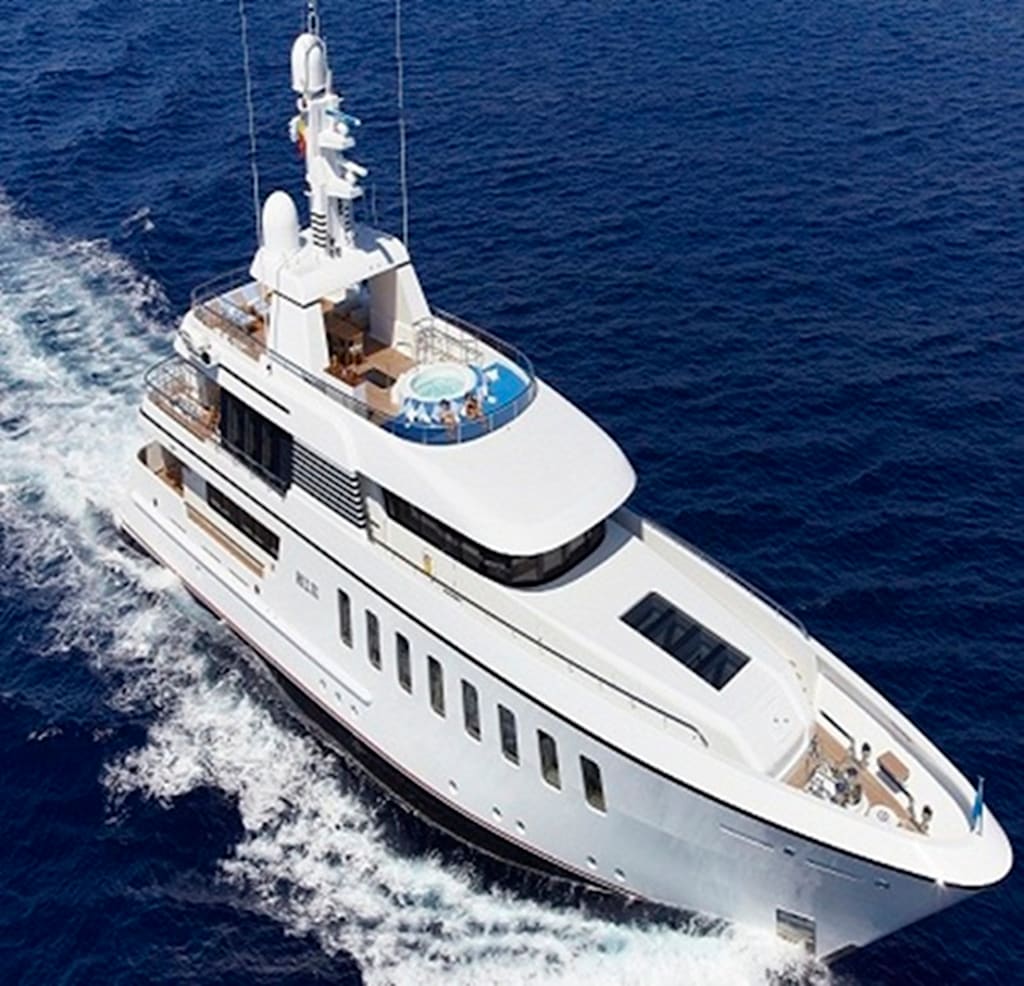
Feadship yachts occupy a category that exists almost entirely apart from the broader superyacht market. While dozens of shipyards compete aggressively on price, delivery timelines, and semi-custom specifications, Feadship has spent more than seven decades building a reputation so singular that its vessels routinely outperform the resale market expectations of every comparable class. For serious buyers researching Feadship yachts for sale, understanding why this is so requires looking beyond the specifications and into the deeper logic of what genuine bespoke yacht building actually means — and what it costs when it's done without compromise.
Feadship, an alliance of Dutch family shipyards and the De Voogt Naval Architects design house, produces fully custom superyachts in which virtually no two vessels share the same hull, interior, or mechanical configuration. Each yacht is designed from first principles around a specific client's requirements, which means a Feadship is not a platform selected from a catalog but an engineered response to a singular brief.
The Architecture of Rarity
What distinguishes Feadship from the wider superyacht market is a deliberate structural constraint: output volume. The yards — Koninklijke De Vries in Aalsmeer and Royal Van Lent in Kaag — collectively deliver a small number of yachts per year. This is not a limitation born of capacity shortfalls but a conscious philosophy. A shipyard that delivers fewer than a dozen vessels annually cannot be accused of manufacturing at scale, and that scarcity is itself a value proposition embedded in every hull that leaves the yard.
In luxury markets, controlled output functions as a powerful price anchor. The same principle governs the valuation logic behind certain Swiss watchmakers, French couture houses, and Parisian coachbuilders — industries where the refusal to scale is inseparable from the product's identity. Feadship understands this implicitly. Its business model was never oriented around maximizing unit sales; it was oriented around maximizing the integrity of each unit produced. That distinction compounds over time in ways that secondary market prices consistently reflect.
When Feadship yachts appear for sale, they attract a specific class of buyer — one who has typically already surveyed the broader landscape and concluded that a vessel with known provenance, verifiable build quality, and a documented maintenance history from one of the world's most exacting yards represents a categorically different risk profile than even a well-maintained production vessel of comparable size.
What Full Custom Actually Means at This Level
The phrase "custom yacht" is applied loosely across the industry. Many shipyards offer custom interiors layered over a standardized hull and structural platform. That model enables faster delivery and lower costs, but it also means the vessel's fundamental engineering is a compromise — optimized for no single owner, but acceptable to many. Feadship's approach is architecturally different.
Every Feadship begins with naval architecture developed specifically for that project. Hull form, superstructure, propulsion arrangement, and systems integration are all responses to the client's intended cruising profile, range requirements, aesthetic preferences, and operational priorities. A client who primarily sails the Aegean in summer and spends winters in the Caribbean will receive a yacht engineered differently, at a fundamental level, from one intended for North Atlantic crossings or Pacific expedition work.
This depth of customization means Feadship vessels carry embedded engineering intelligence that is not interchangeable. The shipyard maintains comprehensive documentation for every yacht built, often spanning decades of service history, which makes each vessel legible to surveyors, insurers, and prospective buyers in ways that vessels with fragmented or incomplete records simply are not. In the pre-purchase survey process, documentation of this quality meaningfully reduces uncertainty — and reduced uncertainty, in any asset class, supports stronger pricing.
The yards' construction standards are governed by Lloyd's Register classification requirements, but Feadship's internal tolerances and material specifications routinely exceed what classification society rules mandate. This gap between minimum compliance and actual execution is where long-term structural integrity is determined, and it is precisely this gap that experienced yacht brokers and marine surveyors cite when explaining why Feadship vessels survey so consistently well at age fifteen, twenty, and beyond.
Resale Dynamics in the Superyacht Market
The superyacht resale market is generally unforgiving of mediocrity. A vessel that was expensive to build but built without distinction depreciates in ways that can be severe and difficult to arrest. Maintenance costs accumulate, technological systems become obsolete, and aesthetic fashions shift — factors that erode value across the fleet regardless of builder. What separates the vessels that hold value from those that do not is ultimately build quality, mechanical reliability, and the credibility of the builder's name as a signal to subsequent buyers.
Feadship yachts for sale tend to generate serious inquiry at asking prices that would be unsustainable for vessels of comparable age from lesser-regarded yards. This is not simply brand premium in the superficial sense — it reflects the market's empirical recognition that these vessels require fewer surprise remediation costs, carry more reliable systems histories, and are structurally sounder at any given age than the alternatives. Buyers who have navigated the superyacht market through previous purchases understand this with particular clarity.
Charter operations also influence residual values in ways that favor well-built vessels. A Feadship placed into commercial charter service retains its reputation for reliability and guest experience in ways that reflect positively when it eventually returns to the sales market. Charter guests and charter brokers develop preferences for specific vessels based on operational experience, and those preferences create a documented track record that adds a layer of market intelligence to the resale proposition.
The Role of De Voogt Naval Architects
No discussion of Feadship's enduring market position is complete without acknowledging De Voogt Naval Architects, the in-house design and engineering practice that has been integral to the alliance since its formation. De Voogt's involvement means that design, engineering, and production are not sequentially handed off between separate entities but remain integrated through every phase of a project.
This integration matters more than it might initially appear. In shipbuilding, as in architecture and aerospace, the distance between design intention and construction reality is where project risk lives. When the same organization carries both the design mandate and the construction responsibility, there is no interface gap — no moment where a specification developed by one party is interpreted, compromised, or simplified by another. The yacht that exits the shed is as close to the engineered design as human craft allows, and any adjustments made during construction are made by people who understand the engineering rationale behind every decision.
De Voogt's portfolio across more than seven decades represents an extraordinary body of work — not in the sense of stylistic consistency, but in the sense of engineering rigor applied across radically different briefs. Feadship yachts range from classically proportioned displacement hulls to contemporary expedition vessels to deeply modern design statements, yet they share a structural and mechanical integrity that originates in De Voogt's methodology rather than any particular aesthetic preference.
Sustainability and the Long-Term Owner's Perspective
The luxury maritime industry has confronted growing scrutiny around environmental performance, and Feadship has responded with greater seriousness than most. The yards have invested substantially in hybrid and full-electric propulsion research, fuel cell development, and waste heat recovery systems — not as public relations gestures but as genuine engineering programs aimed at reducing the operational footprint of vessels that may be in service for thirty or forty years.
This orientation toward longevity is itself a form of value engineering. A yacht built with hybrid propulsion capability, future-proofed electrical architecture, and mechanically durable systems is a yacht whose operational costs and regulatory exposure are better managed over a long ownership horizon than one built to the minimum standards current regulations require. As international maritime emissions regulations tighten — particularly in European waters where many Feadship clients spend significant portions of their cruising seasons — vessels with modern propulsion flexibility will face fewer operational constraints and lower retrofit costs than those without.
For buyers evaluating Feadship yachts for sale today, propulsion specification and electrical architecture deserve close attention alongside the more traditional metrics of hull condition, interior finish, and systems histories. The next decade of regulatory change will distinguish between vessels that were built with the future in mind and those that were not, and that distinction will appear in resale valuations with increasing clarity.
What the Market Signals to the Rest of the Industry
Feadship's position in the superyacht market functions as something more than a commercial success story — it operates as a signal to the broader industry about what genuine long-term brand equity requires. Shipyards that have attempted to compete with Feadship on prestige without matching its commitment to build quality, client service, and engineering rigor have found, consistently, that market participants are more sophisticated than such strategies assume.
The buyers who populate the top end of the superyacht market are, in many cases, people who have built and managed significant businesses, navigated complex asset classes, and developed strong instincts for distinguishing substance from presentation. When that population consistently returns to the same yards, the same brokers, and the same valuation frameworks across multiple vessel purchases, it represents a form of market intelligence that is difficult to dismiss.
Feadship's sustained relevance after more than seven decades is not the product of marketing sophistication or strategic positioning in the conventional sense. It is the cumulative result of thousands of engineering decisions made correctly, across hundreds of projects, by people who understood that their work would be inspected, lived aboard, and eventually evaluated by buyers who demanded accountability. In a market where many things are expensive and fewer are genuinely worth their price, that consistency remains the rarest and most defensible competitive advantage a shipyard can possess.
The resale market for Feadship yachts does not exist in isolation from the values embedded in the building process. It is, in a meaningful sense, the ultimate expression of those values — a moment when the market renders its verdict on decades of engineering choices, material decisions, and client relationships. That verdict, consistently and across multiple market cycles, has favored the yards along the Dutch waterways where this standard was set and has been maintained ever since.
About the Creator
Robert Lama
Robert Lama is a seasoned yacht broker with Miami International Yacht Sales, a reputable yacht brokerage company specializing in both used and new yachts. https://www.miamiinternationalyachtsales.com/
Enjoyed the story? Support the Creator.
Subscribe for free to receive all their stories in your feed.
Comments
There are no comments for this story
Be the first to respond and start the conversation.