
Why every Band needs a Stage Plot for their Concerts
Stage Plot Designer for Musicns
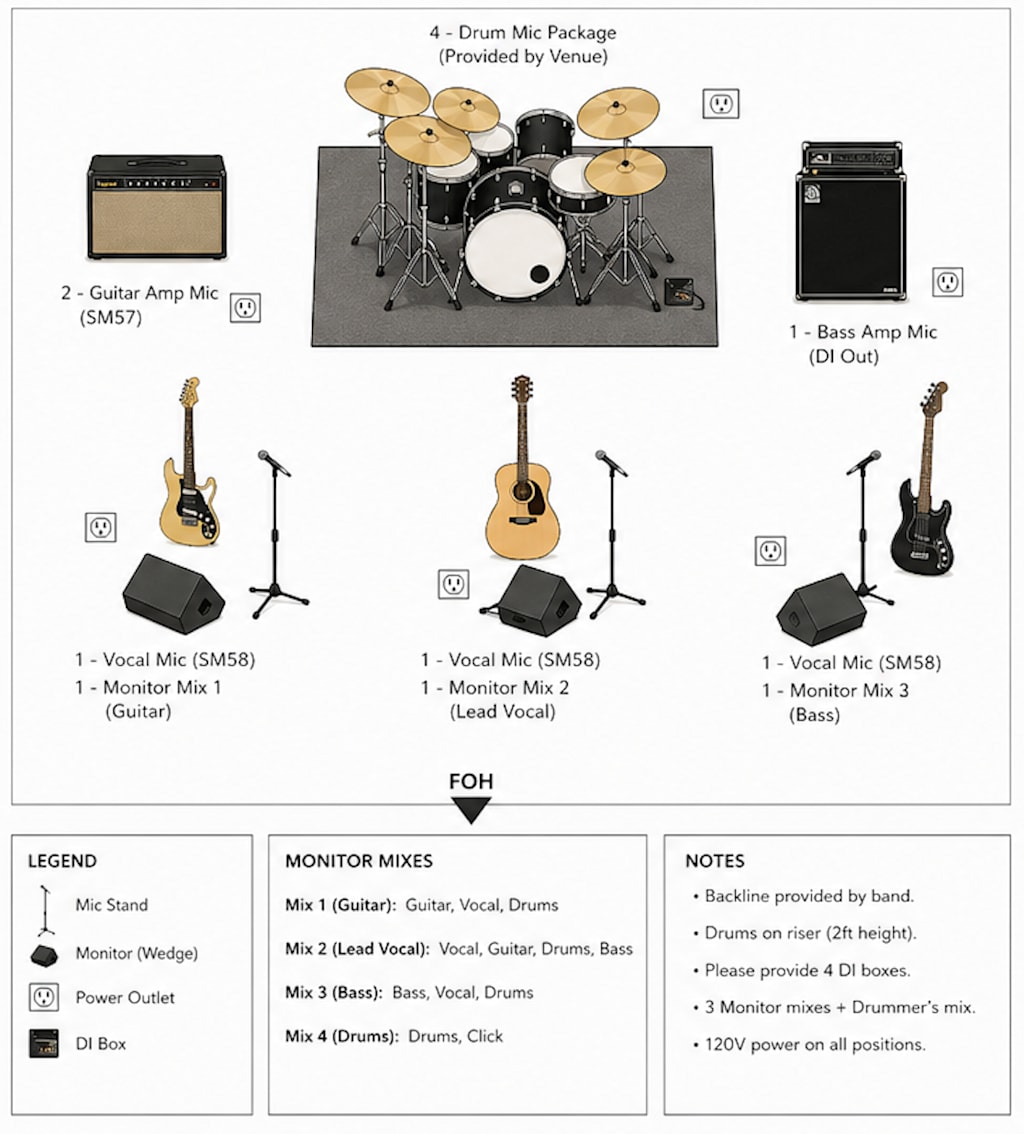
A stage plot is one of the most important documents every musician and band should prepare before a live performance. It is a simple visual diagram that shows where each band member, instrument, amplifier, microphone, monitor, and piece of equipment should be placed on stage. A clear stage plot helps venue staff, sound engineers, and event organizers understand your setup quickly and avoid confusion during soundcheck and performance.
Creating a professional stage plot used to require design software or manual drawing, but today musicians can easily create one online using specialized tools like stage-plot.com. These online tools make the process fast, simple, and professional, even for beginners.
The first step in creating a stage plot is choosing the right online tool. A good stage plot builder offers drag-and-drop functionality, ready-made instrument icons, microphone symbols, monitor wedges, amplifiers, risers, and other common stage equipment. This saves time and ensures your plot looks clean and easy to understand.
Once you open the tool, start a new project by selecting a blank stage template. Some tools also offer venue templates or standard stage sizes. It is helpful to set the stage dimensions close to the real venue size if you already know it. If not, a standard stage layout works perfectly for most concerts.
Next, add all musicians and equipment to the stage. Place each band member in their correct performance position. For example, the drummer is usually centered at the back, the lead singer at the front center, guitarists on the sides, and bass players slightly off-center. Add microphones, amplifiers, monitor wedges, DI boxes, keyboards, and any special gear your band uses.
Clear labeling is extremely important. Every microphone should be identified, such as “Lead Vocal Mic,” “Guitar Amp Mic,” or “Kick Drum Mic.” Monitor mixes should also be labeled clearly, for example “Monitor Mix 1 – Lead Vocal” or “Monitor Mix 2 – Guitar.” This helps the sound engineer prepare the correct setup before your arrival.
You should also include technical notes. Mention details like whether you need phantom power, DI inputs, drum risers, power outlets, wireless systems, in-ear monitors, or special stage lighting positions. The more precise your information is, the smoother your show day will be.
A legend or key is also useful if your stage plot contains custom symbols. This helps everyone reading the plot understand exactly what each symbol means. Simplicity is always better than overcomplication.
Before finalizing the stage plot, review it carefully with your band members. Make sure every position and technical requirement is correct. It is much easier to fix mistakes before arriving at the venue than during a rushed soundcheck.
Finally, export your stage plot as a PDF or image file. PDF is usually the best format because it keeps the layout clean and professional. Send it to the venue, promoter, and sound engineer several days before the concert so they have enough time to prepare.
A good stage plot saves time, reduces stress, and makes your band look professional. It improves communication with the venue and helps ensure a smooth, successful performance. With modern online tools like stage-plot.com, creating a stage plot has never been easier.
About the Creator
Enjoyed the story? Support the Creator.
Subscribe for free to receive all their stories in your feed.
Comments
There are no comments for this story
Be the first to respond and start the conversation.