
Why a Few Hours on the Water Has Become Miami's Default Way to Mark an Occasion
The quiet rituals behind Miami's ongoing relationship with boating

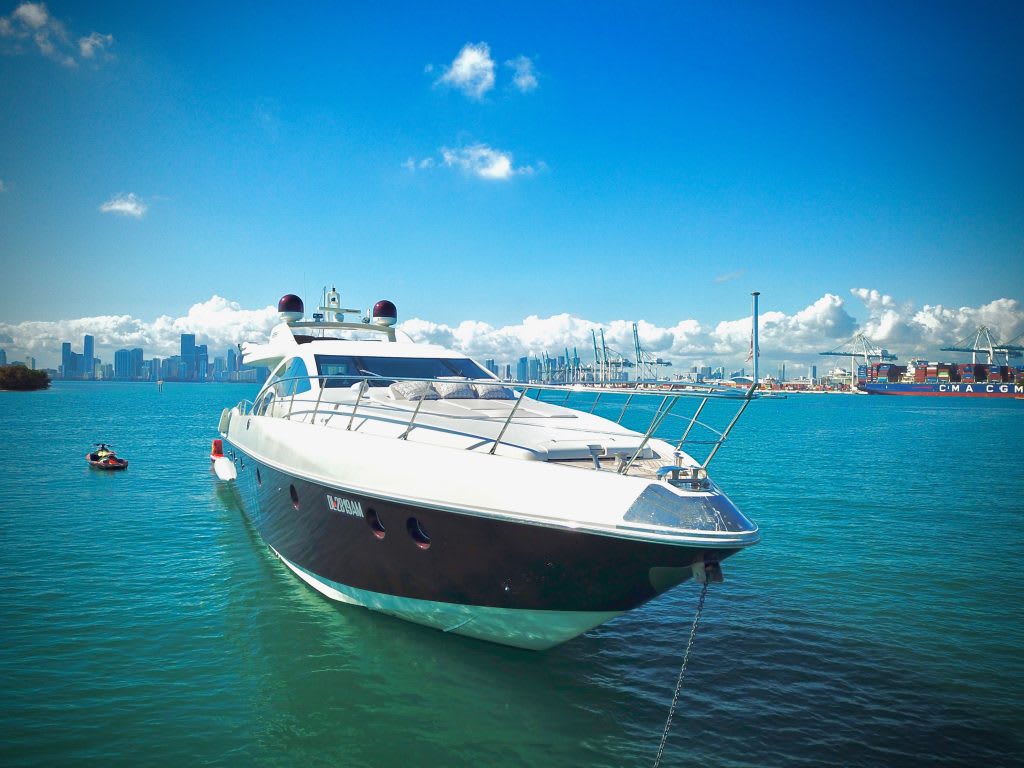
There is a particular rhythm to how Miami treats the water, and it shows up less in any single statistic than in the small, repeated choices people make about how to spend a free afternoon. A birthday that might once have meant a restaurant reservation now just as often means a few hours on a boat. A business gathering that used to default to a hotel conference room sometimes ends up on the water instead. None of this happened through any single decision; it accumulated, almost without anyone noticing, into something closer to a habit than a trend.
Chartering a boat in Miami means hiring a vessel, typically with a captain and crew included, for a set window of time rather than buying one outright. It allows people to spend hours on the water — for a celebration, a gathering, or simply an afternoon — without absorbing the cost or upkeep of ownership.
What's worth examining is less the mechanics of that arrangement and more the particular shape a day like this tends to take, and why Miami, specifically, has become a place where this has settled in as something close to ordinary.
The Shape of a Day on the Water
A few hours on a chartered boat unfolds differently than almost any other kind of gathering, and that difference is part of why it appeals to people the way it does. There's no host scrambling between rooms, no waitstaff circulating with checks, no natural pause where someone has to decide whether the evening is winding down. The group is simply together, moving slowly past a changing backdrop, for however long the charter lasts.
That structure removes a layer of social friction that most gatherings carry without anyone quite noticing it. A dinner party requires someone to manage the kitchen. A bar or restaurant outing competes for attention with neighboring tables and a server's schedule. A boat, by comparison, offers very little to manage and very little competing for attention — which may explain why people who try it once for a birthday or anniversary tend to come back to the idea for the next occasion as well, almost as a default rather than a deliberate choice.
The pacing also changes how conversation tends to go. Without a clock pushing toward last call or a checkout time, conversations on the water tend to stretch and wander in ways that feel harder to engineer in a fixed venue. Whether that's because of the setting itself or simply the absence of anything else demanding attention is hard to say, but the effect shows up consistently enough that it's become part of why people choose this option for occasions they want to feel unhurried.
There's also a sensory dimension to the day that's easy to undervalue until it's actually experienced. The light over the water changes constantly through an afternoon in a way a fixed room never does, and the sound of a gathering on a boat — open air, water against the hull, the absence of background music competing with conversation — creates a different texture than almost any indoor venue can replicate. None of this is dramatic on its own, but it accumulates over the course of a few hours into something that feels distinctly different from a comparable afternoon spent indoors, even when the actual activities — eating, talking, taking photographs — are largely the same.
Why Miami's Geography Makes This Almost Effortless
Few cities make this kind of outing as logistically simple as Miami does. Biscayne Bay, the barrier islands, and a dense network of canals mean a boat can be on open water within minutes of leaving almost any marina in the city. There's no long approach, no extended transit before the actual experience begins — something that distinguishes Miami from many other waterfront cities, where reaching open water from a marina can itself eat up a meaningful part of an afternoon.
That proximity also means a single outing can pass through strikingly different visual and cultural territory in a short span. A route leaving from South Beach feels nothing like one departing from Coconut Grove, and a pass near Key Biscayne carries a different mood entirely from a stretch closer to Downtown or Brickell. A guest who has never been to any of these neighborhoods individually can still come away from a single afternoon with some sense of how different they are from one another, simply by virtue of having moved through several of them at once.
This compressed geography is, in a sense, a quieter version of what makes Miami appealing to visit in the first place: a relatively small footprint that nonetheless contains a wide range of distinct neighborhoods, each with its own character and pace. Most ways of experiencing that variety require planning — choosing where to eat, where to stay, which part of the city to spend a given day in. A few hours on a chartered boat collapses that planning into a single outing, passing through several of those identities in sequence rather than requiring a visitor or resident to seek each one out separately.
Climate plays a role too, though less dramatically than people often assume. The relevant fact isn't that Miami is warm — plenty of cities are warm for parts of the year. It's that Miami rarely has long stretches where being on the water is genuinely unpleasant or impractical, which keeps this option available essentially year-round rather than confined to a short season. That consistency matters more than people tend to credit it for, because it means the choice to spend an afternoon on a boat is available whenever the occasion calls for it, not just during a narrow summer window.
How the Occasion Shapes the Outing
Not every gathering on the water looks the same, and the differences tend to track fairly closely with what's actually being celebrated. A smaller, shorter outing — a handful of people, a few hours, no fixed itinerary — suits a casual afternoon well, the kind of thing that might otherwise have been a backyard get-together or a long lunch. Longer, more elaborate charters tend to appear when the day itself is meant to carry more weight: a milestone anniversary, an engagement celebration, a gathering where the setting is meant to be remembered alongside whatever else happens during it.
Weddings and pre-wedding events have become a noticeable category of their own. Engagement celebrations, in particular, have shifted toward the water in ways that mirror a broader move away from conventional restaurant or hotel settings for these occasions. There's something about marking a beginning — an engagement, a milestone birthday, a retirement — that seems to pair naturally with a setting that itself feels like it's in motion, rather than a static room decorated for the occasion.
Business use follows a quieter but similar logic. A handful of companies headquartered in or visiting Miami have started using chartered time on the water for client meetings or team gatherings, largely for the same reason individuals do: it offers a setting that feels distinct from the usual rotation of conference rooms and restaurants, without requiring much additional planning to achieve that effect.
What's notable across all of these categories — birthdays, engagements, business gatherings — is how little the underlying activity actually changes from one occasion to the next. The boat moves, the group talks, the afternoon passes. What shifts is mainly scale and duration: a smaller group for a shorter window when the occasion is casual, a larger group for an extended outing when the day is meant to carry more significance. That flexibility, more than any single feature of the experience itself, is likely what has allowed it to spread across such a wide range of uses without feeling forced into any of them.
The Visitors Who Already Understood This
Miami's tourism patterns add a layer that's easy to overlook. A meaningful share of the people chartering boats here aren't Miami residents at all — they're visitors, many arriving from Latin America and the Caribbean, regions where spending an afternoon on the water is a far more ordinary part of social life than it tends to be across most of the United States. These visitors don't need to be convinced that this is a reasonable way to spend a day; they arrive already treating it as unremarkable, the way someone from a coastal European city might treat an afternoon spent walking along a promenade.
That familiarity matters locally in a subtle way. When a meaningful share of the people doing something already consider it perfectly ordinary, that framing tends to spread, even to people encountering the idea for the first time. Locals who might once have thought of a yacht charter as an indulgence reserved for special circumstances increasingly encounter it as something visitors treat as a baseline part of a Miami trip, and that shift in framing has done quiet work in normalizing the activity for residents as well. It's a reminder that habits often travel through a city less by deliberate promotion than by repeated, unremarkable example — enough people treating something as ordinary eventually makes it ordinary for everyone else around them too.
What This Reveals About How Miami Marks Time
Step back from any single outing, and what emerges is less a story about boats than a story about how a city chooses to spend the hours set aside for celebration, connection, and pause. Miami's relationship with water has never really been ornamental — it shapes commute patterns, weekend plans, even where restaurants choose to put their best tables. It follows a certain logic, then, that the water would eventually become not just a backdrop for social life here but an active part of it.
This pattern likely says something beyond Miami as well, even if Miami happens to be an especially clear example of it. Cities with strong, accessible waterfronts seem to eventually develop some version of this same habit, where proximity to water gradually shifts from being scenic to being functional — a setting people actually use rather than simply admire from a distance. Miami's particular combination of warm-weather consistency, dense marina access, and a steady flow of visitors already accustomed to boating culture has likely accelerated that shift here faster than in many comparable cities, but the underlying tendency doesn't appear to be unique to this one location.
A day spent this way, understood on its own terms, isn't really a luxury category at all, despite how it's sometimes described. It's closer to a default option that happens to involve a boat — one path among several for marking an occasion, distinguished mainly by how little friction it asks of the people choosing it. A few hours that move at their own pace, against a backdrop that keeps changing, asking almost nothing of the group beyond showing up. In a city built this close to the water, it makes sense that this would eventually become one of the more natural ways to spend time together, rather than the exception it once was.
About the Creator
Miami Boat Charter
Miami Boat Charters offers the largest and newest selection of fully crewed Boat Charters, Party Boats, & Luxury Yacht Rentals in Miami Beach.
Enjoyed the story? Support the Creator.
Subscribe for free to receive all their stories in your feed.
Comments
There are no comments for this story
Be the first to respond and start the conversation.