
Where Sunseeker Sits Today — How the British Builder Evolved Into the Luxury Segment
From Poole's waterfront to the world's most competitive yacht market — the quiet ambition behind one of Britain's most recognized marine brands

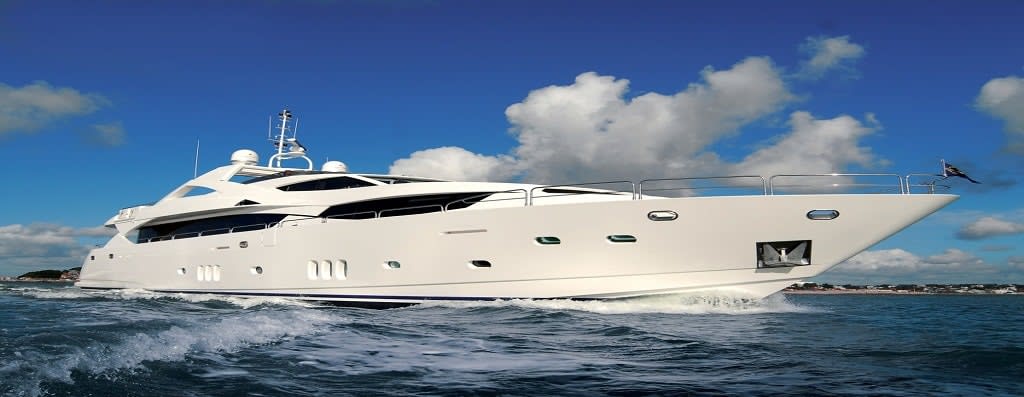
Few names in recreational boating carry the kind of cultural weight that Sunseeker has accumulated over the past five decades. The British manufacturer, headquartered in Poole on England's south coast, has built a position in the global luxury yacht market that most European builders take generations to achieve — and done so while maintaining a level of public recognition that extends well beyond the usual circles of marine industry professionals and serious buyers. For anyone paying attention to where the Sunseeker yacht sits in today's market, the picture is one of deliberate repositioning, expanded scale, and a sustained effort to compete at the uppermost levels of the international luxury segment.
A Sunseeker yacht is a motor yacht or sport cruiser designed and manufactured by Sunseeker International, a British boatbuilder founded in 1969 and based in Poole, Dorset. The company produces vessels ranging from approximately 55 feet to over 160 feet, spanning sport yachts, Manhattan-series motor yachts, and Predator performance models. Sunseeker is majority-owned by Wanda Group, the Chinese conglomerate that acquired a controlling stake in 2013.
The Poole Foundation and Early Identity
Sunseeker's origins are distinctly unglamorous by the standards of its current market position. The company was established in 1969 by Robert Braithwaite, initially operating under the name Poole Powerboats before adopting the Sunseeker name in the 1980s. The early years were defined by the kind of iterative product development common to small marine manufacturers — building performance-oriented sport boats for a domestic market that had not yet developed an appetite for the scale of vessel Sunseeker would eventually produce.
What distinguished the company through its formative decades was a consistent orientation toward performance and visual drama. The Predator series, which emerged as one of the brand's defining product lines, established an aesthetic vocabulary — low, aggressive profiles, deep hulls optimized for speed, interiors that pushed the boundaries of what a boat of that length could contain — that the brand has refined rather than abandoned across subsequent generations. The Predator's identity was never purely functional; it was always about how the vessel appeared in the water as much as how it moved through it.
This dual emphasis on performance and aesthetic presence gave Sunseeker an early advantage in a market where technical specification alone had begun to feel insufficient as a differentiator. Buyers in the aspirational and premium segments were increasingly evaluating vessels not just by their mechanical capabilities but by the experience of ownership in its fullest sense — how the boat looked at the dock, how it felt to be aboard, and what it communicated about the owner's tastes and identity.
The James Bond Effect and Cultural Capital
No honest account of Sunseeker's brand trajectory can omit the role of popular culture — specifically the James Bond film franchise — in constructing its public identity. From the late 1990s onward, Sunseeker vessels appeared repeatedly in the Bond series, most prominently in films including The World Is Not Enough, Die Another Day, and Casino Royale. The placement was not incidental product promotion in the conventional sense. It was a sustained association between the Sunseeker name and a specific visual and cultural grammar: speed, sophistication, European elegance, and the particular kind of effortless wealth that the Bond aesthetic has always represented.
The long-term effect of this association on Sunseeker's brand recognition is difficult to quantify but easy to observe. Among consumers who have never visited a boat show, never priced a charter, and have no immediate intention of purchasing a yacht, Sunseeker registers as a known quantity — a name attached to a specific and aspirational image. This kind of ambient cultural capital is commercially valuable in ways that go beyond direct sales impact. It shapes the context in which the brand is encountered by a prospective buyer, and it gives Sunseeker a conversational presence in luxury consumer culture that most marine manufacturers simply do not possess.
The Wanda Acquisition and Strategic Expansion
The 2013 acquisition of a majority stake in Sunseeker by Dalian Wanda Group, one of China's largest conglomerates, represented a significant inflection point in the brand's development. The deal, which valued Sunseeker at approximately £320 million, brought access to capital on a scale that the Poole-based manufacturer had not previously enjoyed — and with it, the capacity to pursue an expansion of both production capability and model range that would prove transformative.
In the years following the acquisition, Sunseeker invested substantially in its Poole facilities, expanding manufacturing capacity and restructuring its production processes to accommodate the larger vessels that the upper end of the luxury market increasingly demanded. The company's presence at the 161-foot Yacht 161, unveiled to considerable attention at the Monaco Yacht Show, signaled an intention to compete not just in the 60-to-90-foot range where it had historically been strongest, but in the genuine superyacht category where vessel values regularly exceed eight figures.
This upward movement in the product range carried strategic logic. The global superyacht market, while narrow in terms of unit volume, represents a disproportionate share of revenue and margin for manufacturers who can compete effectively within it. More significantly, a credible presence at the top of the range exerts a halo effect across the entire product line — the perception of a brand's capabilities is shaped by its most ambitious offerings, even among buyers whose actual purchase falls well below that ceiling.
The Current Range and Market Positioning
Sunseeker's contemporary lineup reflects the ambitions of the post-acquisition period while remaining anchored in the product DNA that established the brand's reputation. The range currently spans from the sport-oriented Predator models through the Manhattan series of motor yachts and into the Ocean series, which addresses the full-displacement, long-range cruising market that characterizes the upper reaches of the luxury segment.
The Manhattan series in particular has become central to Sunseeker's positioning as a genuine luxury brand rather than a premium performance marque. These vessels prioritize interior volume, fit and finish, and a livability that multi-day and extended cruising demands. The interiors of current Manhattan models reflect a design sensibility that draws on broader luxury residential and hospitality trends — materials, proportions, and spatial arrangements that would not look out of place in a high-end London apartment or a boutique hotel suite. This is not accidental. The buyers at this level of the market are accustomed to a standard of interior quality that yacht manufacturers have increasingly had to match, and Sunseeker's investments in interior design capability have been directed precisely at this expectation.
The Predator series continues to occupy the performance end of the range, retaining the visual aggression and speed-oriented character that defined the brand's early identity. The coexistence of these two product lines within a single brand is itself a positioning statement — Sunseeker addresses both the performance buyer and the luxury cruising buyer without fully subordinating either identity to the other.
Where the Brand Competes and How
In the global luxury yacht market, Sunseeker occupies a competitive space that includes Italian builders such as Ferretti, Azimut, and Pershing, as well as Princess Yachts — the Plymouth-based British manufacturer that represents Sunseeker's most direct domestic competition. Each of these brands carries a distinct character that shapes buyer preference in ways that go beyond specification comparisons.
Against the Italian competition, Sunseeker presents a British design sensibility — more restrained in its aesthetic ambitions, more focused on engineering rigor, and arguably more conservative in its approach to interior styling. This is not a weakness in markets where the Italian aesthetic is perceived as overly expressive or fashion-driven; it is a genuine differentiator. Against Princess, the distinction is subtler and more contested — both brands share a domestic manufacturing base, similar price positioning across overlapping model ranges, and broadly comparable build quality, making the competitive dynamic between them one of the more closely watched in the European luxury marine market.
What Sunseeker brings to this competitive landscape that few of its rivals can replicate is the cultural recognition accumulated through decades of media presence and public visibility. The brand is already known before a prospective buyer enters the consideration process — a commercial advantage whose value compounds across every touchpoint of the purchase journey.
The Broader Significance of Sunseeker's Evolution
Sunseeker's trajectory from a small Dorset boatbuilder to a globally recognized luxury yacht manufacturer is instructive beyond the specifics of the marine industry. It illustrates the role of consistent aesthetic identity, cultural association, and strategic capital in building a brand capable of competing at the luxury tier — and the patience that such a trajectory demands.
The Sunseeker yacht of today is a materially different product from the vessels that established the company's name, yet the core identity has remained legible throughout: a British sensibility applied to performance-oriented, visually distinctive motor yachts designed for buyers who take the sea seriously without abandoning the standards of comfort and elegance that their broader lifestyle demands. That continuity, maintained across ownership changes, market cycles, and significant product range expansion, is perhaps the most accurate measure of what the brand has achieved — and the most reliable indicator of where it is likely to go.
About the Creator
Robert Lama
Robert Lama is a seasoned yacht broker with Miami International Yacht Sales, a reputable yacht brokerage company specializing in both used and new yachts. https://www.miamiinternationalyachtsales.com/
Enjoyed the story? Support the Creator.
Subscribe for free to receive all their stories in your feed.
Comments
There are no comments for this story
Be the first to respond and start the conversation.