
What to Expect From a Personal Stylist Consultation at the Luxury Level
Understanding the Process, the Depth, and the Value Behind High-End Personal Styling

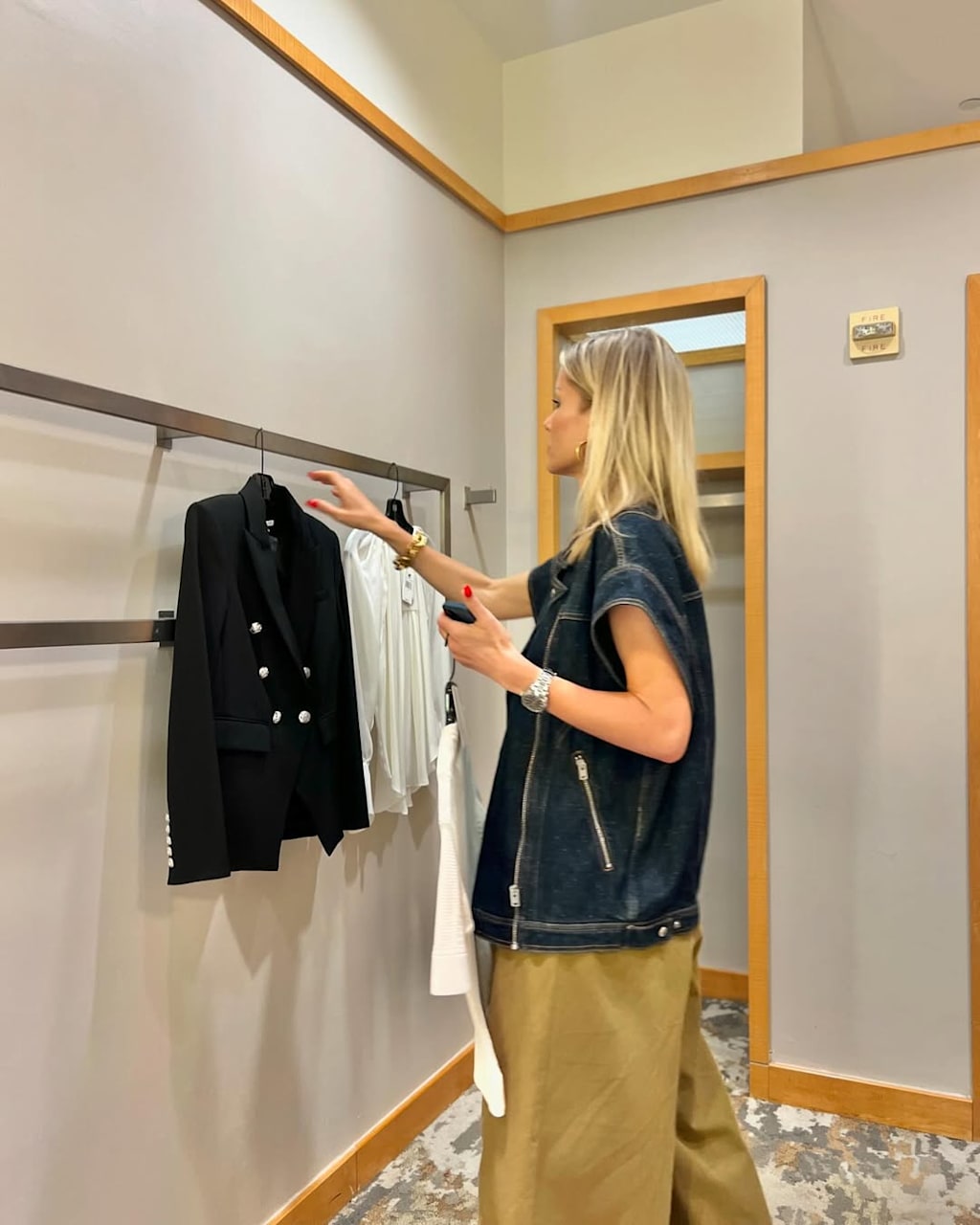
For those accustomed to operating at the top tier of professional and social life, the idea of working with a personal stylist has shifted considerably over the past decade. What was once a service associated almost exclusively with celebrities and editorial fashion has quietly become a practical resource for executives, entrepreneurs, and high-net-worth individuals who understand that how they present themselves carries real consequence. And yet, for many entering this world for the first time, there remains a significant gap between expectation and reality — particularly when it comes to what a luxury-level consultation actually involves.
The term "personal stylist" covers a wide spectrum of service models, from hourly closet edits to full-spectrum style management retainers. At the luxury level, the consultation is not a shopping appointment. It is not a session where someone flips through a lookbook and makes trend-based suggestions. It is, in most cases, a structured and comprehensive evaluation of a client's life, goals, environment, and visual identity — designed to inform every styling decision that follows.
Understanding what that process looks like, and why it is structured the way it is, helps new clients arrive prepared and derive the most from a significant investment.
The Consultation Is an Information-Gathering Process First
One of the most common misconceptions about a high-end stylist consultation is that it will begin with clothes. It rarely does. Before any garment is discussed, a skilled luxury stylist will spend considerable time understanding the person across from them — not just their measurements or colour preferences, but the full context of their life.
This typically begins with a lifestyle and environment audit. Where does the client spend most of their time? What industries do they move through, and what are the visual norms within those environments? Do they travel frequently, and to what kinds of destinations for what kinds of purposes? Are they frequently photographed, whether for press, social media, or board materials? Do they attend a consistent circuit of social events, and if so, what are the dress expectations within those circles?
At the luxury level, stylists often work with clients whose lives span multiple professional identities and social contexts simultaneously. An individual might need to present with authority in boardrooms Monday through Thursday, appear at charity galas or cultural institution events on weekends, and travel internationally on a semi-regular basis — each requiring a visual identity that reads as intentional and appropriate without appearing costumed or effortful. Mapping all of this at the outset is not a courtesy; it is the foundation of every recommendation that follows.
Beyond environment, a serious consultation will also explore the client's relationship with clothing and style historically. This includes understanding what has and has not worked for them in the past, what feedback, if any, they have received from others about their appearance, and where they feel their current wardrobe or personal presentation falls short. These conversations can be surprisingly candid, particularly when clients have avoided addressing style for years and are coming to a stylist after a career transition, significant life change, or long-overdue acknowledgment that their current wardrobe no longer reflects who they are.
The Wardrobe Audit: A Critical Component That Many Clients Underestimate
If the consultation includes an in-home or in-office wardrobe review — which it typically does at the luxury tier — this element deserves particular attention. A wardrobe audit is not a closet cleaning service. It is a diagnostic tool.
The audit allows the stylist to understand what already exists in the client's possession, what is being worn regularly versus what is being avoided, and what the wardrobe as a whole communicates visually. Experienced stylists can learn a great deal from what a client owns: the proportion of formal to casual pieces, the presence or absence of intentional colour strategy, whether the client gravitates toward structured or relaxed silhouettes, and how investment levels compare across different categories of dress.
A quality audit will also identify pieces that are worth retaining and incorporating into a refined wardrobe, even if they sit alongside significant gaps. Many luxury clients are surprised to discover that a portion of what they already own is genuinely good — perhaps well-cut pieces from strong tailors, or investment accessories that simply haven't been styled effectively within a coherent whole.
What the audit also surfaces, more importantly, is pattern. Whether a client defaults repeatedly to comfort over occasion, whether they own multiples of a single type of garment while neglecting entire wardrobe categories, or whether there is a significant disconnect between what they own and the life they are actually living — these patterns inform the strategy going forward. A stylist operating at a high level uses the audit not as an opportunity to judge, but to calibrate.
Body, Fit, and the Role of Personal Colouring
Two areas where luxury-level styling consultations diverge most visibly from their less considered counterparts are fit and personal colouring. Both are highly technical disciplines that require significant skill and training to apply well, and both have an outsized impact on how a person reads in a room.
Fit is, arguably, the single most important factor in how clothing communicates quality and authority. Even garments of lesser material or design can read as polished and composed when they fit well. Conversely, garments of the highest craftsmanship will underperform if they do not account for the individual body wearing them. A thorough consultation will involve either detailed measurements or a fitting assessment, and a skilled stylist will understand the anatomy of tailoring — how to identify where a garment needs adjustment, how different silhouettes interact with different body proportions, and which houses or designers cut in ways that tend to work best for specific body types.
Personal colour analysis — when conducted properly — is similarly foundational rather than decorative. The objective is not to restrict a client to a palette for aesthetic reasons, but to understand which tones and colour families create the most harmonious relationship with the client's natural colouring: skin tone, undertone, eye colour, and hair. When this is calibrated correctly, it affects everything from which neutrals anchor a wardrobe to which accent colours work in proximity to the face. For clients who are frequently photographed or who appear in high-visibility environments, colour strategy can meaningfully affect how they photograph and how they read from a distance.
These assessments, done with care, reduce the margin for error in future purchases and allow the stylist to advise with confidence across a wide range of categories — from formal eveningwear to casual travel pieces — without each decision needing to be re-evaluated from scratch.
What Comes Out of the Consultation: The Strategy Document
A luxury-level stylist consultation should produce something tangible — typically a documented style strategy that serves as the working framework for the relationship going forward. The format of this document varies by stylist, but its function is consistent: to capture the insights gathered during the consultation process and translate them into clear, actionable direction.
This typically includes a defined wardrobe vocabulary — the aesthetic parameters, silhouette preferences, and key aesthetic references that orient the client's style in a cohesive direction. It will usually include a wardrobe gap analysis, identifying which categories are underrepresented or missing entirely. It will outline the client's dress code landscape, mapping each professional and social context to the appropriate standard of dress. And it will often include sourcing direction: the brands, tailors, and retailers most aligned with the client's style parameters, body type, and quality standards.
For clients operating at a significant financial level, this document also becomes the basis for curated shopping and acquisition strategy. Rather than purchasing reactively — responding to what is available in a store on a given day — the strategy allows for intentional building of a wardrobe over time, with each acquisition serving a defined purpose within the larger whole. This is the point at which styling transitions from a transactional service to something genuinely strategic.
The Relationship Dynamic at the Luxury Level
It is worth addressing, for those unfamiliar with high-end styling services, that the consultation is also the beginning of a professional relationship — and the quality of that relationship matters as much as the expertise of the stylist.
A luxury stylist working with a senior executive or high-profile individual is, in many respects, operating in a trusted advisory role. They will, over time, be privy to information about a client's professional transitions, personal circumstances, and goals that are kept reasonably private. They will advise on presentations, board appearances, travel wardrobes, and occasions where visual strategy carries direct professional consequence. The consultation is the point at which a client determines whether a particular stylist is the right fit for that role — not simply in terms of taste or technical skill, but in terms of communication style, discretion, and the ability to listen without projecting their own preferences onto a client's identity.
Clients should come to a first consultation prepared to be candid about what is not working, willing to receive honest professional perspective, and clear about what outcomes they are looking for. A personal stylist who is highly skilled but misaligned with a client's practical context — someone who defaults to editorial influence in a world that calls for boardroom authority, for instance — will not serve that client well regardless of their credentials.
The First Consultation Sets the Standard
For those new to working at this level of styling service, the initial consultation often carries a weight that subsequent appointments do not. It is the session that defines the depth and direction of everything that follows. Approached thoughtfully — with openness, clear communication, and realistic expectations — it can represent a significant inflection point in how a person understands and manages their own presentation.
The luxury styling consultation is, at its best, a professional conversation between an individual who understands their life and goals with clarity, and a skilled practitioner who can translate that understanding into a coherent visual strategy. It is thorough, often more personal than expected, and designed to function not as a one-time service but as the foundation of an ongoing and genuinely useful professional relationship.
For individuals at the executive or ultra-high-net-worth level, the return on that investment — in confidence, in the elimination of decision fatigue, in the consistently accurate signal their appearance sends — tends to compound over time in ways that are difficult to quantify but easy to observe.
About the Creator
Elsab Styling
At ElsaB Styling, we specialize in providing bespoke, high-end personal styling services for high-net-worth individuals, CEOs, executives, and VIPs.
Enjoyed the story? Support the Creator.
Subscribe for free to receive all their stories in your feed.
Comments
There are no comments for this story
Be the first to respond and start the conversation.