
What the Miami Yacht Sales Market Reveals About How Wealth Moves in South Florida
Why the Region's Boat Transactions Tell a More Interesting Economic Story Than Almost Any Other Asset Class

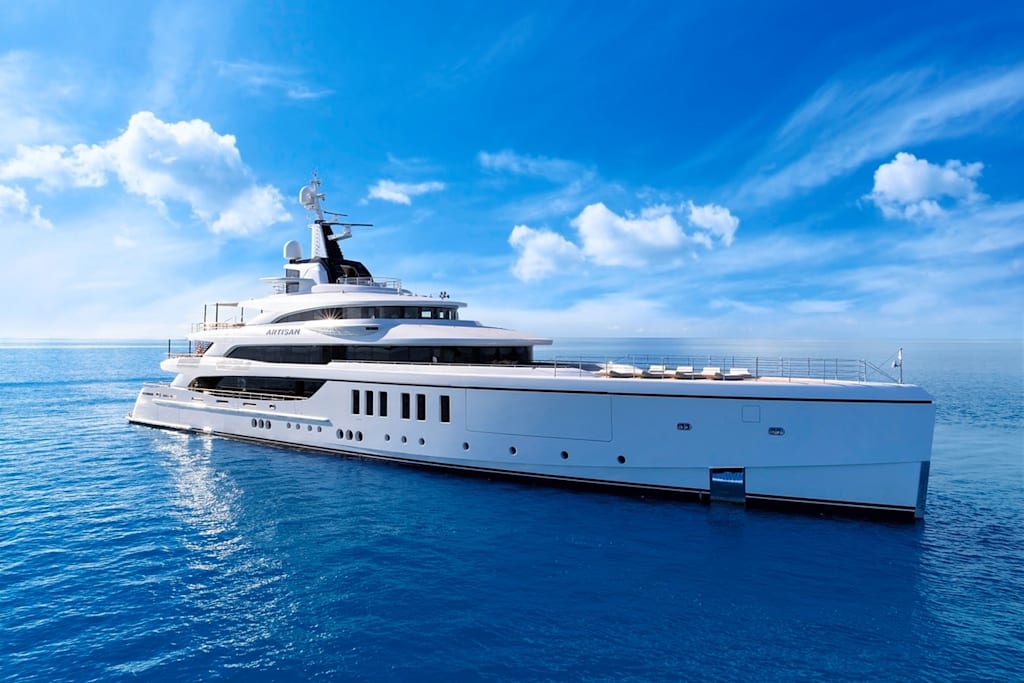
There are more straightforward ways to track wealth migration than watching the yacht market. Real estate transactions are public record. Tax filings, however imperfect, leave traces. Corporate registrations tell their own story. But there is something particular about the market for yachts for sale in Miami that makes it a uniquely useful lens — one that reflects not just the presence of money in South Florida but its character, its confidence, and its intentions in ways that other asset markets don't quite capture.
A yacht purchase is, by almost any measure, a discretionary decision made at the far edge of financial comfort. Unlike real estate, which can be justified as investment or necessity, or art, which carries cultural prestige independent of use, a yacht is primarily about experience. Buying one requires not just capital but the expectation of free time, the anticipation of pleasure, and a belief that the future is stable enough to warrant a significant ongoing cost commitment. When yacht sales in a given market are strong, it signals something specific about how the wealthy people in that market feel — not just about their balance sheets, but about their lives.
Miami's yacht market has been sending a consistent signal for well over a decade, and it has only grown louder. Understanding what that signal actually says requires looking at the city not just as a geography but as a particular kind of wealth ecosystem — one that has been transformed, over a relatively compressed period of time, from a regional leisure destination into one of the most significant concentrations of private capital in the Western Hemisphere.
South Florida's Transformation and What It Did to the Water
The demographic and economic shift that has reshaped Miami over the past fifteen years is well documented in broad strokes: an influx of high-net-worth individuals from the Northeast United States, Latin America, and increasingly Europe, drawn by the combination of favorable tax treatment, lifestyle quality, and a business environment that has grown considerably more sophisticated than its reputation once suggested. What is less often discussed is what that influx specifically did to South Florida's relationship with the water.
Miami has always had a boating culture. The geography more or less demands it — Biscayne Bay is unavoidable, the Atlantic is minutes away, and the Bahamas sit close enough that a capable vessel can reach them before lunch. But the boating culture of earlier decades was largely a regional one, populated by Florida families, seasonal snowbirds, and fishing enthusiasts whose relationship with the water was practical and unpretentious. Large private yachts existed in that ecosystem, but they were the exception.
What the wealth migration of the 2010s and particularly the post-2020 period did was introduce a different kind of buyer to the South Florida marine market — buyers whose reference point for yacht ownership was not the regional boating tradition but the international superyacht culture of the Mediterranean, the Caribbean, and the Pacific. These were people who had owned or chartered significant vessels elsewhere and who arrived in Miami expecting the same infrastructure, the same service standards, and the same caliber of available inventory. The market, over time, adapted to meet that expectation.
The result is a yacht sales environment that now competes seriously with Fort Lauderdale — historically the dominant brokerage hub in South Florida — and attracts international listings and buyers that would once have bypassed the region entirely. The concentration of wealth in Miami proper, particularly in neighborhoods like Brickell, Coconut Grove, and Miami Beach, has created a buyer base dense enough to support a genuinely sophisticated market rather than a peripheral outpost of the Fort Lauderdale scene.
What Buyers in This Market Actually Look Like
The buyer profile in Miami's current yacht market is more varied than the superyacht narrative might suggest, and understanding that variation reveals something important about the different layers of wealth operating in the city simultaneously.
At the upper end, the international buyer — typically Latin American, European, or Middle Eastern — accounts for a meaningful share of transactions involving larger vessels. These buyers frequently already own property in Miami or maintain a significant presence in the city, and the yacht purchase is an extension of a lifestyle infrastructure that is distributed across multiple geographies. For this buyer, Miami is often one node in a network that includes residences in multiple countries, and the vessel needs to function accordingly — capable of offshore passages, properly documented for international travel, and maintained to a standard consistent with how the rest of their life is organized.
Below that tier, the domestic high-net-worth buyer — frequently someone who relocated to South Florida from New York, Chicago, or another high-tax state — represents the market's most active segment by transaction volume. These are buyers who have made Miami their primary residence, who have discovered or rediscovered the practical pleasures of living in a city with direct water access, and who are often buying their first significant vessel or moving up from something smaller. Their decisions are less driven by international mobility and more by the quality of the local experience — weekend trips to the Bahamas, entertainment on the bay, the particular satisfaction of owning something that makes a Miami life feel fully realized.
Then there is the category that rarely makes it into market analyses but is genuinely significant: the business buyer. Miami's emergence as a serious financial and technology hub has brought an ecosystem of founders, fund managers, and corporate executives whose yacht purchases are at least partially professional in character. A well-appointed yacht in Miami serves the same function that a corporate box at a stadium or a private members club might serve elsewhere — it is a place to entertain clients, to hold conversations that benefit from privacy and distance from the ordinary, and to signal a kind of success that is legible to the people it is meant to impress.
The Role of the Bahamas and Regional Geography
No analysis of Miami's yacht sales market is complete without addressing the geographic factor that distinguishes it from virtually every other major American boating market: the Bahamas.
Fifty miles east of Miami, Bimini sits at the edge of the Gulf Stream — close enough that a capable vessel can make the crossing in two to three hours under normal conditions. Beyond Bimini, the Bahama Banks open into one of the most extraordinary shallow-water cruising environments in the world: the Exuma Cays, the Berry Islands, the Abacos, Eleuthera. These are destinations of genuine international caliber, accessible from Miami in a way they are accessible from nowhere else in the continental United States.
For the yacht buyer evaluating where to base a vessel, this geography is not incidental — it is often decisive. A 60-foot motor yacht based in Miami can realistically visit half a dozen Bahamian destinations over a long weekend. The same vessel based in New York would require a multi-day offshore passage just to reach the same starting point. The practical implication is that Miami ownership delivers a quality and frequency of use that other American markets struggle to match, and that calculus shows up in how buyers evaluate the investment.
This dynamic also helps explain the specific character of the inventory in Miami's market for yachts. The vessels that sell well here tend to be capable bluewater cruisers rather than pure bay boats — motor yachts with enough range and seakeeping for offshore passages, sportfishing boats built for open-water conditions, catamarans with the shallow draft to explore the Bahamian flats. The local use case shapes the inventory, and the inventory shapes the market's identity.
Price Signals and What They Reflect
Yacht prices, like most asset prices, tell a layered story. The headline values — what a given vessel lists for, what it ultimately transacts at — reflect supply and demand in ways that are fairly legible. But the less obvious signals are often more interesting.
The Miami market saw an extraordinary run-up in yacht values between 2020 and 2022, driven by a convergence of factors that temporarily compressed supply while dramatically expanding demand. Manufacturing backlogs at major builders stretched to two and three years. Pre-owned inventory tightened as owners held rather than sold into an uncertain new-build environment. And the wave of wealth migration to South Florida brought a surge of new buyers into the market simultaneously. Used vessels that would have traded at one price in 2019 were transacting at multiples of that figure two years later.
The correction that followed was real but, by most accounts, incomplete. Values have moderated from their peak, but they have not returned to pre-pandemic levels — particularly in the 40-to-80-foot range that constitutes the market's most active segment. Part of what is sustaining that floor is the continued growth of Miami's resident wealthy population. Unlike a speculative spike driven by external capital, the demand that built up during the relocation wave has a permanent character — these buyers live here, they intend to use what they purchase, and they are not sellers waiting for the right exit moment.
What that sustained demand reveals, at a market level, is something meaningful about Miami's trajectory. Cities go through phases in their relationship with luxury asset markets — a city that can sustain elevated yacht values through a correction is a city whose wealthy population has genuine depth and staying power rather than a transient concentration of opportunistic capital.
The Infrastructure That Makes It Possible
A yacht market of Miami's current caliber requires more than wealthy buyers and available inventory. It requires the physical and professional infrastructure to support ownership at scale — marinas, service yards, brokerage networks, crew placement agencies, insurance specialists, surveyors, customs facilities for internationally flagged vessels. Over the past decade, that infrastructure has grown considerably in Miami proper, reducing the historical dependence on Fort Lauderdale's more established ecosystem.
The marina landscape has expanded and upgraded. Berthing capacity at Island Gardens and the redeveloped facilities around Coconut Grove has added significant capacity for larger vessels that previously had limited options south of Fort Lauderdale. Service infrastructure — boatyards capable of hauling and servicing substantial vessels, specialists in the systems that define modern yacht ownership — has followed the market northward.
The brokerage community has similarly consolidated around Miami in ways that reflect where the buyers actually are. Offices that once existed primarily to manage day visits to the Fort Lauderdale boat show have become year-round operations with genuine local market knowledge and resident client bases. The professional ecosystem that serious yacht ownership requires has, in other words, grown to fit the market rather than the market remaining constrained by the ecosystem.
That alignment — between the buyers, the vessels, the geography, and the infrastructure that supports it all — is what makes Miami's yacht sales market something worth paying attention to as an economic indicator. It is not a bubble phenomenon or a temporary concentration of unusual activity. It reflects a durable realignment of where serious private wealth in the Americas has chosen to locate itself, and what that wealth, once settled, tends to want.
Disclosure: This article was written with the assistance of AI tools and reviewed by the author for accuracy and editorial quality.
About the Creator
Robert Lama
Robert Lama is a seasoned yacht broker with Miami International Yacht Sales, a reputable yacht brokerage company specializing in both used and new yachts. https://www.miamiinternationalyachtsales.com/
Enjoyed the story? Support the Creator.
Subscribe for free to receive all their stories in your feed.
Comments
There are no comments for this story
Be the first to respond and start the conversation.