
What Makes Miami One of the Most Sought-After Cities for Yacht Charters
Weather, geography, and a deep brokerage market give the region a structural edge over rival charter destinations.

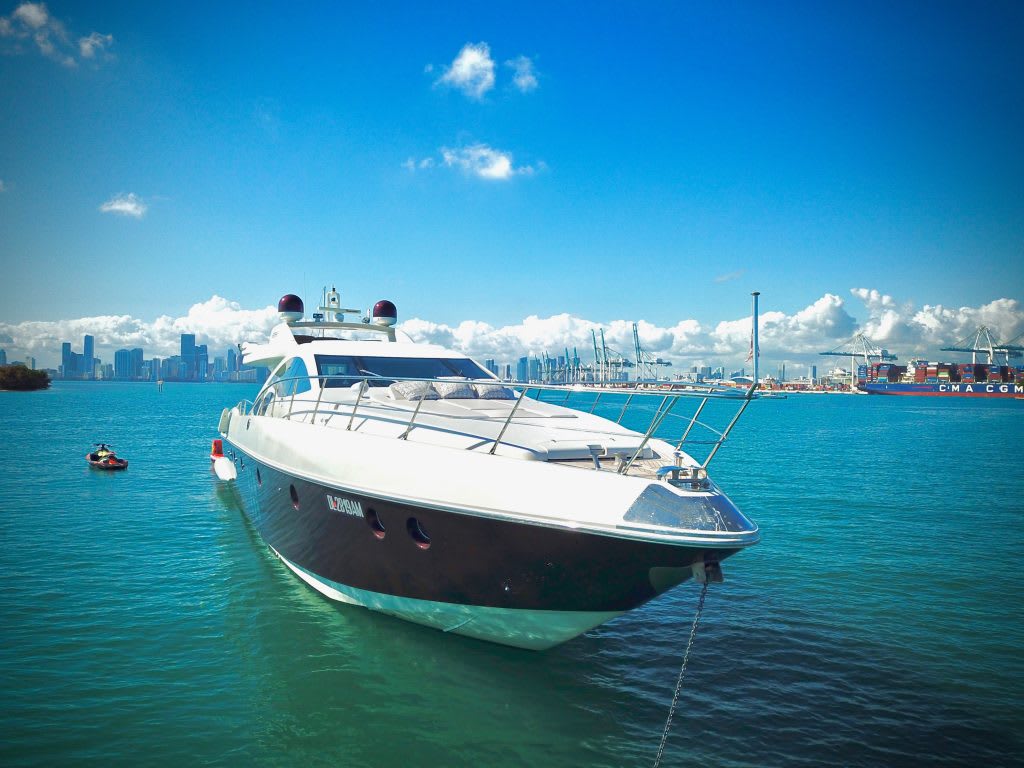
Few coastal cities in the Western Hemisphere concentrate open water, warm weather, and marine infrastructure as effectively as Miami. That convergence has elevated yacht charters in Miami from a regional leisure niche to a recognized category within global luxury travel — one that draws serious comparison to Mediterranean and Caribbean alternatives. For travelers evaluating where to spend time on the water, and for high-net-worth individuals weighing charter experience against ownership, understanding what actually drives Miami's standing in this market requires looking beyond the obvious appeal of its skyline and beaches.
Yacht charters in Miami refer to the short- or long-term rental of a private vessel — typically crewed — for recreational, social, or business-related use on Biscayne Bay, the Atlantic approaches, or nearby Bahamian waters. The market spans half-day bay excursions on center-console sport boats to multi-week superyacht itineraries, supported by a year-round commercial infrastructure of marinas, brokers, crew placement firms, and service providers that few American cities can match in depth or consistency.
A Climate That Operates on Its Own Calendar
The foundation of Miami's charter market is atmospheric before it is commercial. South Florida sits far enough south that its boating season does not compress the way it does in the Northeast, the Pacific Northwest, or the European Mediterranean. Water temperatures in Biscayne Bay rarely drop below the mid-60s Fahrenheit even in January, and air temperatures that would halt boating activity in other markets remain mild enough for comfortable on-water use virtually year-round.
This matters economically in ways that are easy to underestimate. Charter operators in markets like the Hamptons or coastal Maine must recover their full annual overhead — vessel financing, crew salaries, insurance, dockage, maintenance — within a window of three to five months. Miami's operators face no such compression. That distributes fixed costs across a full twelve-month operating year, which allows fleets to carry newer vessels, price competitively, and remain available to clients on short notice rather than working through advance-booking backlogs during a narrow peak season.
For the charter client, this translates into genuine flexibility. A traveler who wants a full-day excursion on two weeks' notice in February is dealing with a functional, fully staffed market in Miami. The same inquiry to a charter broker in the South of France or Nantucket that month would return either silence or a redirect to a distant warm-weather alternative. Miami's calendar does not force that redirection.
Hurricane season, running roughly from June through November, introduces a layer of monitoring and occasional itinerary adjustment, but it does not close the market the way winter does elsewhere. Experienced operators navigate this period by watching forecasts closely and adjusting routes accordingly — a managed operational variable rather than an existential seasonal constraint.
Geography That Compresses Distance and Risk
Miami's physical layout is as consequential as its climate. Biscayne Bay, sheltered by a chain of barrier islands running from Miami Beach south through Key Biscayne, provides calm, protected water suitable for vessels of nearly every size. This arrangement means that a guest boarding a yacht in Coconut Grove or at Island Gardens Marina near Watson Island is already in navigable, swell-free water before the vessel clears the dock. In cities where open-water exposure begins immediately — or where long, shallow estuaries must be transited before reaching workable depths — the time and comfort cost of getting underway is substantially higher.
Government Cut and the Port of Miami corridor provide deep-water Atlantic access within minutes of central marina locations. This direct connection between protected bay water and open ocean eliminates the draft restrictions and lengthy inland transits that complicate operations in many other harbor cities, and it matters practically for operators managing larger vessels that cannot spend an hour threading shallow approaches before reaching navigable conditions.
The proximity to the Bahamas constitutes a geographic advantage that no other major American charter market can replicate at the same distance. The Bimini islands sit roughly 50 nautical miles off Miami's coast — a crossing of three to four hours for a well-found motor yacht, meaning that a two-night charter departing on a Friday evening can reasonably include an international anchorage in turquoise water before returning Sunday. This is not a theoretical itinerary; it is a standard offering in Miami's charter market that routinely draws clients who want an island experience without the logistics of a multi-leg Caribbean journey.
Tourism Volume and the Depth of Charter Demand
Charter markets depend on a critical mass of potential clients within reach of the marina. Pristine water and favorable weather in an undervisited location will still produce an underperforming charter business. Miami eliminates that constraint entirely. The city serves as a primary entry point for Latin American travelers, a major winter destination for northeastern United States residents, and an increasingly prominent draw for international visitors attracted by its hospitality sector, art programming, and culinary reputation. Each of these visitor segments generates charter demand in a different register, but together they sustain a depth of market that smaller boating destinations simply cannot replicate.
Miami's major annual events compound this effect. The Miami International Boat Show, held each February, concentrates marine industry attention on the city at scale, exposing prospective charter clients and vessel buyers to both the market and its offerings simultaneously. Art Basel Miami Beach, held in December, draws a high-net-worth international audience that is, by revealed preference, already disposed to premium experiential spending. The overlap between these visitor segments and the charter market's target audience is substantial and deliberate.
The city's expanding identity as a finance and technology hub has also broadened the charter client base in ways that were less pronounced a decade ago. Business travelers attending financial conferences or closing real estate transactions increasingly extend stays to include a half-day or full-day charter, treating the experience as a natural extension of a professional visit rather than a separate vacation requiring its own planning. This blending of business and leisure travel — increasingly common across premium urban markets — is particularly pronounced in Miami given the concentration of high-net-worth individuals who have relocated to the city since 2020.
The Brokerage and Ownership Ecosystem
Beneath the client-facing charter experience sits a commercial structure that distinguishes Miami from destinations where chartering exists largely as a hospitality amenity. Miami supports an active brokerage economy in which vessels move fluidly between private ownership, charter management, and eventual resale — often within the same transaction ecosystem and sometimes with the same vessel serving multiple functions across different ownership periods.
This dynamic creates depth for buyers and charter clients alike. A prospective vessel owner evaluating the Miami market has access to a concentration of qualified marine surveyors, financing specialists, and brokerage professionals that provides reliable valuation benchmarks across a wide range of vessel types and price points. In thinner regional markets, a buyer may encounter limited comparable sales data and a narrower pool of qualified surveyors, both of which introduce valuation uncertainty that complicates purchase decisions. Miami's transaction volume reduces that uncertainty materially.
Charter management has become a particularly significant part of this ecosystem. Owners who do not intend to use a vessel full time can place it under professional management with companies that handle crewing, maintenance scheduling, booking logistics, and regulatory compliance in exchange for a percentage of charter revenue. In a market with Miami's year-round demand, this arrangement can offset a meaningful portion of annual ownership costs — a calculation that depends directly on the consistency and volume of bookings a given market can generate. Markets constrained by seasonality cannot support this model as reliably, which is a primary reason that charter management companies operating across the broader Florida and Caribbean region consistently use Miami as a base of operations.
How Miami Compares in a Global Context
Measured against other established charter markets, Miami's defining characteristic is efficient access rather than scenery alone. The Mediterranean — the Amalfi Coast, the Greek islands, the Croatian archipelago — offers historic coastal environments and a long-established charter culture, but access typically involves significant international travel, compressed seasonal windows, and the logistical complexity of operating across multiple sovereign jurisdictions. A last-minute or short-notice charter in Croatia requires a different level of planning than the same booking in Biscayne Bay.
The Caribbean presents warm-water conditions comparable to Miami's, but its infrastructure is distributed across dozens of island nations, each with its own regulatory environment, customs procedures, and logistical characteristics. Moving a vessel between charter jurisdictions in the Caribbean involves paperwork and clearance procedures that a Miami-based itinerary largely avoids. For buyers and brokers completing vessel transactions, this jurisdictional simplicity allows sea trials, surveys, and closings to occur within a single legal and customs framework — an efficiency that matters when transaction timelines are compressed.
The Pacific Northwest, which supports one of the United States' other significant charter markets, offers spectacular coastal scenery but operates within a hard seasonal calendar and at a temperature profile that limits the appeal to a narrower demographic than Miami's more permissive climate attracts.
Boating as a Cultural Baseline
There is a subtler dimension to Miami's charter market that structural analysis alone does not fully capture. Boating in South Florida is not an occasional indulgence or a specialized activity confined to dedicated enthusiasts. It is woven into the ordinary social fabric of a city built around waterways, where waterfront dining, marina-adjacent residential development, and boat-accessible sandbars function as standard parts of how residents use their leisure time. This cultural normalization matters commercially because it widens the base of charter demand beyond the segment of travelers who specifically plan boating vacations.
A visitor who would hesitate to charter in a market where the activity feels unfamiliar or specialized is considerably more likely to book a half-day excursion in Miami, where the option presents itself naturally as part of the city's accessible range of experiences. The same dynamic reinforces demand for vessel ownership, since a culture that treats boating as a mainstream lifestyle activity sustains the secondary market that makes charter management viable and gives prospective owners confidence that an asset purchased in Miami will retain market liquidity.
Taken together, these factors explain why Miami holds a distinct position in the global charter conversation — not as a destination that excels on any single dimension, but as one that combines consistent climate, efficient geography, sustained visitor volume, and commercial depth in a configuration that very few coastal cities can assemble simultaneously. For travelers comparing charter destinations and for individuals weighing the economics of charter against ownership, Miami's advantages are structural. They reflect decades of infrastructure investment, demographic convergence, and geographic accident, which is precisely what makes them durable rather than cyclical.
About the Creator
Miami Boat Charter
Miami Boat Charters offers the largest and newest selection of fully crewed Boat Charters, Party Boats, & Luxury Yacht Rentals in Miami Beach.
Enjoyed the story? Support the Creator.
Subscribe for free to receive all their stories in your feed.
Comments
There are no comments for this story
Be the first to respond and start the conversation.