
What High Pressure Cleaning Does — and Why Hobart Painting Contractors Insist on It First
The surface preparation step that separates a lasting paint job from one that fails within seasons
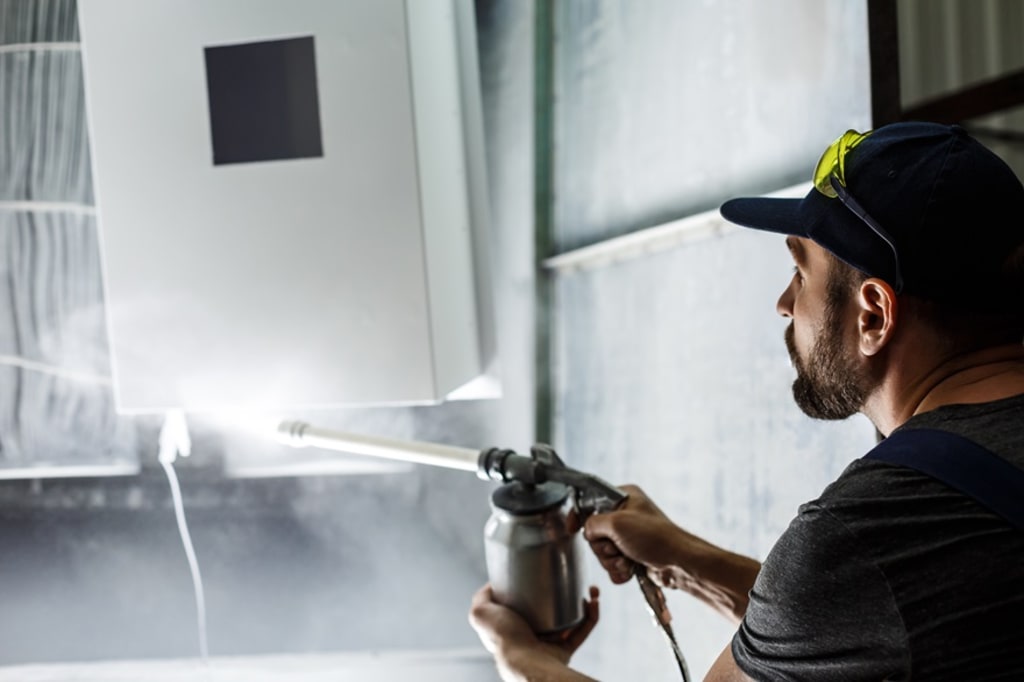
Surface preparation is one of the most discussed — and most misunderstood — aspects of professional exterior painting. Among tradespersons working in Hobart and across southern Tasmania, few preparation steps generate as much consensus as high pressure cleaning. Before a single drop of primer or topcoat is applied, experienced painting contractors routinely insist that all exterior surfaces be thoroughly pressure washed. This is not a preference or an upselling opportunity. It reflects a straightforward understanding of how paint adheres, how surfaces age, and what happens when preparation is skipped or rushed.
High pressure cleaning, also called pressure washing or power washing, involves directing a high-velocity jet of water at a surface to remove contaminants that accumulate over time. For exterior painting purposes, it clears away mold, mildew, algae, lichen, dirt, salt residue, loose paint, and chalking — all of which compromise paint adhesion if left in place.
This foundational step matters enormously, particularly in a climate like Hobart's, where cool temperatures, high humidity, and the city's coastal and semi-rural microenvironments create ideal conditions for biological growth and surface degradation. Understanding what pressure cleaning actually does — and why it is non-negotiable for professional results — helps property owners make better decisions when planning exterior painting work.
What Accumulates on Exterior Surfaces Over Time
Most homeowners and commercial property owners underestimate how much their exterior surfaces have accumulated by the time a repaint becomes necessary. What looks like a dull or faded facade from the street is often carrying several distinct layers of contamination that have bonded to the surface over years of weathering.
Mold and mildew are among the most significant concerns in Hobart's climate. The city's temperate maritime environment, with its frequent rain, overcast skies, and relatively low temperatures, creates sustained moisture conditions that accelerate the growth of organic matter on timber, masonry, Colorbond steel, and rendered surfaces. In areas with limited sun exposure — the southern or shaded faces of buildings, areas beneath eaves, or spaces adjacent to dense vegetation — mold colonization can be surprisingly extensive even on buildings that appear relatively well-maintained from a distance.
Algae and lichen present their own challenges. Unlike mold, which tends to appear as dark staining, algae can produce a greenish bloom across surfaces that is easy to overlook until it is cleaned away. Lichen — the compound organisms formed by algae and fungi together — bond to masonry and some painted surfaces with a tenacity that requires considerable pressure to dislodge. Both organisms produce metabolic byproducts that continue to degrade surfaces even after the organism dies, which is why removal rather than simple die-off is the correct approach.
Salt contamination is particularly relevant for properties in coastal Hobart suburbs. Sandy Bay, Battery Point, Bellerive, and similar waterfront and near-waterfront areas see salt-laden air deposit mineral residue on exterior surfaces over time. Salt is hygroscopic — it attracts and retains moisture — which creates persistent damp conditions beneath paintwork and accelerates the blistering and peeling that characterizes premature paint failure in coastal environments.
Chalking is another significant accumulation issue. As older paint films age and break down under UV exposure, the binders in the paint degrade and release fine powdery pigment residue at the surface. This chalking layer feels almost smooth to the touch and can be invisible in low light, but it represents an unstable base that prevents new paint from forming a proper mechanical bond. Painting over a chalked surface without cleaning is one of the most reliable ways to produce a paint job that begins peeling within a single Tasmanian winter.
How High Pressure Cleaning Prepares a Surface for Paint
The mechanics of what pressure cleaning achieves go beyond simple visible dirt removal. The process addresses surface integrity in several distinct ways that together create the conditions necessary for a quality paint application.
At the most fundamental level, pressure washing removes all active biological contamination — mold, algae, lichen, and mildew — from the surface. Professional contractors typically combine high pressure water with a suitable biocidal detergent for surfaces with significant biological growth, ensuring that not just the visible organism is removed, but the spores and root systems that would otherwise survive and compromise the new paint film.
For surfaces carrying loose or peeling paint, pressure washing performs an important diagnostic and preparatory function simultaneously. The force of the water will dislodge paint that has already lost adhesion, revealing the true condition of the substrate beneath. This is information that a painting contractor needs before specifying primers and coatings. Paint that appears loosely adhered but has not yet peeled can seem stable during a visual inspection, only to fail immediately after new paint is applied. Pressure washing removes that guesswork.
Chalking is effectively addressed by pressure washing in a way that manual scrubbing rarely achieves with the same thoroughness across large areas. The combination of water volume and pressure lifts chalky residue from the surface pores, leaving a cleaner profile to which primer can bond. On masonry surfaces in particular — rendered walls, brick, and concrete — this surface opening is critical, because the porosity of these substrates means that contamination penetrates into the surface profile rather than simply sitting on top of it.
For timber weatherboards, which remain common across older Hobart residential suburbs including areas of North Hobart, Glebe, and South Hobart, pressure washing must be performed with appropriate technique to avoid grain raise or moisture damage. Experienced contractors adjust pressure settings according to surface material and condition, using lower pressure for softer timbers and greater stand-off distance where needed. The goal is thorough cleaning without introducing new damage to the substrate.
The Connection Between Surface Cleanliness and Paint Longevity
Paint manufacturers specify surface preparation requirements in their technical documentation because the chemistry of adhesion is well understood. A paint film bonds to a surface through a combination of mechanical adhesion — the interlocking of the coating with the microscopic profile of the substrate — and chemical bonding between the coating and the surface material. Contamination interferes with both mechanisms.
When paint is applied to a surface carrying mold or algae, the organisms continue to grow beneath the paint film, disrupting the bond from below. This produces the characteristic bubbling, flaking, and peeling that appears at the biological growth sites, often within the first wet season after application. When paint is applied over chalking, the new film bonds not to the substrate but to the loose powder layer, which carries no structural integrity. The result is a paint job that can be peeled away in sheets.
In Hobart's climate, where winters are wet and persistent, the demands on exterior paintwork are considerable. Temperature cycling, sustained damp, and the biological pressure created by a moist and often shaded environment mean that a paint system that has been applied to an inadequately prepared surface will underperform significantly compared to its theoretical lifespan. Manufacturers' durability claims assume correct application over correctly prepared surfaces. When preparation is compromised, those claims carry no practical warranty.
Professional Hobart painting contractors who insist on pressure cleaning prior to all exterior work are protecting more than their workmanship. They are protecting the value of the product they are applying and the investment the property owner is making. A premium exterior coating system applied to a contaminated surface will fail as quickly as a budget product. Surface preparation is not a component of the process that skill in application can compensate for.
What the Process Looks Like in a Professional Context
In practice, a professional high pressure cleaning service performed in preparation for exterior painting involves several stages rather than a single pass with a pressure washer. The sequence and method depend on the surface type, the nature and extent of contamination, and the painting specification to follow.
For surfaces with significant mold or algae — which describes a considerable proportion of exterior walls in Hobart given the climate — a biocidal pre-treatment is typically applied and allowed to dwell before pressure washing begins. This kills the organisms and makes them easier to remove under pressure, reducing the risk of dispersing live spores across the surface. The pre-treatment chemistry must be compatible with the surfaces being treated and with the coatings to be applied — a consideration that professional contractors manage as a matter of course but that is easy to overlook in a DIY context.
Following the pressure wash, surfaces require adequate drying time before painting can proceed. This is not a step that can be meaningfully shortened. Timber and masonry both absorb water during pressure washing, and applying paint over surfaces with elevated moisture content leads to blistering, poor adhesion, and in some cases, long-term substrate damage. In Hobart's cooler climate, drying times are naturally extended compared to warmer mainland Australian cities, and experienced contractors factor this into their project scheduling.
Once surfaces are clean and dry, a visual inspection determines whether additional preparation is needed — further scraping, sanding, filling, or spot priming on areas where the substrate has been exposed or where previous paint adhesion has failed. High pressure cleaning does not eliminate all preparation requirements; it is the foundational step that makes subsequent preparation meaningful and ensures that the finished coating system performs as intended.
The Property Owner's Perspective: Value and Practical Considerations
For homeowners and commercial property owners commissioning exterior painting work in Hobart, the message from professional contractors about pressure cleaning reflects a consistent industry position: the cost of preparation is substantially lower than the cost of premature paint failure.
A quality exterior paint job on a Hobart home, accounting for labour, materials, and preparation, represents a significant investment. The lifespan of that investment — whether the coating lasts five years or fifteen — is determined more by preparation quality than by product quality. The best exterior coatings available will underperform on inadequately prepared surfaces. The difference between a painting contractor who insists on thorough pressure cleaning and one who offers to skip it for a lower price is not, in most cases, a difference in approach to selling services. It is a difference in understanding of what makes paint last.
Commercial property owners face additional considerations. Building facades carry brand and reputational signals for businesses operating from them, and a facade that begins to show mold staining, peeling, or chalking within a few years of a repaint reflects on the property and its occupants. The operational cost of repainting more frequently — both in material terms and in disruption to tenants or operations — generally far exceeds the incremental cost of correct preparation at the time of the original work.
Across Hobart's diverse property stock — from Federation-era and inter-war timber cottages in the inner suburbs to mid-century commercial buildings and newer residential developments on the city's expanding fringe — the preparation requirements vary, but the underlying principle does not. High pressure cleaning is the step that makes everything else in the painting process work as it should.
The insistence that professional painting contractors place on surface preparation, and on high pressure cleaning in particular, is ultimately an expression of technical knowledge applied to practical outcomes. It reflects an understanding that what lies beneath the paint matters as much as the paint itself — and that in a climate like Hobart's, where the environment works persistently against exterior surfaces, the foundations of a lasting finish are laid before the first brush stroke is applied.
About the Creator
Dyson Painters
We are trusted Professional Painters in Hobart, Providing High-Quality Residential and commercial services. Contact us to hire our expert exterior and interior Painters.
Enjoyed the story? Support the Creator.
Subscribe for free to receive all their stories in your feed.
Comments
There are no comments for this story
Be the first to respond and start the conversation.