
What Distinguishes a Genuine Luxury Yacht Rental in Miami
Behind the marketing language, a smaller set of structural standards actually separates premium charters from the rest of the market

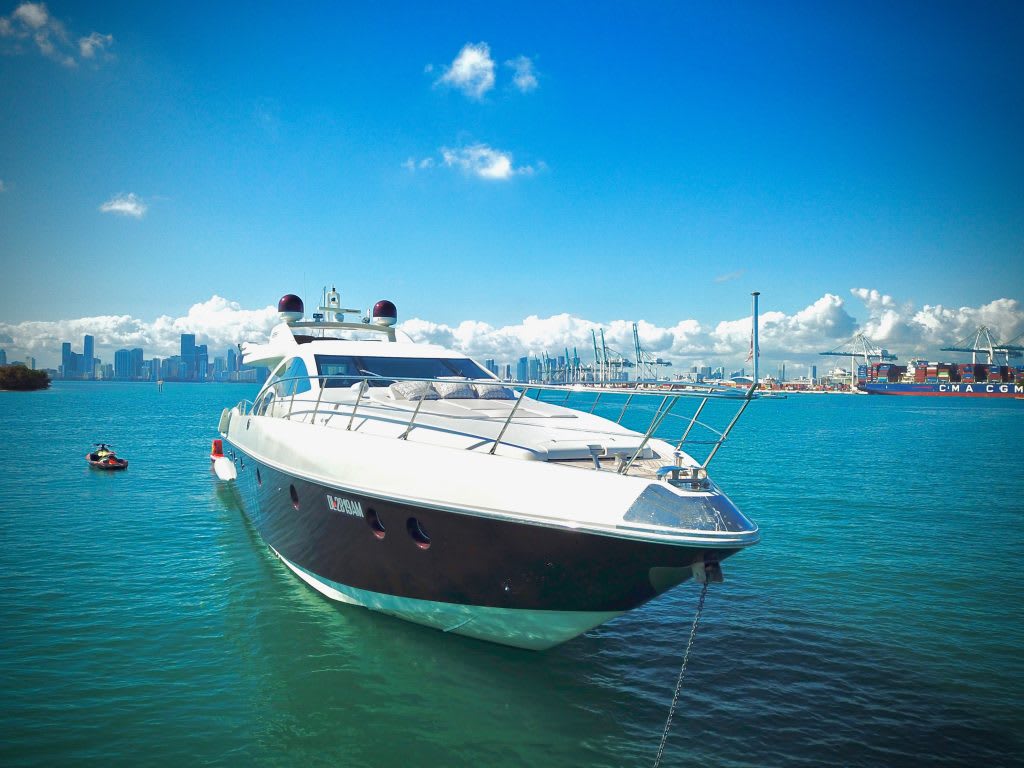
Miami's charter market has grown large enough that the word "luxury" now attaches to almost every listing on it, from modest day boats to full-crew superyachts. That inflation makes the term harder to rely on, even as the city's position as one of the busiest yacht charter hubs in the United States makes the category more relevant than ever. Understanding what genuinely separates a premium charter from an ordinary one requires looking past the marketing copy toward a handful of structural factors that determine the actual experience on the water.
Luxury yacht rentals in Miami are best understood as privately crewed charters aboard professionally maintained vessels, typically 60 feet or longer, where construction quality, crew training, and service standards approach those found in premium land-based hospitality. The category is defined by the coherence of those elements working together, not by price or advertising language in isolation.
Vessel Class and Construction Standards
Within the charter fleet operating out of South Florida, vessel quality is shaped less by overall length than by builder pedigree and maintenance history. Yards such as Azimut-Benetti, Ferretti Group, and Sanlorenzo have built reputations on a level of integration between hull engineering, interior design, and live-aboard function that lower-specification builders typically cannot match. That difference is rarely visible in a listing photograph, but it shows up immediately at sea, in the way a vessel handles chop, in the quiet of the saloon at cruising speed, and in how the materials used throughout the interior hold up over years of charter use.
Condition is a separate variable from pedigree, and in a market as active as Miami's, it often matters more. Vessels in continuous charter service accumulate wear quickly, which means maintenance discipline becomes a meaningful differentiator between operators rather than a background assumption. An older vessel kept to a rigorous service schedule, with documented engine hours, recent interior refits, and consistent systems checks, frequently performs better than a newer boat that has been run hard with minimal upkeep. Operators able to produce maintenance records without hesitation are signaling something substantive about how the vessel has actually been operated, independent of its build year.
Length still matters, but mainly because of what it unlocks structurally rather than as a marker of status. Below roughly 60 feet, a vessel functions well for a relaxed day on the water, with comfortable but compact accommodations. Past 70 feet, the layout typically allows for separated guest and crew circulation, multiple distinct deck levels, staterooms with genuine acoustic separation, and independently zoned climate systems. That shift changes the character of the experience from "a boat with nice finishes" to something closer to a private hospitality environment that happens to be on the water.
Naval architecture also affects comfort in ways that are easy to overlook from a dock-side inspection. Hull design, particularly the relationship between deadrise angle and displacement, determines how a vessel responds to the wake and chop generated by South Florida's heavy weekend boat traffic. A well-engineered deep-V hull absorbs that motion in a way that keeps a vessel stable at anchor and comfortable underway, while a poorly matched hull and superstructure combination can produce a rolling motion that becomes noticeable within the first hour, regardless of how the interior has been finished. This is one of the reasons experienced operators tend to favor a narrower set of builders across their fleets rather than acquiring whatever becomes available on the resale market.
Crew Structure and the Service Layer
Vessel specification only accounts for part of what makes a charter feel premium. A well-built yacht with an inadequate crew produces a mediocre experience regardless of the boat underneath it, while a more modest vessel staffed by a genuinely skilled crew frequently outperforms the inverse pairing. This is one of the more consistent patterns in the charter industry, and one of the hardest for a prospective client to evaluate before a booking is made.
At the lower end of Miami's charter market, crew structure is often limited to a single licensed captain, sometimes supported by one deckhand, which is sufficient for a short trip to a nearby anchorage. At the premium tier, the structure expands to include a captain holding U.S. Coast Guard credentials, and on larger vessels, internationally recognized STCW certification, along with a first mate, a dedicated steward or stewardess responsible for food and beverage service, and on larger charters, a trained chef and additional deck staff. A captain who has handled offshore passages and coordinated multi-day Bahamian itineraries operates with a different level of judgment than one holding the minimum credential required for local day charters, a distinction that becomes relevant the moment weather or logistics introduce any complexity.
The onboard steward or stewardess role is typically where service quality is most apparent to guests. The difference between adequate attentiveness and genuinely skilled hospitality service tends to come down to anticipation rather than effort: beverages refreshed at a pace suited to the group's mood, dietary preferences accounted for without repeated reminders, and meal timing read from the rhythm of the day rather than a fixed schedule. That kind of service is the product of hospitality training and prior experience on professionally run vessels, and it is difficult to substitute for with enthusiasm alone.
The broader crewing pipeline in South Florida also shapes what is realistically available to charter clients. Fort Lauderdale and Miami sit within one of the largest concentrations of professional yacht crew in the world, supported by maritime academies, STCW training centers, and a deep pool of candidates who have worked aboard private and charter vessels in the Caribbean and Mediterranean before relocating to South Florida seasonally or permanently. That density gives well-run charter operators access to crew with genuine cross-regional experience, rather than staff trained exclusively on local day-charter routes. It also means that crew turnover, scheduling, and consistency become operational variables an operator has to manage actively, since the same labor market that supplies experienced crew also creates competition for that talent across the private yacht and charter sectors alike.
Regulatory and Operational Architecture
A significant portion of what separates legitimate luxury operators from the rest of the market is not visible in any brochure, because it concerns regulatory compliance and contract structure rather than the vessel or crew directly. Charters operating in U.S. waters are subject to Coast Guard regulations covering passenger limits, captain licensing, and insurance, and a meaningful share of listings in any major charter market operate in ways that fall short of full compliance. The practical risk to a client is not abstract: it can mean a cancelled trip, an unresolved liability question, or the discovery mid-charter that the arrangement presented as professional does not meet the standards it implied.
Operators running properly structured programs tend to be straightforward about this layer when asked directly, with documented vessel compliance, licensed captains, and transparent contracts that separate the base charter fee from provisioning costs and crew gratuity rather than bundling them into a single ambiguous figure. The presence or absence of that clarity is often a more reliable signal of an operator's overall standards than anything described in the marketing material for the vessel itself.
Amenities, Provisioning, and the Onboard Experience
The amenities listed for a given charter function as a reasonable indicator of how an operator has approached the guest experience, whether as a hospitality question or simply a logistics one. Entry-level charters typically offer functional extras such as a sound system, basic snorkeling gear, and a sundeck. At the premium end, amenities reflect an assumption that guests are familiar with high-end environments on land and expect comparable attention to detail at sea, evident in interior finishes such as leather upholstery, stone countertops, and integrated lighting and storage design rather than fixtures assembled separately without a unifying concept.
Water toy inventory follows a similar logic. The presence of a properly sized tender for shore access, alongside equipment such as personal watercraft or motorized water toys, indicates how much thought has gone into what guests will actually do during hours spent at anchor rather than underway. Food and beverage service is arguably the most immediately legible signal of a charter's overall tier, since the difference between a chef with genuine culinary training and cold provisions left out before departure is apparent within the first meal served. Operators who can describe their culinary staff's background specifically are usually doing so because that background is verifiable, while vague references to "gourmet" catering without supporting detail tend to indicate the opposite.
Provisioning logistics behind the scenes also influence the experience more than guests typically realize. Premium operators generally collect detailed preference information well in advance of a charter date, covering dietary restrictions, beverage preferences, and the general rhythm guests want for the day, and use that information to plan a provisioning run rather than stocking a generic inventory. This matters practically in a market like Miami, where last-minute provisioning runs are constrained by marina logistics, vendor relationships, and the volume of charters departing on any given weekend. An operator without an established provisioning process is more likely to substitute convenience items for what guests actually requested, a gap that becomes apparent the moment a meal is served rather than at the time of booking.
Geography: Biscayne Bay and the Bahamas Corridor
Miami's waterways are not interchangeable with one another, and an operator's familiarity with how the bay and surrounding waters behave across a given day materially affects the quality of an itinerary. Morning departures from marinas in Coconut Grove or Miami Beach typically catch calmer water before afternoon chop and weekend boat traffic build, while the city's skyline viewed from the bay in low-angle morning light offers a perspective unavailable from land. The causeway islands, including Star Island and Palm Island, present differently from the water than from any ground-level vantage point, a detail that experienced operators tend to factor into route planning rather than treat as incidental scenery.
The prevailing southeast breeze that develops through much of the year across South Florida tends to make the early-to-mid afternoon the most comfortable period for time at anchor, and skilled captains generally plan sunset positioning with the same intentionality applied to other parts of the itinerary, since catching the bay's evening light well requires being in a specific location at a specific time rather than leaving it to chance. For clients interested in extending beyond a single day, the proximity of the Bahamas adds a dimension that few other major charter markets in the continental United States can offer. Bimini is reachable as a manageable day run from Government Cut, while destinations such as Nassau or the Exumas require weather-window planning and customs logistics that experienced operators handle as a matter of routine rather than improvisation. The ability to move from an urban waterfront to a remote Bahamian anchorage within roughly two days is one of the more distinctive advantages of chartering specifically out of Miami, a function of geography rather than vessel quality alone.
A Category Defined by Consistency, Not Description
Taken together, these factors point to a fairly consistent conclusion: the difference between an ordinary charter and a genuinely premium one in Miami has little to do with how a listing is worded and much to do with whether vessel quality, crew structure, regulatory compliance, and onboard service are all operating at the same level simultaneously. Any one of those elements can be present without the others, which is precisely why the word "luxury" has become unreliable as a shorthand across the broader charter market.
For clients evaluating luxury yacht rentals in Miami, the more useful approach is to treat each of these layers as a separate question rather than relying on a single overall impression. A vessel's build quality says little about its crew's training, and an impressive amenity list says nothing about whether the operator's compliance and contract structure are sound. It is the alignment of all of these factors, more than any individual one, that determines whether a charter ultimately delivers the experience its marketing implies.
About the Creator
Miami Boat Charter
Miami Boat Charters offers the largest and newest selection of fully crewed Boat Charters, Party Boats, & Luxury Yacht Rentals in Miami Beach.
Enjoyed the story? Support the Creator.
Subscribe for free to receive all their stories in your feed.
Comments
There are no comments for this story
Be the first to respond and start the conversation.