
What Defines a Superyacht — and Why the Classification Matters More Than the Label
A closer look at how the term “superyacht” is defined, interpreted, and used across maritime, cultural, and commercial contexts

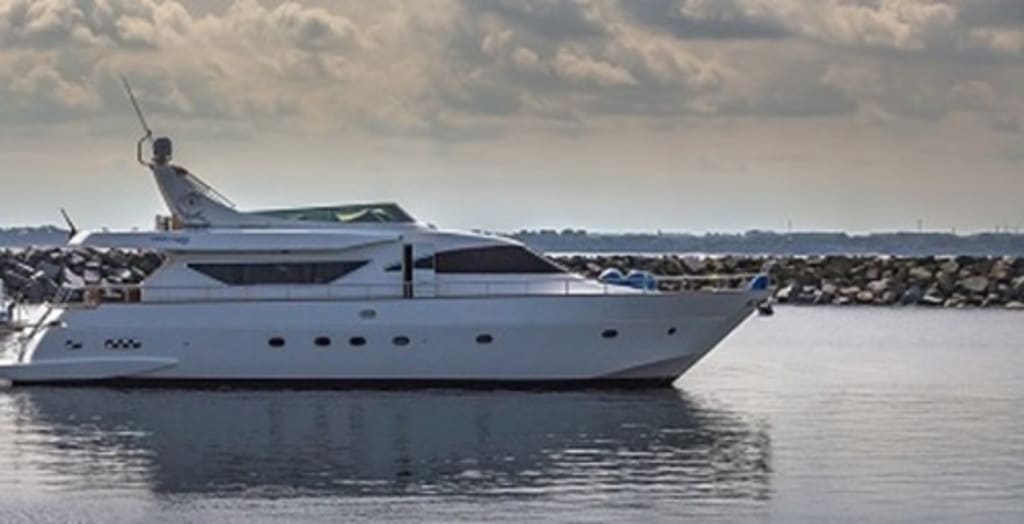
The term “superyacht” occupies a unique space in modern maritime language. It appears frequently in media coverage, brokerage listings, travel discussions, and lifestyle reporting, yet it remains surprisingly fluid in definition. Unlike many categories in transportation or luxury goods, a superyacht is not defined by a single regulatory threshold or universally accepted technical standard. Instead, it exists as a convergence of size, capability, design complexity, and cultural perception.
This ambiguity is not a flaw in classification but rather a reflection of how the modern yacht industry has evolved. As vessels have grown larger, more technologically advanced, and increasingly customized, the vocabulary used to describe them has expanded in parallel. The term “superyacht” has become less about strict measurement and more about signaling a particular tier of maritime experience—one that sits distinctly above conventional luxury yachts, both in scale and in expectation.
Understanding what defines a superyacht therefore requires looking beyond the word itself and into the frameworks—formal and informal—that shape how the category is used across the global marine industry.
The Origins and Evolution of the Term “Superyacht”
The word “superyacht” is relatively modern in maritime history. While luxury yachts have existed for more than a century, particularly among European aristocracy and industrial elites, the prefix “super” gained traction in the late 20th century as yacht design and ownership shifted toward increasingly large and complex private vessels.
Historically, yachts were broadly categorized simply as motor yachts or sailing yachts, often differentiated by size bands that varied across regions and classification societies. However, as vessels began to exceed 40 meters in length and incorporate features previously associated with small cruise ships—such as multiple decks, helipads, cinema rooms, and advanced stabilization systems—industry language began to shift.
The emergence of shipyards specializing in bespoke, large-scale private yachts contributed to this linguistic evolution. Naval architecture firms, classification societies, and brokers gradually adopted the term “superyacht” as a convenient shorthand for a category that no longer fit traditional definitions.
Over time, the term expanded in usage but not in precision. Today, it functions less as a strict classification and more as a widely understood descriptor for yachts that operate at the upper end of size and luxury. The evolution of the term reflects broader changes in wealth distribution, global mobility, and the increasing personalization of private maritime vessels.
Size, Function, and the Absence of a Legal Definition
One of the most important characteristics of the superyacht category is that it lacks a universally binding legal definition. Different organizations and markets may apply varying thresholds, but none are globally standardized.
In many industry contexts, a vessel is often considered a superyacht once it exceeds approximately 24 meters (around 79 feet) in length. However, this benchmark is not fixed. Some classification societies and brokerage firms use 30 meters or 40 meters as reference points, particularly when distinguishing between luxury yachts and larger, more complex vessels.
This variability highlights a key point: superyachts are defined less by exact measurements and more by their functional complexity. A vessel in this category typically includes multiple guest suites, professional crew accommodations, high-end engineering systems, and significant onboard amenities. These may include wellness facilities, beach clubs, tenders and toys storage, and advanced navigation technologies designed for long-range cruising
Another important factor is crew structure. Superyachts almost always require a professional, full-time crew, often with specialized roles such as engineers, chefs, deck officers, and hospitality staff. This distinguishes them from smaller yachts that may be owner-operated or require minimal staffing.
The absence of a strict legal definition allows flexibility within the industry but also creates a layered hierarchy of terminology. As a result, terms like “megayacht” or “gigayacht” have emerged informally to describe even larger vessels, further illustrating how classification is driven by convention rather than regulation.
What Classification Actually Signals in the Maritime World
In practice, the classification of a vessel as a superyacht carries meaning far beyond its physical dimensions. Within the maritime ecosystem, the term signals a combination of engineering sophistication, operational complexity, and luxury standardization.
From a technical perspective, superyachts are often built under stringent classification rules established by organizations such as Lloyd’s Register or the American Bureau of Shipping. These rules govern structural integrity, safety systems, environmental compliance, and seaworthiness. As yachts grow larger, compliance requirements become increasingly similar to those of commercial vessels, even if the yacht remains privately owned.
At the same time, classification also reflects market positioning. In yacht brokerage, marketing language plays a significant role in shaping buyer expectations. The term “superyacht” indicates a vessel that is not simply a leisure craft but a fully realized maritime asset, often custom-built and designed for long-distance cruising across oceans rather than coastal navigation alone.
There is also an implicit cultural signal embedded in the classification. A superyacht is not only a mode of transport but also a floating environment that integrates architecture, engineering, hospitality, and design. The distinction becomes relevant when discussing ownership structures, charter operations, and even registration jurisdictions.
In this sense, classification operates on two levels: one technical and one symbolic. It communicates both what the vessel is capable of and how it is perceived within global luxury and maritime circles.
Lifestyle, Industry, and the Culture of Large Yachts
Beyond technical definitions, superyachts exist within a broader cultural and economic ecosystem. They represent a convergence of design innovation, global mobility, and high-net-worth lifestyle patterns.
The interior and exterior design of superyachts often involves collaboration between naval architects, interior designers, and specialist shipyards. This interdisciplinary approach has elevated yacht building into a field that overlaps with contemporary architecture and industrial design. Materials, spatial planning, and onboard experience are carefully engineered to function within the constraints of marine environments while still achieving residential levels of comfort.
At the same time, the operational side of superyachts forms a specialized industry of its own. Crewing agencies, maritime management firms, refit yards, and classification experts all contribute to the lifecycle of these vessels. Unlike static luxury assets, superyachts require continuous maintenance, periodic upgrades, and regulatory compliance across different jurisdictions.
Charter activity has also influenced how superyachts are perceived. Many vessels are available for seasonal charter, particularly in regions such as the Mediterranean and the Caribbean, where demand for high-end maritime tourism is concentrated. This dual role—private ownership combined with commercial charter potential—adds another layer of complexity to how superyachts function within the broader maritime economy.
Culturally, superyachts have become symbols of mobility and privacy in an increasingly globalized world. They allow for movement between destinations without reliance on fixed infrastructure, reflecting broader trends in personalized luxury and experiential travel. However, they also exist within ongoing discussions about environmental impact, sustainability, and maritime regulation, particularly as the industry explores hybrid propulsion systems and alternative fuels.
Why the Term Matters in Today’s Market for Superyachts for Sale
In the commercial context, terminology plays a significant role in shaping perception and market dynamics. The phrase “superyachts for sale” is widely used across brokerage platforms and listings, but its meaning extends beyond simple inventory categorization.
For buyers, the term helps frame expectations regarding scale, complexity, and investment level. A vessel labeled as a superyacht typically implies a higher degree of customization, longer construction timelines, and more advanced onboard systems than smaller yachts. It also signals entry into a market where transactions are highly individualized, often involving private negotiations rather than standardized pricing structures.
For the industry, the classification supports segmentation. Shipyards may specialize in specific size ranges, while brokers and advisors often structure their services around distinct tiers of yachts. The superyacht category, in particular, occupies a space where technical expertise and lifestyle consultancy intersect.
However, the lack of strict definition also introduces interpretive variability. What one brokerage considers a superyacht may overlap with what another classifies as a large motor yacht. This fluidity reflects the broader nature of the luxury maritime market, where personalization often overrides standardization.
As demand continues to evolve, particularly among emerging global wealth centers, the terminology surrounding superyachts is likely to remain flexible. Rather than narrowing into a fixed definition, the category continues to expand alongside design innovation and shifting ownership patterns.
Beyond Superyacht: Megayachts and the Language of Luxury at Sea
As vessels have grown larger, the vocabulary used to describe them has also expanded. Terms such as “megayacht” and “gigayacht” are not formally regulated but are widely used within industry circles to distinguish vessels that exceed traditional superyacht dimensions.
A megayacht typically refers to yachts exceeding 60 meters in length, while gigayachts may surpass 90 or even 100 meters. These distinctions are primarily descriptive rather than technical, reflecting a need to articulate scale in an industry where incremental increases in size can represent substantial changes in complexity and cost.
This linguistic expansion highlights a broader trend: as luxury assets grow in scale and sophistication, language evolves to keep pace. However, the proliferation of terms also reinforces the idea that classification is inherently relative. What defines a superyacht today may shift as shipbuilding capabilities continue to advance.
Ultimately, the terminology serves a communicative purpose rather than a regulatory one. It helps shape understanding across a global audience that includes designers, engineers, brokers, journalists, and enthusiasts. Yet the underlying reality remains consistent: these vessels are defined less by labels and more by the intricate combination of design, engineering, and experience they represent.
Conclusion
The concept of the superyacht exists at the intersection of language, engineering, and cultural perception. While it is often used casually to describe large luxury yachts in miami, its meaning is far more nuanced when examined within the context of maritime practice and industry structure.
Rather than a fixed category, a superyacht represents a threshold of complexity—where size meets customization, and where private vessels begin to resemble floating architectural environments. The absence of a strict definition does not weaken the term; instead, it allows it to adapt alongside the rapid evolution of yacht design and ownership patterns.
In contemporary usage, the classification carries significance not because of precise measurements, but because of what it signals: a distinct tier of maritime capability and lifestyle integration that continues to shape both the industry and the language used to describe it.
As global interest in luxury maritime assets continues to expand, the conversation around superyachts is likely to remain as dynamic as the vessels themselves. The label may shift, but the underlying idea—a uniquely engineered world at sea—remains firmly anchored in the imagination of the modern maritime landscape.
About the Creator
Robert Lama
Robert Lama is a seasoned yacht broker with Miami International Yacht Sales, a reputable yacht brokerage company specializing in both used and new yachts. https://www.miamiinternationalyachtsales.com/
Enjoyed the story? Support the Creator.
Subscribe for free to receive all their stories in your feed.
Comments
There are no comments for this story
Be the first to respond and start the conversation.