
Westport Yachts and the Case for American-Built Luxury in a European-Dominated Market
How a sixty-year-old shipyard on the Washington coast built its case against Italian and Dutch prestige — one hull, one range chart, and one resale value at a time

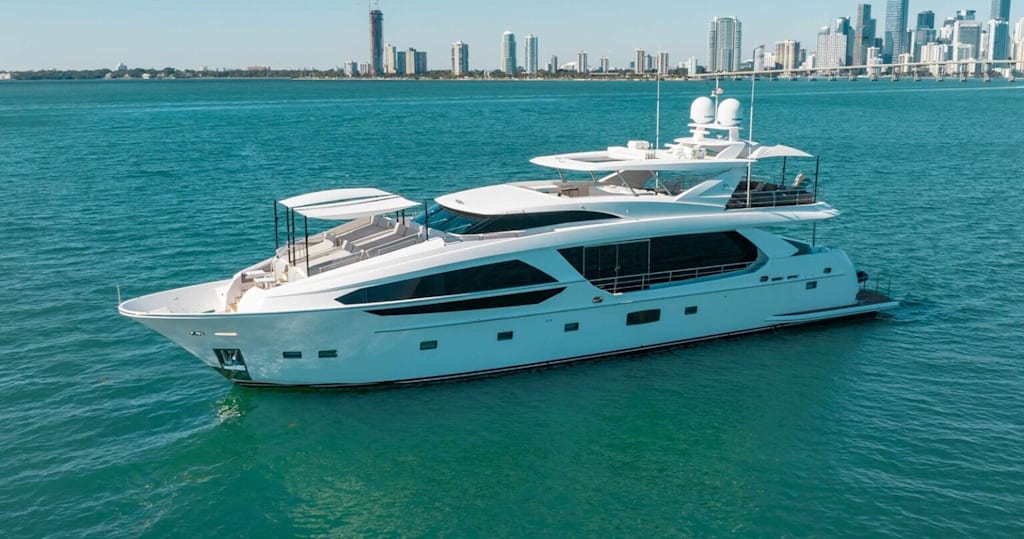
The global superyacht industry is, by most measures, a European conversation. Italy's storied shipyards — Ferretti, Benetti, Azimut — define the aspirational center of the market. Dutch builders like Feadship and Heesen occupy the ultra-custom tier with a near-mythological reputation for engineering precision. Against that entrenched geography of prestige, a shipyard on the Washington coast has spent six decades quietly making a different argument: that American craftsmanship belongs at the top of the industry too.
Westport Yachts builds semi-custom motoryachts in the 112-to-172-foot range from a cluster of facilities in Westport, Hoquiam, and Port Angeles, Washington. Understanding why it has succeeded where most American builders haven't requires looking past the patriotic framing and into the actual engineering and business decisions that got it there.
A Builder Shaped by Hard Water
Westport didn't start as a yacht company. Naval architect Jack Sarin founded the shipyard in 1964 to build commercial fishing vessels for the North Pacific fleet — boats meant to survive the Gulf of Alaska, not impress anyone at a marina. By 1977 the company had been acquired by Gary Chouest, whose family's Louisiana-based maritime businesses would eventually take Westport in a very different direction. The shift toward private luxury motoryachts began in earnest through the 1980s, but the engineering DNA never really changed: Westport's hulls are still built by people who think about a boat's behavior in genuinely bad water first and its appearance at the dock second.
That history is also why Westport became one of composite construction's earliest serious adopters in the yacht world. Fiberglass-reinforced hulls offered better strength-to-weight ratios than steel or aluminum, didn't corrode in saltwater the way metal does, and were dramatically cheaper to maintain over a vessel's working life — a calculation that mattered more to commercial fishing operators than it did to custom European yards building one-off art pieces, but one that turned out to matter just as much to the Americans who eventually bought Westport's yachts.
Series Production, Not Mass Production
Westport occupies a specific middle ground in the market: not the full-production approach of a Viking or Hatteras, and not the multi-year bespoke commissioning process of a Dutch or Italian custom yard. The current lineup — the 112, 117, 125, 130, 135, and the flagship 172-foot tri-deck — shares standardized naval architecture and core systems across each platform, while interior layout and finish remain client-driven. According to figures reported by Worth Avenue Yachts, a new 164-foot hull historically started roughly every 26 weeks, a production cadence that simply has no equivalent among the fully custom European builders Westport competes against at the top of its range.
That predictability shows up most clearly in the resale market. Because Westport's mechanical and structural specifications are standardized and well-documented, surveyors and brokers know exactly what they're looking at, and parts and service don't require flying in specialists from an Italian or Dutch yard. For an owner weighing the full financial exposure of yacht ownership — acquisition, refit cycles, and eventual resale — that's a real, quantifiable advantage, not a marketing talking point.
Range as the Actual Differentiator
The specification that separates Westport from its European-built competitors in the same size class is range, and the company's most-built platform, the 112, illustrates why. Depending on engine configuration, fuel load, and cruise speed, owners and brokers have reported the W112's range anywhere from roughly 1,200 nautical miles at faster cruise speeds up to 3,200 nautical miles at the slower, fuel-efficient end — figures that, even at the conservative end, support extended offshore passages most European builds in this size range aren't optimized for. The 112 also carries a notably shallow draft of around six feet, which matters in practical terms: it lets the boat get into the shoal anchorages of the Bahamas and the Caribbean that deeper-draft European yachts have to avoid.
Naval architecture on Westport's hulls has come from a short list of well-regarded names — Jack Sarin's own firm, William Garden, Taylor Olson, and Greg Marshall among them — and the resulting wave-penetrating bow geometry and semi-displacement hull forms are built around open-ocean behavior rather than sheltered Mediterranean cruising. Owners who've run these boats through the Pacific Northwest's tidal currents or across the North Atlantic consistently describe sea behavior that holds up well against larger European yachts whose design assumptions started from calmer water.
The Prestige Gap, and How Westport Closes It
None of this erases the cultural reality that European origin still functions as a shorthand for quality in the superyacht world, in ways only loosely connected to actual performance data. Westport's answer to that has mostly been to let the interiors speak for themselves: the builder has brought in designers like Holly Hunt, Destry Darr, and Marty Lowe for individual projects, producing finished interiors — the one-off Holly Hunt fit-out on the 125-foot Serenity, for instance — that read as custom rather than catalog. It's a quieter argument than a brand campaign, but it's the one that tends to actually change a skeptical buyer's mind once they're standing in the salon.
There's also a generational shift working in Westport's favor. A cohort of American owners who bought a European-flagged yacht as their first boat, then spent a decade dealing with parts lead times and refit logistics from a U.S. port, has increasingly landed on the same conclusion: the practical case for a domestically built yacht with American service infrastructure behind it outweighs the prestige of European provenance.
Visibility in Florida
Westport maintains a dedicated sales and service office in Fort Lauderdale, and the Fort Lauderdale International Boat Show has long served as the company's primary East Coast showcase. The charter market does some of the same work less formally — Westport yachts including Chasing Daylight, Trending, Memento Vivere, and Kemosabe have operated as charter vessels in the Bahamas and Caribbean, giving prospective buyers a chance to spend several days aboard before committing to a purchase, which is a more persuasive sales tool than almost anything else in the industry.
The shipyard's record has also picked up recognition beyond the brokerage world: Westport 164s have been finalists at the World Superyacht Awards, and the W112 was a finalist at the International Yacht & Aviation Awards in 2021. None of that settles the argument about whether European provenance still deserves the premium it commands. But sixty years of continuous production, a stable resale market, and an expanding flagship platform suggest a meaningful segment of American buyers has already made up its mind.
About the Creator
Robert Lama
Robert Lama is a seasoned yacht broker with Miami International Yacht Sales, a reputable yacht brokerage company specializing in both used and new yachts. https://www.miamiinternationalyachtsales.com/
Enjoyed the story? Support the Creator.
Subscribe for free to receive all their stories in your feed.
Comments
There are no comments for this story
Be the first to respond and start the conversation.