
Vinegar vs 30% Cleaning Vinegar: Safety, Uses & Hidden Truth 101!
What most people don’t know about vinegar strength—and why it changes everything for cleaning results and safety.

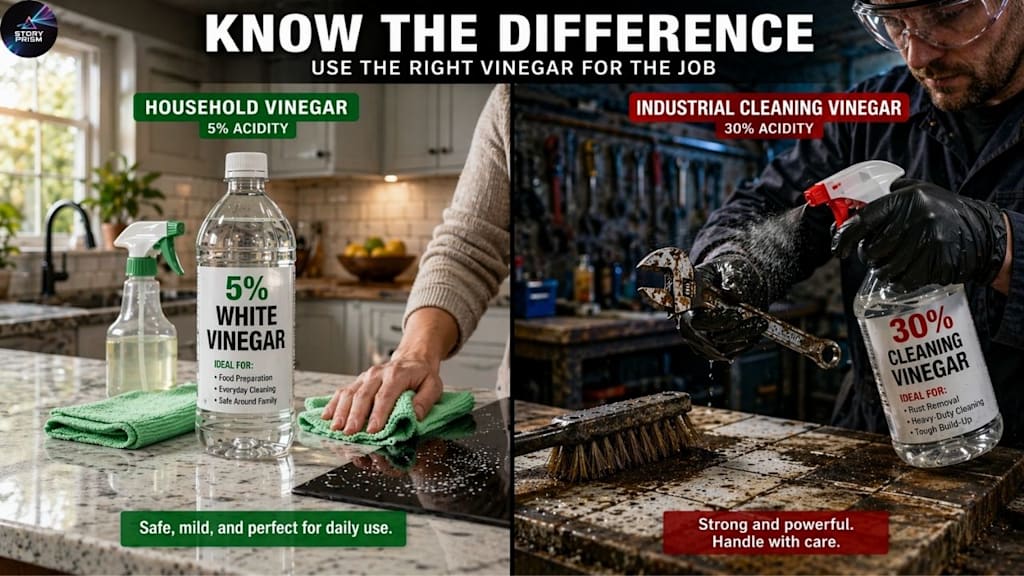
Vinegar vs 30% Cleaning Vinegar: What Most People Don’t Realize
For many years, vinegar has been promoted as a natural, affordable, and safe household cleaning solution. Most people assume that all vinegar is basically the same strength and works the same way. However, there is a major difference between the standard white vinegar found in grocery stores and the highly concentrated industrial vinegar sold in hardware stores. Understanding this difference can completely change how effective vinegar is for cleaning tasks.
The common white vinegar used in kitchens is typically around five percent acetic acid. This mild solution is safe for cooking, food preparation, and everyday cleaning. It works well for removing light stains, deodorizing surfaces, cleaning glass, and handling minor mineral buildup. Because it is relatively gentle, it is widely used in homes without requiring special safety precautions. However, its cleaning power has limits, especially when dealing with stubborn grime, mold, mildew, or rust.
On the other hand, cleaning vinegar available in hardware stores can range from twenty to thirty percent acetic acid. This is a much stronger chemical solution and is not intended for casual household use. At this concentration, vinegar becomes a powerful acid capable of breaking down tough deposits, stripping organic buildup, and even removing rust from metal surfaces. However, this strength also makes it hazardous if handled improperly. It can cause serious irritation or burns to the skin and eyes, and proper protective equipment such as gloves and ventilation is necessary.
One of the biggest misconceptions people have is assuming that household vinegar should be effective for all cleaning purposes. Many cleaning tips online simply say “use vinegar” without clarifying the concentration. As a result, people often try to clean mold, mildew, or heavy stains using weak five percent vinegar and are disappointed with the results. In reality, the solution they are using may simply be too diluted to have any significant impact on stubborn buildup.
When stronger thirty percent vinegar is used correctly, the results can be dramatically different. It is effective at cleaning outdoor surfaces such as gutters, concrete stains, and bathroom grout where mold and mildew tend to grow. It can also be used to soak tools and remove rust buildup, restoring metal surfaces more effectively than many commercial cleaners. However, it is important to note that it can also damage protective coatings and finishes on metal if left too long or used too aggressively.
The key difference between these two forms of vinegar is not just strength, but purpose. Five percent vinegar is designed for safe, everyday household use. Thirty percent vinegar is closer to an industrial chemical cleaner and should be treated with respect and caution. Mixing up the two can lead to ineffective cleaning or even safety risks.
Another important factor is cost and availability. Household vinegar is inexpensive and easy to find in any supermarket. Strong cleaning vinegar is usually found in hardware or specialty cleaning supply stores and may come with warning labels due to its corrosive nature. This alone should signal that it is not a substitute for kitchen vinegar in food-related use.
Ultimately, understanding the difference between standard vinegar and high-strength cleaning vinegar can save time, effort, and frustration. It also helps prevent misuse and ensures that the right product is chosen for the right task. While vinegar is often marketed as a universal natural cleaner, the reality is more nuanced. Strength matters, and knowing which type you are using makes all the difference in cleaning effectiveness and safety.
Because of its strength, 30 percent vinegar should always be handled with caution and treated like a chemical cleaner rather than a kitchen ingredient. Users should wear protective gloves, avoid breathing fumes directly, and never mix it with bleach or other cleaning chemicals, as this can create dangerous reactions. It is also important to test it on a small hidden area before applying it to larger surfaces to avoid damage. Dilution may sometimes be necessary depending on the task, especially for delicate materials. For most everyday household cleaning, standard five percent vinegar remains the safest and most practical option. However, for heavy duty outdoor cleaning, mineral buildup, or rust removal, the stronger version can be extremely effective when used responsibly. Understanding these differences allows homeowners to choose the correct product, improve cleaning results, and avoid unnecessary risks while maintaining a cleaner and safer environment overall and ensuring proper cleaning efficiency in different situations at home safely.
About the Creator
Enjoyed the story? Support the Creator.
Subscribe for free to receive all their stories in your feed.
Comments
There are no comments for this story
Be the first to respond and start the conversation.