
True Story Unsolved Mystery: Who Killed Joseph Ludwig?
A century-old Arizona murder with every answer buried.

The Arizona Territory had a way of attracting people who believed tomorrow might change everything. Some came chasing copper. Others followed rumors of gold hidden beneath the rocky hills surrounding Globe. Many arrived carrying little more than a bedroll, a pickaxe, and hope. Along with opportunity came gambling halls, saloons, boarding houses, and places where loneliness could be forgotten for a few hours. During the early years of the twentieth century, Globe grew into one of the busiest mining towns in the Southwest, alive with the sound of ore wagons, blasting powder, and the voices of thousands searching for a better life.
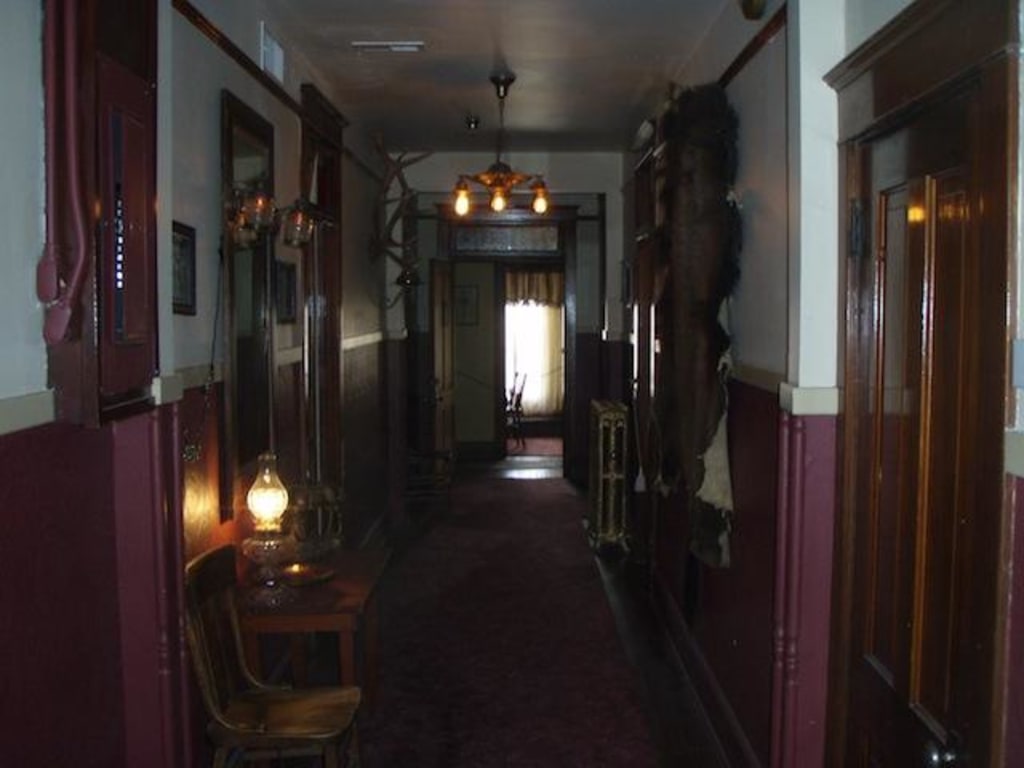
One of the town's best-known establishments stood along Broad Street. The Drift Inn Saloon opened in 1902, offering weary miners a place to drink after long days underground. Upstairs, the building housed the International House, a brothel whose narrow hallway held a row of rented rooms. Every evening strangers climbed those wooden stairs. Miners fresh from the shafts mixed with gamblers, drifters, businessmen, and travelers passing through town. Faces changed from week to week, leaving few lasting impressions. Within those walls countless stories unfolded, though one would survive long after every witness had disappeared.
During October 1906, a miner named Joseph Ludwig entered Room 18 inside the International House. Historical records reveal little about his personal life. His name survives because of the terrible events that followed rather than any account of the man himself. Like many miners working Arizona's rich ore deposits, Ludwig likely understood danger. Cave-ins, explosions, and deadly accidents remained constant companions beneath the earth. Death often arrived without warning inside the mines, though few could have imagined the fate waiting upstairs inside the Drift Inn.
Somewhere inside Room 18, Joseph Ludwig was murdered. Every confirmed account agrees upon that single fact. Everything afterward transforms an already brutal crime into one of Arizona's enduring mysteries. Rather than leaving the victim inside the room, someone removed his body from the building and carried it roughly a mile into a nearby canyon. Such an effort required time, determination, and a willingness to risk discovery while moving a lifeless body across uneven desert ground.
Once the body reached the canyon, the violence continued. Ludwig's throat had been slit. His heart had been removed. Then came the final act. Dynamite had been placed with the body before the explosive charge was ignited. The blast scattered remains across the rocky landscape, destroying valuable evidence that investigators might have used to reconstruct the crime. Even by the standards of Arizona's rough mining camps, the killing shocked residents. Murder could accompany frontier life. What happened afterward belonged to another category entirely.
Law officers faced a daunting investigation. Scientific crime scene analysis remained in its infancy during 1906. Fingerprint identification had only begun finding acceptance in American law enforcement, while forensic techniques familiar today existed only in the future. Detectives depended upon witness interviews, physical observations, and whatever evidence survived. Every passing hour reduced the chances of identifying the person responsible.
The Drift Inn presented investigators with another challenge. Patrons came from across Arizona and beyond, many remaining only a short time before moving toward another mining camp. A man could spend an evening inside the saloon, rent a room upstairs, then disappear into the mountains before sunrise. Tracking those movements proved nearly impossible. Globe itself pulsed with newcomers seeking work, making strangers an ordinary part of daily life.
Speculation soon surrounded every aspect of the crime. Some believed Ludwig knew his killer well. Others imagined an argument that spiraled into deadly violence inside Room 18. The removal of his heart inspired theories ranging from revenge to ritual, though historical evidence supports none with certainty. Every explanation eventually reaches the same obstacle. Reliable facts remain painfully scarce.
The use of dynamite offers another fascinating piece of the puzzle. Mining communities depended upon explosives every day. Experienced miners understood how to handle dynamite safely, where to obtain it, and how much force it could unleash. Destroying a body with explosives may have served several purposes. The blast could scatter evidence, conceal wounds, and complicate any effort to determine exactly how the victim died. Whether the killer acted from careful planning or overwhelming rage remains impossible to determine more than a century later.
Questions continue to surround the journey from Room 18 into the canyon. Carrying a body that distance would challenge a single person, especially across rough terrain under cover of darkness. Some historians have wondered whether more than one individual participated. Others believe a lone killer completed the task. Available records provide little guidance. Time carried away witnesses, memories, and many official documents that might have answered those lingering questions.
As decades passed, Globe gradually changed. Mining continued shaping the community, though automobiles replaced horse-drawn wagons and modern buildings rose where older structures once stood. The story of Joseph Ludwig survived every generation, passed from local historians to visitors eager to hear tales from Arizona's frontier past. Among the legends of lost mines, gunfights, and ghost stories, the events surrounding Room 18 remained especially haunting because they rested upon documented history rather than folklore.
The mystery has endured through remarkable advances in criminal investigation. Modern detectives rely upon DNA, sophisticated forensic laboratories, digital databases, and investigative tools unimaginable during Theodore Roosevelt's presidency. Even with those advances, the passage of time creates obstacles that technology alone cannot overcome. Physical evidence vanished long ago. Every person directly connected with the crime entered history many decades ago. Whatever secret lived inside Room 18 during October 1906 disappeared with them.
Joseph Ludwig deserves remembrance as more than a name attached to an old mystery. He came to Globe seeking the same opportunity that drew thousands into Arizona's mining country. Somewhere along that journey his path crossed another individual whose identity has escaped every investigation ever conducted. Room 18 became the beginning of a mystery. The lonely canyon became its final chapter.
More than a century has passed since that autumn evening, yet the central question remains exactly where investigators first encountered it in 1906. Who murdered Joseph Ludwig, carried his body into the Arizona desert, removed his heart, and erased the final traces of the crime with dynamite? The canyon has offered every season since then a chance to surrender its secret. Even today, silence remains the only answer.
About the Creator
Nolan Reed
I write true stories, including unsolved mysteries and events that actually happened.
Enjoyed the story? Support the Creator.
Subscribe for free to receive all their stories in your feed.
Comments
There are no comments for this story
Be the first to respond and start the conversation.