
The Supernatural Legend of the First World War: Angels of Mons
A story of divine intervention, perseverance, and hope during World War I (1914-1918)

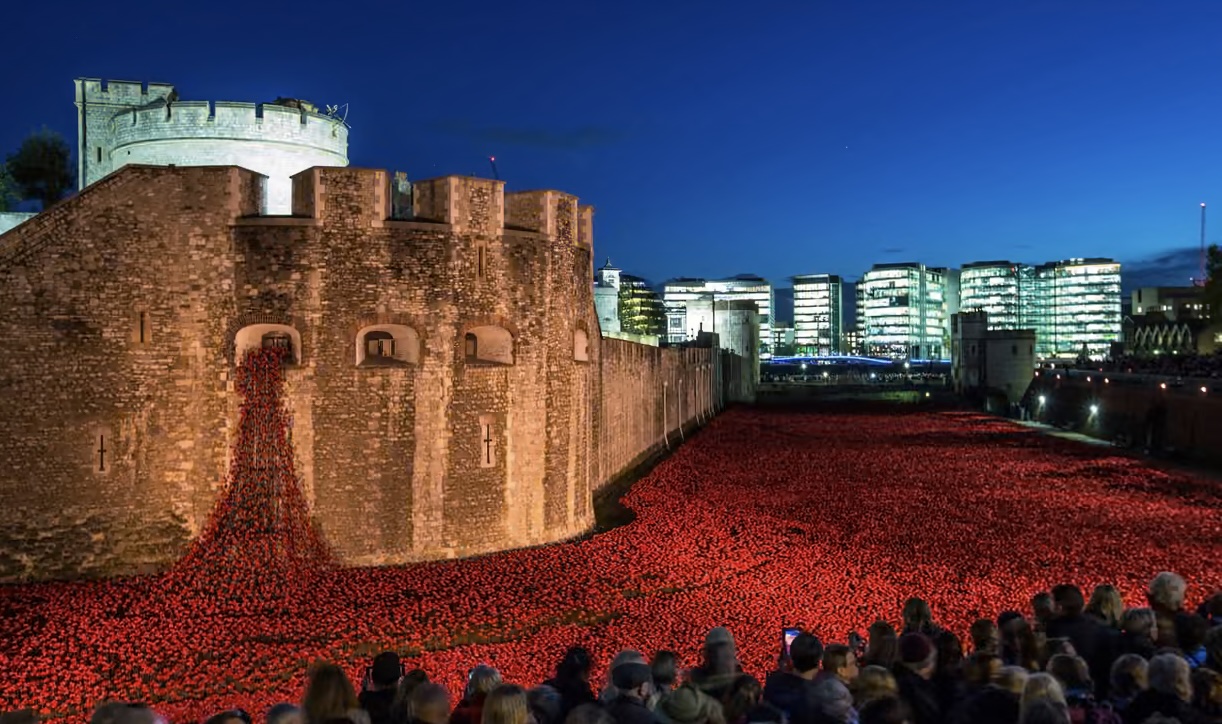
On the 11th hour of the 11th day of the 11th month, World War I ended, but victory came at a devastating cost.
Once the fighting had finished, fields of red poppies grew where soldiers had fallen. The poppy became a symbol of remembrance for all those who never made it home.
But for soldiers in the trenches, another symbol gave them strength and hope.
This is the story of the Angels of Mons.
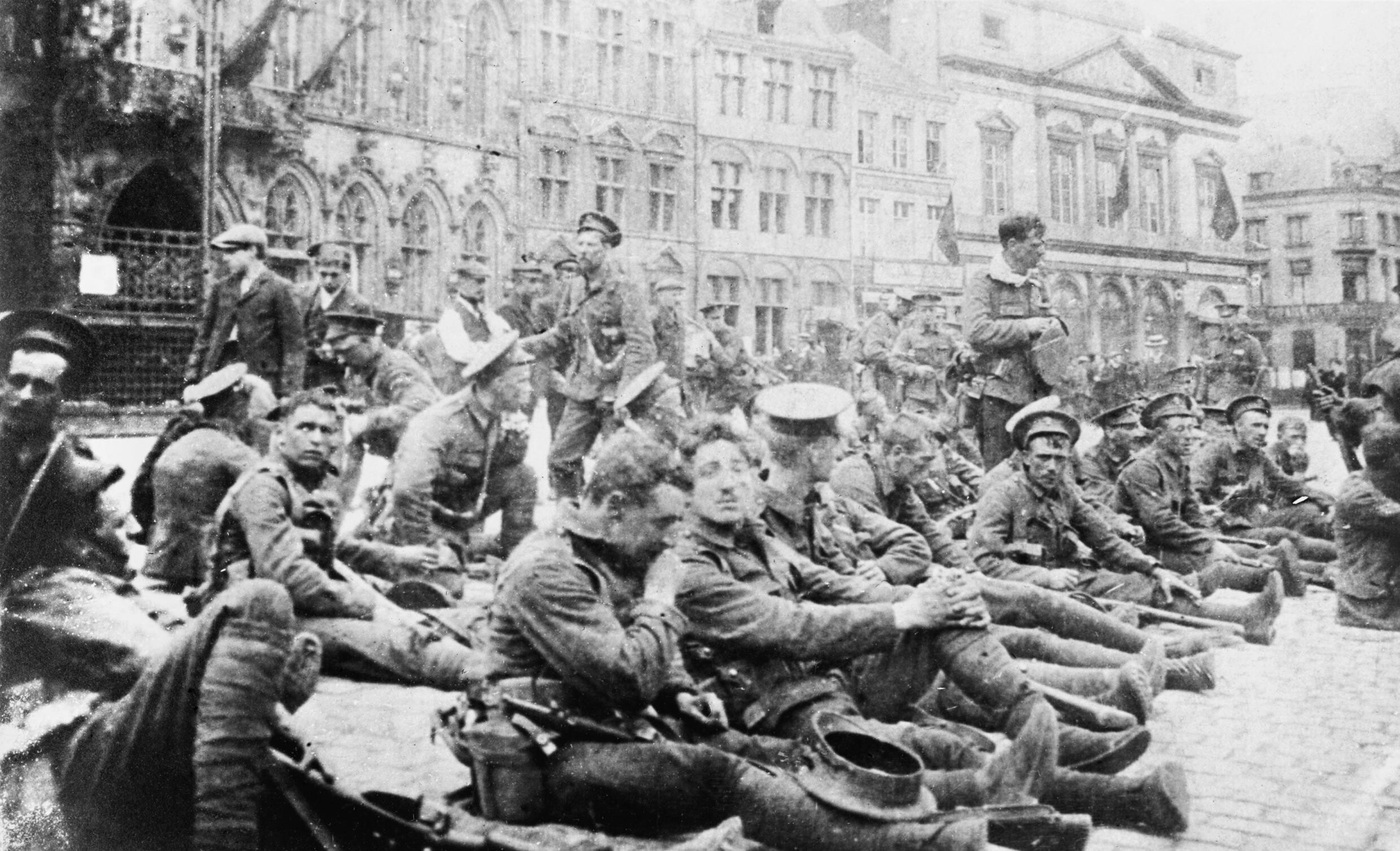
The Battle of Mons (23rd August 1914) was just a few weeks into the war, and the first battle the British Expeditionary Force (BEF) would face. Outnumbered and already starving, 75,000-90,000 British and Irish troops prepared to fight against 160,000 German soldiers.
The German Empire fought with machine guns while English, Welsh, Scottish and Irish men fought with rifles. Germany was victorious after the BEF retreated.
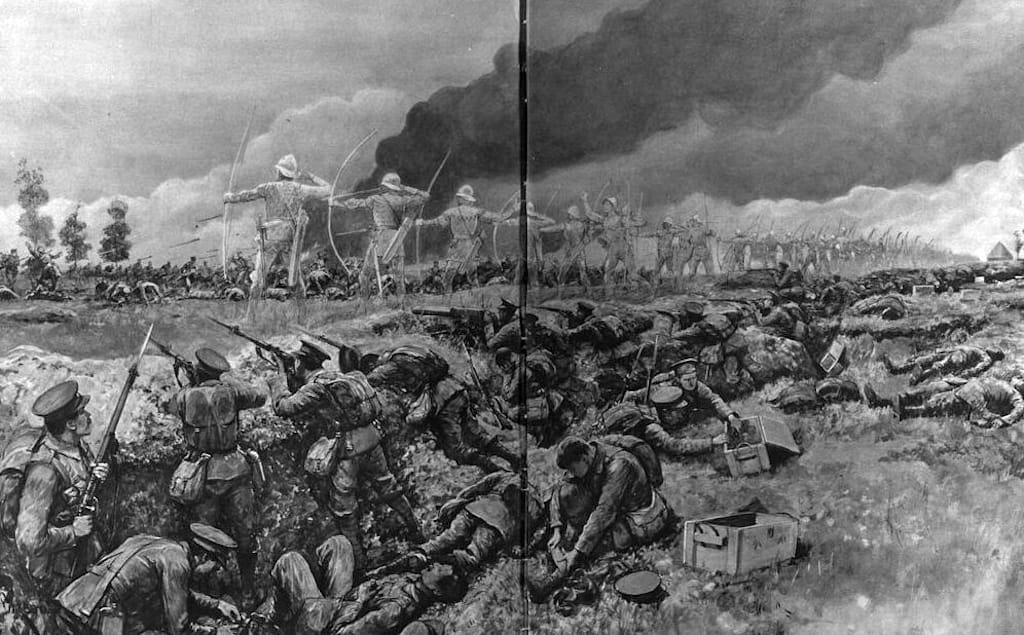
Then, when hope was lost, angelic warriors from the Battle of Agincourt descended from the heavens with Saint George himself. Armed with longbows, they protected the soldiers from defeat.
This story spread like chlorine gas through the trenches all the way home. God had sided with the Allies, and the war was morally justified.
The Church saw the Angels of Mons as divine intervention. Everyday people saw this as a miracle.
The Angels of Mons (originally titled The Bowmen) was published in September 1914 by Welsh writer Arthur Machen. He wrote the short story as pure fiction after reading accounts of the retreat, but once published and reprinted, it became its own entity.
Many began asking Machen for letters from soldiers who witnessed the event. But he couldn’t provide any.
It was a complete work of fiction, and Machen spent the rest of his life trying to dispel the rumours.
Yet the idea was enough, and Machen’s story rang in the ears of the nation, with some soldiers claiming to have witnessed the event themselves.
Eventually, some even wrote about it in letters, which people used as proof that the Angels of Mons wasn’t fictional.
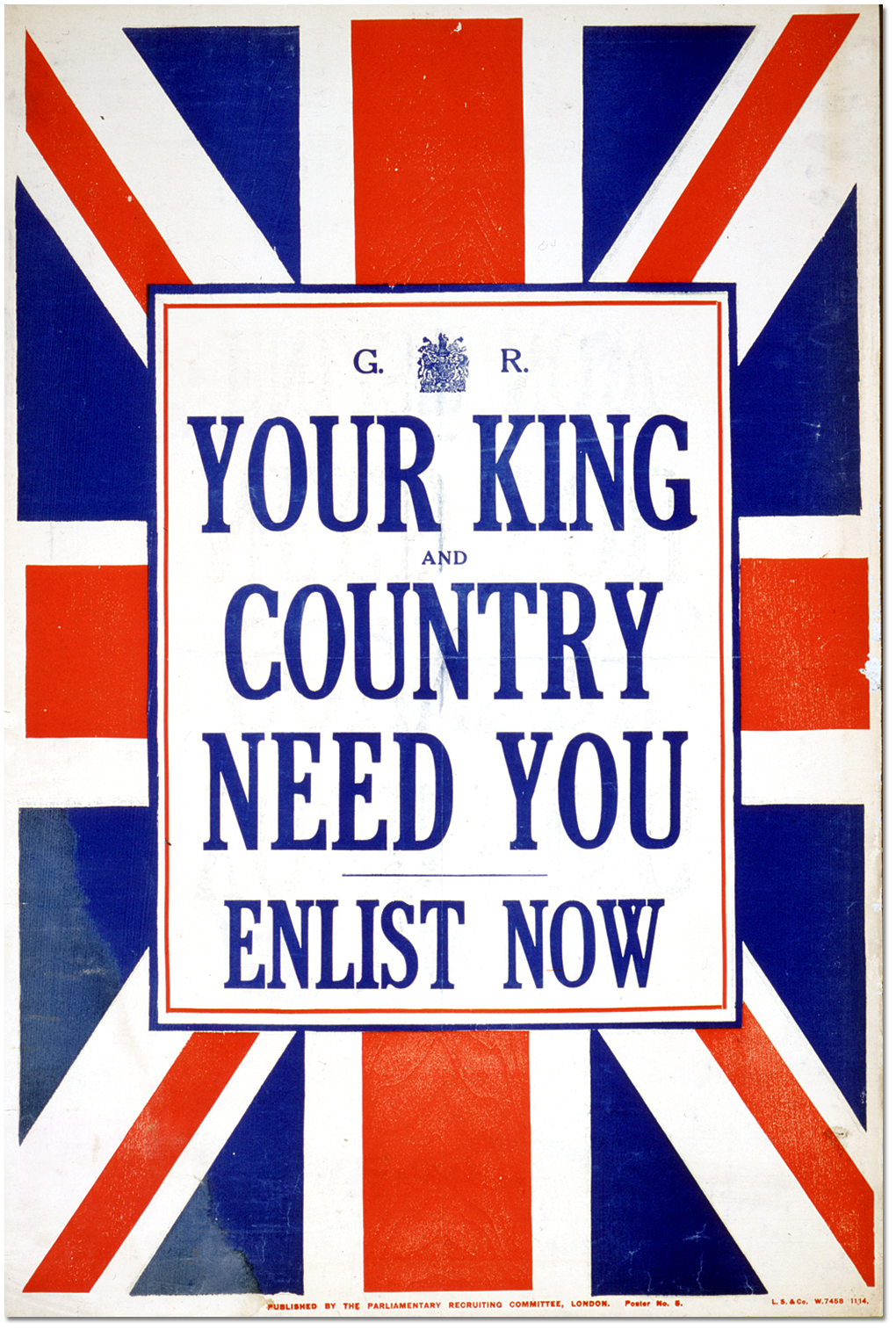
In fact, contemporary perspectives may view this story as unintentional propaganda. The horrors of the front line were heavily censored. Slogans like “your country needs you!” and shame tactics influenced young men to sign up in droves. A story like the Angels of Mons would have definitely fuelled eager young recruits seeking glory.
To understand the power behind Machen’s story, we have to remember what these soldiers were facing.
In a 1988 interview, an Irish gentleman aged 93 described the atrocities that occurred in the Great War. He was part of the first wave of men who left to fight and was present at Mons.
He said:
“The lice feasted on the living, and the rats gorged on the dead.”
Painting an even more gruesome picture, he goes on to describe a fellow soldier who had been wounded and witnessed a rat bite his cheek. Two days later, the soldier had died and had turned black. The rats were full of poison.
Starvation, chemical gases, trench foot, mounds of corpses, lice, rats, and diseases, including syphilis, were rampant, along with constant shelling, flying bullets, and minefields.
The war to end all wars was a hell on Earth.
German soldiers were told the war would last 40 days. British soldiers were told they would be home by Christmas; of course, the war lasted for four bloody years.
Machen wrote this story a week after the First Battle of the Marne, or the Miracle of Marne.
Commander-in-Chief of the British Expeditionary Force, John French, was preparing troops to evacuate back to Britain. The German Army was 25 miles outside Paris when the French army joined British soldiers along the Western Front. Together, they were 1 million.
They almost encircled the German troops. Unlike at Mons, the Germans, outnumbered by 100,000, were stifled in their advances and suffered terrible losses.
This battle had turned the tables, and the push and pull of trench warfare began.
Their first victory gave exhausted soldiers the confidence they needed. This is what makes The Angel of Mons a clever and timely work of fiction.
It became a divine symbol of hope and perseverance, boosting morale in a horrendous war humanity had never seen.
To use warriors from the Battle of Agincourt is a brilliant writing choice that tapped into the psyche of traumatised soldiers and terrified civilians.
For historical context: England and France were at war from 1337 to 1453. England had suffered great defeats until Henry V turned the tide at Agincourt.
The French vastly outnumbered the English. Against the odds, the French Army retreated in defeat. 80% of Henry’s English and Welsh soldiers were longbow archers. Agincourt was a legendary victory for England and restored hope, morale and determination in a war that lasted more than 100 years.
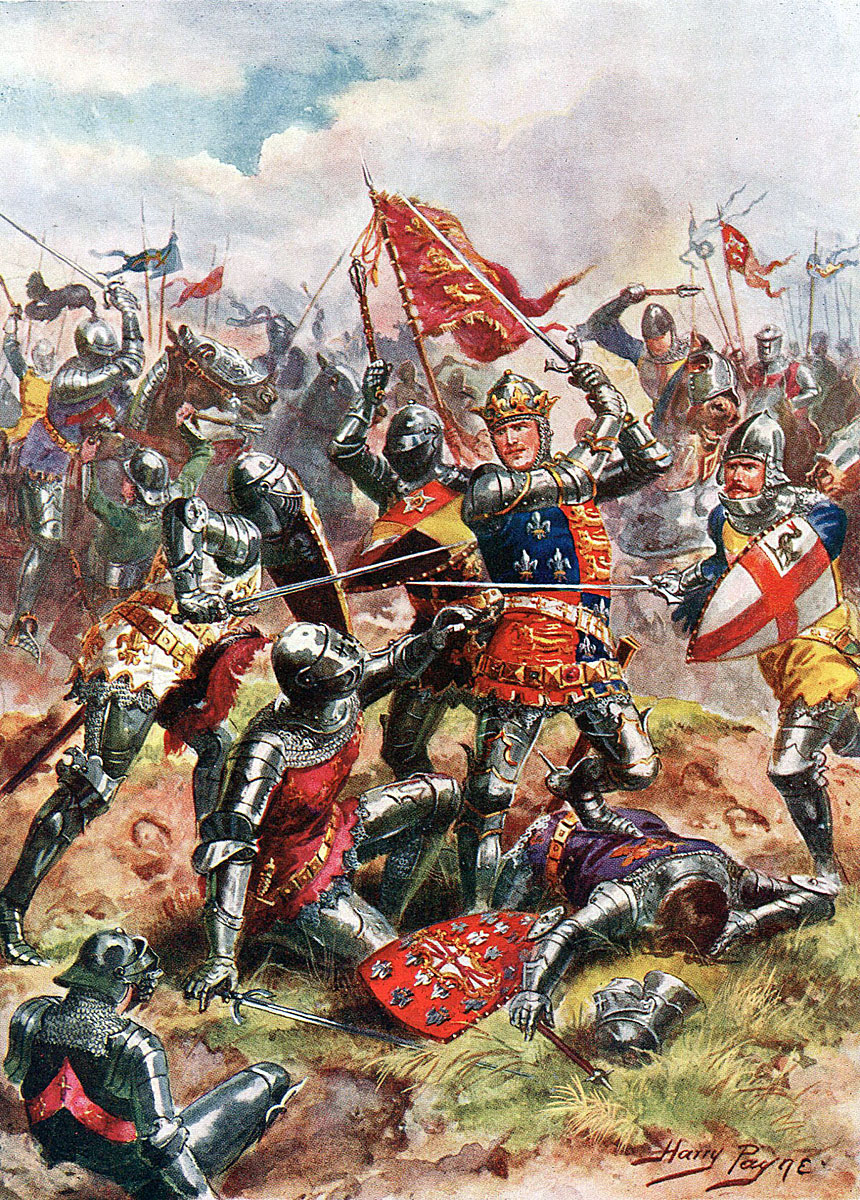
Once the war ended on 11th November 1918, poems like Wilfred Owen’s Dulce et Decorum Est revealed the true scale of the conflict. The Angels of Mons fell into military folklore.
I think about how stories like this are still used today, but in a different sense.
How history is romanticised to suit an agenda that constructs a narrative that drives us further apart rather than brings us closer together.
“Shoulder to shoulder, lest we forget.”
This year’s Remembrance Day feels different. With conflict and genocide occurring in our modern world, governments across the continent are preparing their citizens; it is hard not to feel deeply about all the lives that have already paid the price for freedom and peace.
The world we know today was forged by this terrible war, and defined by wars that came after.
It feels as if we have forgotten, or perhaps become desensitised by the horrors of conflict. I cannot help but feel great sorrow and, in some respects, an element of failure when I look at the poppy.
Over the past decade, the symbol of the poppy has been weaponised by politics. Some see it as patriotism. Others avoid wearing one altogether, fearing it links them to a particular political stance.
But in doing so, they are labelled as unpatriotic and traitorous.
By politicising the poppy, we have made it about ourselves rather than remembering the people we wear it for.
In light of this, the history of the white poppy offers a vital perspective.
This is the poppy of peace, created by the Co-operative Women's Guild, wives, mothers, and sisters, who had lost someone in World War One.
It became popular and widely distributed in 1933, as tensions in Europe rose before World War Two.
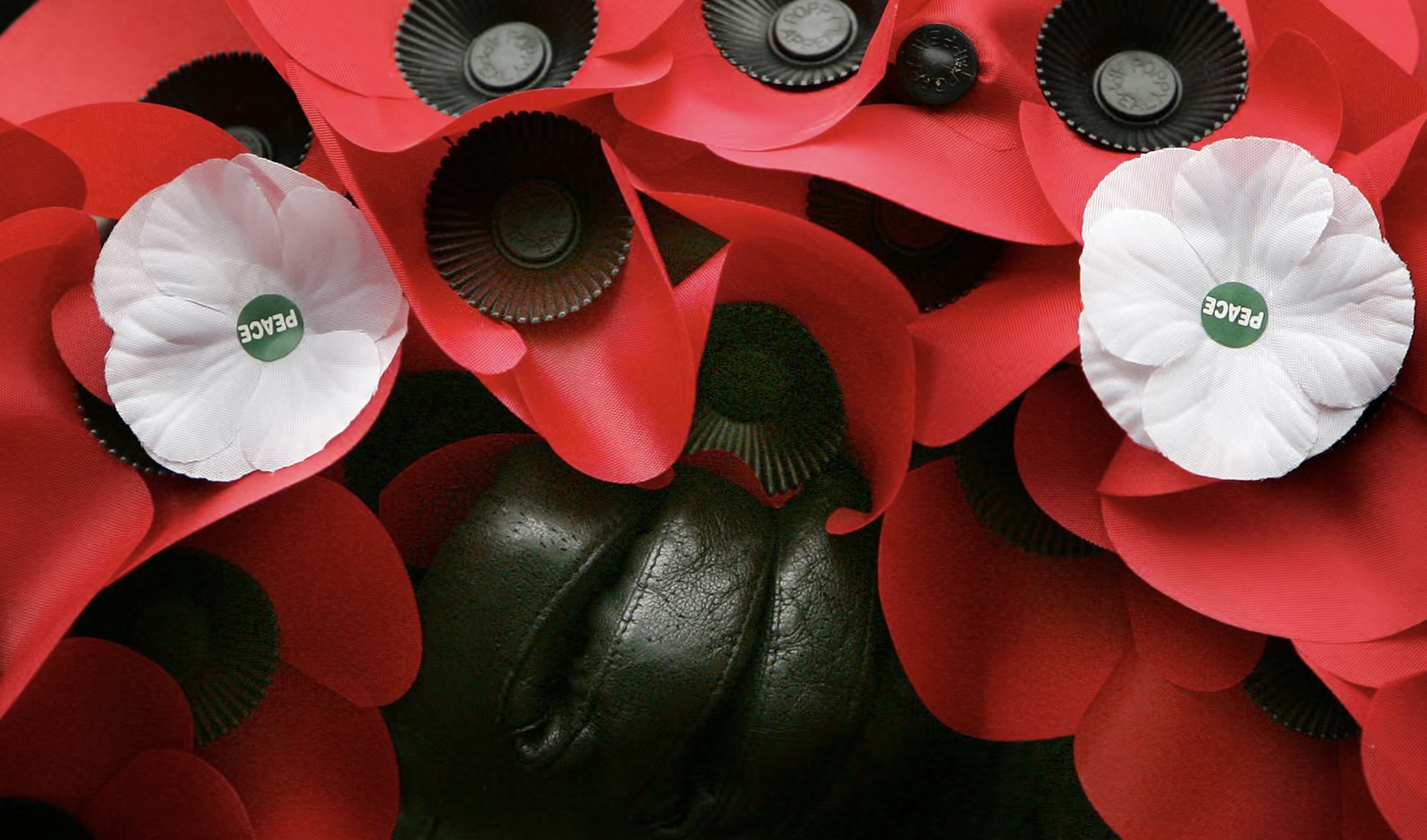
Some people view the white poppy as a controversial symbol that is taking away from the memory of those who had been lost.
I don’t think this is the case. I think it is ensuring that no more lives need to be unnecessarily lost to greedy men consumed by power, while the rest of us pay the consequences for their games of war.
30 countries fought in the First World War, along with 100 global territories and colonies. Millions of lives were lost, and we still don’t have all the correct figures to this day. There are still soldiers buried in unmarked graves with no one to grieve them.
We need a symbol of peace, of hope, like the Angels of Mons, and the white poppy is exactly that, without the spin of a narrative: a reminder of those who never came home.
A reminder that those who stay forever on the battlefield are the reason we inevitably have peace.
We must never lose hope, for we will lose ourselves.
Thank you for taking the time out of your day to read my work. If you like what I do, don't forget to like and subscribe.
SubscribeCheck out my youtube video that covers this story!
About the Creator
Enjoyed the story? Support the Creator.
Subscribe for free to receive all their stories in your feed.
Comments
There are no comments for this story
Be the first to respond and start the conversation.