
The Strange Discovery of the Hexham Heads
And an intrusive werewolf?

I think at some point in our childhoods, we’ve all tried digging in the garden for treasure. Yet despite our efforts to find the pot of gold at the end of the rainbow, we would find pointless things like dusty old bottle caps or one orphaned button.
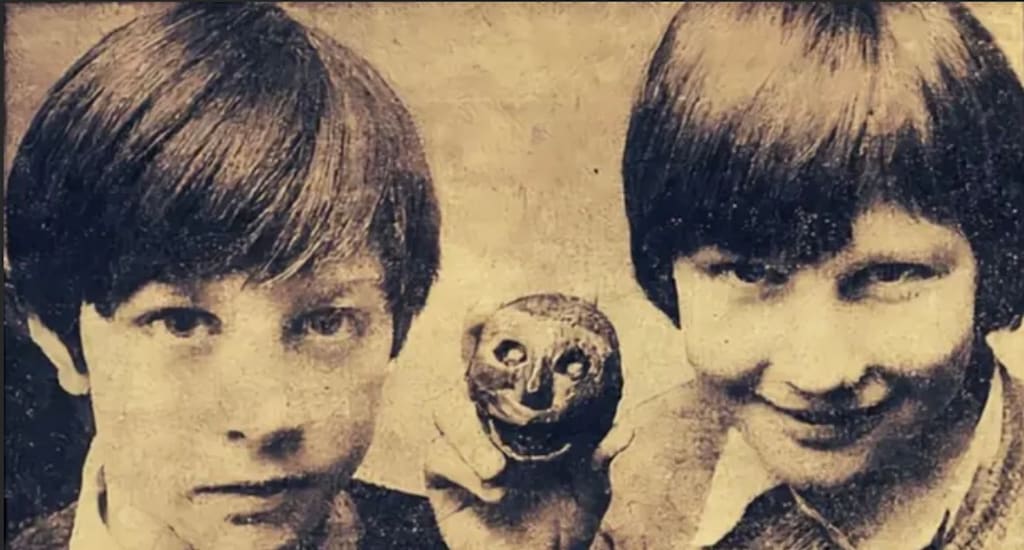
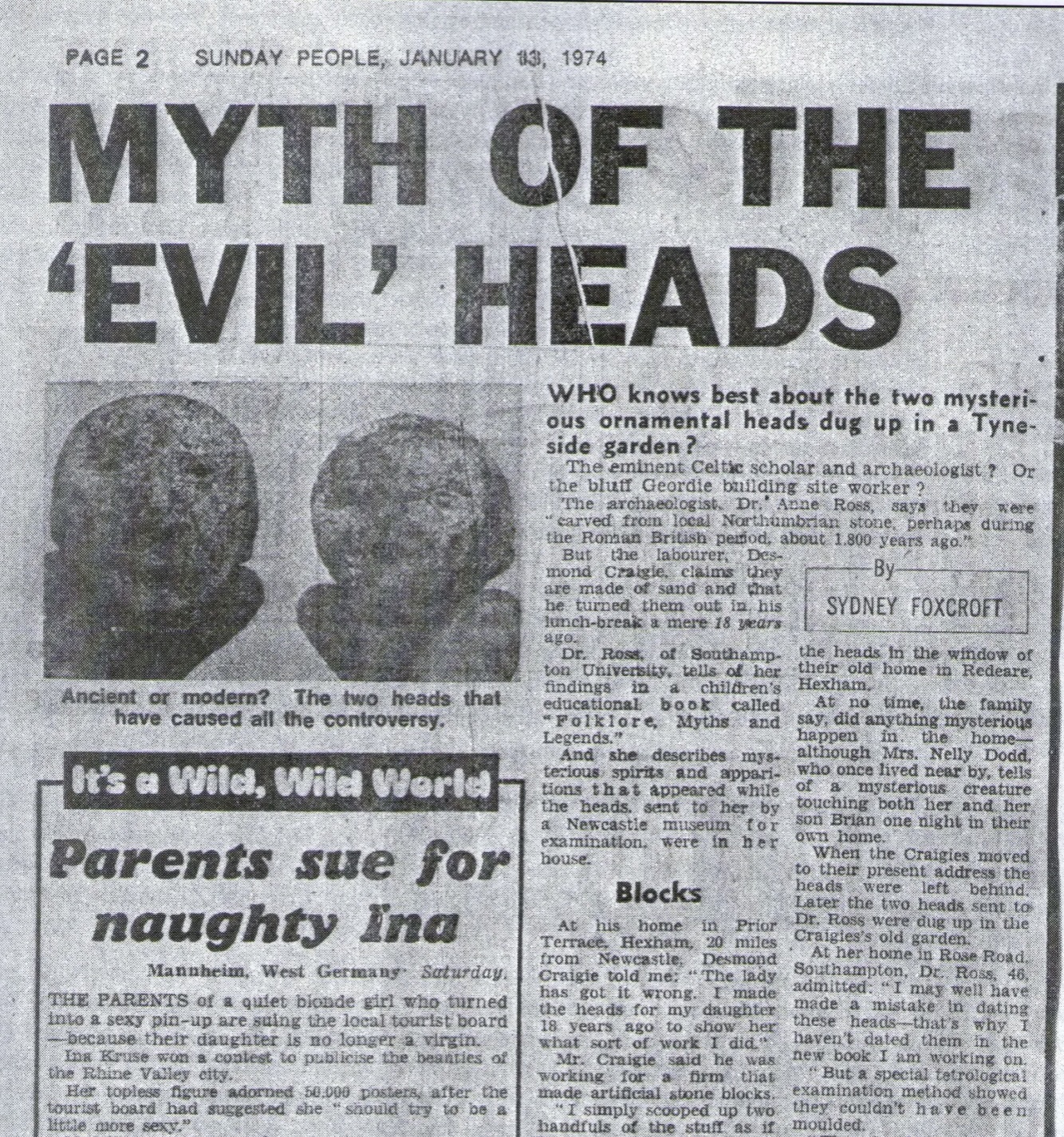
For Colin and Leslie Robson, their hard work paid off when the two boys unearthed a pair of stone head carvings in their back garden in Hexham, Northumberland, in 1971.
The Legend
Part One
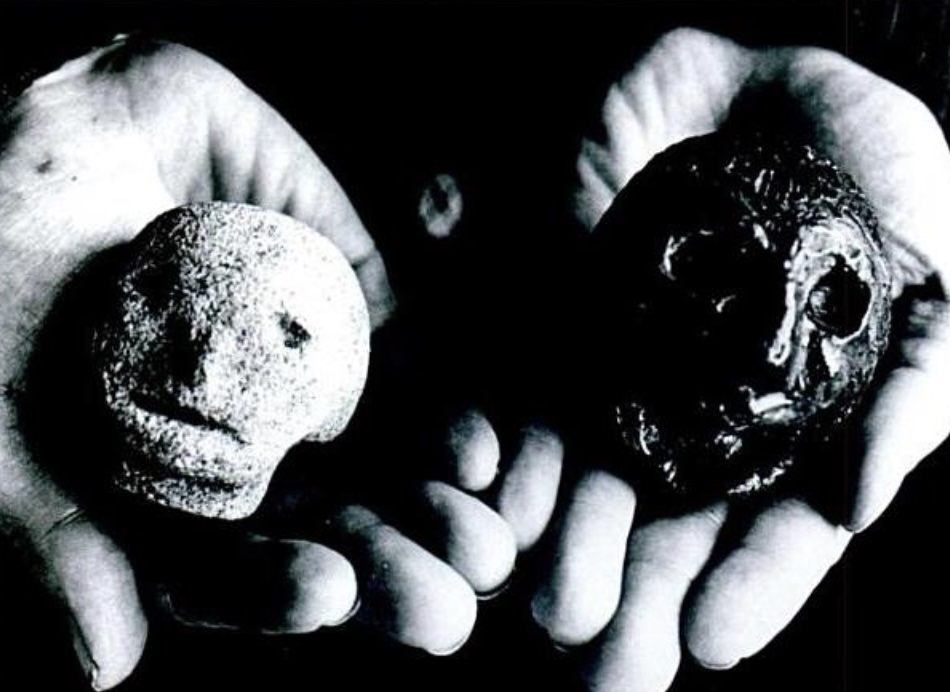
The brothers eagerly presented the two tennis ball-sized heads to their mother, who then showed the next-door neighbour. Unbeknownst to them, their 6cm discovery would spark a series of unusual paranormal activity, throwing them and their neighbour into a strange mystery.
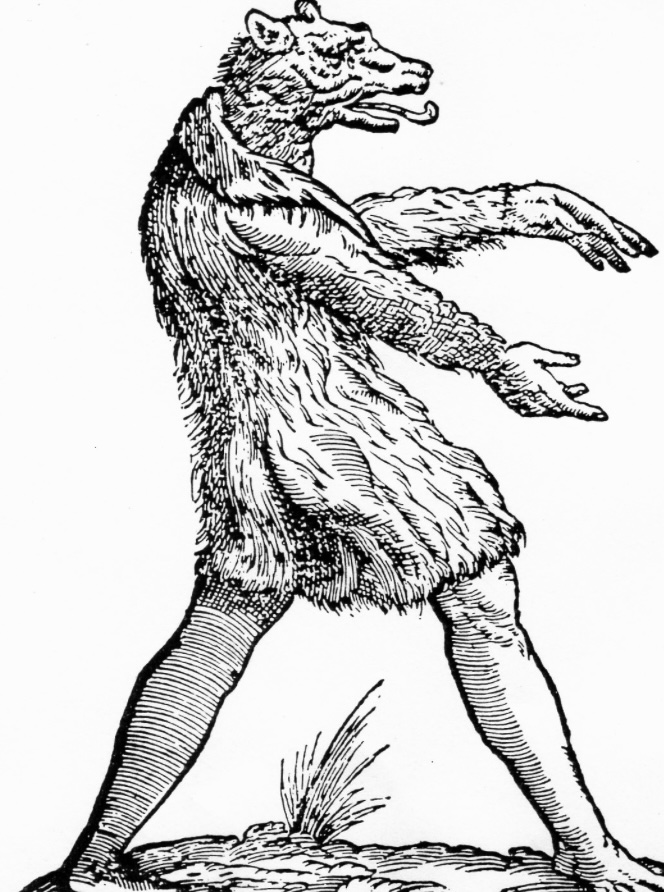
Bottles started flying around rooms, children’s hair was pulled in their sleep, and the neighbour woke to the presence of a half-man, half-wolf figure.
Part Two
After a while, the talk of the town captured the attention of Celtic folklorist Dr Anne Ross, who acquired the heads and took them back to the University of Southampton.
Completely bewitched by the pair, she brought them into her home, unknowingly inviting the half-man, half-wolf figure, who became known as the Werewolf of Allendale, along with them.
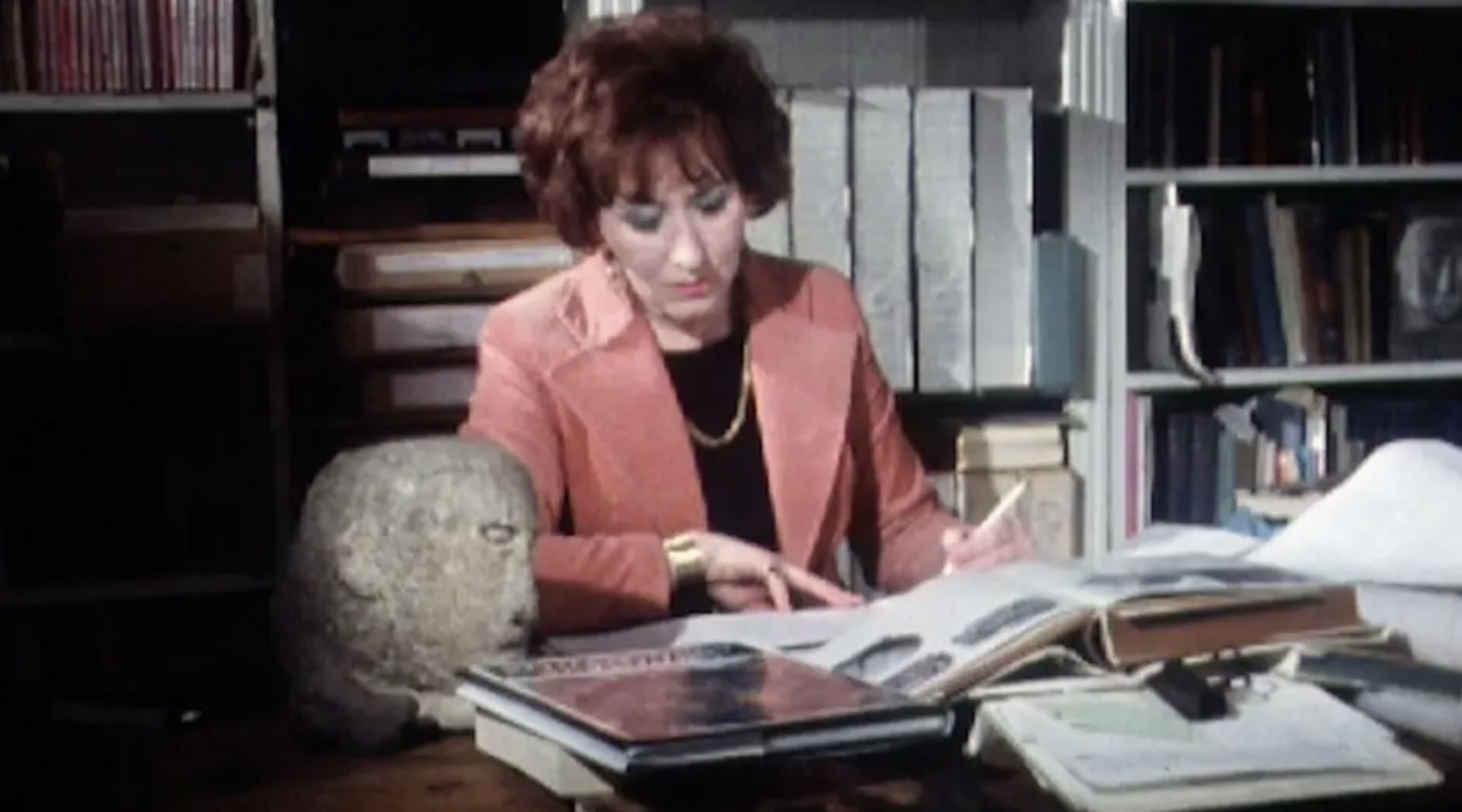
It wasn’t long before Dr Anne Ross woke one night to an odd chill in the air. When she looked towards her bedroom door, she saw a large, dark, hair-covered creature standing over six feet tall. From the waist down, it was human, but the upper body was distinctly wolf-like.
When it left the room, she instinctively followed it down the stairs as it vanished into the kitchen. She claimed she was terrified by the presence, but didn’t feel the fear until it had gone.
On another occasion, her teenage daughter was home alone when she also saw the black half-wolf figure leap over the bannister from the stairs, out the back door and over the gate into next door’s garden.
Part Three
The family experienced a series of door slamming and objects moving on their own, prompting Dr Anne Ross to give away her entire stone head collection to the British Museum.
For a short while, the heads were on display, but it wasn’t long before staff reported seeing a half-human, half-wolf figure wandering the halls. They removed the heads from the exhibit and placed them in storage, hoping to stop the strange disturbances.
In 1977, chemist Don Robins, an ancient earth mysteries enthusiast, ‘rescued’ the stones and began testing his theories. He agreed with Dr Anne Ross that the heads were sandstone and quartz.
Oddly, only one strange thing occurred to Robins while the heads were in his care. He claimed his dog became very agitated and bit one of the heads. He did not see the lupine man.
Robins gave the heads to a private collector who wanted to remain anonymous and away from media attention. As of today, their location remains unknown.
The Theories
Since then, many people have put forward theories. Some focus on the origins of the heads, others concentrate on the wolf-man and the eyewitness accounts, while the question of where the heads may be today looms in the background.
A Hoax
First stop on the hypothesis train is the hoax theory. Based on the carving style, Dr Anne Ross dated them roughly 1,800 years old. She concluded the heads were of Celtic origin, for two reasons:
Celts believed the head was the seat of the soul and source of divine power, and it could have been used as tools/offerings in sacred rituals.
The heads were made from natural materials: sandstone and quartz.
Newcastle University argued against Dr Anne Ross’ findings, stating the heads were man-made, not naturally sourced. At the height of the media circus, truck driver Desmond Craig claimed he made the heads in 1956 for his daughter. He said he had made three heads and wasn’t sure what had happened to the other one.
However, when asked to replicate the ‘toys’, as he called them, he couldn’t carve them to the same calibre as the Hexham pair. As a result, this outcome, to some, is evidence that he is not the creator. Accidentally elevating the mystery even further.
Local Folklore
Next stop is the wolf coming back for vengeance. In 1904, a real, massive black wolf escaped from a local menagerie and terrorised the livestock of Northumberland, evading traps and hunters like a ghost until it was hit by a train. It became known as the Wolf of Allendale.
The wolf's head was above the entrance of the railway station until the late 1930s. When stories of the wolf-man surfaced, people believed the head invoked the wolf and had returned for the rest of his body.
The Stone Tape Theory
Another stop on the theory train is the stone tape theory, proposed by Don Robins. As a chemist, Robins was fascinated by the head’s materials. Places and environments rich in minerals (like quartz) are magnetic for the residual energy.
Quartz is famous for its piezoelectric properties and can generate an electrical charge when under mechanical stress or pressure. Robins believed that the strong energy would replay in the right conditions.
Roman Empire in Celtic Britain
Going further down the track is the Syrian/North African/Roman Empire theory. This theory is where history and folklore intertwine. Theories point to Celtic Britain under Roman occupation.
The Roman Empire had soldiers from all over its region, including Mesopotamia and Africa. Hexham is also close to Hadrian's Wall. Soldiers from these regions were stationed along the wall.
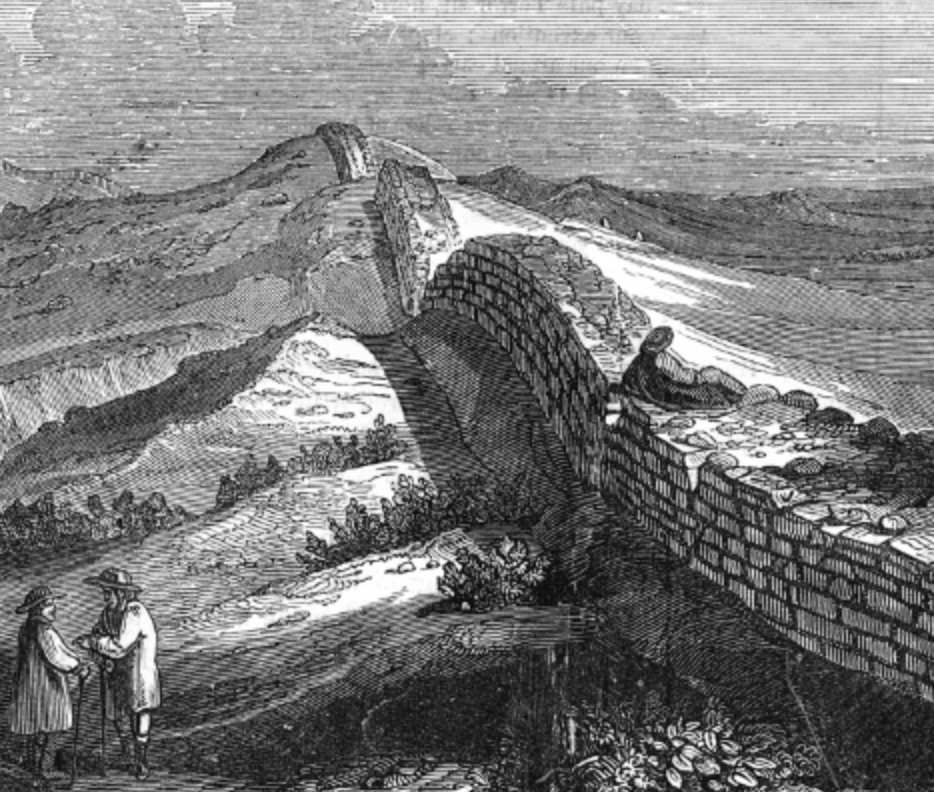
Soldiers from modern-day Algeria and Morocco, known as the Moors of Aurelius, were stationed at Hadrian’s Wall, along with Syrian soldiers known as the First Cohort of Hamians, who built temples and shrines to Dea Syria, the Syrian goddess.
Some suggest soldiers carried the heads as a talisman for protection, as many Roman soldiers blended their traditions and cultures with Celtic beliefs.
Disbelievers use the marvels of Rome: marble statues, colosseums, roads that still last today, mosaics, heated floors and sewers to disprove this idea. As such, people think the style of the heads is rather primitive compared to the might of Roman art, architecture, and inventions.
Others argue a soldier could have carved a small head or two with an iron chisel to remind them of home. After all, they were Roman soldiers.
The Disturbed Offering
Final stop: the offering theory. When I first heard the story, my mind wandered into the realm of the Ancient Egyptians, who depicted their gods as half-human, half-animal.
The God, Wepwawet is depicted as half-human, half-wolf. Translated into English, his name means the opener of realms. Said to clear the way for Pharaohs and their armies to pass through into the afterlife.
Funnily enough, Wepwawet is very, very similar to Celtic belief.
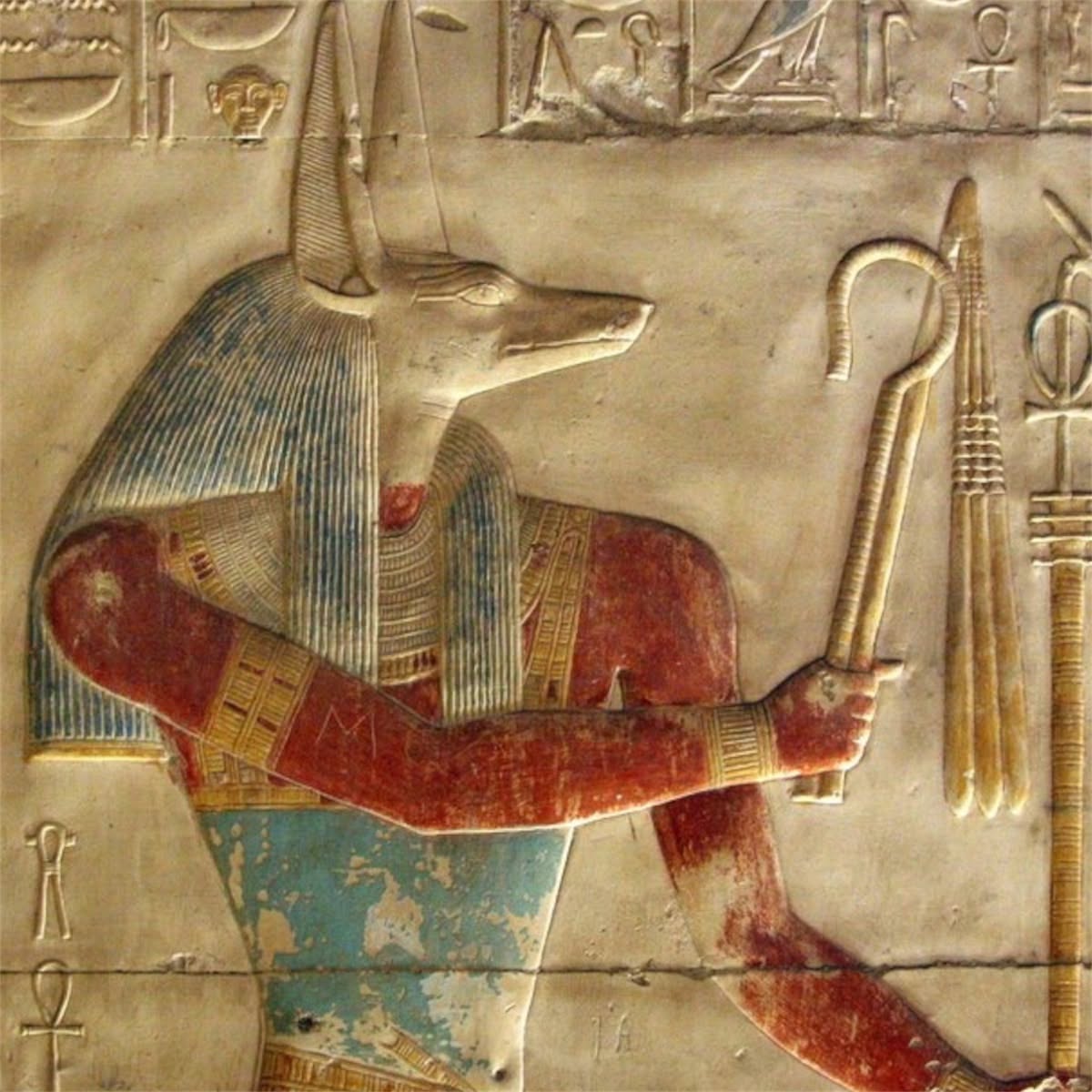
In the Celtic world, places where earth and water blend, like fens, bogs, deep springs, and misty riverbanks, were liminal spaces into the otherworld. Similar to Wepwawet, wolves were seen as the gatekeepers of this world, guardians who would guide lost souls. People would leave offerings at these places to appease the guardians, particularly stone heads, aka the seat of the soul.
Maybe this is why Dr Anne Ross felt the need to follow the lupine guardian? A common theme associated with these guardians.
And maybe that’s why the chemist never saw such a thing, because he didn’t need to be guided?
Side Note Discovery
Another Stone Head
While on a break from researching, doomscrolling and wasting time. I discovered that a group of archaeology students in 2025, in Orkney, Scotland, found a stone head, much bigger than the two small ball heads the boys found.
In Norse mythology, the god Mimir lived beneath the roots of Yggdrasil, guarding a well of cosmic knowledge. Mimir is known as a guardian of cosmic knowledge and memory. His refusal of Odin’s request to drink from the well made Odin the one-eyed god, and because of Odin, Mimir lost his head.
Odin preserved the head with herbs and dark magic while chanting runes and carried Mimir's head on his person. Mimir became his personal adviser. As such, the Nordics believed the head was the harbour of knowledge and would create stone heads (if not use the skulls of their victims) to honour Mimir and remember the dead.
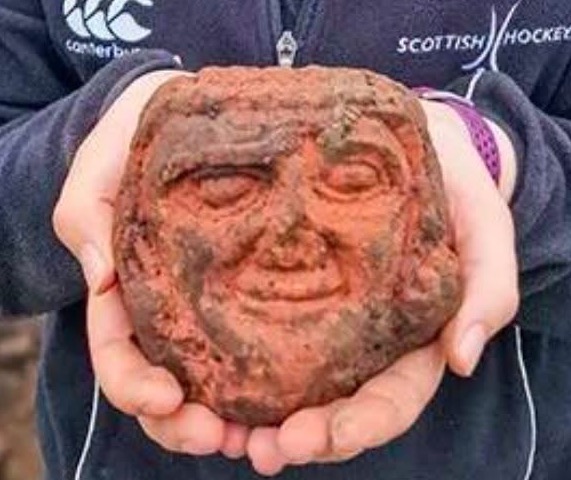
Despite obvious differences (Mimir is not a wolf, as wolves had very different attributes in Nordic lore), the purpose of stone heads in Nordic and Celtic beliefs is similar.
Specifically, the act of offerings/honorings of the guardians of sacred portals, whether they were guarding a cosmic well under the World Tree or a misty riverbank in Celtic Britain.
However, the recent archaeological find is theorised more as a play piece or a toy rather than an offering. Yet its style was probably influenced by the Celts that they encountered. I think this solidifies the Hexham Heads as, at the very least, Britannic in origin.
Final Thoughts
Growing up in Hampshire, I remember hearing stories of Werewolves as a kid, because for some reason, places like Hampshire happen to be a hotspot for these tales. In fact, there seem to be quite a few stories of werewolves or dogmen up and down the UK. And I fear I have found a new rabbit hole.
It turns out a few others, and I believe the two boys, had uncovered an offering and had accidentally disturbed the guardian it was gifted to. So maybe the local folklore was almost right, in some sense. A wolf did return to Hexham, but for other reasons.
But what do you think? Do you think it was a hoax? A Roman Soldier away from home? Or an offering that had been disturbed by the curiosity of children?
Thank you for taking the time out of your day to read my work. If you like what I do, don’t forget to leave a like and subscribe so you don’t miss the next story!
SubscribeAbout the Creator
Enjoyed the story? Support the Creator.
Subscribe for free to receive all their stories in your feed.
Comments
There are no comments for this story
Be the first to respond and start the conversation.