
The Science of Wardrobe Management: An Essential Guide for HNWI Homes in Miami
How Miami's Most Distinguished Households Curate, Preserve, and Style Luxury Wardrobes — and the Professionals Who Make It Possible

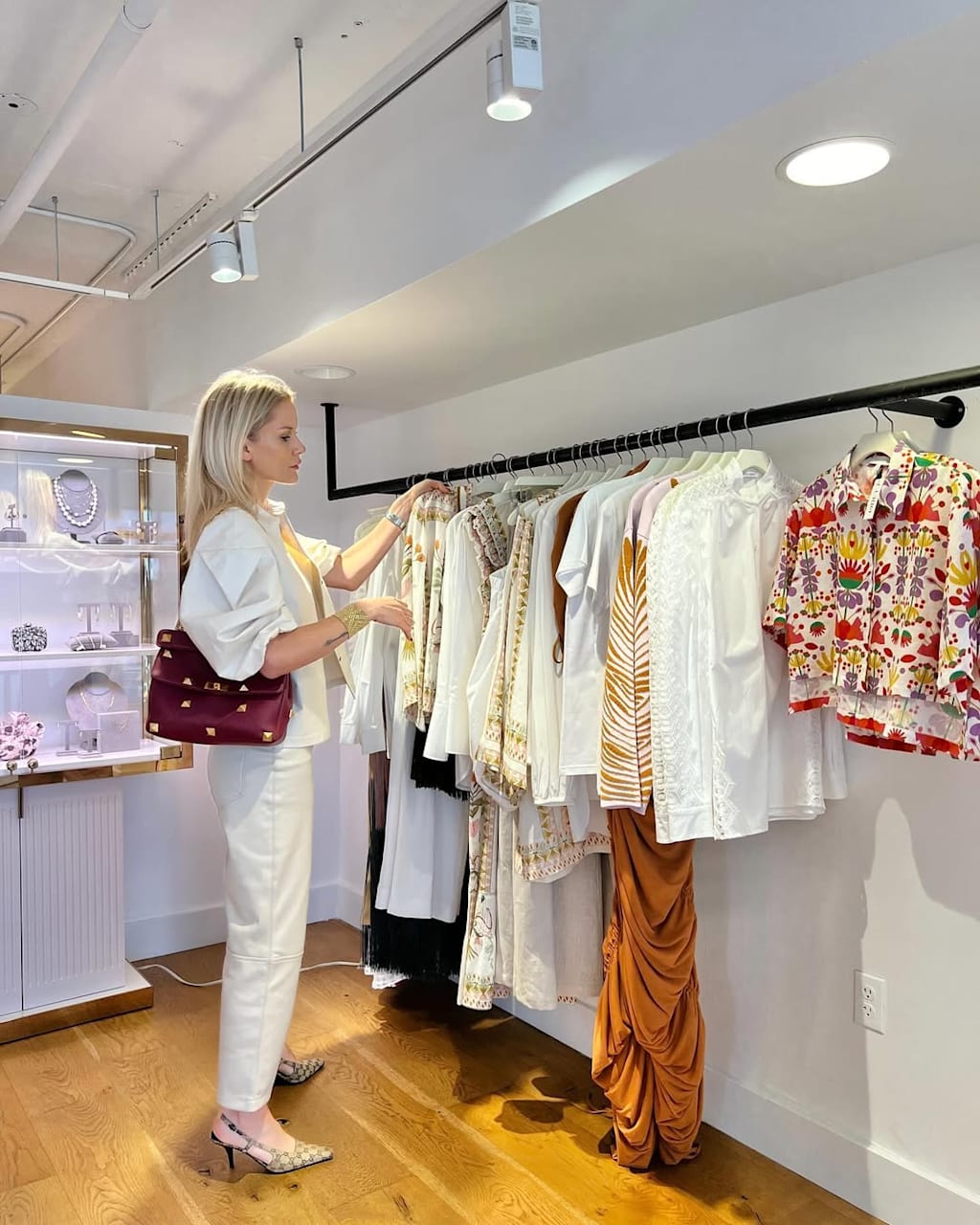
In Miami's most prestigious residential enclaves — from the waterfront estates of Star Island to the private compounds of Fisher Island and the architecturally distinguished streets of Coral Gables — wardrobe management for HNWI households is treated with the same operational seriousness as estate administration or private wealth management. For High Net Worth Individuals and Ultra High Net Worth Individuals, a luxury wardrobe is simultaneously a financial asset, a personal branding instrument, and a daily operational requirement. Managing it professionally demands rigorous systems, specialist knowledge, and — increasingly — the refined expertise of a personal stylist who understands both the aesthetic and logistical dimensions of dressing at the highest level in one of North America's most dynamic luxury markets.
Wardrobe management for HNWI households refers to the professional, systematic administration of a high-value clothing and accessories collection. It encompasses garment preservation, climate-appropriate storage, seasonal curation, digital inventory management, travel wardrobe preparation, and ongoing collaboration with personal stylists, luxury retailers, and specialist garment care providers. In Miami, where subtropical humidity and an exceptionally active social calendar create wardrobe demands unlike those in any other American city, this discipline extends well beyond organisation — it becomes an essential pillar of refined household management and a meaningful reflection of the standards maintained throughout the residence.
The Financial and Reputational Case for Professional Wardrobe Management
A luxury wardrobe is rarely discussed in financial terms, yet for many HNWI households it represents a substantial and — in select categories — appreciating asset. Bespoke Savile Row tailoring from houses such as Huntsman or Henry Poole, Hermès Birkin and Kelly bags, archive couture pieces from Chanel or Yves Saint Laurent, and limited-edition releases from Loro Piana or Brunello Cucinelli collectively constitute collections that, across Miami's most affluent addresses in areas like Bay Point, Indian Creek, and La Gorce Island, routinely reach valuations well into six and seven figures.
Without professional management, these assets deteriorate silently and often irreversibly. Improper storage accelerates fabric degradation across all natural fibers. Incorrect hanging distorts the precise shoulder construction of bespoke tailoring in ways that even master tailors cannot fully correct. Miami's subtropical humidity — consistently exceeding 70 percent through the summer months and rarely falling below 60 percent year-round — creates ideal conditions for mold growth, fiber breakdown, and colour degradation in silk, wool, cashmere, and fine cotton. The Dry Clean Super Center and specialty garment care providers such as Flair Cleaners, which operates across South Florida, regularly receive pieces that have suffered preventable humidity damage — damage that professional wardrobe management would have eliminated entirely.
Beyond preservation lies a subtler but equally significant dimension: personal presentation and reputational integrity. For executives conducting business across Brickell's financial district, celebrities navigating Miami's highly photographed social scene, and families attending charity galas at the Pérez Art Museum Miami or private events during Art Basel, the ability to dress with effortless precision across every context is a genuine professional and social advantage. A professionally managed wardrobe makes this consistency possible — not occasionally, but as a reliable daily standard.
Garment Care, Hanger Selection, and the Details That Define Excellence
The physical care of garments forms the foundational layer of any serious wardrobe management system. At the HNWI level, every detail — from the specific type of hanger used for each garment category to the precise conditions of the storage environment — carries measurable consequences for the long-term integrity of the collection. These are not aesthetic preferences. They are evidence-based professional standards applied consistently by trained wardrobe managers and personal stylists working in private households.
Hanger selection is among the most instructive examples of this precision. Solid cedar or mahogany hangers with anatomically shaped, broad shoulders — produced by specialist manufacturers such as Kirby Allison's The Hanger Project, widely regarded as the industry standard for luxury wardrobe care — are the correct choice for structured tailoring. Suits, blazers, overcoats, and formal jackets from houses including Tom Ford, Brioni, Kiton, and Zegna require the wider contour of a quality wooden hanger to preserve the precise shoulder construction and chest shape that define bespoke and made-to-measure tailoring. Thinner or inferior hangers cause irreversible distortion over time — a reality that professional wardrobe managers cite consistently when assessing newly inherited or poorly maintained collections.
Padded satin hangers serve a distinctly different but equally critical function. Delicate evening wear, silk blouses, couture dresses, and fine lingerie — from labels such as La Perla, Valentino, and Elie Saab — require a surface that eliminates pressure marks and friction damage entirely. Velvet-coated slim hangers provide the grip necessary for slippery fabrics, bias-cut pieces, and fine knitwear that would slide from standard hangers. For tailored trousers and structured skirts, clip hangers with rubber-coated grips — suspending garments from the waistband rather than folded over a bar — preserve the structured fall of the fabric and eliminate the horizontal crease marks that bar hangers inevitably create across finely woven wool and silk blends.
Storage conditions in Miami demand particular environmental attention. Climate-controlled wardrobe environments, maintained between 65°F and 70°F with relative humidity regulated between 45 and 55 percent, are the accepted professional standard for luxury garment preservation — a specification aligned with the storage guidelines issued by the Costume Institute at the Metropolitan Museum of Art and adopted by leading private conservators. All couture and investment-grade pieces are housed in breathable, acid-free garment bags — never plastic covers, which trap moisture and accelerate the yellowing process in light-coloured and natural-fiber garments. Cedar blocks and sachets, sourced from suppliers such as Woodlore and replaced every three to six months, provide natural humidity absorption and moth deterrence calibrated to South Florida's climate demands. Luxury footwear — from Berluti's hand-patinated leather to John Lobb's bespoke lasts — is stored in individual dust bags with fitted shoe trees maintaining form, positioned away from direct light and heat sources that accelerate leather drying and color fading.
The Organisational System Behind Effortless Dressing
A professionally managed HNWI wardrobe is not simply well preserved — it is organised to a standard that makes dressing for any occasion immediate, intuitive, and entirely stress-free. The system behind this effortlessness is deliberate, layered, and maintained with the same consistency as any other operational system within a well-run private household.
Garments are separated by category — tailoring, casualwear, evening wear, resort wear, sportswear, outerwear, and travel clothing each occupy clearly defined sections. Within each category, a colour gradient from light to dark creates both visual harmony and practical efficiency: whites, creams, and pastels lead; mid-tones follow; deep tones and blacks close each section. Applied consistently across every garment type, this arrangement dramatically reduces decision time and creates the visual order that immediately communicates professional management to anyone who enters the wardrobe suite.
A secondary organisational layer by occasion further sharpens the system. In Miami, where a principal's week moves fluidly between a Brickell boardroom, a Bal Harbour charity dinner, a Saturday afternoon aboard a private yacht in Biscayne Bay, and an Art Basel Vernissage opening at the Miami Beach Convention Center, having business, black-tie, resort, and social sections clearly defined transforms daily dressing from a logistical exercise into an intuitive process. Seasonal and travel-specific pieces — heavy outerwear for visits to New York or London, ski-specific garments, or formal winter tailoring — rotate into secondary climate-controlled storage, keeping the primary wardrobe focused and immediately navigable.
Quarterly wardrobe audits, conducted by the wardrobe manager or personal stylist, serve multiple functions simultaneously. They identify pieces requiring garment care attention — pressing, specialist cleaning, or leather conditioning. They surface items unworn across multiple seasons, prompting a considered conversation about retention, donation to organisations such as Dress for Success Miami, or consignment through platforms such as The RealReal or Vestiaire Collective. And they integrate new acquisitions — from trunk show purchases at Neiman Marcus Bal Harbour or private appointments at Chanel Miami Design District — into the existing system without disrupting its organisational integrity.
Working as a Personal Stylist for HNWI Clients in Miami
Working as a personal stylist for HNWI clients represents one of the most demanding and professionally rewarding roles within the private household service sector. The position bears little resemblance to editorial fashion styling or commercial brand work — it is a deeply operational, highly personal, and technically rigorous discipline that sits at the intersection of luxury fashion expertise, household management, and private service professionalism.
The technical foundation required is considerable and specific. A stylist working within an HNWI household must understand the care and handling requirements of every significant luxury house — the precise pressing protocols for Chanel's interlocked tweed, the storage sensitivities of Loro Piana's vicuña and cashmere blends, the hand-finishing details of Kiton's hand-stitched lapels that dictate specific dry-cleaning restrictions. This knowledge is not acquired through general fashion education alone. It develops through direct professional experience, mentorship within established private households, and ongoing engagement with the luxury industry at a level that general stylists rarely access.
Professional training pathways increasingly recognised within the HNWI private service world include programmes offered by the British Butler Institute, the International Butler Academy based in the Netherlands, and the Starkey International Institute for Household Management in Denver — all of which incorporate wardrobe management and private styling modules into their private household staff training curricula. In the United States, the Association of Image Consultants International (AICI) provides a recognised credentialling framework for personal stylists, with its Certified Image Professional (CIP) designation increasingly cited by luxury household staffing agencies as a preferred qualification for candidates entering HNWI private service roles.
In Miami's specific social and cultural context, a personal stylist working for HNWI clients must maintain active relationships with the personal shopping teams at Neiman Marcus and Saks Fifth Avenue at Bal Harbour Shops, the private client services at the Chanel, Dior, and Louis Vuitton boutiques in the Miami Design District, and the bespoke tailoring ateliers serving South Florida's executive and entertainment community. Awareness of what each major house produces season to season — and how new pieces integrate with an existing collection — is part of the continuous professional responsibility the role demands.
The interpersonal dimension is equally defining. Wardrobe managers and personal stylists in HNWI households operate with access to the most personal dimensions of a principal's daily life. They are trusted with knowledge — about schedules, social relationships, physical insecurities, and professional ambitions — that extends well beyond the wardrobe itself. Absolute discretion, unwavering professional composure, and a service orientation calibrated precisely to the individual preferences and rhythms of each household are the qualities that distinguish professionals who sustain long-term placements from those who do not. In Miami's closely connected luxury community, where reputation moves quickly and privacy is fiercely protected, these personal attributes carry professional weight equal to any technical qualification.
Technology and the Digital Wardrobe
The integration of digital inventory management into luxury wardrobe care has materially elevated the operational standard expected by HNWI households. Comprehensive digital catalogues — every item photographed against a neutral background, tagged by brand, category, colour, occasion, season, purchase value, and care instructions, and maintained within platforms such as Stylebook Pro or the enterprise-level wardrobe management systems used by luxury hotel groups — are increasingly the baseline expectation rather than the innovation in Miami's most sophisticated private residences.
These systems allow wardrobe managers to prepare outfit selections in advance of events, generate precise packing lists for private jet travel, track cost-per-wear across an entire collection, and maintain wardrobe continuity across multiple residences. For Miami's internationally mobile HNWI community — regularly dividing time between South Florida, the Hamptons, European capitals, and the Middle East — digital inventory management ensures that the correct pieces are always in the correct location without duplication errors or last-minute gaps.
Smart environmental monitoring now operates alongside these digital systems. Calibrated humidity sensors, UV-filtering wardrobe lighting systems from manufacturers such as Ketra and Lutron, and integrated temperature management within the wardrobe suite infrastructure protect the collection at the environmental level while the digital layer manages it operationally. Together, they represent a standard of wardrobe management that treats the collection with the technological seriousness applied to every other significant asset within a well-administered private household.
A Standard That Speaks for Itself
Wardrobe management, at its most refined, is an expression of the values that define a distinguished household. The precision of the storage systems, the quality of the garment care, the depth of the stylist's expertise, and the seamlessness of the daily service collectively communicate a standard that extends well beyond visible luxury into genuine operational excellence.
For Miami's HNWI and UHNWI community, the science of wardrobe management and the professional discipline of working as a personal stylist for high net worth clients represent two dimensions of the same elevated commitment. As Miami continues to consolidate its position among the world's foremost addresses for high-net-worth living — drawing international wealth, cultural influence, and the most demanding household expectations to its shores — the professionals who manage, curate, and style within its most distinguished homes will remain among the most valued, most trusted, and most sought-after members of the private service world.
About the Creator
Elsab Styling
At ElsaB Styling, we specialize in providing bespoke, high-end personal styling services for high-net-worth individuals, CEOs, executives, and VIPs.
Enjoyed the story? Support the Creator.
Subscribe for free to receive all their stories in your feed.
Comments
There are no comments for this story
Be the first to respond and start the conversation.