
The Rise of Private Wardrobe Services Among High-Net-Worth Households
Inside Miami's growing market for treating personal style as a managed asset, not a weekend task

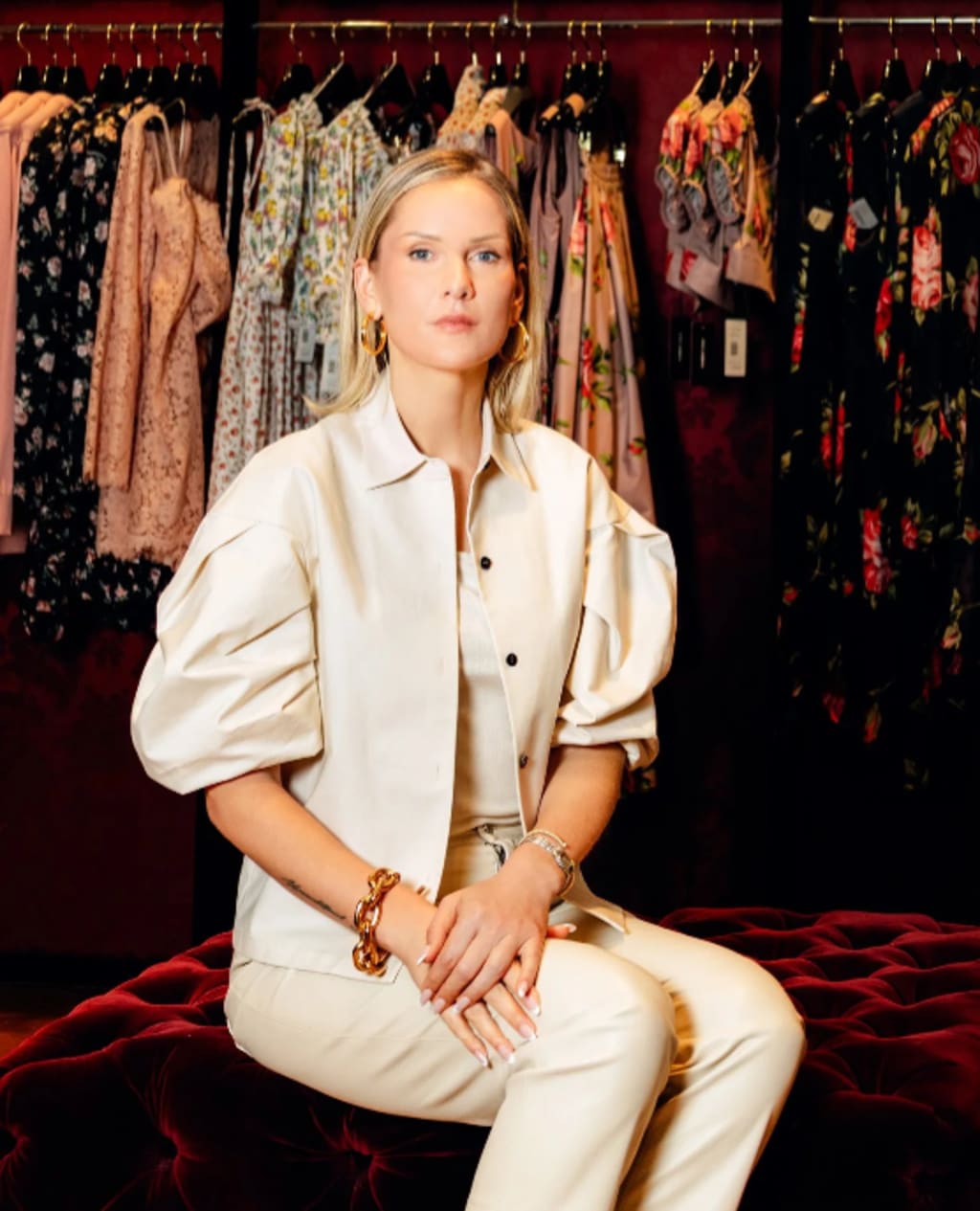
Among Miami's affluent households, clothing has quietly become something closer to a portfolio than a closet. Where stylists were once hired for a single gala or a red-carpet appearance, a different kind of professional has taken root: the private wardrobe consultant, retained year-round to organize, maintain, and continually refine a household's clothing collection. The shift reflects a broader pattern in how wealth is managed — extending the logic of asset oversight into a part of daily life that was, until recently, left to individual habit.
A private wardrobe consultant is a professional retained to curate, organize, and maintain a client's clothing collection on an ongoing basis, rather than for a single event. The role spans inventory management, seasonal rotation, sourcing, alterations coordination, and travel packing, treating a wardrobe as a long-term personal asset rather than a one-time styling project.
Wardrobe as an Asset Class, Not an Errand
The language used around this profession is telling. Practitioners and their clients speak less of "outfits" and more of "inventory," less of "shopping" and more of "acquisition strategy." This vocabulary borrows directly from wealth management, and the comparison is not accidental. High-net-worth households already employ professionals to oversee real estate portfolios, art collections, and even wine cellars — categories of personal property that require specialized knowledge, ongoing maintenance, and periodic reassessment of value. Clothing, particularly at the level of bespoke tailoring, rare leather goods, and limited-production pieces, fits the same pattern more naturally than it might first appear.
A well-maintained wardrobe of this kind can represent a meaningful financial outlay, often comparable to other categories of personal property that already receive professional oversight. Garments from certain ateliers and leather houses hold or appreciate in resale value when properly cared for, while neglect — improper storage, missed alterations, deferred cleaning — can erode that value quickly. Provenance has become part of the calculation as well. Original receipts, authentication documents, and condition records increasingly determine resale value on the secondary luxury market, and maintaining that paperwork is now considered part of a consultant's responsibility rather than an afterthought. Framing wardrobe management as asset stewardship rather than a personal indulgence has made the service easier to justify within family office budgets, where every recurring expense is expected to have a clear rationale.
What the Role Actually Involves
The day-to-day responsibilities of a private wardrobe consultant extend well beyond the popular image of someone selecting outfits. A significant portion of the work is administrative: cataloging garments by category, season, and condition; tracking which pieces require cleaning, repair, or retirement; and maintaining records of purchase dates, care instructions, and resale considerations. Many consultants now use dedicated inventory software, photographing each item and logging it much the way a registrar might catalog a private art collection.
Sourcing is another core function, but it operates differently than personal shopping. Rather than reacting to an upcoming event, the consultant works from a long-term plan — identifying gaps in a client's collection, anticipating seasonal needs across multiple residences, and coordinating directly with ateliers, tailors, and boutiques that may not be accessible through standard retail channels. This often involves working relationships with private client departments at major fashion houses, where appointments and allocations are handled outside the public retail calendar entirely.
Travel preparation has also become a meaningful part of the role for clients who divide time between cities or attend a recurring calendar of professional and social engagements. Packing for a week in one climate followed immediately by an entirely different one requires planning that goes beyond what most individuals manage on their own, particularly when the itinerary includes formal events, business meetings, and leisure stops within the same trip. Consultants frequently prepare detailed packing manifests in advance, cross-referencing each garment against the specific occasions it needs to cover, and coordinate directly with household staff to ensure pieces arrive cleaned, pressed, and ready ahead of departure.
Why Miami Has Become a Center for This Work
Miami's particular combination of climate, mobility, and social calendar has made it an unusually active market for this kind of service. The city's year-round warmth eliminates the seasonal wardrobe turnover that structures clothing management elsewhere, replacing it with a different kind of complexity: garments must perform across humidity, air-conditioned interiors, and frequent travel to cooler climates, often within the same week. A wardrobe built for Miami life has to account for fabric durability and climate control in ways that a four-season city does not require. Humidity in particular accelerates the deterioration of leather goods and certain natural fibers, making climate-controlled storage and proactive maintenance scheduling a more central part of the consultant's role here than in drier markets.
The city's residential geography compounds this. Households with primary or secondary homes in Fisher Island, Coral Gables, or Miami Beach frequently maintain closets across more than one property, sometimes in more than one country, and a consultant's inventory work becomes a coordinating function across locations rather than a single physical space. Tracking which pieces live where, ensuring duplicate essentials exist across residences, and avoiding the kind of redundant purchasing that happens when a household loses track of its own holdings are practical problems that only become visible once a wardrobe spans multiple addresses.
Miami's social calendar adds further demand. Art Basel Miami Beach, the city's expanding gallery and auction scene, and a steady rotation of philanthropic galas create recurring high-visibility occasions that reward careful, well-documented wardrobe planning rather than last-minute styling. The city's continued growth as a hub for family offices and private wealth management has reinforced this pattern, bringing with it the kind of household infrastructure — property managers, executive assistants, private chefs — that a wardrobe consultant now slots into as a matter of course. The result is a client base that treats wardrobe management less as an occasional service and more as a standing arrangement, not unlike a property manager retained for a vacation home.
From Event Styling to Ongoing Management
The professional category itself has evolved. Personal styling, as it developed through the late twentieth century, was largely transactional: a stylist was engaged for a wedding, a press appearance, or a single shopping trip, and the relationship ended once the occasion passed. The private wardrobe consultant model that has gained traction over the past several years operates on a retainer basis instead, with responsibilities that continue regardless of whether a specific event is on the calendar.
This shift mirrors changes in adjacent service industries. Concierge medicine moved from episodic visits to ongoing relationships built around prevention and monitoring. Family offices evolved from transaction-based advisory work into continuous oversight of a household's full financial picture. Wardrobe management has followed a similar arc, driven by clients who increasingly view their personal effects — clothing included — as requiring the same continuity of care as their other assets. The consultant becomes less a vendor and more a member of an extended household staff, alongside property managers, executive assistants, and household administrators.
The professionals filling these roles often arrive from adjacent fields rather than from styling alone. Many have backgrounds in luxury retail buying, where they developed an eye for quality construction and an understanding of which pieces hold value over time. Others come from image consulting or fashion editorial work, bringing a more conceptual sense of how a wardrobe should function as a coherent whole rather than a series of individual purchases. What unites them is less a shared career path than a shared set of skills: an ability to manage logistics discreetly, a working knowledge of garment construction and care, and the judgment to make acquisition decisions that hold up over years rather than a single season.
The Quiet Luxury Effect and the Economics of Discretion
The rise of private wardrobe consulting has coincided with a broader cultural shift away from overt displays of wealth and toward what has been widely described as "quiet luxury" — clothing that signals taste and resources to those who recognize the details, without announcing itself to a general audience. This shift has direct implications for the wardrobe consulting profession. Curating a collection built around subtlety, fabric quality, and fit requires more specialized knowledge than assembling logo-forward pieces, precisely because the value is harder to identify without expertise. A consultant operating in this space needs to recognize the difference between a well-cut, unmarked jacket worth a significant sum and a similarly unmarked piece of comparatively little value, a distinction that depends entirely on construction details most clients are not trained to evaluate themselves.
Discretion extends to the service itself. Clients in this category are generally reluctant to discuss household staff publicly, and the consulting relationship is typically structured to be as invisible as the wardrobe it manages. Confidentiality agreements are standard, and many consultants work exclusively through referral networks rather than public marketing, a pattern consistent with how other high-trust personal services — private chefs, household managers, security consultants — operate within this demographic. The economics of the arrangement reflect this discretion as well; pricing is rarely published, and engagements are negotiated individually based on the scope of a household's holdings rather than a standardized rate card. Some arrangements are structured as a flat retainer covering a defined set of responsibilities, while others bill against hours spent on sourcing, travel preparation, and inventory maintenance, with the structure typically determined by the size and complexity of the collection being managed.
Technology and the Professionalization of a Personal Category
Digital tools have accelerated the formalization of wardrobe management as a distinct profession. Inventory platforms originally built for retail and resale markets have been adapted for private use, allowing consultants to maintain searchable, photographed records of every garment a client owns, complete with notes on fit, care requirements, and usage history. Some platforms now incorporate basic predictive functions, flagging items nearing the end of a typical wear cycle or surfacing pieces that have gone unused for an extended period, prompting a review of whether they still serve the collection.
This technological layer has also made the asset-management framing more concrete. A documented, photographed, and valued wardrobe is easier to insure accurately, easier to incorporate into estate planning conversations, and easier to assess for resale or donation. Insurance providers serving high-net-worth clients have increasingly accommodated scheduled coverage for clothing and accessories in the same way they have long covered jewelry and fine art, a development that depends on the kind of detailed documentation a private wardrobe consultant produces as a matter of routine. What began as a personal convenience has, in this sense, become integrated into the broader financial infrastructure that surrounds significant household wealth.
A Reflection of How Wealth Manages Itself
The growth of private wardrobe consulting says less about clothing itself than about how wealth organizes the practical dimensions of daily life. As households accumulate more categories of personal property worth professional attention, the impulse to bring in specialized oversight extends further into domains once considered too personal or too minor to warrant it. A private wardrobe consultant operating in a market like Miami sits at the intersection of several established trends — the rise of quiet luxury, the multi-residence lifestyle increasingly common among the wealthy, and the steady professionalization of household management more broadly.
What makes the trend worth watching is not the novelty of paying someone to manage clothing, a practice with precedent among the wealthy for generations, but the formalization of that role into something closer to an institutional function: documented, insured, and integrated into a household's broader financial picture. As that formalization continues, the line between a personal wardrobe and a managed asset class is likely to keep narrowing, particularly in cities like Miami where climate, mobility, and a dense social calendar make the case for ongoing oversight especially clear.
About the Creator
Elsab Styling
At ElsaB Styling, we specialize in providing bespoke, high-end personal styling services for high-net-worth individuals, CEOs, executives, and VIPs.
Enjoyed the story? Support the Creator.
Subscribe for free to receive all their stories in your feed.
Comments
There are no comments for this story
Be the first to respond and start the conversation.