
The Musical Genius of Ilaiyaraaja: A Study in Musical Diversity
The Musical Genius of Ilaiyaraaja
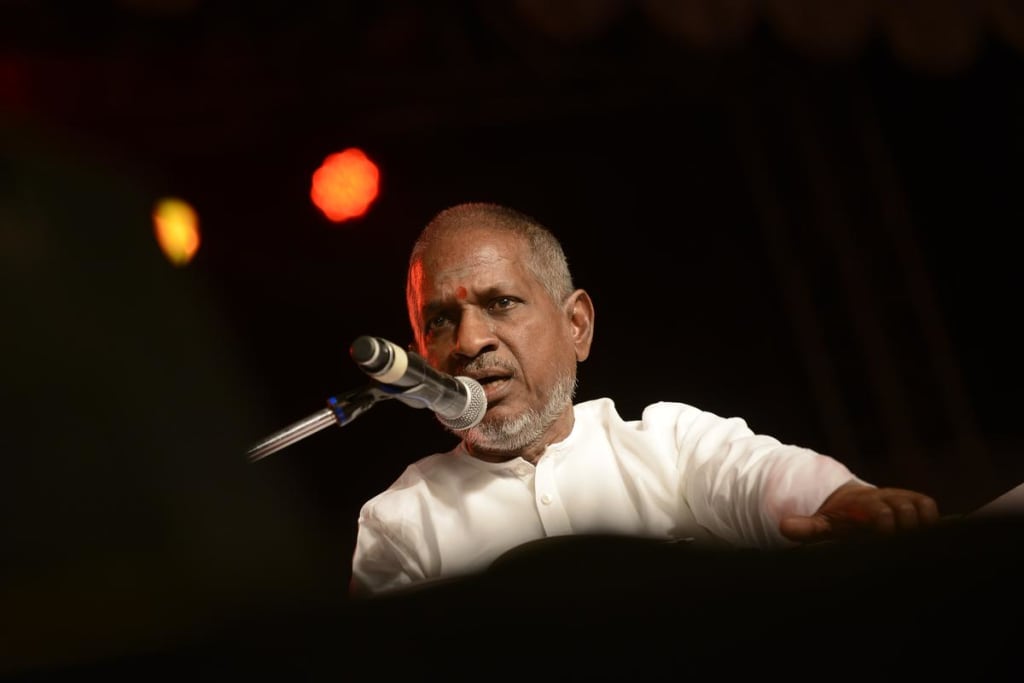
Ilaiyaraaja, often celebrated as the “Isaignani” (The Musical Genius), is a legendary figure in Indian music who has uniquely blended tradition with modernity. Over his five-decade career, he has composed over 7,000 songs, scoring for more than 1,000 films across multiple languages. But what sets Ilaiyaraaja apart is his extraordinary ability to infuse Western musical elements with deeply rooted Indian traditions, creating a sound that resonates with both classical purists and fans of contemporary music alike. This article explores how Ilaiyaraaja’s innovation in blending traditional Indian music with Western influences has made him a beloved and timeless artist.
Ilaiyaraaja’s Roots in Traditional Indian Music
Ilaiyaraaja’s journey in music is deeply intertwined with his South Indian roots. Born in a small village in Tamil Nadu, he was exposed early on to folk and classical Indian music, which he later formalized with studies in classical Tamil folk music. His grasp of Carnatic and Hindustani classical traditions is evident in his compositions, which frequently feature traditional Indian instruments like the mridangam, veena, tabla, and flute.
This rich background not only gave him a solid foundation in Indian classical music but also informed his unique style, one that respects the structures and emotions of Indian tradition. For instance, he would often use ragas to evoke specific moods and emotions, a skill that became a hallmark of his film compositions. In films such as Salangai Oli (1983) and Thalapathi (1991), he demonstrated his prowess in capturing Indian sensibilities through classical arrangements while still innovating within them.
The Western Influence: A New Wave of Sound in Indian Cinema
While Ilaiyaraaja’s understanding of traditional Indian music is exceptional, his curiosity about Western classical and contemporary music led him to create a new sound in Indian cinema. He was one of the first Indian composers to incorporate Western harmony, orchestration, and electronic instruments like synthesizers into film scores. Inspired by composers like Beethoven and Bach, Ilaiyaraaja would bring together Indian melodic structures and Western harmonic layering, creating music that felt universal yet unmistakably rooted in India.
One example of his Western influence is in the film Punnagai Mannan (1986), where he used synth pop and orchestral arrangements to create a distinctly international sound. Tracks like “Andhi Mazhai Pozhigirathu” blend orchestral strings with Indian vocals, capturing a modern sound that was revolutionary at the time. His song structures often featured chord progressions, counterpoints, and Western scales, elements not traditionally seen in Indian music.
The Fusion: Blending Indian Melodies with Western Arrangements
The hallmark of Ilaiyaraaja’s genius is his effortless fusion of Indian melodies and Western arrangements. In the film Mouna Ragam (1986), for example, his background score uses a Western orchestral framework to support a distinctly Indian melody, beautifully marrying both worlds. His work in Anjali (1990) goes even further by adding a children’s choir to the composition, blending Western choral elements with Indian folk tunes to convey innocence and wonder.
His song “Rakkamma Kaiya Thattu” from the film Thalapathi is another prime example, where he used a combination of Carnatic music, African beats, and Western orchestration. The result was a composition that transcended linguistic and cultural boundaries, becoming a hit internationally. This cross-cultural fusion made his music accessible to audiences who might not be familiar with Indian cinema, while still appealing to traditional listeners.
Innovations in Film Soundtracks
Ilaiyaraaja revolutionized the role of background scores in Indian cinema, viewing music as an integral part of storytelling rather than as mere accompaniment. His scores became so expressive that they could tell the story on their own. For instance, his background score in Nayakan (1987) is widely recognized as one of the most effective uses of music to convey emotion in Indian cinema. He used subtle, haunting tunes to reflect the film’s dark themes, often letting music take center stage in emotional scenes.
He was also one of the first Indian composers to record with a live orchestra, giving his soundtracks a richer, fuller quality. In a time when synthesized music was common, his orchestral pieces were a breath of fresh air, adding depth to the cinematic experience. His use of a full orchestra in films like Sindhu Bhairavi (1985) showcased his ability to blend Indian ragas with Western symphonic elements, leading to unforgettable scores that were deeply resonant.
Legacy: The Enduring Appeal of Ilaiyaraaja’s Fusion Music
Ilaiyaraaja’s influence on Indian music is profound and far-reaching. His innovative approach inspired a generation of composers, including the likes of A.R. Rahman, who also blended Indian and Western styles in his work. Even today, Ilaiyaraaja’s compositions are celebrated for their timeless quality, as young listeners discover his music on streaming platforms like Spotify.
The way he combined seemingly disparate styles has cemented his position as a bridge between musical worlds. His works continue to inspire modern musicians and composers who aim to create something original while respecting the traditions they come from. By uniting Indian classical motifs with Western harmonic structures, Ilaiyaraaja showed that music could be both innovative and rooted, modern yet timeless.
Conclusion
Ilaiyaraaja’s journey as a composer is a testament to his genius and versatility. By blending traditional Indian music with Western innovations, he crafted a sound that transcends cultural boundaries. His work has left an indelible mark on Indian cinema and music, inspiring countless musicians and winning the hearts of audiences worldwide. As his music continues to resonate across generations, Ilaiyaraaja remains a powerful symbol of the potential of fusion in art.
About the Creator
MusicVerse
Lets dive into the world of music.
Enjoyed the story? Support the Creator.
Subscribe for free to receive all their stories in your feed.
Comments
There are no comments for this story
Be the first to respond and start the conversation.