
The Inside Story of the Boeing 737 Max Grounding
When Regulators Step Back

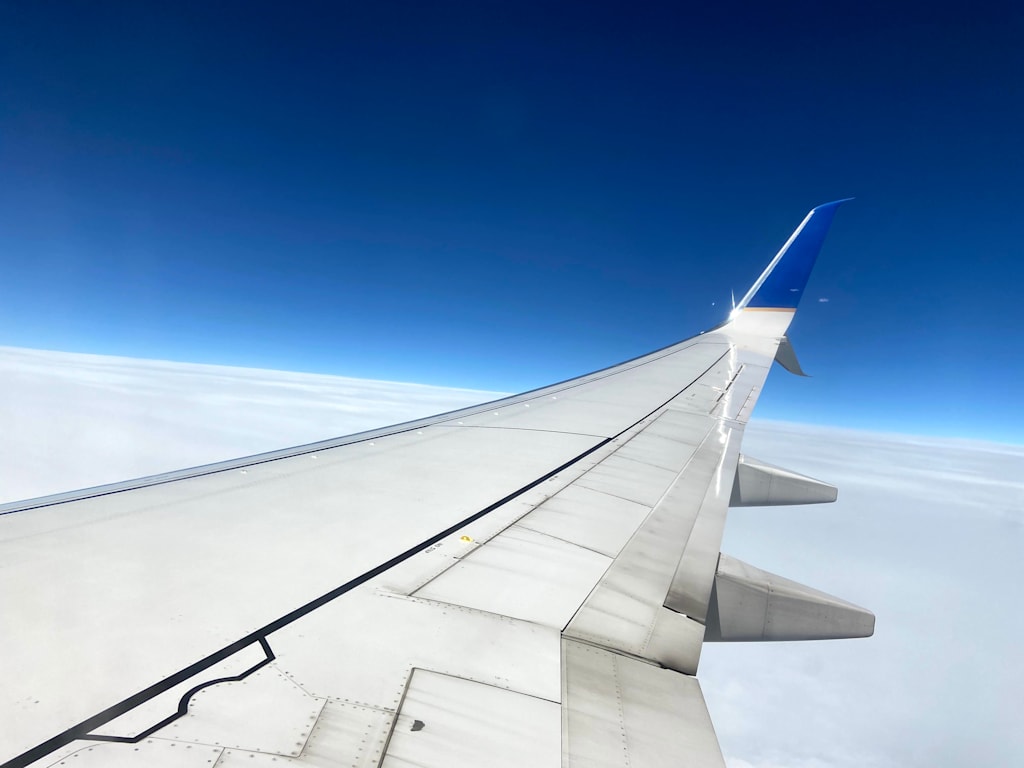
Before the Boeing 737 Max was grounded worldwide, a dangerous game of bureaucratic telephone allowed a fatal flaw to take to the skies—leaving the media, Congress, and the public to scramble to pull the plug.
Introduction
In 2019, a Boeing 737 Max 8 crashed six months after the first Boeing 737 Max 8 crash. This led to the new planes being grounded worldwide as well as in America. It is important to understand the process of how these planes were able to take to the skies and what events played out to have the planes grounded in the United States. The media, members of Congress, the Federal Aviation Administration (FAA), and President Donald Trump all played important roles in deciding to implement the order to ground Boeing 737 Max 8 and the 737 Max 9 planes.
The FAA & Boeing Relationship
The reason that the crashes occurred in the first place can be attributed to the relationship between Boeing and the FAA. In more recent years, the FAA has been giving more control to Boeing. They have allowed them to do the majority of the safety tests required to certify an aircraft. The FAA would then come in and do the final tests, which help speed up the certification of new planes. As a result, this has limited the FAA’s ability to oversee the process of producing new aircraft and led to the problem that occurred with the airplane’s automated flight-control system. This is a perfect example of the dilemma of bureaucracy that is explained by Cornelius Kerwin and Scott Furlong in Rulemaking. In the reading, they describe how there are many agencies in a government and that they require employees who are subject matter experts to efficiently run their respective fields. Due to this, the power and regulation are delegated down to the agency, and as a result, you lose some oversight capabilities. This is what happened with the FAA, they were able to relax the standards with Boeing and delegate their tasks to the company, and allow them to run their own tests.
The Media's Role
The first people to raise the question about the aircraft’s safety were the media. They first reported on the Lion Air Flight 610 crash that happened on October 29th, 2018. In the following weeks and months, major news companies began to investigate the cause and informed the public on the subject. CNN started to report on the problems and dangers that the plane could possibly have after ruling out other variables that could play into the crash. While other news sources such as Time and the New York Times identified the mistakes and shortcuts made by Boeing and the FAA. They found that Boeing had made changes to how the plane functioned. Boeing claimed that pilots should be familiar with previous versions of the aircraft and would not require additional training to combat any changes made to the 737 Max. The FAA backed this stance by Boeing; therefore, the planes were able to be piloted with minimal new training. After the first crash, the FAA released an Emergency Airworthiness Directive identifying that there were errors with the aircraft and updated the airplane flight manual with procedures that would address the conditions. This was the only action they took and they deemed that the aircraft were still safe to fly. It wasn’t until the second crash that occurred on March 10th, 2019, in Ethiopia that the media began pushing to ground the planes. They began reporting how other countries like China, Mexico, and the majority of Europe were grounding the Boeing 737 Max planes. They also reported that American flight attendants and ground crews who are part of the Association of Professional Flight Attendants called for the grounding of the aircraft. The media served as the major informal actor that pushed for the implementation of the new regulation. Aviation groups and public opinion also helped push the issue.
The Turning Point / Political Pressure
The pressure from the media, the U.S. public, and aviation communities across the world led to members of Congress to urge for the grounding of the planes. Senator Ted Cruz, the Chairman of the Subcommittee on Aviation and Space, made a statement on March 12th saying, “I believe it would be prudent for the United States likewise to temporarily ground 737 Max aircraft” he later went on to say that he would hold an investigation to find the factors that led to the crash. On the same day that Congress and the public were urging for the grounding of the planes, Boeing released a statement saying they “…have full confidence in the safety of the 737 MAX.” Boeing was a clear opponent to any decision to ground the planes due to the potential money they could lose. The FAA also released a statement where their Acting Administrator, Daniel K. Elwell, said “Thus far, our review shows no systemic performance issues and provides no basis to order grounding the aircraft. Nor have other civil aviation authorities provided data to us that would warrant action.” At this point, the FAA had been monitoring the situation and was holding off on its decision to keep the airplanes in the air, which sided with Boeing’s claims. All the events described led up to the decision on whether to ground the 737 Max series planes. The issue had moved into the hands of more formal actors such as Congress and the FAA.
The Decision-Making Process
For a policy, regulation, or an order to go into effect, it must go through a few steps. The best way to analyze how the FAA made its decision is to implement it into Thomas R. Dye’s Policy Making Process. The first step in this process is to identify the problem. In this case, there was a situation that had a high demand for an answer; the media brought this issue into the spotlight and was calling for action. Not only was the media covering it, but members of Congress and the aviation community were urging the FAA to ground the planes. The next step is agenda setting. Dye claims that this is the most important part of the entire policy making process because it is determined if the issue will be a problem to fix or something that does not need fixing. As a result of two plane crashes and the attention of multiple different influencers, this became the top priority on the FAA’s agenda. The next step was to formalize the policy. The FAA had two choices, the first was to continue what they were already doing by allowing the 737 Maxes to continue to fly and have Boeing fix any issues identified. The alternative was to follow suit with the rest of the world and ground all flights of these aircraft. The FAA had ongoing investigations on the two crashes. Their main goal was to link them together to identify if there was a similar error. On March 13th, 2019, they found new evidence from the most recent crash and compared it to satellite-based tracking and concluded there was indeed a possible similarity in the two crashes. Therefore, the FAA began to legitimize the alternative option. That same day, the FAA released an Emergency Order of Prohibition that prevented the Boeing 737-8 and 737-9 airplanes from flying in the U.S. The order stated that all the aircraft would be grounded immediately. To properly implement this order, President Trump announced it on a press briefing that day, and the FAA informed all control towers across the country. The implementation of this order was very straight forward and quick; it did not require the creation of a new department to carry out and enforce the order. By having the President announce it live, the message was able to spread in a timely manner.
Evaluation / Conclusion
The final step that Dye describes is the evaluation of the policy. It has been a year since this order was put into effect, and it is still standing with Boeing working to fix their errors. The FAA has investigative teams that have been researching the errors and how to avoid future ones. The FAA is not the only group that is evaluating the policy and the action leading up to it. The public has criticized the way the government and Boeing handled the situation and how they bypassed safety mechanisms. This led to concerns with the delegation program the FAA had in place to certify planes. Currently, the FAA does not have the manpower to conduct its own oversight on all the certifications needed to get planes into the air. As a result, they allow the private companies, like Boeing, to conduct testing for certain certifications. This is what happened when approving the Maneuvering Characteristics Augmentation System (MCAS), the system that malfunctioned in both crashes. This method has been in effect since 1956, but is currently being reviewed due to the circumstances. A Congressional Research Service report explains some of the challenges of this program. The largest challenge described was that, for the FAA to adequately certify the planes, they would need extremely specialized skills and training to understand the modern complexities of the aircraft. It also addressed that a quarter of the certifications were conducted overseas and had little to no oversight from the FAA. Identifying the problems will most likely lead to future changes in how the FAA conducts airplane certifications. These issues were all brought up as a result of evaluating the causes and effects of this no-fly order.
The process of a policy can take time, while others, like the order from the FAA, can escalate quickly. Both informal and formal actors play a vital role in this. The media and organizations like the aviation groups brought the issue to the public’s attention and began to shape their opinions. A second plane crash in a short time frame placed the issue on the government’s agenda. Through the policy-making process and investigations, the FAA made a swift call to change its position and stop Boeing 737 Max aircraft from flying in one day. The final phase of evaluation is still ongoing and will continue into the near future until the issues are resolved.
Bibliography
“Boeing Statement on 737 MAX Operation.” Boeing Media Room, March 12, 2019. https://boeing.mediaroom.com/news-releases-statements?item=130403.
CDT Thomas Spencer, Co C2 ’22. Assistance given to the author, peer review. CDT Spencer
reviewed a final draft of my essay and gave me some advice to correct grammar and flow within the paper.
Cruz, Ted. “Sen. Cruz Issues Statement on Ethiopian Airlines Crash.” U.S. Senator Ted Cruz, March 12, 2019. https://www.cruz.senate.gov/?p=press_release.
“Delegation of Federal Aviation Administration Certification Authorities to Aviation Manufacturers.” Congressional Research Service, March 25, 2019.
Dye, Thomas R. “The Policymaking Process: Getting Inside the System.” Essay. In Top Down Policymaking, 316–35, 2000.
Elwell, Daniel K. “Emergency Order of Prohibition.” Federal Aviation Administration, March 13, 2019. https://www.faa.gov/news/updates/media/Emergency_Order.pdf.
“FAA Updates on Boeing 737 MAX.” Federal Aviation Administration, March 12, 2019. https://www.faa.gov/news/updates/?newsId=93206.
Finkle, Victoria. “Health and Safety Regulations.” CQ Researcher, September 6, 2019. http://library.cqpress.com.usmalibrary.idm.oclc.org/cqresearcher/document.php?id=cqresrre2019090600.
Glanz, James, Julie Creswell, Thomas Kaplan, and Zach Wichter. “After a Lion Air 737 Max Crashed in October, Questions About the Plane Arose.” The New York Times. The New York Times, February 3, 2019. https://www.nytimes.com/2019/02/03/world/asia/lion-air-plane-crash-pilots.html.
Griffiths, James, and Steve George. “Lion Air Crash: Indonesia to Inspect All Boeing 737 Max 8 Planes.” CNN. Cable News Network, November 1, 2018. https://www.cnn.com/2018/10/30/asia/lion-air-plane-crash-intl/index.html.
Josephs, Leslie. “Flight Attendants Urge Carriers to Ground Boeing 737 Max Planes after Crash.” CNBC. CNBC, March 12, 2019. https://www.cnbc.com/2019/03/12/american-airlines-flight-attendants-seek-to-ground-boeing-737-max-planes-after-ethiopian-airlines-crash.html.
Kaplan, Thomas. “After Boeing Crashes, Sharp Questions About Industry Regulating Itself.” The New York Times. The New York Times, March 26, 2019. https://www.nytimes.com/2019/03/26/us/politics/boeing-faa.html.
Kerwin, Cornelius, and Scott Furlong. “Rulemaking.” Essay. In The Lanahan Readings in the American Polity, 263–71. Baltimore: Lanahan Publishers, 2016.
Spangenburg, Chris. “Emergency Airworthiness Directive.” Federal Aviation Administration, November 7, 2018. https://rgl.faa.gov/Regulatory_and_Guidance_Library/rgad.nsf/0/83ec7f95f3e5bfbd8625833e0070a070/$FILE/2018-23-51_Emergency.pdf.
About the Creator
Sam Shroyer
I am an active-duty Engineer Officer in the US Army with a BS in Environmental Engineering from West Point. My previous positions include the following:
- Assistant Training Officer
- Sapper Platoon Leader
- Company Executive Officer
Enjoyed the story? Support the Creator.
Subscribe for free to receive all their stories in your feed.
Comments
There are no comments for this story
Be the first to respond and start the conversation.