
# The Hidden Reason Mental Health Practices Lose Thousands in Reimbursements
"Why are so many of my claims getting denied when I'm providing quality care?"*
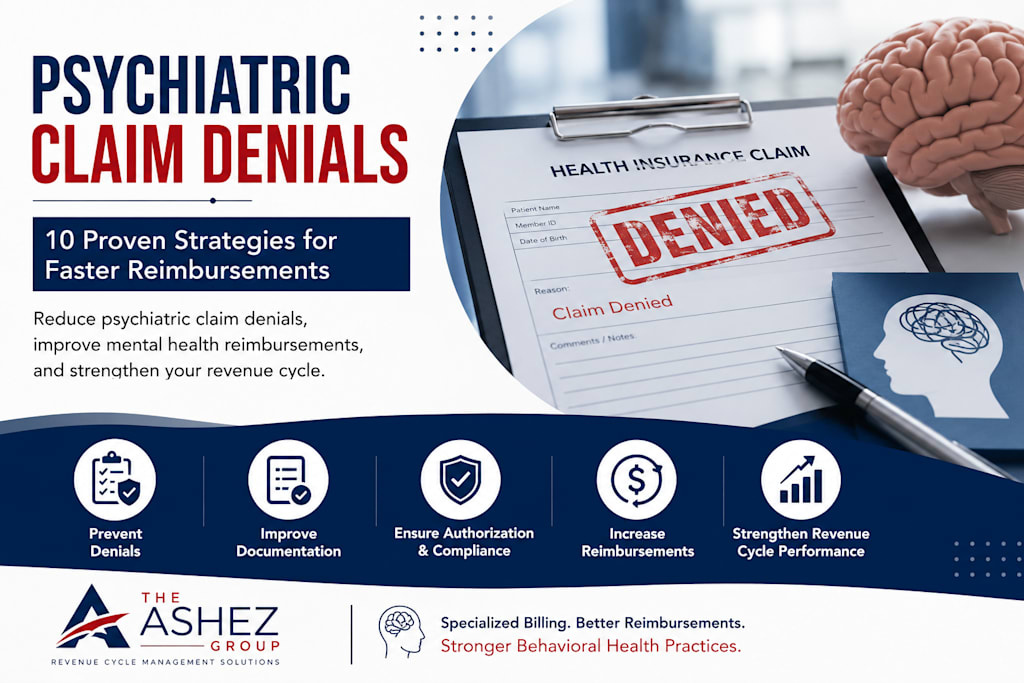
# The Hidden Reason Mental Health Practices Lose Thousands in Reimbursements
A behavioral health provider once asked a simple question:
"Why are so many of my claims getting denied when I'm providing quality care?"*
The answer wasn't patient care. It wasn't clinical outcomes. It wasn't even the insurance company itself.
It was the billing process.
Across the United States, mental health providers face some of the highest claim denial rates in healthcare. Psychiatrists, psychologists, therapists, and psychiatric nurse practitioners often spend countless hours helping patients while struggling with reimbursement issues behind the scenes.
The reality is that many mental health claims get denied for reasons that are entirely preventable.
## The Growing Challenge of Behavioral Health Billing
As demand for mental health services continues to rise, insurance companies have introduced more complex billing requirements. Prior authorizations, medical necessity reviews, documentation standards, and telehealth regulations create additional hurdles for providers.
A single missing authorization or coding error can delay reimbursement for weeks—or eliminate it entirely.
For smaller practices, these denials can quickly become a serious financial burden.
## Why Mental Health Claims Get Denied
Many providers assume a denied claim means the service wasn't covered. In reality, denials often occur because of administrative issues.
Some of the most common reasons include:
* Missing prior authorizations
* Incomplete documentation
* Insurance eligibility problems
* Incorrect CPT codes
* Diagnosis and procedure mismatches
* Telehealth billing errors
* Timely filing violations
Most of these problems can be identified before a claim is submitted.
## The Cost of a Denied Claim
When a claim is denied, the impact extends beyond a single payment.
Staff members must investigate the denial, gather documentation, communicate with insurance companies, and submit appeals. This creates additional administrative work while delaying cash flow.
Over time, repeated denials can result in:
* Increased accounts receivable
* Slower reimbursements
* Staff burnout
* Reduced profitability
* Lost revenue opportunities
For behavioral health practices already operating with limited resources, the consequences can be significant.
## Documentation Matters More Than Most Providers Realize
Insurance carriers frequently review psychiatrist and health insurance claims to verify medical necessity.
A treatment plan may be clinically sound, but if documentation fails to support the services billed, reimbursement may be delayed or denied.
Progress notes, treatment goals, session duration, and clinical assessments all play an important role in claim approval.
Strong documentation protects both the provider and the practice.
## The Importance of Insurance Verification
One of the simplest ways to prevent reimbursement issues is verifying insurance before every appointment.
Many denied claims occur because:
* Coverage has terminated
* Benefits have changed
* Authorizations were never obtained
* Telehealth services are not covered
A few minutes spent verifying eligibility can save hours of rework later.
## Telehealth Introduced New Challenges
The rapid growth of telehealth created additional billing complexities for mental health providers.
Changes involving:
* POS codes
* Modifier 95
* Documentation requirements
* State regulations
have increased the likelihood of billing mistakes.
Providers who fail to stay current with payer requirements often experience higher denial rates.
## Prevention Is More Effective Than Appeals
Most practices focus heavily on appealing denied claims.
However, the most successful organizations focus on preventing denials before they happen.
This includes:
* Verifying benefits
* Obtaining authorizations
* Maintaining accurate documentation
* Monitoring coding updates
* Reviewing denial trends
A proactive approach typically produces better financial outcomes than constantly reacting to denials.
## Looking Ahead
Mental health services remain one of the fastest-growing sectors in healthcare. As demand increases, providers will continue facing pressure from evolving insurance requirements and reimbursement policies.
Understanding why mental health claims get denied—and implementing processes to prevent those denials—can have a measurable impact on a practice's financial health.
Quality patient care will always be the foundation of behavioral health. But sustainable growth often depends on something much less visible:
Getting paid accurately and on time for the care you provide.
Because helping patients should be challenging enough. Getting reimbursed shouldn't be.
#Mental Health #theashezgroup
About the Creator
Enjoyed the story? Support the Creator.
Subscribe for free to receive all their stories in your feed.
Comments
There are no comments for this story
Be the first to respond and start the conversation.