
The Ferretti Group Decoded: What Owning Multiple Luxury Brands Really Means for Yacht Buyers
From Riva to CRN, understanding how a multi-brand marine conglomerate shapes the choices, expectations, and experiences of today's serious yacht buyer

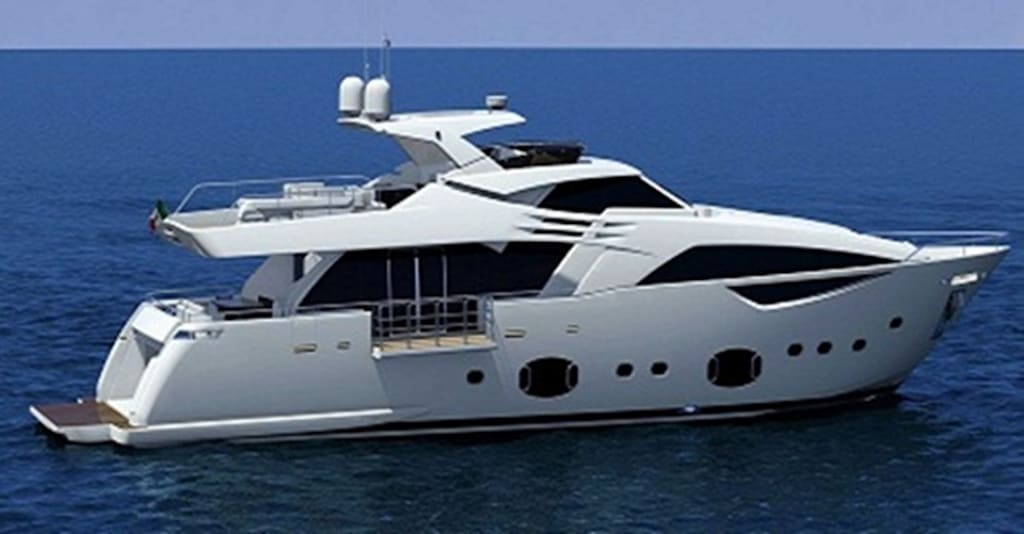
The luxury yacht market is rarely straightforward, but few corners of it generate more genuine confusion among prospective buyers than the multi-brand conglomerate model. When a single parent company owns multiple yacht marques — each with its own heritage, design philosophy, price positioning, and target clientele — the purchasing decision becomes considerably more layered than simply selecting a vessel. The Ferretti Group represents perhaps the most prominent example of this model in contemporary yachting, operating a portfolio of brands that spans nearly every segment of the luxury recreational and superyacht market.
The Ferretti Group is an Italian luxury yacht manufacturing conglomerate that owns and operates multiple distinct yacht brands under a single corporate structure. Its portfolio includes Ferretti Yachts, Riva, Pershing, Itama, Mochi Craft, CRN, and Custom Line — each brand maintaining independent design identity, production facilities, and market positioning while sharing group-level resources in engineering, technology, and global distribution.
A Conglomerate Built on Distinct Identities
What distinguishes the Ferretti Group from a single-brand manufacturer is the deliberate preservation of individual brand identity within a shared corporate architecture. This is not incidental — it is a central strategic decision that shapes everything from vessel design to the buyer experience at the dealership level.
Riva, arguably the most culturally resonant name in the portfolio, carries a heritage that predates the Ferretti Group's formation by more than a century. Founded in 1842 on Lake Iseo in northern Italy, Riva built its early reputation on handcrafted mahogany runabouts that became synonymous with Mediterranean glamour during the mid-twentieth century. The Aquarama, produced between 1962 and 1996, remains one of the most recognized watercraft in design history — photographed aboard by figures from Brigitte Bardot to Aristotle Onassis, and collected today with the seriousness of fine art. Under Ferretti Group ownership, Riva has expanded into larger fibreglass motor yachts while maintaining the aesthetic codes — teak detailing, mahogany accents, distinctive red upholstery — that give the brand its visual continuity across generations.
CRN occupies an entirely different position within the portfolio. Specializing in fully custom steel and aluminum superyachts, CRN operates more as a bespoke shipyard than a production manufacturer. Vessels from CRN are not selected from a catalogue — they are conceived in direct collaboration with the owner, often over multi-year build periods, with hull lengths typically exceeding forty meters. The distinction between CRN and the group's production brands is fundamental: where Ferretti Yachts and Pershing deliver refined, design-forward vessels within established model ranges, CRN delivers genuinely singular objects whose only constraint is the owner's vision and the laws of naval architecture.
Pershing sits at a different point on the spectrum — performance-oriented motor yachts characterized by aggressive exterior design, high-speed capability, and an aesthetic language that borrows more from automotive culture than from classical maritime tradition. The brand has built a following among buyers who prioritize dynamic performance and contemporary styling, and its presence in the Ferretti portfolio serves a clientele that might find Riva's heritage-inflected design vocabulary less personally resonant.
What Group Ownership Means in Practice
For the buyer evaluating vessels across the Ferretti portfolio, the practical implications of group ownership are more significant than they might initially appear. The most immediate benefit operates at the level of engineering and technology infrastructure. Across its brands, the Ferretti Group invests in shared research and development — naval architecture advances, hull engineering innovations, propulsion system developments, and onboard technology integration — that filter through the portfolio rather than being siloed within individual brands.
This means that a buyer purchasing a Ferretti Yachts model in a given year is, in a meaningful sense, the beneficiary of engineering investment that extends across the entire group's production volume. The economies of scale available to a multi-brand conglomerate with global production and distribution allow for levels of R&D investment that smaller independent yards would find difficult to sustain. In practical terms, this tends to manifest in areas such as hull efficiency, structural engineering standards, systems integration, and the pace at which new technologies — hybrid propulsion, digital helm systems, advanced stabilization — are adopted across the fleet.
The global service network is a related and equally practical consideration. Ferretti Group maintains authorized service and support infrastructure across major yachting markets worldwide, a distribution of technical expertise that independent yards with smaller production volumes often cannot match. For buyers who intend to operate their vessels across multiple geographic regions — or who plan to keep a vessel based in a market distant from its country of manufacture — the depth and geographic reach of that service network carries real operational value.
The Brand Hierarchy and How Buyers Navigate It
Understanding where each brand sits within the broader portfolio — and what that positioning implies about the buyer it is designed for — is essential context for anyone approaching the Ferretti Group as a purchasing consideration rather than simply a manufacturing entity.
At the production motor yacht level, Ferretti Yachts itself occupies the group's most accessible price tier, offering models that deliver Italian design sensibility and build quality within ranges that, while still firmly luxury, represent a more attainable entry point than the group's upper-tier marques. These vessels appeal to experienced boaters seeking a balance of design refinement, livability, and value retention — a combination that has made the brand a consistent presence in the pre-owned market as well as among new buyers.
Custom Line bridges the gap between production yachts and the fully bespoke end of the market. Specializing in fibreglass semi-custom vessels in the displacement and semi-displacement categories, Custom Line offers buyers a meaningful degree of personalization within a more structured build framework than CRN's fully custom model. This positioning attracts buyers who want individual expression in their vessel without the extended timelines and open-ended investment that fully custom construction entails.
Itama and Mochi Craft represent the group's presence in the open and lobster-style cruiser categories respectively — smaller, more focused product lines serving specific lifestyle and aesthetic preferences. Itama's open sportboats carry a distinctly Italian coastal aesthetic, while Mochi Craft's lobster-influenced design vocabulary references the heritage of the American East Coast working boat tradition, reinterpreted through an Italian luxury lens.
The architecture of this portfolio reflects a deliberate attempt to capture buyers across a wide spectrum of size, style, and budget preferences while maintaining the coherence of a luxury positioning across all brands. For the buyer who begins with an Itama open boat and graduates over successive purchases toward a Riva flybridge or a Custom Line displacement cruiser, the group offers a logical progression within a consistent quality and service framework.
The Pre-Owned Market and Its Relationship to Brand Heritage
Any serious discussion of the Ferretti Group's market significance must address the pre-owned segment, which represents a substantial proportion of total transactions across all the group's marques. The value retention characteristics of individual brands within the portfolio vary meaningfully, and those differences matter considerably to buyers for whom resale value is a relevant factor in the purchasing decision.
Riva occupies a category-defining position in this regard. Vintage Riva mahogany runabouts — particularly Aquarama models in original or sympathetically restored condition — have demonstrated appreciation trajectories more commonly associated with classic automobiles or fine art than with recreational watercraft. Collectors in Europe, the Middle East, and North America pursue well-documented examples with a seriousness that extends to provenance research, period-correct restoration, and specialist survey. Contemporary Riva fibreglass models do not replicate this appreciation dynamic, but they benefit from the brand's cultural authority in ways that translate into stronger pre-owned demand relative to comparably specified vessels from less heritage-rich manufacturers.
CRN superyachts, by virtue of their fully custom nature, present a more complex pre-owned valuation picture. Every CRN vessel is, by definition, an expression of its original owner's specific preferences — layout choices, finish selections, technical specifications, and onboard systems that may or may not align with subsequent buyers' requirements. This can create valuation variability that production vessels, with their standardized specifications and established market comparables, do not face to the same degree. Buyers approaching the CRN pre-owned market are advised to engage experienced superyacht brokers with specific knowledge of custom vessel valuation — a different discipline from standard production boat appraisal.
For buyers specifically exploring yachts for sale in Miami and the broader South Florida market, the Ferretti Group's brands appear with notable frequency in regional brokerage inventories. South Florida's position as one of North America's most active yacht trading markets — driven by year-round boating conditions, proximity to the Bahamas and Caribbean cruising grounds, and a resident population of high-net-worth individuals with established maritime interests — means that Ferretti Group vessels in the pre-owned segment tend to move through this market with regularity. Buyers in this geography benefit from a relatively deep local inventory and an established broker community with specific familiarity with Italian production and semi-custom marques.
What the Conglomerate Model Means for the Future of Luxury Yachting
The multi-brand conglomerate model that the Ferretti Group exemplifies is not universally embraced within the luxury marine industry, and the debate around its merits relative to independent yard ownership reflects genuine tensions within the broader market.
Critics of the conglomerate model argue that corporate ownership inevitably introduces commercial pressures that compromise the craft traditions and design independence that give heritage brands their value. The concern is not abstract — the history of luxury goods consolidation in adjacent industries, from fashion to automobiles, includes examples where brand acquisition has diluted rather than preserved the qualities that made individual marques desirable in the first place.
The counterargument, and the one that Ferretti Group's sustained market position tends to support, is that well-managed conglomerate ownership can provide the investment capital, engineering resources, and distribution infrastructure that allow heritage brands to survive and compete in a modern market where the costs of compliance, technology development, and global service support have risen substantially. Independent yards of meaningful scale are increasingly rare; those that persist do so through either extreme specialization, private ownership with patient capital, or the kind of group structure that the Ferretti model represents.
For the buyer, the practical question is whether the brand they are considering has retained the qualities — design integrity, build standards, heritage continuity — that justify its positioning and price. Across the Ferretti portfolio, the evidence suggests that this balance has been managed with reasonable care, though individual buyers will form their own assessments based on direct vessel experience and engagement with the specific marque's current product range.
What remains consistent across the portfolio, and what ultimately defines the Ferretti Group's market proposition, is a commitment to Italian design sensibility as a unifying thread — expressed differently across brands, in different scales and at different price points, but recognizable as a coherent aesthetic and cultural identity that distinguishes the group's vessels from the production output of Northern European, American, and Asian competitors. For buyers to whom that design heritage matters, the portfolio offers a range of expressions of it. For those to whom it does not, the market offers alternatives. The choice, as always in serious yacht acquisition, belongs entirely to the buyer.
About the Creator
Robert Lama
Robert Lama is a seasoned yacht broker with Miami International Yacht Sales, a reputable yacht brokerage company specializing in both used and new yachts. https://www.miamiinternationalyachtsales.com/
Enjoyed the story? Support the Creator.
Subscribe for free to receive all their stories in your feed.
Comments
There are no comments for this story
Be the first to respond and start the conversation.