
The Changing Social Culture Around Boat Rentals in Miami
A closer look at how waterfront leisure is becoming a modern social language

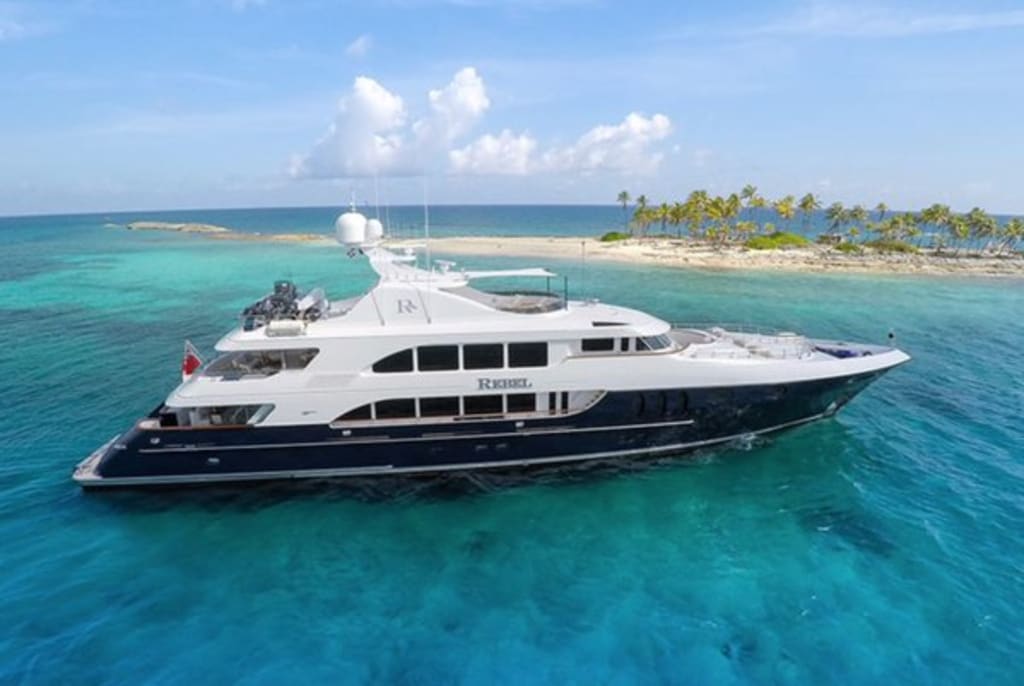
Miami has long been associated with coastal leisure, but the role of boats in the city has gradually shifted beyond tourism or occasional recreation. What was once a niche luxury activity is increasingly woven into everyday social behavior, shaping how people gather, celebrate, and experience time together on the water.
This evolution is not only about access to boats or improved marine services. It reflects a broader transformation in how social life itself is being organized in coastal cities—less around fixed venues and more around adaptable environments that offer privacy, flexibility, and atmosphere in equal measure.
Boat rentals, in this context, are no longer just a service category. They have become part of Miami’s evolving social culture.
Waterfront spaces as modern social environments
In traditional urban settings, social life is anchored to restaurants, clubs, lounges, and private indoor venues. These spaces are defined by walls, schedules, and structured service models. In contrast, Miami’s waterfront introduces an environment that is open, fluid, and constantly shifting.
The ocean does not behave like a static backdrop. It changes with light, weather, and movement. This dynamic quality has gradually turned waterfront spaces into more than just scenic locations—they function as living environments where social interactions feel less formal and more fluid.
Boat-based experiences extend this idea further. Instead of adapting social behavior to a fixed space, the space itself becomes adaptable. Movement replaces stillness, and the environment becomes part of the experience rather than a passive setting.
This shift helps explain why boat rentals are increasingly integrated into social life rather than reserved for occasional leisure.
The quiet shift from venues to experiences
A noticeable change in urban leisure culture is the movement away from traditional venues toward experience-driven environments. Instead of planning social life around static locations, there is a growing preference for settings that feel temporary, flexible, and immersive.
Boat rentals fit naturally into this pattern. They do not function as fixed venues but as adjustable spaces that change based on time, group size, and purpose. A single outing can shift between relaxation, celebration, conversation, and observation without requiring a change in location.
This fluidity reflects a broader cultural preference: experiences are increasingly valued over physical settings. The emphasis is less on where something happens and more on how it unfolds in real time.
In Miami, where water is an integral part of the city’s identity, this transition has become particularly visible.
Privacy as a defining feature of modern leisure
One of the most significant drivers behind the rise of boat rentals is the changing perception of privacy. In many urban environments, privacy has become more difficult to maintain in traditional public venues. Noise, crowd density, and fixed service structures often limit control over personal space.
On the water, the dynamic changes. Distance becomes natural, and boundaries are no longer defined by walls but by movement and positioning. This creates a different kind of social environment—one where interaction can be more intentional and less exposed.
Privacy in this context is not about isolation. It is about control over social exposure. Groups can define their own atmosphere without the interruptions commonly associated with land-based venues.
This subtle shift has contributed to the growing appeal of private boat rentals as a social setting rather than just a recreational activity.
The influence of time flexibility on social behavior
Modern social culture is increasingly shaped by time constraints. Schedules are fragmented, commitments overlap, and availability often varies. As a result, rigid event structures are becoming less practical for many people.
Boat-based experiences offer a different rhythm. They are not bound by fixed indoor programming or rigid venue schedules in the same way as traditional spaces. Time on the water tends to feel more continuous and less segmented.
This flexibility aligns with broader changes in lifestyle patterns, where shorter, more adaptable experiences are preferred over long, structured commitments.
In this sense, boat rentals are not only a leisure choice but also a response to changing time behavior. They accommodate unpredictability while still offering a structured experience within a flexible framework.
Miami as a cultural setting for water-based identity
Miami’s geography plays a defining role in the development of its waterfront culture. Unlike many inland cities where water is a visual or recreational feature, Miami is structurally tied to the ocean. The coastline is not peripheral—it is central to the city’s identity.
This proximity has shaped how social life evolves. Water is not treated as a destination; it is part of the everyday landscape. Over time, this has normalized the idea that social and leisure activities can extend beyond land into marine environments.
As a result, boat rentals in Miami exist within a broader cultural acceptance of water-based living. They are not perceived as unusual or exclusive in the same way they might be in non-coastal cities.
Instead, they reflect a natural extension of how the city already interacts with its environment.
The shift toward experience-centered social identity
A broader cultural trend influencing this change is the growing emphasis on experiences as a form of identity. Social behavior is increasingly shaped by what people do rather than what they own or where they live.
Within this context, shared experiences carry more meaning than static possessions or conventional status markers. The quality of interaction, environment, and memory creation becomes more important than the format in which it takes place.
Boat rentals align with this shift because they offer a temporary but immersive environment where experiences are central. The setting itself contributes to how the moment is perceived, rather than serving as a neutral backdrop.
This has helped reposition boating from a recreational activity into a cultural expression of modern leisure identity.
Group dynamics and changing social configurations
Another noticeable change in Miami’s waterfront culture is the evolution of group behavior. Traditional social gatherings often follow predictable formats—fixed seating, structured service, and pre-defined durations.
On the water, group dynamics become more fluid. Movement, shared space, and environmental variation influence how people interact. Conversations are less segmented, and social roles feel less rigid.
This environment naturally supports smaller, more connected groups rather than large, structured gatherings. The result is a shift toward more intimate social configurations that prioritize interaction over formality.
This change reflects a broader trend in urban social life: smaller groups are increasingly preferred for their flexibility and coherence.
The blending of leisure, lifestyle, and cultural expression
What makes Miami’s boat rental culture particularly distinct is how seamlessly it blends leisure with lifestyle expression. The experience is not limited to recreation—it often reflects broader cultural and aesthetic choices.
Lighting, timing, route selection, and group composition all contribute to how the experience unfolds. This level of adaptability allows individuals and groups to shape the atmosphere in ways that feel personally meaningful.
However, this should not be interpreted as exclusivity-driven culture. Instead, it reflects a broader democratization of experience design, where individuals have more control over how leisure time is structured.
Miami’s waterfront environment amplifies this flexibility by offering a setting that naturally accommodates variation.
The broader implications for urban leisure culture
The evolution of boat rentals in Miami reflects a larger shift occurring in many coastal cities. Leisure is becoming less tied to fixed infrastructure and more connected to adaptable environments.
This shift suggests a rethinking of how cities support social life. Instead of concentrating experiences in enclosed venues, there is a gradual movement toward open, fluid, and hybrid spaces that allow for multiple forms of engagement.
Waterfront environments are particularly well-positioned within this transformation because they inherently support variation. They are neither fully structured nor completely unstructured, allowing them to adapt to changing social expectations.
Conclusion
The changing social culture around boat rentals in Miami reflects more than a trend in leisure activity. It illustrates a broader transformation in how modern social life is organized, experienced, and understood.
What was once a simple recreational option has become part of a larger cultural shift toward flexibility, privacy, and experience-based living. Waterfront environments provide a unique setting where these changes naturally converge, allowing social interaction to evolve beyond traditional boundaries.
As urban lifestyles continue to change, the role of adaptable environments like Miami’s waterways will likely continue to grow—not as alternatives to traditional spaces, but as parallel expressions of how modern social life is being redefined.
About the Creator
Miami Boat Charter
Miami Boat Charters offers the largest and newest selection of fully crewed Boat Charters, Party Boats, & Luxury Yacht Rentals in Miami Beach.
Enjoyed the story? Support the Creator.
Subscribe for free to receive all their stories in your feed.
Comments
There are no comments for this story
Be the first to respond and start the conversation.