Vocal
Expert Tips for Successful Mobile App Development in the Australian Market
Australia's mobile application scene has expanded exponentially over the last couple of years. The evolution of the industry is evident in the rise of numerous app-based solutions across the country, from Sydney's fintech startups to healthcare apps in Melbourne and on-demand services in regional areas. Businesses are going digital through apps to engage with customers, simplify processes, and provide superior services. However, just creating an app with good code won't be enough to make it successful in Australia. Success comes from meticulous planning, knowing your audience, and tailoring the user experience to real-world app usage.
By Rajinder Kumar11 months ago in FYI
What Therapists in Dubai Say About Maderotherapy?
In Dubai’s fast-growing wellness industry, one treatment has quietly taken over luxury spas and body-sculpting studios — Maderotherapy. Also known as wood therapy, it’s the latest buzz for people seeking natural body contouring and cellulite reduction.
By Revivers Home Spa11 months ago in FYI
Buyers and sellers
Running my new eBay store, Cinderbox, has been a learning experience. I’m trying to figure out ways to stand out in the sea of sellers—building a website, maybe even doing merch down the line. But this story isn’t really about my store. It’s about something bigger: negative reviews.
By Robert Kegel11 months ago in FYI
November's Great Rainbow - A Mikeydred November Dollar Prompt For All Vocal Creators
Introduction Every month, I set prompts in the Vocal Social Society and offer a dollar tip to five random creators who participate, asking them to share their stories in the comments and on the thread in the group.
By Mike Singleton 💜 Mikeydred 11 months ago in FYI
The Rise of Google Baseball: How Technology Is Changing the Game
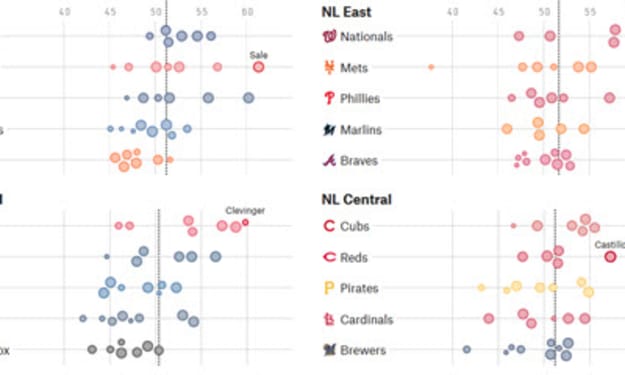
The Rise of Google Baseball: How Technology Is Changing the Game Google Baseball has become one of the most intriguing intersections between sports and technology in recent years. It represents a combination of data analytics, artificial intelligence, and cloud computing applied to the world’s most traditional sport—baseball. While baseball has always relied on numbers and statistics, Google has taken this to a new level, redefining how teams, coaches, and even fans experience the game. At its core, Google Baseball refers to the use of Google’s advanced data systems—especially cloud-based machine learning—to analyze every pitch, swing, and play. Major League Baseball and other professional leagues have long depended on data collection, but the integration of Google’s tools has made that data smarter and more predictive. Instead of simply recording past performances, these systems can now forecast outcomes, detect player fatigue, optimize defensive alignments, and even suggest pitching strategies in real time. One of the biggest ways Google Baseball has changed the sport is through data visualization and instant analysis. By using artificial intelligence, the system can take raw player data—like swing speed, launch angle, or spin rate—and turn it into visual dashboards that help coaches and scouts make faster decisions. This kind of real-time analytics allows for precise game adjustments that were impossible just a few years ago. The power of Google Cloud has also made it possible for teams to process enormous amounts of information. Baseball generates a staggering amount of data every game: pitch tracking, player biometrics, positional shifts, and even environmental conditions like humidity or wind speed. Google’s servers can analyze all of this simultaneously, providing insights in seconds. The result is a smarter version of baseball, where every play can be informed by millions of data points. Fans, too, are benefiting from Google Baseball. Through interactive platforms and smart broadcasting tools, spectators now get access to advanced metrics and 3D visualizations of plays in real time. Google’s integration with YouTube has made watching games more interactive, letting fans view player stats, compare performances, and even predict outcomes during live broadcasts. This has transformed baseball from a passive viewing experience into an interactive, data-driven one. Teams have begun using Google AI not just for in-game strategy but also for player development. For example, by analyzing biomechanical data from sensors and cameras, AI systems can identify flaws in a batter’s swing or a pitcher’s mechanics before they lead to injuries or performance decline. This predictive capability has saved teams millions of dollars and extended player careers. Machine learning algorithms can even help scout new talent by comparing amateur data to the profiles of current professional stars, uncovering hidden gems who might otherwise go unnoticed. Google Baseball also has a major role in fan engagement through predictive entertainment. Using historical data and live updates, AI can estimate the likelihood of certain events happening, such as home runs, strikeouts, or comeback wins. These predictions keep fans more invested and enhance sports betting markets, fantasy leagues, and interactive online experiences. However, the rise of Google Baseball has also sparked debates about the balance between human instinct and machine intelligence. Traditionalists argue that baseball’s beauty lies in unpredictability and the human element—the gut feeling of a coach or the spontaneous brilliance of a player. Critics fear that overreliance on AI could make the game too mechanical or data-driven. On the other hand, supporters claim that Google Baseball simply provides better tools, not replacements, for human decision-making. The data enhances intuition rather than eliminates it. Now, let’s address some of the key questions people frequently ask about Google Baseball: **What is Google Baseball?** It’s the integration of Google’s AI and cloud technology with baseball analytics to collect, process, and interpret game data in real time. It helps teams, players, and fans understand the sport through technology-driven insights. **How does Google Baseball work?** It works by feeding live data from cameras, sensors, and player statistics into Google Cloud’s machine learning algorithms. These systems analyze patterns, predict outcomes, and deliver insights instantly through dashboards and visual reports. **Which teams are using Google Baseball?** Many professional and college teams across the United States have adopted similar systems based on Google’s technology. These teams rely on the data for scouting, training, and strategic decision-making throughout the season. **How does it affect the players?** Players can use the data to improve performance, reduce injury risk, and track progress over time. They receive precise information about their movements, reaction times, and efficiency, allowing them to train smarter rather than harder. **Does Google Baseball replace coaches?** No. The system supports coaching decisions rather than replacing them. It provides information, but human intuition and leadership remain vital parts of the game. Coaches interpret the data, apply strategy, and make adjustments that machines cannot fully replicate. **What are the advantages of Google Baseball?** The main advantages include improved accuracy in scouting, injury prevention, smarter game strategies, and deeper fan engagement. It also democratizes baseball knowledge—giving smaller-market teams access to the same level of analytics as wealthier franchises. **Are there any concerns about privacy or fairness?** Yes, as with any data-heavy system, there are concerns about player privacy and data ownership. Teams and leagues are still defining who controls the biometric and performance data collected during games and practices. Transparency and regulation are becoming increasingly important to maintain fair use. Google Baseball represents the future of sports technology. It combines tradition with innovation, proving that even a game rooted in over a century of history can evolve through artificial intelligence and cloud computing. While debates about data versus instinct continue, there’s no denying that the partnership between baseball and Google has redefined the boundaries of how the game can be played, studied, and enjoyed.
By America today 11 months ago in FYI
Postnatal Massage vs. Prenatal Massage: Key Differences Explained
Massage therapy offers countless benefits at every stage of motherhood, nurturing both the body and mind through the many physical and emotional changes that come with pregnancy and childbirth. From easing discomfort, reducing swelling, and improving sleep during pregnancy to supporting healing, restoring balance, and relieving tension after delivery, both prenatal and postnatal massage play an essential role in a mother’s overall wellness journey.
By Revivers Home Spa11 months ago in FYI
The Ultimate Starter Kit for Building Scalable, Secure Enterprise Microservices
As enterprises demand faster release cycles, greater resilience, and modular evolution of systems, microservices provide a powerful architectural foundation. By breaking software into independently deployable components aligned to business capabilities, organizations gain flexibility, improved fault isolation, and the ability to scale services individually based on usage. However, succeeding with microservices requires more than coding smaller applications — it requires the right architectural discipline, tooling, security posture, and operational maturity.
By Jakob Stanely11 months ago in FYI
The Future of Food Franchising: What’s Working in 2026 . AI-Generated.
The food franchising industry is undergoing a major transformation in 2026. With rising consumer expectations, technological innovation, and a growing demand for sustainability, the way franchises operate today is drastically different from just a few years ago.
By Rose Alden11 months ago in FYI
Why Co-Living Makes More Financial Sense in 2025 | SharedEasy. AI-Generated.
The housing market is evolving faster than ever. Rising rents, inflation, and lifestyle changes are pushing people to rethink how they live. In 2025, the concept of co-living has transformed from a niche housing trend into a mainstream solution for modern renters. At the center of this change are communities like SharedEasy, redefining affordable and flexible living for professionals, students, and digital nomads alike.
By Shared Easy11 months ago in FYI