Science
Science
How the Keto Diet Can Improve Your Overall Health
Introduction: The Keto Diet has become increasingly popular as a healthful way of eating. It is a high-fat, low-carb diet that focuses on keto food, such as avocados, nuts, seeds, and non-starchy vegetables. By adopting the Keto Diet Habit, you can potentially improve your overall health by reducing inflammation, increasing energy, and promoting weight loss. In this blog post, we will discuss how the Keto Diet can benefit your health and provide some tips to help you get started.
By Mu.Fahmidul Islam4 years ago in FYI
Conquering Diabetes: A Guide to Achieving Optimal Blood Sugar Control.
Diabetes is a chronic condition characterized by high levels of sugar (glucose) in the blood. There are two main types of diabetes: type 1 and type 2. Type 1 diabetes is an autoimmune disorder in which the body's immune system attacks and destroys the cells that produce insulin, a hormone that regulates blood sugar. Type 2 diabetes, on the other hand, occurs when the body becomes resistant to insulin or is unable to produce enough of it.
By Pakirisamy Maniam4 years ago in FYI
"Future ready world" with Lithium Industry
Introduction: How Lithium can be useful to booming industries in several ways: Energy storage: Lithium-ion batteries have a high energy density and long battery life, making them ideal for use in renewable energy storage systems. MSME industries can benefit from using these batteries to store excess energy generated by solar panels or wind turbines, for example, and use it when needed.
By Vishalraj M4 years ago in FYI
Get Ready for the Ultimate Super Bowl 2023 Parties
INTRODUCTION From different types of parties and entertainment options to food and drinks, the article provides all the information needed to make the most out of the Super Bowl 2023 party scene. Whether you're a first-time attendee or a seasoned veteran, this article will provide insider tips and recommendations to ensure an unforgettable experience.
By Rayne Skipper4 years ago in FYI
Unlock The Benefits Of Employee Retention Tax Credit
A tax credit known as the Employee Retention Tax Credit (ERTC) was first made available in 2020 as a result of the Coronavirus Aid, Relief, and Economic Security (CARES) Act. The ERTC is intended to motivate companies to continue paying their employees during the COVID-19 pandemic. Even if their firms are temporarily forced to close down or scale back operations owing to the epidemic, qualifying employers that keep their employees on staff and continue to pay their wages and salaries are still eligible for the credit.
By Anthony Nicholson4 years ago in FYI
30 Days To A New You: How To Lose Weight Quickly In Just One Month
Introduction Losing weight quickly can be a daunting task, but it is definitely possible with a bit of dedication and effort. In just one month, you can lose a significant amount of weight by making some simple lifestyle changes and following a healthy diet plan.
By Wellness and Fitness4 years ago in FYI
WEBSITE DESIGN TIPS & TRICKS FOR TECHNOLOGY COMPANIES
Technology-related websites are a central location and a powerful instrument for marketing campaigns. To be successful your site's technological capabilities, it must to offer more prominent content and sales touchpoints whilst not overwhelming the user or the potential buyer.
By Bhavitra Techsolutions4 years ago in FYI
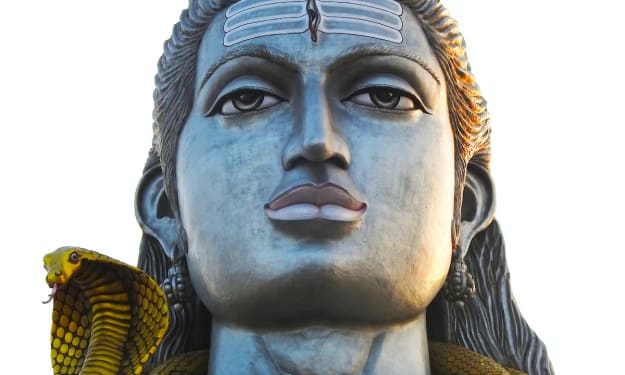
Third Eye : “The Divine Eye of Lord Shiva”
Who is Lord Shiva? Lord Shiva is one of the major deities in Hinduism and is considered to be one of the three primary gods along with Brahma and Vishnu. He is often depicted as a powerful and ascetic deity who is associated with the concepts of destruction, creation, and preservation. Shiva is known by many different names and is revered by millions of devotees all over the world. He is often depicted as a fearsome and wrathful deity, but also as a gentle and compassionate god. In Hindu mythology, Shiva is often portrayed as the divine teacher and the ultimate yogi, embodying the highest levels of spiritual wisdom and knowledge. Shiva is also associated with the Hindu concept of yoga, and is seen as the embodiment of the power of concentration and meditation. He is often depicted as sitting in deep meditation, with the crescent moon in his hair and the river Ganges flowing from his head, symbolizing the power of his spiritual insight. In addition to his spiritual associations, Shiva is also associated with the forces of nature and is revered as the god of storms, earthquakes, and fertility. He is often depicted with weapons such as a trident and a drum, symbolizing his ability to control and harness the elements of nature. In Hindu tradition, Lord Shiva is often worshipped along with his consort, the goddess Parvati, and their son, Lord Ganesha. He is also venerated by the followers of the Shaiva sect, which regards him as the supreme god. Overall, Lord Shiva is seen as a complex and multifaceted deity, embodying both the power of destruction and the grace of creation, and serving as a source of inspiration for millions of Hindus worldwide. Third Eye : “The Divine Eye of Lord Shiva” The third eye of Lord Shiva, also known as the “Divine Eye,” is a spiritual symbol in Hinduism representing the concept of inner wisdom, knowledge, and enlightenment. In Hindu mythology, it is said that Lord Shiva has the ability to burn anything to ashes with just a glance from his third eye, which is located in the center of his forehead. This eye is believed to represent his power of perception, the ability to see beyond the physical realm and understand the hidden truths of the universe. In Hindu tradition, Lord Shiva is often depicted with a third eye, which is painted or carved in the center of his forehead. This eye is often represented as being red or blue in color, and is sometimes surrounded by a halo of flames, symbolizing the power and intensity of its gaze. The third eye is also associated with spiritual awakening, and is seen as a symbol of the inner vision and intuition that one can develop through spiritual practice. In conclusion, the third eye of Lord Shiva is a powerful symbol in Hinduism, representing inner wisdom, knowledge, and enlightenment. It is associated with the power of perception, spiritual awakening, and the ability to see beyond the physical realm and understand the deeper truths of the universe. The third eye is also considered to be a powerful tool for meditation and spiritual practice. Many Hindu devotees believe that by meditating on the third eye, they can tap into their own inner wisdom and gain a deeper understanding of the world around them. This is seen as a way to gain greater control over one’s thoughts and emotions, and to develop a more enlightened state of consciousness. In Hindu mythology, the story of Lord Shiva’s third eye is often tied to the story of his wife, Parvati. It is said that when Parvati playfully covered Shiva’s eyes, the world was plunged into darkness. In order to restore light to the world, Shiva opened his third eye, which released a powerful beam of light and energy that destroyed everything in its path. This story is often interpreted as a metaphor for the power of the third eye and its ability to destroy ignorance and bring enlightenment to those who possess it. In modern Hindu culture, the third eye continues to be an important symbol of spiritual power and enlightenment. Many Hindu devotees wear a bindi, a small dot or mark, on their foreheads as a symbol of the third eye, and as a reminder to strive for inner wisdom and spiritual growth. The third eye is also often incorporated into Hindu art and architecture, as a symbol of the divine presence and the power of the spirit. In conclusion, the third eye of Lord Shiva is a complex and powerful symbol in Hinduism, representing the pursuit of inner wisdom, knowledge, and spiritual growth. It continues to be an important aspect of Hindu culture, inspiring devotees to seek greater understanding and enlightenment through spiritual practice. In addition to its spiritual significance, the third eye is also often seen as a symbol of protection. In Hindu tradition, it is believed that those who possess the power of the third eye are protected from harm and negative influences. This is why the third eye is often depicted as a fierce and intense gaze, capable of destroying any obstacle that stands in the way of the individual’s spiritual growth. The third eye is also associated with the Hindu goddess Kali, who is seen as a fierce protector of the divine and the destroyer of evil. In this context, the third eye represents the power of divine knowledge and the ability to see through illusion and deception. This power is seen as essential for the protection of the individual and for the attainment of spiritual enlightenment. In some Hindu sects, the third eye is also believed to be a physical manifestation of spiritual power, located in the pineal gland of the brain. It is said that by awakening this gland, an individual can gain access to higher levels of consciousness and spiritual insight. This idea has been popularized in recent times by some New Age and spiritual movements, which promote the awakening of the third eye as a way to achieve spiritual growth and greater understanding of the universe. In conclusion, the third eye of Lord Shiva is a multifaceted symbol in Hinduism, representing the pursuit of inner wisdom, knowledge, protection, and spiritual growth. Its importance continues to be recognized and celebrated in Hindu culture, inspiring individuals to seek greater understanding and enlightenment through spiritual practice. The power of the third eye is often seen as being intimately tied to the pursuit of spiritual growth and enlightenment. In Hinduism, the third eye is believed to represent the power of inner vision, intuition, and perception, which can be developed through spiritual practice. With the awakening of the third eye, it is believed that one can gain a deeper understanding of the world and the underlying truths of the universe. This power is seen as the ability to see beyond the physical realm and to perceive the spiritual dimension of reality. It is said to bring greater clarity and insight, and to give the individual a more profound sense of purpose and meaning in life. The third eye is also associated with spiritual protection and the ability to see through illusion and deception. It is believed that those who possess the power of the third eye are protected from harm and negative influences, and are better equipped to navigate the challenges of life with wisdom and grace. In some Hindu sects, the awakening of the third eye is believed to bring about a state of heightened consciousness, in which the individual experiences a deep sense of unity and oneness with the universe. This is seen as a crucial step in the spiritual journey, and as the path to ultimate enlightenment. In conclusion, the power of the third eye is seen as an essential aspect of spiritual growth and enlightenment in Hinduism. It represents the power of inner vision, intuition, and perception, and is believed to bring greater wisdom, clarity, and insight to those who awaken it. If the third eye is “opened,” it is believed to bring about a range of spiritual and psychological changes. The exact nature of these changes can vary depending on the individual, as well as their religious and spiritual beliefs. However, some common experiences associated with the opening of the third eye include: Increased intuition and psychic abilities: Many people report having stronger intuition, heightened awareness, and more developed psychic abilities after the third eye has been opened. This can include the ability to sense the energy of others, to receive psychic messages, and to perceive the world in new and deeper ways. Greater spiritual insight and understanding: The opening of the third eye is often seen as a key step on the path to spiritual growth and enlightenment. It is believed to bring about a deeper understanding of the universe and one’s place in it, and to give the individual a more profound sense of purpose and meaning in life. Changes in perception and awareness: The opening of the third eye is often accompanied by changes in perception and awareness. This can include a heightened sensitivity to light, sound, and energy, as well as an expanded sense of consciousness. Some people report having experiences of synesthesia, or the blending of the senses, after the third eye has been opened. Physical symptoms: Some people report physical symptoms associated with the opening of the third eye, such as headaches, pressure in the forehead, and changes in sleep patterns. These symptoms are generally considered to be temporary and can be managed through meditation, breathing exercises, and other spiritual practices. It's Important to note that the experience of opening the third eye can be highly subjective, and can vary greatly from person to person. Some people may experience profound changes and spiritual insights, while others may not notice any significant differences. Additionally, the idea of the “opening” of the third eye is often associated with certain spiritual or esoteric practices, and its scientific validity is a matter of debate.
By Santhosh Ramesh 4 years ago in FYI
What happens after Death
The journey of the soul after death: Garuda Purana is an ancient Hindu text that is considered one of the 18 major Puranas. The text is primarily focused on providing guidelines for Hindu funeral rites and the afterlife. In this text, there are many detailed descriptions of what happens after death, including the journey of the soul, the experiences of the soul in the afterlife, and the ultimate fate of the soul.
By Pro Writer4 years ago in FYI