Historical
Ukraine handed over all their nuclear weapons to Russia
In the tumultuous years following the collapse of the Soviet Union, Ukraine found itself in possession of the third-largest nuclear arsenal in the world. This unprecedented situation was resolved through the Budapest Memorandum, an agreement signed in 1994 that saw Ukraine relinquish its nuclear weapons in exchange for security assurances. This blog post explores the historical context, the details of the agreement, and the long-term implications for Ukraine and global security. Historical Context The dissolution of the Soviet Union in 1991 left Ukraine, along with Russia, Belarus, and Kazakhstan, in possession of significant nuclear arsenals. Ukraine inherited approximately 1,900 strategic nuclear warheads, as well as numerous tactical nuclear weapons. While these weapons were under the operational control of the Russian military, their physical presence in Ukraine posed a complex geopolitical challenge. The newly independent Ukrainian government faced immense pressure to address this issue. On one hand, there were concerns about the security and maintenance of the nuclear arsenal. On the other, Ukraine sought to establish its sovereignty and integrate into the international community. The presence of nuclear weapons was both a potential bargaining chip and a liability. The Budapest Memorandum In December 1994, Ukraine, Russia, the United States, and the United Kingdom signed the Budapest Memorandum on Security Assurances. The agreement was a significant diplomatic achievement, marking a major step in global nuclear disarmament efforts. The key provisions of the memorandum included security assurances, economic aid, non-use of nuclear weapons, and support for denuclearization. The signatories committed to respecting Ukraine's independence, sovereignty, and existing borders. They also pledged to refrain from using or threatening to use force against Ukraine. In addition to security assurances, Ukraine was promised economic assistance to help manage the transition and compensate for the loss of its nuclear deterrent. The agreement included commitments to support Ukraine's denuclearization efforts and ensure the safe and secure dismantling of its nuclear arsenal. Between 1994 and 1996, Ukraine successfully transferred its nuclear warheads to Russia for dismantling, becoming a non-nuclear-weapon state under the Treaty on the Non-Proliferation of Nuclear Weapons (NPT). This move was hailed internationally as a model for nuclear disarmament and non-proliferation. The Aftermath and Reassurances In the years following the Budapest Memorandum, Ukraine navigated its path as a non-nuclear state. The economic and political reforms were slow and often met with challenges, but the nation managed to establish its sovereignty and develop its own military capabilities. The security assurances provided by the memorandum were intended to offer Ukraine a safety net, allowing it to focus on nation-building without the burden of maintaining a nuclear arsenal. However, the assurances of the Budapest Memorandum were put to the test in 2014 when Russia annexed Crimea and began supporting separatist movements in eastern Ukraine. This blatant violation of Ukraine's sovereignty and territorial integrity raised serious questions about the effectiveness of the security guarantees provided by the memorandum. The international community condemned Russia's actions, but the response was limited to economic sanctions and diplomatic pressure. The Geopolitical Implications The events of 2014 had profound implications for Ukraine and global security. For Ukraine, the annexation of Crimea and the ongoing conflict in the Donbas region highlighted the vulnerabilities and limitations of relying on international security assurances. The country has since sought to strengthen its own military capabilities and deepen its ties with Western institutions such as NATO and the European Union. For the global non-proliferation regime, the situation posed a significant challenge. The Budapest Memorandum was often cited as a success story in nuclear disarmament, demonstrating that security assurances could incentivize states to relinquish their nuclear arsenals. However, the failure of the signatories to uphold their commitments undermined the credibility of such assurances. This erosion of trust could have far-reaching consequences for future disarmament efforts, as other states may become wary of giving up their nuclear weapons without robust and enforceable security guarantees. Lessons Learned The case of Ukraine and the Budapest Memorandum offers several important lessons for international security and non-proliferation. Security assurances need to be backed by credible and enforceable mechanisms. The ambiguity and lack of concrete enforcement measures in the Budapest Memorandum left Ukraine vulnerable when the assurances were violated. Strong international institutions and alliances play a crucial role in maintaining security and deterring aggression. Ukraine's pursuit of closer ties with NATO and the EU reflects a recognition of the need for collective security arrangements. While international agreements are important, countries must also invest in their own defense capabilities. Ukraine's ongoing efforts to modernize its military and enhance its defensive posture underscore the necessity of a balanced approach to security. The geopolitical landscape is dynamic and often unpredictable. Agreements and assurances must be flexible enough to adapt to changing circumstances and evolving threats. Moving Forward Despite the setbacks and challenges, Ukraine continues to navigate its path toward a secure and prosperous future. The lessons from the Budapest Memorandum have informed its strategic decisions and reinforced the importance of robust security arrangements. The international community also has a role to play in supporting Ukraine and ensuring that the principles of sovereignty and territorial integrity are upheld. For global non-proliferation efforts, the experience of Ukraine underscores the need for comprehensive and credible security frameworks. As the world faces new and emerging threats, the principles of disarmament and non-proliferation must be reinforced through strong international cooperation and effective enforcement mechanisms. Conclusion The story of Ukraine's nuclear disarmament and the Budapest Memorandum is a complex and multifaceted one, filled with lessons and implications for global security. While the relinquishment of nuclear weapons was a significant step toward non-proliferation, the subsequent challenges highlighted the limitations of security assurances. Moving forward, it is crucial to build on these lessons to create a safer and more secure world, where the principles of sovereignty and peace are upheld for all nations.
By Deji Akomolafe2 years ago in FYI
The strange corpses of "mermaids"
Dead bodies of mermaids As one of the most beloved characters in the fairy tales of the famous Danish writer Andersen, the mermaid has entered the subconscious of many generations with her clear voice and holy soul. It seems like it's just a character in a fairy tale, but recent fossil discoveries of half-fish, half-human creatures raise a question: Are mermaids real?
By Ken Daklak2 years ago in FYI
A Journey to Radiant Skin: My Daily Beauty Ritual. AI-Generated.
My journey to achieving healthy, radiant skin has been filled with trials and errors, but I've finally found a routine that works wonders for me. My face used to be very dry, so in the mornings, I avoid harsh cleansing foams and oils. Instead, I opt for a gentle cleansing milk. It’s soothing and doesn’t strip away my skin’s natural oils. The areas I focus on most are around my chin and nose. Since switching to this method, my skin has shown significant improvement. It turns out, my face was craving moisture and oil. With consistent care, my skin texture has improved, and the painful dryness I used to experience has lessened considerably.
By Emily Johnson2 years ago in FYI
The Challenge Within: Emma's Journey to Conquer Her Limits
The Challenge Within ### Chapter 1: The Restless Mind In a bustling city, a young woman named Emma felt a deep sense of restlessness. Despite her comfortable job and supportive friends, something was missing. She had always been ambitious, but her current life felt stagnant. She longed for a challenge, something that would push her beyond her comfort zone. Emma had always been fascinated by mountains. The idea of standing on top of a peak, looking down at the world, symbolized conquering her fears and limitations. She decided that she would climb one of the highest mountains in her country, Mount Echo. This decision was met with mixed reactions from her friends and family. Some were supportive, while others were skeptical, questioning her physical ability and preparedness. ### Chapter 2: The Preparation Emma began her preparation with determination. She joined a local gym and hired a personal trainer who specialized in endurance training. The workouts were grueling. She woke up at dawn for long runs, lifting weights, and practicing rock climbing. Her body ached, but she relished the pain as a sign of progress. Each day, she pushed herself a little harder, ran a little farther, and climbed a little higher. In addition to physical training, Emma read books and watched documentaries about mountain climbing. She learned about the equipment she would need, the best routes, and the potential dangers she might face. She practiced setting up her tent, cooking with a portable stove, and packing her backpack efficiently. Emma's weekends were now dedicated to hiking smaller mountains and trails to build her stamina and experience. Each hike brought new lessons. She learned how to navigate using a compass and map, how to conserve her energy, and the importance of staying hydrated and nourished. She made mistakes, got lost a few times, but each error was a valuable learning experience. ### Chapter 3: The Doubts As the months passed, Emma's body grew stronger, but her mind was often filled with doubts. The stories of climbers who had failed or met with accidents haunted her. She questioned whether she had what it took to complete such a daunting task. The weight of her decision sometimes felt overwhelming. One evening, after a particularly exhausting training session, Emma confided in her best friend, Sarah. "What if I'm not good enough? What if I can't do it?" she asked, her voice trembling with uncertainty. Sarah looked at her with a mixture of sympathy and determination. "Emma, you've already achieved so much. Remember why you started this journey. It's not just about reaching the summit; it's about pushing your limits and discovering your true strength. You've got this." ### Chapter 4: The Journey Begins With renewed resolve, Emma set a date for her climb. The day arrived, and with her backpack loaded and her heart pounding with a mix of excitement and fear, she began her ascent of Mount Echo. The initial part of the trail was familiar and relatively easy, surrounded by lush forests and chirping birds. As she climbed higher, the terrain became more challenging. The air grew thinner, and the temperature dropped. Emma's legs burned with each step, and her breath came in short gasps. She encountered steep inclines, rocky paths, and narrow ledges that tested her balance and courage. Each step required careful consideration and focus. ### Chapter 5: The Obstacles Halfway up the mountain, Emma faced her first major obstacle. A sudden snowstorm swept over the mountain, reducing visibility to nearly zero. The wind howled around her, and snow pelted her face. She struggled to set up her tent, her fingers numb from the cold. Inside her tent, she shivered, both from the cold and the fear that she might have to turn back. As she waited out the storm, Emma remembered the countless hours of training, the books she had read, and the encouragement from Sarah and her other friends. She couldn't give up now. She had come too far. She focused on staying warm and hydrated, conserving her energy for when the storm would pass. ### Chapter 6: The Summit Push The storm eventually subsided, leaving behind a crisp, clear morning. Emma emerged from her tent to a breathtaking view of the snow-covered landscape. Refreshed and determined, she continued her ascent. The final part of the climb was the most difficult. The air was thin, and every step felt like a monumental effort. Her muscles screamed in protest, and her mind wavered between hope and despair. As she neared the summit, Emma encountered a sheer ice wall. She secured her crampons and ice axe, using every ounce of strength and technique she had learned. It was a slow, painstaking process, but she kept moving, inch by inch, upward. Her heart pounded, and her breaths were ragged, but she refused to stop. ### Chapter 7: The Triumph Finally, after what felt like an eternity, Emma reached the summit. She stood at the top of Mount Echo, her chest heaving with exertion and emotion. The view from the peak was nothing short of spectacular. The world stretched out before her in a vast panorama of valleys, rivers, and distant peaks. Tears of joy and relief streamed down her face. She had done it. She had conquered the mountain, and more importantly, she had conquered her doubts and fears. Standing there, she felt a profound sense of accomplishment and clarity. This journey had taught her that she was capable of far more than she had ever imagined. ### Chapter 8: The Return The descent was challenging in its own right, but Emma was buoyed by her success. She navigated the treacherous paths with care, her confidence bolstered by her triumph. When she finally returned to the base, her friends and family were there to greet her with cheers and hugs. Emma's journey to the summit of Mount Echo became a defining moment in her life. It was a testament to her resilience, determination, and the power of challenging oneself. She realized that the true value of the experience lay not just in reaching the top, but in the journey itself – the preparation, the struggles, the doubts, and ultimately, the triumph over adversity. ### Chapter 9: The Lessons Emma's adventure inspired many in her community. She began sharing her story, giving talks at local schools and community centers about the importance of setting goals, persevering through challenges, and believing in oneself. Her message resonated with people of all ages, encouraging them to pursue their own dreams and overcome their own obstacles. For Emma, the climb was just the beginning. She continued to seek out new challenges, both physical and mental. Each new endeavor was approached with the same determination and resilience that had carried her up Mount Echo. She knew that the journey to success was ongoing, filled with peaks and valleys, but she was ready for whatever came her way. ### Chapter 10: The New Horizons Years later, Emma looked back on her climb of Mount Echo as a pivotal moment in her life. It had set her on a path of continuous growth and self-discovery. She had traveled to many other mountains, both literal and metaphorical, always pushing herself to reach new heights. She had built a successful career, made lasting friendships, and found a deep sense of fulfillment in her adventures. Emma's story is a reminder that the greatest challenges often lie within us. By confronting our fears, pushing our limits, and embracing the unknown, we can achieve extraordinary things. Success is not just about reaching a destination, but about the journey and the growth we experience along the way.
By Ibrahim mohamed2 years ago in FYI
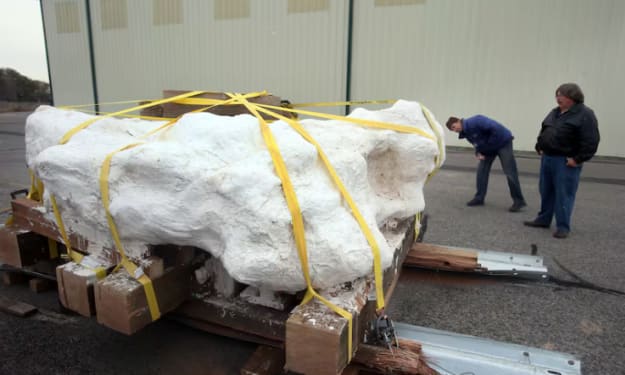
The mysterious 9-ton stone block sealed up to 20 "monsters" for 136 million years
According to Deseret News , 20 years ago, archaeological experts found a strange stone block in Arches National Park in Utah, USA. After testing, they said the rock belonged to the Cedar Mountain Formation. More surprisingly, inside it is "sealing" about 20 different "beasts".
By Ken Daklak2 years ago in FYI
6 underground attractions that attract the most tourists in the world
Most people feel scared when going deep underground - a pitch-black land, filled with mysteries that even scientists have not been able to discover. Even for brave people, being underground can easily make people feel suffocated and repressed.
By Ken Daklak2 years ago in FYI