Historical
"The New Age of Borders: How Global Travel is Evolving in 2025"
The world has changed dramatically over the past few years. International travel, once straightforward for many, now operates under new rules, new technologies, and new philosophies. As we move deeper into 2025, the very idea of borders is evolving — not disappearing, but transforming.
By Muhammad Rafiq2 years ago in FYI
Why Is a Pope's Signet Ring Broken When He Dies?
What Is the Papal Signet Ring? The fisherman's ring is much more than a mere bauble of jewelry. It is worn by the current pope and serves as a public reminder of his role as the successor of Saint Peter—the apostle appointed by Jesus to be the rock on which the Roman Catholic Church would be established. The ring typically has an engraving of Saint Peter fishing from a boat, a clear allusion to Christ's words in the Bible to call Peter to be a "fisher of men." Beyond this legendary image, the ring also carries the name of the current pope.
By samoresh de2 years ago in FYI
LinkedIn: From Online Résumé to the World’s Professional Powerhouse
When you think of social media, flashy platforms like TikTok, Instagram, or YouTube come to mind. But quietly operating behind the scenes is a different kind of giant — LinkedIn. It's not about selfies, dances, or daily vlogs. It’s about jobs, connections, and career growth. Yet, its story is just as remarkable as its louder counterparts. This is the story of how a small idea about connecting professionals changed the way the world finds work. --- The Beginning: A Different Kind of Network The year was 2002. Reid Hoffman, a Silicon Valley veteran with experience at PayPal and SocialNet, had an idea. While others were focused on connecting friends and families, Hoffman wanted to create a space where people could connect professionally, build trust, and advance their careers. He joined forces with Allen Blue, Konstantin Guericke, Eric Ly, and Jean-Luc Vaillant to bring that idea to life. On May 5, 2003, LinkedIn was launched from Hoffman’s living room. The early days were slow. In the first week, only 2,700 people signed up. Growth was sluggish, and most people didn’t understand why they needed a professional social network. At a time when MySpace and Friendster dominated the scene, LinkedIn felt out of place. But the team stayed focused — they believed that one day, everyone would need a place to manage their professional identity. --- Finding Its Purpose LinkedIn began picking up momentum when it introduced features like: Endorsements and recommendations Groups for industries and interests Company pages Job listings What set LinkedIn apart wasn’t just its tools — it was its focus. While other platforms chased attention and entertainment, LinkedIn doubled down on being useful. It became the place to: Recruit top talent Discover job opportunities Show off work experience Share professional insights By 2006, LinkedIn had 5 million members. By 2011, that number had grown to 100 million. Companies started recognizing its value. Instead of posting jobs on outdated job boards, they turned to LinkedIn — where they could find highly targeted, skilled candidates with just a few clicks. --- Making Money the Smart Way LinkedIn had something most platforms struggled with: a clear business model. While others relied mostly on ads, LinkedIn made money in three smart ways: 1. Premium memberships – Professionals paid to see who viewed their profile, message people outside their network, or access detailed insights. 2. Recruitment tools – Companies paid for powerful talent-hunting features. 3. Advertising – High-value, targeted ads for B2B and career-related services. This three-pronged model helped LinkedIn become profitable early, which gave it the breathing room to innovate and expand. --- The Microsoft Era In 2016, Microsoft acquired LinkedIn for $26.2 billion in cash. Many questioned the deal — what was Microsoft, a tech company known for software, doing buying a social network? But it made perfect sense. Microsoft wanted to integrate LinkedIn’s data and network into its tools like Microsoft Office, Outlook, and Teams. The result? A tighter ecosystem where professional identity and productivity were woven together. Since the acquisition, LinkedIn has only grown. It now boasts: Over 1 billion users Presence in 200+ countries Over 50 million companies listed It’s the go-to platform for hiring, networking, thought leadership, and skill development. --- More Than Just a Job Board Today, LinkedIn is far more than a digital résumé. It’s a content platform, a learning hub, and a personal branding tool. Creators and professionals alike use it to share industry insights, build influence, and connect with communities that matter to their careers. It has also transformed the modern job hunt. With features like “Open to Work” and skill badges, people don’t just apply for jobs anymore — they attract them. --- The Quiet Giant That Changed Everything LinkedIn didn’t explode onto the scene. It didn’t go viral. It grew deliberately, strategically, and with purpose — and that may be its greatest strength. In a world where attention is currency, LinkedIn has built something even more powerful: trust. That’s why it remains one of the most respected and valuable platforms on the internet.
By SHADOW-WRITES2 years ago in FYI
Google: The Search Engine That Became the Brain of the Internet
In the mid-1990s, the internet was growing fast, but searching for information online felt like wandering through a library with the lights off. You had to dig through cluttered pages, inaccurate results, and slow-loading sites just to find something useful. Two Stanford University students — Larry Page and Sergey Brin — saw a better way. What started as a research project quickly grew into one of the most powerful, influential companies the world has ever seen. This is the story of how Google went from a dorm room idea to becoming the gateway to all human knowledge. --- It All Started with Backrub In 1996, Larry and Sergey started developing a search engine called Backrub. The idea was simple but revolutionary: instead of just counting how many times a keyword appeared on a page, their system would evaluate a site’s importance based on how many other sites linked to it. They called it PageRank, and it was the foundation of what would become Google. The name “Backrub” didn’t stick for long. Eventually, they renamed the project Google, a play on the word “googol,” which means the number 1 followed by 100 zeros — a nod to the massive scale of information they hoped to organize. --- A Garage, a Check, and a Breakthrough In 1998, Page and Brin received their first big investment — a $100,000 check from Sun Microsystems co-founder Andy Bechtolsheim. They weren’t even incorporated yet. The check had to sit in a drawer until they officially founded the company. They launched Google out of a friend’s garage in Menlo Park, California, the same kind of humble beginning as Apple and Amazon. Their goal? "To organize the world’s information and make it universally accessible and useful." The site quickly gained traction because it was clean, fast, and accurate. Unlike the cluttered search engines of the time (like Yahoo! and AltaVista), Google returned relevant results in milliseconds. --- Changing the Internet — and the World As more users flocked to Google, the challenge became how to make money from all that traffic. That’s where AdWords (now Google Ads) came in. Launched in 2000, it allowed businesses to advertise directly within search results. It wasn’t just ads — it was targeted, keyword-specific advertising, and it worked incredibly well. Google turned into a money-making machine almost overnight. Then came an avalanche of game-changing innovations: Gmail (2004): Free email with 1GB of storage — 100x what others offered. Google Maps (2005): Interactive, detailed, and eventually paired with Street View. Android (acquired 2005): The mobile OS that would eventually dominate the smartphone market. Chrome (2008): A lightning-fast browser that quickly became #1 worldwide. Google Drive, Docs, Sheets: Cloud-based productivity tools that rival Microsoft Office. By the end of the 2000s, Google was no longer just a search engine. It had become the operating system of the modern internet. --- Alphabet and the Moonshots In 2015, Google restructured itself under a new parent company called Alphabet Inc. The idea was to separate its core business (search, ads, YouTube, etc.) from its experimental ventures — known as “moonshots.” These include: Waymo: Self-driving cars Verily: Health tech DeepMind: Artificial intelligence Loon: Internet balloons for rural areas While not all of them succeed, Alphabet’s willingness to bet big on the future has kept Google at the forefront of innovation. --- The Double-Edged Sword of Influence Today, Google handles over 8.5 billion searches per day. Its reach touches everything from the phone in your pocket to the ads you see, the maps you follow, and even the questions you ask. But with power comes scrutiny. Google has faced criticism over privacy, censorship, monopoly practices, and data collection. The debate continues over how much control a single company should have over so much information. Still, the company’s impact is undeniable. --- From Dorm Room to Digital Empire Larry Page and Sergey Brin never set out to build an empire. They just wanted to make it easier to find stuff online. But in doing so, they created a platform that became the gateway to the internet for billions of people. Google didn’t just change how we search — it changed how we think, how we live, and how we connect.
By SHADOW-WRITES2 years ago in FYI
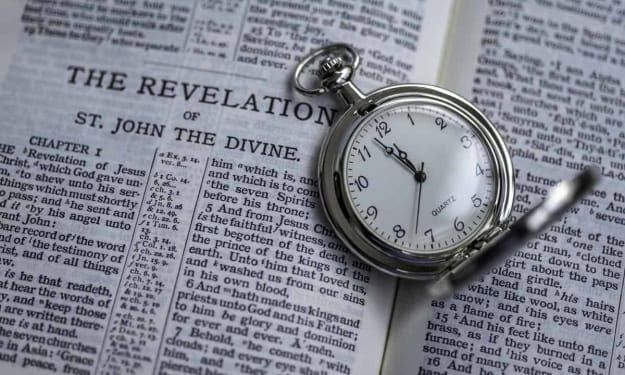
A basic guide to understanding the Book of Revelation. AI-Generated.
The Book of Revelation, that is, the last book of the Bible, has been one of the most controversial throughout history. To understand it well, it is convenient to be guided by its structure and carefully read each of its messages, since they lend themselves to too many interpretations.
By Ninfa Galeano2 years ago in FYI
Apple: The Garage Startup That Changed the World
In 1976, inside a cluttered garage in Los Altos, California, two young men with a shared passion for computers decided to build something revolutionary. Their names? Steve Jobs and Steve Wozniak. With $1,300, a typewriter, and a wild belief that computers could become personal, they created Apple — a company that would later redefine innovation, design, and global culture. Today, Apple is a trillion-dollar giant, but its journey to the top is anything but smooth. It’s a story of vision, rebellion, near-failure, and relentless reinvention. --- The Humble Beginnings Jobs was the charismatic dreamer. Wozniak, the shy genius. Together, with the support of Ronald Wayne (who sold his 10% stake after just 12 days), they built the Apple I — a computer sold as a fully assembled circuit board, which was revolutionary at the time. They sold the machine out of Jobs’ parents’ garage. The first big order? 50 units from a local computer store called Byte Shop. That was just the beginning. Soon after, Apple introduced the Apple II, which brought color graphics and a sleek design. It became one of the first mass-market personal computers — and Apple’s first commercial hit. --- From Success to Struggle By the early 1980s, Apple was riding high. But competition was fierce. IBM entered the personal computer game, and Apple needed to stay ahead. So Jobs pushed for something bolder — the Macintosh, introduced in 1984 with the now-iconic Super Bowl commercial directed by Ridley Scott. The Mac introduced the world to a graphical user interface and a mouse, concepts we take for granted today. But inside Apple, things weren’t going well. Jobs was brilliant, but difficult. His leadership style clashed with the growing corporate structure. By 1985, he was pushed out of his own company. The company he founded was no longer his. --- The Comeback Nobody Saw Coming Apple without Jobs began to decline. Products flopped. Market share dropped. By the mid-1990s, Apple was close to bankruptcy. Then, in 1997, Apple made a stunning move — it acquired NeXT, a computer company founded by Jobs after his ousting. That acquisition brought Steve back home. And that changed everything. Jobs became CEO again, and he wasted no time reshaping Apple’s future. He simplified the product line, improved design, and focused on innovation. In 1998, Apple released the iMac — colorful, bold, and unlike anything on the market. Sales surged. Apple was back. --- The Era of Iconic Innovation Then came the magic. 2001: iPod – A music player that put 1,000 songs in your pocket. 2003: iTunes Store – A new way to buy and manage digital music legally. 2007: iPhone – The product that changed everything. A phone, an iPod, and an internet device, all in one. 2010: iPad – A tablet that reshaped media consumption. 2015: Apple Watch – Wearable tech done right. Each product wasn’t just well-designed — it changed how people lived, worked, and played. Apple didn’t just launch gadgets. It created ecosystems. --- From Tech Company to Cultural Icon Under Jobs, Apple became known not just for innovation, but for aesthetic excellence and brand loyalty few companies could rival. When Jobs passed away in 2011, many feared Apple would lose its soul. But under CEO Tim Cook, the company doubled down on sustainability, health, privacy, and service-based revenue like Apple Music, iCloud, and the App Store. Apple became the first U.S. company to reach a $1 trillion valuation in 2018, then $2 trillion, then $3 trillion — a level no one could’ve imagined back in that garage in 1976. --- The Legacy of Apple Apple’s story is a reminder that the future belongs to those bold enough to challenge the present. It’s about vision, failure, resilience, and relentless pursuit of excellence. Jobs once said, “People who are crazy enough to think they can change the world are the ones who do.” Crazy or not, Apple did exactly that.
By SHADOW-WRITES2 years ago in FYI