Historical
The Power of Misinformation: A Cautionary Tale
*The Power of Misinformation: A Cautionary Tale* In today's digital age, misinformation can spread like wildfire, often with devastating consequences. A recent story circulating on social media highlights the importance of fact-checking and critical thinking. The story, which claims to be about a father who brutally injured his two-year-old son and then set his car on fire, is a perfect example of how misinformation can spread and cause harm. *The Story* The story goes like this: a father in Abu Dhabi, United Arab Emirates, became enraged when his two-year-old son scratched his new car with a nail. In a fit of rage, the father hit the child with a hammer, causing severe injuries, including the loss of a finger. When the child asked the father when his finger would grow back, the father was overcome with guilt and set the car on fire. The next day, the father took his own life, unable to cope with the trauma he had inflicted on his child. *The Red Flags* While the story is certainly tragic, there are several red flags that suggest it may not be entirely true. For example: - Would a father really use a hammer to clean his car? - Can a two-year-old child write a coherent message, such as "I love you, Daddy"? - Would a child who has just suffered a severe injury be able to ask such a profound question about their finger growing back? - What is the connection between the Abu Dhabi police and the city of Riyadh, Saudi Arabia, which is mentioned in the story? *The Dangers of Misinformation* This story highlights the dangers of misinformation and the importance of fact-checking before sharing information on social media. When we share information without verifying its accuracy, we can contribute to the spread of misinformation and cause harm to others. In this case, the story may have been fabricated to elicit an emotional response from readers, rather than to provide a genuine account of events. *The Importance of Critical Thinking* Critical thinking is essential in today's digital age, where misinformation can spread quickly. By taking the time to verify information before sharing it, we can help to prevent the spread of misinformation and promote a more informed and engaged community. *The Consequences of Misinformation* The consequences of misinformation can be severe. In this case, the story may have caused unnecessary distress and anxiety for readers who believed it to be true. In other cases, misinformation can have even more serious consequences, such as: - Damaging someone's reputation or credibility - Inciting violence or hatred towards certain groups or individuals - Causing financial losses or economic instability *The Role of Social Media* Social media plays a significant role in the spread of misinformation. Platforms such as Facebook, Twitter, and WhatsApp can spread information quickly and widely, often without adequate fact-checking or verification. While social media can be a powerful tool for sharing information and connecting with others, it also requires a critical and discerning approach. *How to Avoid Spreading Misinformation* So, how can we avoid spreading misinformation on social media? Here are a few tips: - Verify information before sharing it - Check the credibility of the source - Be cautious of emotional or sensational headlines - Take the time to fact-check information before sharing it *Conclusion* In conclusion, the story of the father who brutally injured his two-year-old son and then set his car on fire is a cautionary tale about the dangers of misinformation. By being aware of the potential for misinformation and taking steps to verify information before sharing it, we can help to promote a more informed and engaged community. Remember, it's always better to be safe than sorry, and a little bit of skepticism can go a long way in preventing the spread of misinformation. *The Importance of Media Literacy* Media literacy is critical in today's digital age, where misinformation can spread quickly. By understanding how to evaluate information and identify potential biases or inaccuracies, we can make more informed decisions and avoid spreading misinformation. *The Role of Education* Education plays a critical role in promoting media literacy and critical thinking. By teaching children and adults alike how to evaluate information and think critically, we can help to promote a more informed and engaged community. *The Future of Misinformation* As technology continues to evolve, it's likely that misinformation will continue to be a major challenge. However, by promoting media literacy, critical thinking, and fact-checking, we can help to mitigate the effects of misinformation and promote a more informed and engaged community. In conclusion, the spread of misinformation is a complex issue that requires a multifaceted approach. By understanding the causes and consequences of misinformation, promoting media literacy and critical thinking, and taking steps to verify information before sharing it, we can help to create a more informed and engaged community.
By Ikram Ullahabout a year ago in FYI
The Concept of Lucifer: A Comparative Analysis of Christian and Islamic Perspectives
*The Concept of Lucifer: A Comparative Analysis of Christian and Islamic Perspectives* The concept of Lucifer, also known as Satan or Iblis, is a complex and multifaceted figure that has been interpreted in various ways across different cultures and religions. In Christianity, Lucifer is often depicted as a fallen angel who defied God's authority and was cast out of heaven. In Islam, Iblis is considered a jinn who disobeyed God's command to prostrate before Adam. This article will explore the differences and similarities between the Christian and Islamic perspectives on Lucifer, examining the biblical and Quranic accounts, as well as the cultural and artistic representations of this figure. *The Christian Perspective: Lucifer as a Fallen Angel* In Christian theology, Lucifer is often seen as a beautiful and powerful angel who was cast out of heaven due to his pride and rebellion against God. The biblical account of Lucifer's fall is found in the book of Isaiah, which describes how the morning star, Lucifer, fell from heaven due to his pride and ambition (Isaiah 14:12). This passage is often interpreted as a reference to the fall of Satan, who is seen as the embodiment of evil and opposition to God. The concept of Lucifer as a fallen angel has been influential in Western art and literature, with many depictions of Satan as a beautiful and charismatic figure who embodies the qualities of pride, ambition, and rebellion. John Milton's epic poem "Paradise Lost" is a classic example of this tradition, portraying Satan as a complex and nuanced character who is both beautiful and terrifying. *The Islamic Perspective: Iblis as a Jinn* In Islamic theology, Iblis is considered a jinn who disobeyed God's command to prostrate before Adam. According to the Quran, Iblis was not an angel, but a jinn who was given the choice to obey or disobey God's command (18:50). Iblis's disobedience was due to his pride and arrogance, and he was punished by God for his actions. The Islamic perspective on Iblis highlights the importance of obedience and submission to God's will. Iblis's story serves as a warning against the dangers of pride and arrogance, and the importance of humility and obedience. *Comparison of Christian and Islamic Perspectives* While both Christianity and Islam recognize the figure of Lucifer or Iblis as a symbol of evil and disobedience, there are significant differences in the way this figure is understood and depicted in each tradition. In Christianity, Lucifer is often depicted as a beautiful and powerful angel who embodies the qualities of pride and rebellion. In Islam, Iblis is considered a jinn who disobeyed God's command, and his story serves as a warning against the dangers of pride and arrogance. The artistic representations of Lucifer in Western culture also reflect the differences in the way this figure is understood. In many Western artworks, Lucifer is depicted as a beautiful and charismatic figure, often with wings and a handsome appearance. In contrast, Islamic art often depicts Iblis as a monstrous or ugly figure, symbolizing his evil nature. *Cultural Significance of Lucifer* The concept of Lucifer has had a significant impact on Western culture, influencing art, literature, and popular culture. From John Milton's "Paradise Lost" to the modern-day depictions of Satan in popular culture, the figure of Lucifer continues to fascinate and inspire artists and writers. In recent years, the concept of Lucifer has also been reinterpreted in various ways, with some seeing him as a symbol of rebellion and nonconformity. This reinterpretation reflects the complex and multifaceted nature of the Lucifer myth, which continues to evolve and adapt to changing cultural and social contexts. *Conclusion* The concept of Lucifer is a complex and multifaceted figure that has been interpreted in various ways across different cultures and religions. While both Christianity and Islam recognize the figure of Lucifer or Iblis as a symbol of evil and disobedience, there are significant differences in the way this figure is understood and depicted in each tradition. By examining the biblical and Quranic accounts, as well as the cultural and artistic representations of Lucifer, we can gain a deeper understanding of the significance and impact of this figure on Western culture and beyond. In conclusion, the concept of Lucifer serves as a reminder of the importance of humility and obedience to God's will. Whether depicted as a fallen angel or a disobedient jinn, Lucifer's story highlights the dangers of pride and arrogance, and the importance of submission to a higher authority. *The Impact of Lucifer on Art and Literature* The concept of Lucifer has had a profound impact on art and literature, inspiring countless works of art and literature throughout history. From the iconic depictions of Satan in John Milton's "Paradise Lost" to the modern-day reinterpretations of Lucifer in popular culture, this figure continues to fascinate and inspire artists and writers. The artistic
By Ikram Ullahabout a year ago in FYI
Abraham Accord or Abraham Betrayed? Unmasking the Politics of Peace
They call it peace. We see it as a betrayal. In 2020, the world witnessed a moment portrayed as historic: the signing of the Abraham Accords by Israel, the United Arab Emirates, and Bahrain, with full support from the United States. Media outlets celebrated it as a breakthrough for Middle East peace, claiming it to be rooted in the shared heritage of Prophet Abraham — known in Arabic as Ibrahim (A.S.).
By Leah Brookeabout a year ago in FYI
The Curse of Tamerlane’s Tomb – Did Opening It Unleash World War II’s Fury?
A Tomb That Whispers Nestled in Samarkand’s azure-lit Gur‑e‑Amir Mausoleum lies the tomb of Timur—known as Tamerlane—the 14th-century conqueror whose empire stretched from Persia to Delhi. In
By DRE Explainsabout a year ago in FYI
Mayday Over the Mediterranean
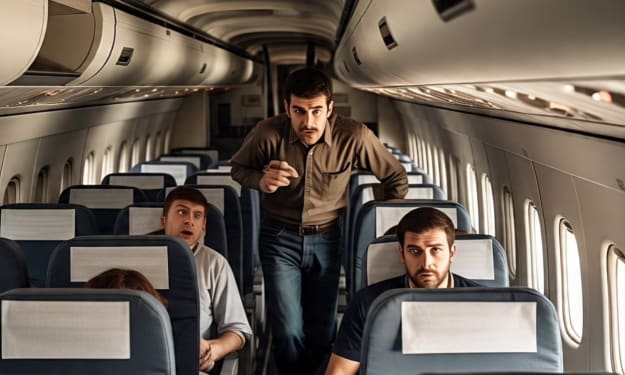
It was supposed to be just another connecting flight. Athens to Rome. A short trip over the turquoise waves of the Mediterranean. I was returning home from a business conference in Greece, carrying nothing but a briefcase, my laptop, and a head full of deadlines. The plane took off at 10:42 a.m. The sky was clear. Flight attendants smiled, offering orange juice or coffee. We were just leveling off above 30,000 feet when I noticed them: two men in heavy jackets, sweating nervously despite the cool air conditioning. Ten minutes later, chaos shattered the calm. One of the men stood up, yelled in broken English, and held up something small but unmistakable—a grenade. Panic erupted. The other man ran toward the cockpit, shoving a steward aside. Screams echoed, babies cried, and within seconds, the hijackers took control. One claimed to have a bomb strapped to his chest. The intercom buzzed. The captain's voice, trembling, translated the demand: “We have been hijacked. We are being diverted to Beirut.” My hands were shaking. I had read about hijacks. I just never thought I’d be inside one. The Hours That Followed For the next six hours, we were prisoners in a steel box flying over nations we couldn't see. We landed once—somewhere in Cyprus, I think—for fuel. Negotiators tried to talk over radio. The hijackers shouted in Arabic, argued with the crew, and slapped a passenger who tried to stand. They claimed political motives. “We want the world to know we exist!” one shouted. We didn’t understand. We didn’t care. We just wanted to survive. A young flight attendant, barely 22, whispered prayers in Greek. I watched an old woman hold hands with a man she didn’t know. Strangers became family in those narrow seats. One passenger had a heart condition. The hijackers wouldn’t let him access his medication. A quiet protest formed. An elderly man offered his own pills. A teenager gave up her bottle of water. Humanity found its way through terror. One woman kept a journal the entire time, writing in tiny cursive letters, recording everything—our fears, our prayers, our attempts to stay calm. Later, I learned her entries would become key evidence in an international investigation. The Escape We Didn’t Expect The plane took off again. This time, we headed for Libya. But something went wrong. An F-16 fighter jet appeared on our left. Then another on the right. A standoff began in the sky. Through the tiny windows, I saw them—armed, fast, circling us like hawks. Then came the moment I’ll never forget: The pilot faked an engine failure. He announced in Arabic and English, “One engine failed. Emergency landing!” and guided us toward Malta. The hijackers panicked. One tried to force open the cockpit. The other grabbed a woman from the front row and used her as a shield. But the pilot was calm. He landed the plane hard and fast. Airport police surrounded us in seconds. Hours passed with no food, no bathroom breaks. And then… Gunfire. A single shot cracked through the air. Then a flash. Smoke. Confusion. Special forces stormed the plane. The fight was fast, loud, and brutal. I ducked behind a seat. Screams blended with gunfire. When it was over, one hijacker lay dead, the other bleeding. What Came After We were escorted off in silence. Some wept, others laughed nervously, unable to process the trauma. I remember the sun setting as I stepped onto the tarmac. I looked up, feeling the air again. Alive. That was the word. Later, I would find out this was one of the most underreported hijacks in European air history. Some say it was a failed terrorist attack. Others say it was a message. I only know it changed how I saw life. I call my parents more often now. I say “I love you” without shame. And I never board a plane without silently thanking the pilot, the crew, and every brave soul who stood up in the face of fear. Aftermath and Reflection Weeks passed before I returned to normal. If you can call it that. Nightmares visited me often—being trapped, hearing that click of a grenade pin, the suffocating smell of fear. The airline offered therapy. I accepted. We were also called to testify. The surviving hijacker was eventually sentenced. But justice never truly balances the scale. I kept in touch with some passengers. The teenager who gave her water became a paramedic. The old woman who held a stranger’s hand now writes letters to that man monthly. As for me, I write. Because stories like these shouldn’t be forgotten. Because sometimes, survival itself is the loudest story we can tell.
By Muhammad Usamaabout a year ago in FYI
🔥 The Healing Heat of Japanese Saunas: Discovering Japan’s Sauna Culture in Osaka. AI-Generated.
Japan’s sauna culture is more than a health trend—it’s a spiritual journey. While most visitors associate Japan with sushi, shrines, and Shinkansen, there’s another side of modern Japanese life that deserves attention: the art of “totonou”—achieving a euphoric state through sauna.
By Takashi Nagayaabout a year ago in FYI
When the Sky Turned Orange
In the summer of 2023, residents of New York City woke up to a sight that seemed straight out of a dystopian film. The sky had turned a hazy, unnatural orange. It wasn’t a cinematic filter or a social media hoax. It was real—and terrifying. The cause? Smoke drifting in from unprecedented wildfires raging in Canada. For days, people walked the streets in masks, not because of a pandemic, but to protect themselves from the hazardous air. Flights were delayed, schools closed, and health advisories warned vulnerable groups to stay indoors. The Big Apple, known for its bustling energy, slowed to a tense, smog-covered crawl. This wasn't an isolated event. From California to Australia, from the Amazon to Siberia, wildfires have been increasing in intensity, frequency, and destructiveness over the past decade. What used to be considered "once in a generation" fires are now annual occurrences. The Science Behind the Fire So why is this happening? Scientists are clear: climate change is the accelerant. Rising global temperatures dry out forests, turning them into tinderboxes. Changes in precipitation patterns leave some areas in prolonged droughts. Add lightning strikes or human negligence into the mix, and you've got a recipe for catastrophe. A study by the National Oceanic and Atmospheric Administration (NOAA) found that the U.S. is experiencing larger and more frequent wildfires than ever before. Satellite data shows that the average wildfire season is now nearly 80 days longer than it was in the 1980s. It’s Not Just About Trees The impact of wildfires extends far beyond the burning of trees. The carbon dioxide released during these fires accelerates global warming, creating a vicious feedback loop. The smoke contains fine particulate matter (PM2.5), which can penetrate deep into human lungs, causing respiratory and cardiovascular issues. Studies have linked wildfire smoke exposure to increased emergency room visits and even premature deaths. Ecosystems are disrupted, species lose their habitats, and indigenous communities are often the first to suffer. The economic toll is staggering: billions of dollars in damages, lost productivity, and long-term health costs. The Political Flame Despite the clear science, wildfire policy remains mired in politics. Debates rage over forest management, prescribed burns, and fire suppression funding. In some cases, misinformation campaigns downplay the role of climate change, focusing instead on short-term fixes rather than addressing root causes. Environmental advocates argue that we need systemic changes: aggressive carbon reduction targets, investment in renewable energy, and reforestation programs. Others focus on adapting to the new reality by building fire-resistant infrastructure and updating emergency response systems. Personal Stories Amid the Smoke Take Emily, a 29-year-old school teacher in Oregon. In 2021, a wildfire razed her neighborhood. "We had minutes to leave. The smoke was so thick I couldn’t see my own hands," she recalls. Her home, her school, her childhood memories—gone in hours. "But the worst part," she says, "was the feeling that this won't be the last time." Or consider the case of José, a firefighter in California who has battled flames for over a decade. "These aren’t the fires I used to fight," he says. "They move faster, burn hotter, and last longer. It’s like we’re fighting a dragon with a garden hose." What Can We Do? While the scale of the problem may seem overwhelming, action is possible. On a personal level, individuals can: Reduce their carbon footprint Support sustainable forestry products Donate to wildfire relief organizations Stay informed and vote for climate-conscious policies On a broader scale, governments and corporations must: Enforce stricter emissions regulations Fund climate research and adaptation strategies Protect and restore natural fire buffers like wetlands Prioritize marginalized communities in disaster planning A Glimpse of What’s to Come The orange sky over New York was not just an eerie anomaly—it was a glimpse of a potential future. If current trends continue, experts warn that megafires will become the norm rather than the exception. Entire regions may become uninhabitable during fire seasons, leading to climate migration and new geopolitical challenges. But with awareness comes the power to act. By understanding the roots and impacts of wildfires, we are better equipped to face them—not just as isolated disasters, but as part of a broader, systemic crisis that demands urgent, collective response. Because the sky turning orange should never feel normal.
By Muhammad Usamaabout a year ago in FYI
"Viral Hacks 2025: Dominate TikTok, Reels & Shorts.
✍️ By Aman Ullah --- 🌟 Introduction: Why short videos rule the internet Short videos have completely taken over our screens. Whether it’s TikTok, Instagram Reels, or YouTube Shorts, billions of people watch these snappy clips every single day. They’re quick, fun, and arguably the easiest way to get your content seen by millions.
By Aman Ullahabout a year ago in FYI
Miracle on the Hudson: The Harrowing True Story of Flight 1549
January 15, 2009 — a day like any other in New York City. Cold winds swept through the boroughs, and the Hudson River flowed silently under grey winter skies. At 3:25 PM, US Airways Flight 1549, an Airbus A320, took off from LaGuardia Airport, bound for Charlotte, North Carolina. Onboard were 150 passengers and five crew members, including Captain Chesley “Sully” Sullenberger and First Officer Jeff Skiles. For the first two minutes, everything was normal. Skies were clear, communication was steady, and the aircraft climbed smoothly. But at exactly 2 minutes and 7 seconds into the flight, at an altitude of 2,800 feet, the unimaginable happened. A flock of Canada geese slammed into the aircraft, disabling both engines in an instant. A thunderous silence fell inside the cockpit — the engines had gone completely dead. No thrust. No power. No second chance. --- 🧠 Decisions in Chaos The cockpit, once full of humming machinery, now echoed with only the voices of two men making the most critical decision of their lives. Captain Sully radioed calmly, “We’ve lost thrust in both engines… we’re turning back towards LaGuardia.” Air Traffic Control scrambled. Options were tossed: “You can try LaGuardia… or Newark… or Teterboro.” Sully’s eyes scanned the skyline. His instincts — trained over decades — told him the ugly truth: they wouldn’t make it to any runway. He looked to the left. The Hudson River stretched like a silver ribbon between concrete towers. He spoke firmly: “We’re gonna be in the Hudson.” The decision was terrifying. No commercial aircraft had ever successfully executed a water landing in a river. The odds of survival? Practically none. But Sully was not like most men. --- 🌊 Impact Without Explosion At 3:31 PM, just under six minutes after takeoff, Flight 1549 struck the surface of the Hudson River at around 140 knots. The nose of the plane tilted upward slightly, absorbing the blow. The fuselage groaned but didn’t break. The water, instead of becoming their grave, cushioned them — barely. Inside, screams. Cold air. Water rushing in. Flight attendants rushed to open emergency exits. Inflatable slides deployed, doubling as life rafts. Passengers — dazed, panicked, and wet — stumbled out onto the wings, the rafts, or into the freezing water. And yet, no fire. No explosion. The plane floated. Within minutes, ferries, NYPD boats, and Coast Guard vessels swarmed in — pulled people from water and wings like angels in uniforms. When the last passenger was evacuated, Captain Sully walked the entire cabin — twice — to make sure no one remained. Only then did he exit, the last man to leave the sinking plane. --- 👨✈️ A Hero, Not a Showman In the hours and days that followed, Captain Sully became a national icon. His calm voice, stoic face, and precise actions were replayed on news channels across the globe. But to him, he had just done his job. He would later admit to battling PTSD. The landing played in loops in his mind. He questioned everything: Could I have made it to LaGuardia? Was ditching the only option? Flight simulations later showed that a perfect immediate return to LaGuardia might have been possible — but only if the decision was made within 20 seconds of the bird strike. Sully had taken 35. But the NTSB concluded that given the real-world uncertainty, lack of altitude, and time needed to assess the situation, his choice was the safest. They called it: “The most successful ditching in aviation history.” --- 🌍 Survivors Who Were Changed Forever Among the passengers, stories of transformation followed. A young couple who had postponed their wedding finally got married after surviving the crash. A man who had never swum before told reporters he’d always feared water — now, he embraced every moment of life. Two strangers who met during the evacuation would go on to start a relationship — bonded by the moment that nearly ended them. People on that plane re-evaluated their lives, their priorities, their definitions of miracles. --- 🏆 Legacy That Floated Above Time Sully and First Officer Skiles received heroic honors, including the Master’s Medal from the Guild of Air Pilots. The aircraft, recovered mostly intact, now rests at the Sullenberger Aviation Museum in Charlotte, North Carolina — not repaired, not polished — but preserved with all the scars of that fateful flight. In 2016, Clint Eastwood directed the film “Sully”, starring Tom Hanks as Captain Sullenberger. The movie brought this miracle to a new generation, showing that true heroism lies in quiet competence and selfless duty — not theatrics. --- 💡 Why This Story Still Matters It’s not just a plane crash story — it’s a human story. It proves that calm minds can save lives under impossible pressure. It reminds us that leadership is often silent, steady, and grounded in care for others. And above all, it teaches us that sometimes, miracles are man-made. --- 📊 Timeline at a Glance: Time Event 3:25 PM Flight 1549 takes off from LaGuardia 3:27 PM Bird strike disables both engines 3:28–3:29 Crew attempts restart, assesses options 3:30 PM Sully declares water landing 3:31 PM Plane lands in the Hudson River 3:35 PM Rescue boats arrive 3:55 PM Last person evacuated safely.
By Muhammad Usamaabout a year ago in FYI
USS Gerald R. Ford: The World’s Largest Warship That Can Shift the Tide of War
In the vast expanse of the world's oceans, there sails a vessel unlike any other — not just a warship, but a floating fortress, a symbol of military dominance, and a strategic game-changer in modern naval warfare. This colossal marvel is known as the USS Gerald R. Ford (CVN-78) — the most advanced and largest aircraft carrier ever built. Currently deployed in the Pacific Ocean, the ship is participating in routine naval exercises conducted by the United States Navy. However, when tensions rise or full-scale military operations begin, this warship is often the first to enter the battlefield — a statement of power, readiness, and technological superiority. --- ⚓ What Is the USS Gerald R. Ford? The USS Gerald R. Ford is the lead ship of the Ford-class aircraft carriers and represents the next generation of U.S. Navy warships. It is the successor to the famous Nimitz-class carriers, bringing with it enhanced capability, higher efficiency, and revolutionary technologies. Key Specifications: Length: 1,106 feet (approx. 340 meters) Beam (Width): 78 meters (flight deck) Draft: 34 feet (10.5 meters) Displacement: Around 100,000 tons Height from waterline to top of the structure: 244 feet — roughly equivalent to a 24-story building This sheer size makes it long enough to fit four full-sized football fields on its deck! --- 🛡️ What Can It Carry? The USS Gerald R. Ford is not just a ship — it is a complete mobile airbase at sea. It is designed to carry over 75 aircraft, including: F/A-18 Super Hornet multirole fighters F-35C Lightning II — the latest fifth-generation stealth fighters E-2D Hawkeye early warning aircraft MH-60R/S Seahawk helicopters Combat drones and unmanned aerial vehicles (UAVs) These aircraft enable the ship to conduct air-to-air combat, launch precision strikes, conduct surveillance, perform anti-submarine operations, and transport troops or rescue personnel. The ship also accommodates over 4,500 naval personnel, including sailors, airmen, engineers, and marines, making it a small city on water, complete with its own command centers, living quarters, cafeterias, clinics, and flight operations. --- 🛰️ Cutting-Edge Technology Onboard The Gerald R. Ford-class carriers are the most technologically advanced warships ever created. Key Features Include: Dual Band Radar (DBR): Automatically detects and tracks multiple aerial and sea threats. Electromagnetic Aircraft Launch System (EMALS): Replaces traditional steam catapults and allows faster, more efficient aircraft launches. Advanced Arresting Gear (AAG): Enables safe landing of aircraft with improved safety and efficiency. Automated weapons elevators: Reduces crew workload and speeds up rearming processes. Nuclear Propulsion System: Powered by two A1B nuclear reactors, the ship can operate for 25 years without refueling. These systems make the Gerald R. Ford not only more lethal and capable than any previous aircraft carrier but also far more cost-efficient in the long run. --- 🌍 A Strategic Presence: Near Iran, a Potential Flashpoint As of now, the USS Gerald R. Ford is positioned in international waters near the southern coast of Iran, observing regional developments. Tensions in the Middle East often dictate U.S. military movements, especially in scenarios involving Iran and Israel. If conflict escalates — particularly with U.S. support for Israel during rising hostilities — this carrier could be deployed near the Strait of Hormuz or Bandar Abbas, putting it within strategic striking range of sensitive Iranian targets. Such a move would place immense pressure on Iran, forcing it to confront the combined air and sea might of both the U.S. and Israeli forces. Given the Gerald R. Ford’s advanced defense and offensive systems, it would serve as an intimidating front-line deterrent. --- 🧠 Why Is It So Important? Aircraft carriers are the crown jewels of naval power. They allow nations to project power far from home shores without needing a permanent military base. With its air fleet, radar systems, and nuclear propulsion, the USS Gerald R. Ford can: Launch strikes anywhere within thousands of kilometers Provide humanitarian aid during natural disasters Enforce naval blockades Secure international shipping routes Act as command centers for coalition forces during joint operations It represents mobile sovereignty, extending America’s military reach into virtually any ocean on Earth. --- 🛠️ How Was It Built? The construction of the USS Gerald R. Ford began in 2005 and cost over $13 billion, making it the most expensive warship in history. It was commissioned in 2017 and named after President Gerald R. Ford, the 38th President of the United States and a former naval officer who served during World War II. Its construction involved: Thousands of engineers and shipbuilders Over 200,000 separate components Advanced materials designed to resist corrosion and extend durability Innovations that reduce the crew size by about 600 personnel compared to previous carriers --- ⚔️ The Future of Naval Warfare The USS Gerald R. Ford is just the first of a new class of carriers. The U.S. Navy plans to build at least four more Ford-class ships, ensuring that American naval dominance remains unchallenged for decades. But more than size and weaponry, this ship reflects a changing philosophy in naval warfare—one that is more precise, automated, and responsive. Its presence in global conflict zones acts as a warning and a reminder: power can arrive silently, swiftly, and devastatingly from the sea. --- Conclusion: The Floating Fortress of Modern Warfare The USS Gerald R. Ford is not just a machine — it is a message. A message that signals to the world America's unwavering commitment to global security, technological supremacy, and strategic dominance. As it silently cruises the ocean’s vastness — sometimes visible, often hidden — it reminds allies and adversaries alike: warfare has changed, and those who command the seas can influence the outcome of any global conflict. It is, in every sense, the world’s most powerful warship, capable of altering the tide of war — one mission, one launch, one presence at a time.
By Ikram Ullahabout a year ago in FYI