Historical
Titanic's Sister: A Dark Secret? BIBLIOGRAPHY
This is the bibliography for both portions of the article "Titanic's Sister: A Dark Secret?". This bibliography has been written separately from the two documents as I was having trouble putting it into the official documents due to a persistent parsing problem. At the end of both parts, I have provided a guide to the reader informing them to look at this bibliography for references.
By Luke Milner4 years ago in FYI
How Hawaii Was Stolen by the US
The ocean floor split open forty million years ago, letting molten lava pour out. As it collided with the chilly ocean water, it cooled and solidified, ultimately forming mountains in the water. These mountains continued to grow in height, and eventually a chain of islands emerged.
By C. Christian4 years ago in FYI
The forgotten history of Mexican Chernobyl
Two years before the Chernobyl catastrophe occurred, the largest nuclear accident on the American continent took place in Mexico. The tragedy known as the Cobalt-60 incident in Ciudad Juarez (in the north of the country) originated in a warehouse of the private hospital Centro Medico de Especialidades. This event is reminiscent of the Goiania accident in Brazil, with similar characteristics. "The Juarez accident was the largest in America due to the area affected and the waste generated," Epifanio Cruz Zaragoza, from the UNAM Nuclear Science Center, explained to Verne in an interview.
By diego michel4 years ago in FYI
Napoleon Bonaparte
Napoleon Bonaparte (born Napoleone Buonaparte; 15 August 1769-- 5 May 1821), later on understood by his regnal name Napoleon I, was a French armed forces and political leader that rose to prestige during the French Revolution and also led effective projects throughout the Revolutionary Wars. He was the de facto leader of the French Republic as First Consul from 1799 to 1804, after that Emperor of the French from 1804 up until 1814 as well as once more in 1815. He is thought about among the best army commanders in history. Napoleon's political as well as social legacy sustains to now; he stands as one of the most popular and also debatable leaders in history.
By james parker4 years ago in FYI
Most earlier human civilisation
What made our ancestors to be the most earliest human civilisation? This question always raises when we are talking about different cultures like Mesopotamia, Egypt, Sumeria etc.. And in my opinion, most of the people settled at the first places which were suitable for civilised living. Ancient Egyptians The ancient Egyptians were one of the earliest human civilizations. Their society is known for being very advanced and for some of the greatest buildings that have ever been built. They are also known for having an extremely complicated society with a lot of rules, punishments, and laws. The ancient Egyptians believed that there was one god above all others, called Ra. Each person was required to worship this god in a specific way. This included building temples dedicated to him and sacrificing animals to him on special occasions such as childbirth or death. The ancient Egyptians also believed in another god called Osiris, who ruled over the underworld. He was considered by many to be the father god and had many similarities with Set, who ruled over chaos or evil spirits in Egyptian mythology. Indus Valley Civilization The Indus Valley Civilization, also known as the Harappan Civilization, was a Bronze Age civilization characterized by urban settlements, advanced techniques of copper and bronze metallurgy, and a complex system of weights and measures. It is one of three Early Bronze Age civilizations in South Asia, the other two being Mesopotamia and Ancient Egypt. The Indus Valley Civilization emerged around 3300–3100 BCE in the Punjab region during the late Harappan period. It was founded by the immigrants from the Indus River valley (modern day Pakistan) who had established various early settlements there. The civilization mainly consisted of villages and small townships on river banks which were in constant contact with each other. The urban population lived in amorphous villages spread across the plains (the plain villages), while the rural population resided in isolated farmsteads or villages located away from these areas. The major religions of the time include Hinduism, Buddhism, Jainism and local variants of these religions such as Shaktism and Vaishnavism. A number of schools of thought developed within Hinduism, like Shaivism and Shaktism which are still practiced today. Some scholars have argued that Norte Chico The Norte Chico is a period of time in human history that began around 14,000 years ago, and ended around 10,000 years ago. It corresponds to the period when modern humans were expanding out of Africa and spreading throughout the globe. This period may be seen as the climax of the Old World civilization and culture which had emerged from a long process of development in Africa between 100,000 and 50,000 years ago. The civilizations of this period were characterized by an advanced material culture and widespread social inequality; the social systems included chiefdoms, states (including empires), and complex polities. The Norte Chico was dominated by sedentary cultures that built monumental architecture, multi-story pyramids, ball courts, earthworks, terraces.The peoples who inhabited this area are believed to have spoken languages belonging to one or more language families belonging to the Berber branch of Afro-Asiatic languages. The Norte Chico civilization originated in Sub-Saharan Africa. It spread through parts of East Africa to Southern Africa (Zimbabwe), West Africa (Senegal) and Southwest Asia (Iranian plateau). Later on it reached Europe where it was replaced by other civilizations including Mesopotamia and Egypt Mesopotamia Mesopotamia is a region of Southern Asia. It is named after the river and city of Mesopotamia (meaning between rivers). The term Mesopotamia was originally used to describe the area around the Tigris and Euphrates rivers, but has since come to refer to all of the lands between those two rivers. The earliest evidence of human settlement in Mesopotamia has been dated to approximately 9500 BCE. This was followed by archaeological periods which saw gradual shifts in people's lifestyles. There are traces of early writing systems in Sumerian, which date back as far as 3500 BCE, and Babylonian cuneiform script from about 1750 BCE. The decline of Sumerian civilisation resulted in the rise of Akkadian religion, while Babylonian empire was replaced by Persian empire. Later on, there was an interchange between Greek and Persian civilisations which led to the spread of Hellenistic culture throughout Asia Minor and Middle East regions such as Syria and Palestine. In about 300 BCE, Alexander the Great invaded Mesopotamia (then known as Babylonia) with his Macedonian army. The eastern part fell under Seleucid rule while western province came under Ptolemaic rule for a period before it was conquered by Rome in 63
By ABHI RAWAT4 years ago in FYI
Without a now-gone Nile River tributary, the Pyramids of Giza would not have been possible
The seventh wonder of the world, Cheops' pyramid, is one of the Giza pyramids, which captures the imagination. Not least of all due to the fact that they are built with millions of leaden stones. Naturally, you then ponder how the ancient Egyptians managed to get those stones there.
By Alex Hermes4 years ago in FYI
Remember, Remember the 5th November!. Top Story - November 2022.
I and millions of other Brits will be gathering in farmer's fields freezing to the bone this weekend. As we gaze in awe at the cold night backdrop and its pretty colourful display. Smells of gunpowder smoke slowly infiltrate the odours of cooked meats, kebab vans and children's sweets. The crowd huddled together in darkness in between sparklers, LED plastic sticks, and flickers of light all celebrating Guy Fawkes Night (Bonfire Night).
By Rosie J. Sargent4 years ago in FYI
El Peuchen of Mapuche Mythology. Top Story - November 2022.
The cultures of South America have such a rich history that it makes it challenging to hone in on any one particular subject. Every piece of folklore, mythology, creature, monster, and history of every culture has stories that have been told and retold countless times. Many of these have evolved and changed, sitting just below the surface of modern stories as nearly invisible roots. The first Harry Potter novel featured a basilisk, a snake with a lethal gaze. Accounts and descriptions of such a creature can be traced back to at least the writings of Pliny the Elder in Ancient Rome.
By J.A. Hernandez4 years ago in FYI
Magazine Subscriptions - Are they Worth it?
I like magazines. Honestly, I prefer magazines over books most of the time. They go a lot further and take up a lot less space. They are easy to travel with. They can be recycled and used quicker. They usually have more art and photographs within their pages to enjoy. Yes, I'm a fan of magazines.
By Shanon Angermeyer Norman4 years ago in FYI
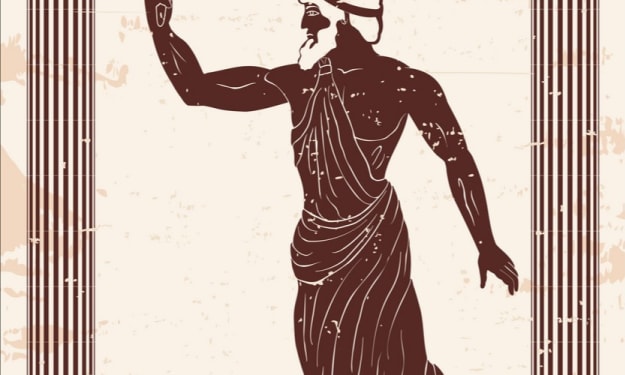
Old Greek Legends Present day Understanding
From Greek folklore to current comic books, accounts of strong creatures mirror society's qualities and power dreams. Old Greece portrayed legends plunged from divine beings, with otherworldly strength and power. Beginning during the 1930s, the brilliant period of comics, they portrayed creatures with godlike capacities, like the accounts of old Greece. Wesley Farnsworth, Wild West Comics and Games head supervisor, said Greek folklore straightforwardly and in a roundabout way impacts heros. Legends like Miracle Lady depend vigorously on Greek folklore, Farnsworth said. "These awesome characters are so persuasive thus strong, it's hard not to see them as, as, legendary or god-like creatures," Farnsworth said. Theory teacher Charles Chiasson said superhuman comics and Greek legends both arrangement with issues of mortality. Greek legends were not generally great or praiseworthy people. Current superheroes varied from antiquated Greek legends in their jobs of profound quality and how they reflected cultural perspectives, Chiasson said. Hercules, who is viewed as the embodiment of the old Greek legends, frequently took part in viciousness roused by childish longings. Current legends battle with being models of profound quality, an idea old Greeks didn't share. Additionally dissimilar to Greek folklore, present day creators' viewpoint of legends engage ladies. The Amazons, female champions in Greek folklore, existed to be crushed by legitimate male legends since they wouldn't bow to cultural standards, Chiasson said. Wonder Lady engaged ladies to track down certainty and worth. Greek residents saw antiquated legends with high eminence and assembled religions around them, Chiasson said. Penances were made to conciliate these gods. "This is normally not the situation with present day," Chiasson. Current superheroes battle with their ethical quality, while antiquated Greek legends were above human norms, he said. "Kids maintain that the Greek legends should be moral," Chiasson said. They maintain that they should be great individuals." Power was more significant, and the profound quality of a legend was irrelevant of old folklore. Comic books have various takes on superheroes, like how the old world had varieties of Greek writing, Chiasson said. The varieties of stories can show serious attributes while they could become comedic and happy in another story, he said. This is like superheroes, with shifts in essayists and characters. Brain science senior Channing Wells said superheroes can show the most ideal rendition of an individual while being interesting. "However much they are astounding, they're additionally reasonable." Wells said. "They're noticeably flawed." Relating to comic book superheroes and having their obligation to their ethics and temperances is a piece of their allure, Chiasson said. The availability of comics has empowered more individuals to appreciate and have an interest in comic book legends. The fame and lifted up status of superheroes is many times discussed in film and comics, Farnsworth said. "They're similar to the best variants of ourselves-they're honest, tell the truth, they battle for equity, they're awesome," Farnsworth said. "These various qualities we hope for, they are those credits times 10."
By John Chukwuemeka4 years ago in FYI