
Rubber Bellows: A Versatile Solution for Motion Control in Automotive and Industrial Applications
Rubber Bellows for Motion Control in Automotive and Industrial Applications

Introduction
Rubber bellows are consistently used in the automotive and several other industries due to their importance in functional manufacturing. Specifically intended for applications that require a level of mobility of the containment component, rubber bellows provide a protective seal that is flexible and robust. They have critical applications in providing support and extension of mechanical elements, as well as providing melt Interfaces to prevent contaminants from entering critical areas while damping or offering liner or angular movement. In this blog, we’d like to highlight what rubber bellows are, what they are used for in automotive and industrial industries, and the problems they address.
#### Rubber Bellows
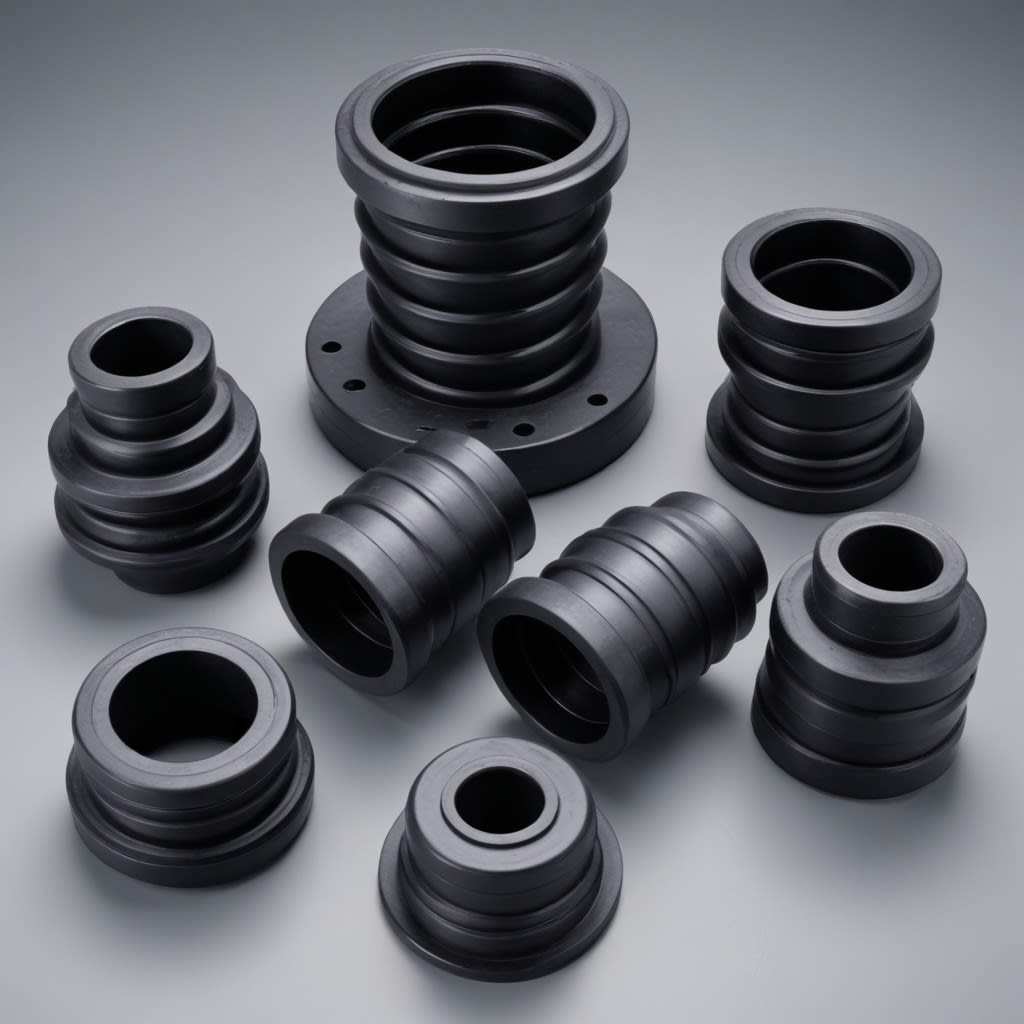
Rubber bellows are versatile components designed in the form of a flexible, foldable material used in the manufacture of rubber products or other elastomers. These designs make them collapsible and expandable and therefore suitable for areas that are expected to experience movement. There are variety of rubber bellows, which can be produced according to the size, shape and mechanical characteristics. The materials commonly used in rubber bellow manufacturing are EPDM, Nitrile rubber, and Silicone for each has its advantage depending on the application.
#### Some of the Challenges Common to Automotive and Industrial Uses
Several issues can contribute to the efficiency of equipment and systems in automotive and industrial environments. These challenges include:
- Vibration and Shock Absorption: It is usually found that machines and automobiles tend to vibrate which is damaging to the tools and cars. With out shock absorption, parts can get mutilated, was costly to car owners.
- Contamination Protection: The influences from dust, dirt, and other contaminants on the moving parts adversely affect their performance levels. A key element in holding in equipment is necessary to preserve its operational nature.
- Fluid Leakage: For many applications, operational and safety issues arise from leakage of fluids such as oil or coolant require seals to be used.
- Thermal Expansion: Fluctuations in temperature result in expansion and contraction in materials used, hence design elements that will not be affected by this process.
Rubber bellows adequately solve these problems by packaging motion control and protection.
### Benefits of Rubber Bellows for Automobile and Industrial Uses
Rubber bellows offer several advantages that make them an essential choice for automotive and industrial applications:
#### 1. The two strategies are labelled as flexibility and motion accommodation.
Rubber bellows are also flexible in design, which enable it to be subjected to different form of motion such as linear, rotational or angular movements. This flexibility is important where the components which make up the system require unrestricted motion.
#### 2. Vibration Dampening
Rubber bellows on the other hand are good vibration isolation devices that minimize vibration and shock levels prevalent in equipment and thus ensuring durability of sensitive equipment within the equipment. This vibration energy dissipation contributes positively to performance and durability of machines.
#### 3. Shield Against Harmful Substances
As a flexible seal rubber bellows shield the critical areas from dust, dirt and moisture by offering a barrier. This protection serves to prevent contamination that is likely to cause failure within the moving parts and to keep off dirt and dust on the surfaces.
#### 4. Protection against the environing conditions
Rubber bellows are used in a variety of climates and distances, of course, UV radiation, temperature, and chemical. These features guarantee that they are able to maintain functionality in the observed demanding environments.
#### Uses of Rubber Bellows in Automobile and Industries
Rubber bellows are used in a wide range of applications across the automotive and industrial sectors, including:
#### 1. Automotive Suspension Systems
In automobile shock absorber systems, rubber bellows are applied for shielding of the shock absorber as well as strut. They enable power train and lateral motion while excluding contaminants that affect ride quality and vehicular performance from entering the system.
#### 2. Drive Shafts
Hose clips are used in drive shafts to allow the movement of the shaft while at the same time protecting it from dirt and moisture. This ensures the longevity of the parts of the drivetrain and it is general health of the vehicles in question.
#### 3. Industrial Machinery
In industrial machinery rubber bellows is available in actuators, pumps and valves etc. They work as a sealing function that can eliminate any chances of leakage of fluids on the circuit board as well as shield critical components from the outsiders’ intrusion.
#### 4. Robotics and Automation
In robotics and automation raised rubber bellows are used to provide for movement of robotic arms while at the same time affording the necessary protection from debris and contaminants. They improve functionality of robotic systems in many ways such as in; production and construction.
### Resolution of General Issues Associated With Rubber Bellows
It is noteworthy that rubber bellows provide several solutions to multiple issues that are characteristic of automotive and industrial use. Here are some examples:
#### 1. Reducing Shock and Vibrations
Rubber bellows is famous for its absorption of vibrations and shocks hence protecting fragile part in automobiles and industrial plants. They are capable of increasing the durability of equipment and lowering maintaining expenses.
#### 2. Contamination Control: Progressive Implemented Protocol for Continuous Safety
It therefore protects important parts of systems from potential contaminants, while rubber bellows guarantee slick and functionally efficient operations. This protection of the equipment from contamination reduces the possibilities of failure and make the equipment more reliable.
#### 3. Preventing Fluid Leakage
Rubber bellows play the role of an effective seal against loss of fluid in various functions. This is especially the case in automobile systems that oil and coolants are used; leakage can cause issues and safety concerns.
#### 4. Coping with Thermal Expansion
Some come in rubber bellows to facilitate the expansion and contraction due to changes in temperatures of the environment into which they have been installed. This flexibility makes sure they do not compromise their sealing abilities with the fluctuation of temperatures.
#### Degree of Customization of Rubber Bellows
The elasticity of rubber enables manufacturers to greatly customize rubber bellows according to customer needs.
Since custom manufacturing solutions are available, they can work to design rubber bellows that will meet the needs of any particular application. Some common customization options include:
#### 1. Size and Shape
These flexible manufacturing aids can be manufactured in many sizes and thicknesses depending on their application. This ensures that they afford the required flexibility and sealing as needed for the job to be done.
#### 2. Material Selection
Considering the applications demands, there are several types of rubber materials available such as EPDM Rubber, Nitrile Rubber and Silicone Rubber each carrying characteristic features that can suit different climates.
#### 3. Thickness and Durometer
Rubber bellows can be manufactured to different thickness or hardness depending on requirement. Such customization enables the part to exhibit a better set of performance attributes, e.g. flexibility or durability.
#### Future Trending Aspects of Rubber Bellows
Significant challenges are observed when manufacturing rubber bellows due to the complexity of the technology. Some emerging trends include:
#### 1. Integration of Smart Sensors
The use of smart sensors in rubber bellows manufacturing is gradually increasing. These sensors can be used for performance parameters like temperature and pressure, which, if fed back in real time can greatly improve the efficiency in performance.
#### 2. Sustainable Materials
As there is rising awareness about sustainability, consumers and manufacturers are looking at green products for rubber bellows. This trend is to use less resource harming the environment while striving to achieve best performance.
#### 3. New Methods of Manufacturing
The development of improved manufacturing methods, including Selective Laser Sintering, 3D Printing and Precision Molded goods are expected to enhance productivity of the rubber bellows while providing better performance characteristics of the overall characteristics of the final product.
### Conclusion
Rubber bellows are a critical product for automotive and industrial markets, meeting all key requirements for motion control, protection against contamination, and shock isolation. These qualities make them useful in solving some of the problems that manufacturers and automotive engineers encounter most. Through flexibility, durability as well as resistance to environmental conditions, rubber bellows improve the performance and durability of critical systems. With the development of technology in the future, rubber bellows will be used more and more widely in automotive as well as the industrial markets to guarantee the quality and performance.
About the Creator
Excel Rubber Industries Inc
Excel Rubber Industries is a leading manufacturer of custom rubber products, specializing in high-quality seals, gaskets, O-rings, and profiles for various industries, including automotive, aerospace, and medical.
Enjoyed the story? Support the Creator.
Subscribe for free to receive all their stories in your feed.
Comments
There are no comments for this story
Be the first to respond and start the conversation.