
Riva's Enduring Appeal — How a Century-Old Italian Brand Remains Relevant to Modern Buyers
What makes a boat brand outlast generations, trends, and entire shifts in how people think about luxury

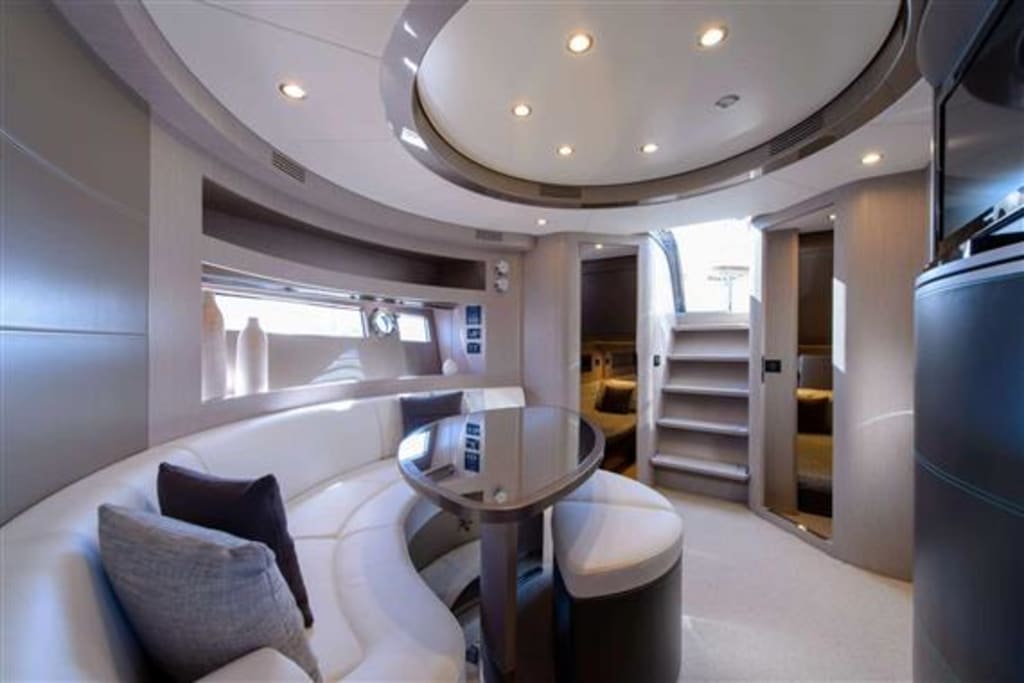
There are yacht brands and then there is Riva. The distinction matters because most boat manufacturers, however technically accomplished, exist primarily as solutions to a practical problem — you need a vessel, they build vessels. Riva has never really operated in that space. Since Pietro Riva started building boats on Lake Iseo in northern Italy in the 1840s, the company has occupied a different category entirely: not just watercraft, but objects that people have strong feelings about. That is a rare thing in any manufacturing industry, and understanding how Riva maintained it across nearly two centuries says something genuinely interesting about design, heritage, and why certain brands become permanent fixtures in cultural life.
Riva yachts for sale today — whether pre-owned classics from the 1950s and 1960s or current production models from the modern lineup — consistently attract buyers who are thinking about more than horsepower and hull specifications. That context is worth exploring.
The Object Itself
Start with the boats, because the reputation was built there first and everything else followed.
The Riva most people picture when they hear the name is the Aquarama, produced from 1962 to 1996. Mahogany hull, twin engines, deep red upholstery, chrome fittings that caught the Mediterranean light in a way that made photographers reach for their cameras reflexively. The Aquarama was not designed to be the most powerful or fastest runabout available. It was designed to be beautiful, and it succeeded so completely that it became the standard against which other beautiful boats are still measured.
What Carlo Riva understood — Pietro's great-grandson, who ran the company through its most influential decades — was that an object people love is fundamentally different from an object people use. You maintain something you love differently. You talk about it differently. You make purchasing decisions based on entirely different criteria. The Aquarama was not cheap when new, but buyers were not doing a cost-benefit analysis. They were responding to something that felt, in the most literal sense, worth having.
The craft that went into those boats was real, not decorative. The mahogany hulls required skilled woodworkers, the kind of patient, detail-oriented labor that industrial manufacturing had largely made obsolete. Riva maintained it anyway, partly out of tradition and partly because the result was something that simply could not be replicated by faster methods. That commitment to material quality became inseparable from the brand's identity.
How Hollywood and the Mediterranean Made Riva Famous
The Aquarama era coincided almost perfectly with the peak of a particular kind of European glamour — the late 1950s through the 1970s, when the Italian Riviera, the French Côte d'Azur, and Lake Como were genuinely central to how wealthy and famous people spent their summers. The boats that appeared in those settings got photographed, and the photographs went everywhere.
Brigitte Bardot on a Riva. Sean Connery. The Shah of Iran. Racing drivers. Film directors. It was not a calculated marketing strategy in the modern sense — Riva did not have the kind of brand management infrastructure that would be built decades later. It was more that the boats were beautiful, the people who could afford them were visible, and the resulting images embedded themselves in the collective imagination of anyone who was paying attention to what sophisticated leisure looked like.
This matters for understanding the current market for Riva yachts because that visual history is still actively shaping who buys them and why. A vintage Riva is not just a boat — it is a physical connection to a specific moment in postwar European culture that has never really lost its appeal. Design museums have acquired Rivas as objects worth preserving on purely aesthetic grounds. That is not something that happens to many manufacturers of recreational watercraft.
The modern Ferretti Group, which acquired Riva in 1969 under Whittaker Corporation and eventually became part of the current ownership structure, has worked carefully to maintain this cultural positioning while expanding the lineup into larger vessels. The contemporary Riva range includes everything from 27-foot day cruisers to superyachts exceeding 90 feet, and the design language across the range is recognizably continuous with the classic boats — the wood accents, the particular proportions, the sense that these are objects made to be looked at as much as used.
What the Vintage Market Actually Looks Like
The market for pre-owned and vintage Riva yachts is genuinely unusual compared to other boat categories.
Most used boats depreciate in ways that roughly track their mechanical condition and age. A ten-year-old production powerboat from almost any other manufacturer is worth a fraction of its original price, and that fraction continues declining. Vintage Rivas from the classic era — particularly Aquaramas, Ariston models, and Tritone runabouts in good condition — have held value in ways that more closely resemble fine art or classic automobiles than recreational watercraft. Exceptional examples have traded at auction for prices that would have seemed implausible when the boats were new.
This creates a market with dynamics worth understanding. Buyers looking at Riva yachts for sale in the vintage category are often approaching the purchase as both acquisition and investment, which changes the due diligence involved. Provenance matters — documented ownership history, original components, evidence of professional maintenance. Restoration quality matters enormously, because a poorly restored Riva can actually be worth less than a well-preserved unrestored example. The mahogany hull condition matters, the chrome condition matters, the engine originality matters.
There are specialist brokers who deal exclusively or primarily in classic Rivas, and the knowledge concentration in that corner of the market is significant. A buyer approaching it without good guidance tends to either overpay or acquire problems that were not obvious on inspection. The boats are old, they were built from organic materials that require ongoing attention, and the difference between a well-maintained example and a neglected one is not always visible at a glance.
The contemporary Riva market operates differently but shares some of the same quality sensitivity. New and recent-production Rivas are positioned at the upper end of the European performance boat and yacht for sale in Miami market, and buyers in that segment expect a purchasing experience and an ownership experience that matches the brand's reputation. Ferretti Group has built out the service infrastructure to support this, which matters because a beautiful boat that is difficult to maintain stops being enjoyable quickly.
Design as Identity
It is worth pausing on what Riva's design actually represents, because it is more specific than "Italian style" — a phrase that gets used loosely enough to lose meaning.
The classic Riva aesthetic is rooted in a particular attitude toward materials and proportion. The mahogany hulls were not just traditional — wood has acoustic and tactile properties that fiberglass cannot replicate, and the way a wooden boat sits in the water and responds to movement is physically different. Carlo Riva insisted on using the finest available mahogany, sourced specifically for the purpose, and the workshop standards for finishing were set at a level that made each boat genuinely time-intensive to produce.
The proportions of the classic runabouts — the long foredeck, the relatively low profile, the way the chrome fittings were placed — reflect an aesthetic sensibility that was Italian in a very specific way. Not baroque, not maximalist, but precise and confident. There is nothing on an Aquarama that is there by accident or because it was cheap to include. Every element was considered.
This is what design-oriented buyers respond to, and why Riva has attracted an audience that extends well beyond the conventional boating market. People who care about architecture, about furniture, about how well-designed objects feel in use — they find in Riva something that speaks to the same values that govern their other aesthetic choices. The boat becomes part of a sensibility rather than just a possession.
Contemporary Riva models have maintained this design discipline more successfully than most heritage brands manage when they scale up their production ranges. The transition from small wooden runabouts to fiberglass hulls and larger vessels was a genuine challenge to the brand's identity, and Ferretti Group has navigated it by investing heavily in design continuity — retaining wood detailing, maintaining the characteristic proportions, and working with designers who understand what the brand's visual language actually means rather than simply imitating its surface features.
The Buyer Profile and What It Reveals
Who actually buys Riva yachts, new or vintage, in the current market?
The honest answer is that it is a more varied group than the brand's exclusive image might suggest, though exclusivity remains part of the picture. At the top end — large new-production yachts and pristine vintage classics — the buyers are genuinely wealthy, often with existing collections of design objects or classic vehicles that reflect the same aesthetic interests. For these buyers, a Riva is a coherent addition to a curated life, and the price is not the primary decision factor.
Below that level, the market opens up considerably. Mid-size pre-owned Rivas from the 1980s and 1990s — the transitional period when the brand had moved to fiberglass but maintained strong design standards — can be found at prices accessible to serious enthusiasts who are not ultra-high-net-worth individuals. These buyers tend to be deeply informed about the brand's history, attentive to condition and provenance, and committed to proper maintenance. They are buying into something they care about, not making a casual leisure purchase.
There is also a growing segment of international buyers, particularly from markets in Asia and the Middle East, where Italian design heritage carries significant cultural weight. For buyers in these markets, Riva represents a specific kind of European aesthetic credibility that newer brands cannot easily replicate — it takes time to accumulate the kind of history that makes an object genuinely resonant.
Why Heritage Actually Matters in the Boat Market
The yacht industry has no shortage of technically sophisticated manufacturers. Hull engineering, propulsion systems, onboard technology, and construction quality have all improved dramatically across the industry over the past few decades. A buyer focused purely on performance and reliability has many excellent options.
Riva's continued relevance is not primarily a technical argument. It is a cultural one. The brand carries a specific history — of craftsmanship, of beautiful design, of presence in a particular moment of European cultural life — that simply cannot be manufactured from scratch. Newer brands can commission good design and invest in quality manufacturing. They cannot buy a Brigitte Bardot photograph or a racing heritage or seventy years of being the boat that appeared in the background of the images people still reference when they think about what summer on the Mediterranean looked like.
That is what buyers are actually purchasing, alongside whatever vessel they choose. Access to a lineage. Membership in a very long conversation about what beautiful things are worth making and keeping. It sounds like a soft reason to spend serious money. But it is, in practice, a durable one — which is why Riva is still here, still selling, and still mattering to people who care about these things, nearly 180 years after the first boat came out of that workshop on Lake Iseo.
About the Creator
Robert Lama
Robert Lama is a seasoned yacht broker with Miami International Yacht Sales, a reputable yacht brokerage company specializing in both used and new yachts. https://www.miamiinternationalyachtsales.com/
Enjoyed the story? Support the Creator.
Subscribe for free to receive all their stories in your feed.
Comments
There are no comments for this story
Be the first to respond and start the conversation.