
Preventing a Second Crimea: The U.S. Dilemma in Latvia
Inside America's Strategy to Protect the Baltics

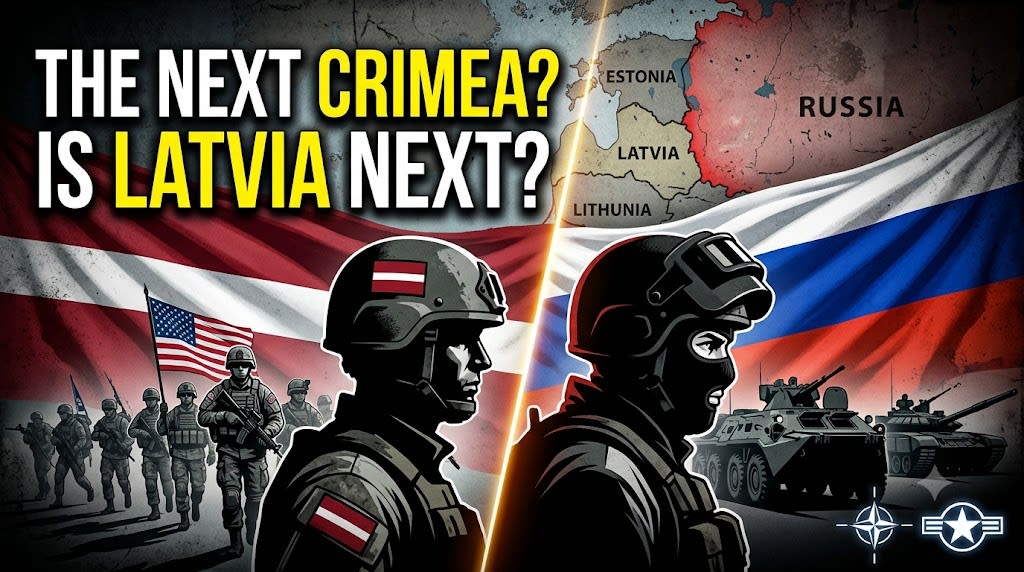
As Russian special ops cross the border and ethnic tensions boil over, the United States faces a chillingly familiar question: can it stop Latvia from becoming the next Crimea without triggering World War III?
This memo outlines the options for the United States actions towards Russian involvement in Latvia. Recently, a large ethnic Russian faction in Latvia under the name Rodina has staged protests and strikes across the country. These events have turned violent, and the tension has gained Russian support. Latvian officials have reported that Russian special operations units have already crossed the border, with masses of conventional forces staging at the border.
BACKGROUND:
Russia has a history of placing pressure on small Eastern European countries, with the most recent example of Russia’s annexation of Crimea from Ukraine in 2014. Destabilization within the country, as well as troop movements near the border, are events that occurred in 2014 and can be seen currently happening. In 2014, the Ukrainian government responded slowly and lost Crimea. To avoid an event from happening again, the North Atlantic Treaty Organization (NATO) has built up forces in Eastern Europe, including the Baltic States. This strategy of deterrence is largely aimed at Russia; however, they continue to build tension along their borders.
OBJECTIVES:
This agency has three principal objectives in this matter:
- Prevent and deter Russian forces from invading Latvia and other Baltic States
- Lead and assist our NATO allies in Europe during this situation
- Avoid any direct conflict with Russia, unless necessary
OPTIONS AND ANALYSIS:
To accomplish the objectives, this agency proposes two options:
1. Increase U.S. Military personnel in Eastern Europe and send advisors to assist Latvia with easing internal tensions.
Given that there is no direct threat to the United States, we should limit our intervention as much as possible. The increase of troops in Europe will not be a rapid deployment, which will prevent any escalation of Russian actions. The purpose of this maneuver is to show our strength in the region and discourage Russia from sending more military forces into and around Latvia. Additionally, we should send advisors or encourage the United Nations to help Latvia deal with its ethnic clashes within the country. Russia is using this as a cover to enter the country, just as they did with Ukraine. The confusion of protests and strikes makes it difficult to control the country. If the Latvian government helps thwart their internal issue, they will be able to solely focus on the Russian pressures at their borders.
2. Deployment of U.S. Military Forces to Latvia as part of a NATO coalition and positioning Navy vessels in the Baltic Sea off the coast of Latvia.
This option is much more extreme and should be viewed as the last resort. The U.S. must avoid provoking a conflict that is not directly threatening the country. However, under NATO’s Article 5, all members must defend an ally if they are attacked. If NATO deems Russia’s actions as an armed attack, the U.S. is obligated to honor the alliance and will support Latvia. This will show our strength on the world stage and set a precedent that NATO is not just a signed document, but rather a strong deterrent to hostile forces. The United States will lead this military effort while calling for all other NATO members to join.
RECOMMENDATIONS AND JUSTIFICATIONS:
The overall goal is to stop any Russian movements in Latvia or any Baltic State. This agency recommends the first option, to avoid any conflict and keep the United States from being too involved in this complicated situation. The role of the Department of Defense is first to protect the American citizens and the country. The U.S. must be cautious in dealing with situations like this.
The increase of U.S. Troops in the region will be a warning and put pressure on Russia to step down. They too, have interests to stay out of an armed conflict. The U.S. needs to take certain actions in the region to prevent a second Crimea incident. Sanctions will not work, as Russia disregarded them in 2014 and continued to conduct operations in that region. We also recommend sending advisors to help control the domestic situation in Latvia. This is the best course of action for Latvia to handle the situation without too much U.S. intervention.
BIBLIOGRAPHY
Garamone, Jim. “NATO Continues to Strengthen in Response to Great Power Competition.” U.S. DEPARTMENT OF DEFENSE, March 11, 2019. https://www.defense.gov/Explore/News/Article/Article/1781895/nato-continues-to-strengthen-in-response-to-great-power-competition/.
Hamilton, Daniel S. “Trump's Jacksonian Foreign Policy and Its Implications for European Security.” Ulbrief, 2017.
Mead, Walter Russell. “The Carter Syndrome.” Foreign Policy, January 4, 2010. https://foreignpolicy.com/2010/01/04/the-carter-syndrome/.
“Ukraine and Russia Sanctions.” U.S. Department of State. U.S. Department of State. Accessed April 27, 2020. https://2009-2017.state.gov/e/eb/tfs/spi/ukrainerussia//index.htm.
About the Creator
Sam Shroyer
I am an active-duty Engineer Officer in the US Army with a BS in Environmental Engineering from West Point. My previous positions include the following:
- Assistant Training Officer
- Sapper Platoon Leader
- Company Executive Officer
Enjoyed the story? Support the Creator.
Subscribe for free to receive all their stories in your feed.
Comments
There are no comments for this story
Be the first to respond and start the conversation.