


The current state of the world has provided the perfect environment for anger to flourish. Many people across the continents are experiencing multiple levels of hardship, injustice, and distress. It appears that wherever you look, calm and serenity are nothing more than an idealistic dream.
Whether it’s on the streets or road rage, people are frustrated, tired and angry. How can we as individuals learn to navigate our anger to our benefit? Instead of letting anger dictate our lives and our actions. How can we go from reaction to ultization?
What is anger?
To begin, we should consider the formal definitions of anger:
In psychology, anger is defined as a primary, natural emotion involving a strong, uncomfortable and non-cooperative response to a perceived provocation, hurt, or threat. Anger is actually a high-energy survival tool.
To be crystal clear, anger is the emotion. Aggression is our behaviour, and hostility is our attitude.
According to Richard Lazarus, a pioneer in emotion research. Formally categorised anger under his Cognitive-Mediational Theory.
"A demeaning offence against me and mine."
According to the Lazarus perspective, anger is a high-arousal, approach-oriented emotional state triggered by the cognitive appraisal of a perceived injustice or goal obstruction.
Underneath the Neurological Hood
So what really goes on in our brains when we experience a surge of anger, or potential rage? And how can we reprogram ourselves to use it as a motivator, rather than initiate our demise?
When we get angry, our amygdala, the brain’s emotional centre, triggers our survival instincts, known as the fight-or-flight response. This then floods our bodies with high levels of cortisol and adrenaline. Our sudden demise comes from a slight delay in our prefrontal cortex, the rational decision-making section of our brains.

To avoid this, we should engage in cognitive reframing. This is when we sit with the emotion for 90 seconds. Neuroanatomist Dr Jill Bolte Taylor explains that the duration of a chemical emotional surge, making our decision in the 92nd second. This gives your prefrontal cortex a moment to get itself together, allowing you to turn what could be deconstructive behaviour into constructive.
In essence, instead of becoming a walking AZ-5 button, sit with that emotion while you focus on the solution rather than fixate on the problem or obstacle. We can figure out the why later, focus on the now and the how.
Deconstructive to Constructive
When anger shifts from a constructive fuel (building/protecting) to a deconstructive force (tearing down), it usually moves from the realm of problem-solving into ego-preservation.
While constructive anger leads to growth, deconstructive anger leads to Entropic Decay. This is where relationships are eroded as people may feel like they are walking on eggshells, leaving the angry person isolated - possibly causing further issues. In isolation, anger doesn't just flare; it echoes, growing distorted and louder until it feels like the only truth we have left.
This also involves cognitive tunnelling, which is when we lose the ability to see the bigger picture. Without the social brakes of a physical community, where a calm peer might help us co-regulate our nervous systems, our anger often lacks a reality check.
Finally, there is a physical tax associated with deconstructive anger, as it can cause premature cellular ageing (known as Telomere shortening), increasing the risk of cardiovascular disease.

Although studies from the Journal of Personality and Social Psychology indicate that anger is uniquely effective in challenging situations where goals are being obstructed.
Researchers found that in tasks ranging from word puzzles to difficult video games, participants who were primed with anger performed significantly better than those in a neutral or amused state.
Anger reduces the perception of risk and increases the perception of control. Neurologically, anger is one of the few negative emotions that is approach-oriented rather than avoidance-oriented.
Unlike other negative emotions, i.e, fear, disgust, or sadness, that trigger a withdrawal response. Anger, on the other hand, activates the left side of the frontal cortex, the same area of the brain associated with positive, goal-directed behaviour.
Therefore, neurologically, we can argue that anger is closer to joy and determination rather than fear or anxiety.
However, it is vital to be aware of the balance; low anger can work against you, and excessive anger can lead to cognitive narrowing. This is when the emotion goes into overdrive, and as such, may miss nuances, resulting in errors. This is why it is important to sit with those emotions before we act.
Stereotypes and Archetypes in the Hierarchy of Anger.
Yet there is a hierarchy of anger that dictates who is seen as powerful and who is deemed unstable, usually reinforced by stigma about the emotion. For example, angry women are often seen as hysterical and emotionally unstable, whereas angry men are seen as competent leaders who have high standards.
If an individual is a POC, the stereotype is much more enforced; for example, assuming a POC is angry even when their facial expressions and body language are neutral results in an overregulation of their emotions in a system that is actively oppressing them. This is extremely unhealthy and can be very damaging.
Finally, there is the stereotype that those susceptible to anger are unintelligent. In reality, anger is a sophisticated cognitive appraisal of injustice. High-performers often use micro-bursts of anger to navigate complex negotiations.
The demise of the angry person isn't usually due to anger itself, but to the social stigma and the unskilled expression of it.

When we look at archetypes, we begin to understand perception vs reality. If someone is considered volatile, described as a ticking time bomb, they are most likely suffering from PTSD and consequently have become hypervigilant. This, in turn, is a misreading of the situation, and therefore the individual sees nothing but threats - the ultimate trigger for anger.
A passive-aggressive individual, perhaps described as weak or snidey, is actually the one who was punished for directness as a child and learned that leakage was the only safe way to express needs. Remember, anger triggers our survival instincts. Self-preservation is an instinctive reaction for survival.
If someone comes across as self-righteous or is labelled a moral crusader, they may be annoying. However, individuals that fall into this archetype are often someone with a high Social Functionalism drive; their anger is the engine for social correction and boundary setting.
Righteous Rage and Justice.
Of course, anger already works in our favour when it comes to injustice, combined with moral outrage; anger then becomes a great motivator to ensure justice.
A common concept in Indigenous and marginalised communities, known as sacred or righteous rage, define anger as not an individual problem to be fixed in therapy, but a community messenger.
Functioning as the guardian of the collective, a protective energy that has been passed through the generations to ensure the survival of culture. It isn’t deconstructive if it is tearing down an oppressive system to build something more equitable.
Final Thoughts & Word to the Wise.
To navigate anger successfully, one must understand the biology, calibrate the psychology, and respect the social context in which it is expressed:
Biology defines anger as a survival mechanism.
Psychology defines it as a cognitive appraisal.
Sociology defines it as a social signal.
A tactical sequence known as ARC helps us move from a biological hijack to a constructive state.
- Acknowledge: Acknowledge how you are feeling, and sit with it. Research shows that affect labelling diminishes the intensity of emotional bursts. Shifting the activity from the amygdala to the prefrontal cortex.
- Re-evaluate: After the emotion has passed, re-evaluation moves you away from the person (deconstructive) and toward the problem (constructive).
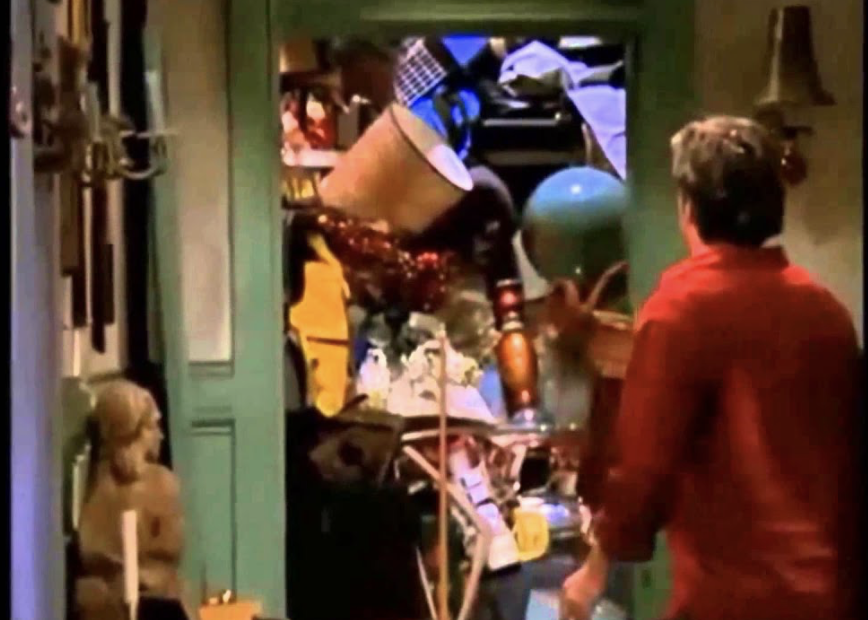
- Channel: Use the adrenaline spike to tackle the present. Identify a task that requires high focus or physical effort, such as household chores, gardening, or clearing out the Monica cupboard you’ve been avoiding.
Another method to navigate our anger is sublimation, a process of transforming socially unacceptable impulses into socially constructive actions.
- Spite Portfolio: Failure can be your best friend. Many successful people keep a folder of failures or a list of people who doubted them. When they feel their drive dipping, they tap into that residual anger to push through the boring part of the work.
- Physical Grounding: Because anger is a high-arousal state, the body needs a discharge, and to stabilise the nervous system. As mentioned above, intense physical exertion mimics the fight-or-flight response safely, allowing the nervous system to complete the stress cycle and return to baseline.
To avoid the demise of burnt bridges, often isolating us from our deconstructive actions, implement a strict protocol for the expression of anger, known as the 24-hour wait:
- Draft the Rage Version: Write the angry email or text, but do not send it. This allows the brain to feel heard.
- Wait 24 Hours: This allows the cortisol levels to drop.
- The Value Filter: Re-read the draft the next day. Delete or let it sit, is it still worth it, or has the energy already been channelled during the writing process?
The ultimate way to navigate anger is to re-socialise it. Chronic isolation puts the brain into a state of hypervigilance, making our anger threshold much lower because we feel we have no tribe to protect us.
Instead of stewing in a digital or physical echo chamber, talk about the anger with a neutral third party. Moving the energy from a private demise to a public, constructive dialogue, allowing our nervous systems to stabilise through connection rather than combat.
Anger is not a sign of a broken character; it is a sign of a functioning heart. It tells us what we value, what we won't tolerate, and where we have the power to create change. The goal isn't to be calm; it's to be effective. When we stop allowing our anger to govern us, we begin to steer that rage engine into an explosion of our progress.
_________________________________________________
Orginally publish on Substack.
Thank you for taking the time out of your day to read my work. If you like what I do, don't forget to hit like and subscribe!
About the Creator
Enjoyed the story? Support the Creator.
Subscribe for free to receive all their stories in your feed.
Comments
There are no comments for this story
Be the first to respond and start the conversation.