
Mohammed Rafi: The People’s Singer
Mohammed Rafi: The People’s Singer
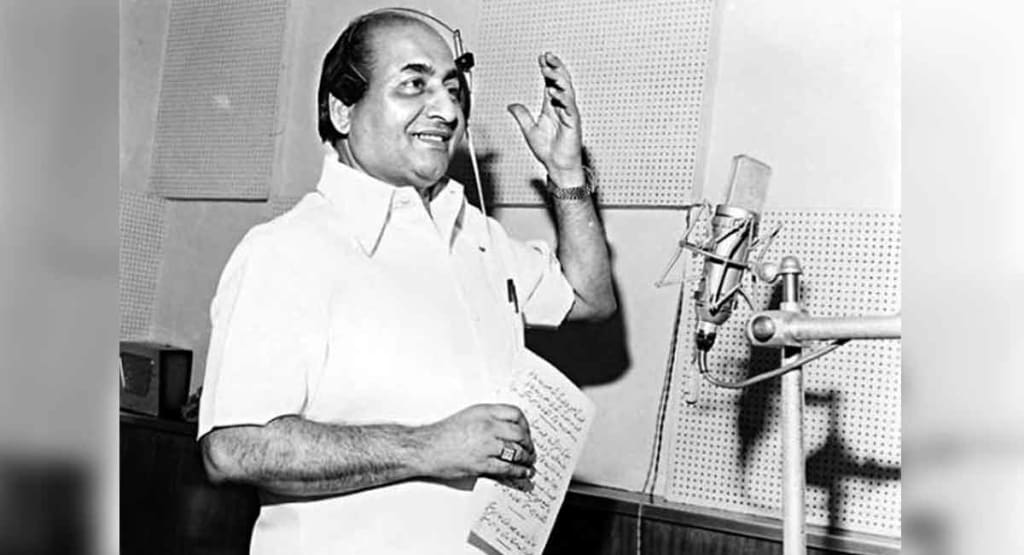
When we think of Bollywood's golden era, a few names stand out as legends who shaped its identity. Among them, Mohammed Rafi holds a special place as a singer whose voice transcended generations. Born on December 24, 1924, in Kotla Sultan Singh near Amritsar, Rafi's journey from a small village to becoming the most celebrated playback singer in Indian cinema is nothing short of extraordinary. His melodious voice, incredible versatility, and dedication to his craft made him an icon whose songs continue to touch millions of hearts worldwide.
This article explores how Rafi defined an era of Indian music, his contributions to Bollywood, and the lasting legacy of his unmatched talent.
A Humble Beginning
Mohammed Rafi's life began in a modest household in Punjab, where his love for music was evident from a young age. Legend has it that Rafi was inspired by a wandering fakir who sang soulful tunes in his village. This early exposure to music planted the seeds of a passion that would later blossom into a legendary career.
Rafi's family recognized his potential and supported his ambitions, leading him to train under esteemed musicians like Ustad Bade Ghulam Ali Khan and Firoze Nizami. His rigorous training in classical music became the foundation of his versatile singing style, which allowed him to perform effortlessly across various genres. Despite his growing talent, Rafi remained humble, a trait that endeared him to colleagues and fans alike.
Rise to Stardom in Bollywood
Rafi's Bollywood journey began in 1944 when he sang for the Punjabi film Gul Baloch. However, his big break came in 1946 with the song "Tera Khilona Toota Balak" in Anmol Ghadi, composed by Naushad Ali. This marked the beginning of a partnership that would produce some of the most iconic songs in Indian cinema.
Rafi's golden era coincided with Bollywood's rise during the 1950s and 60s. Collaborating with renowned composers such as Shankar-Jaikishan, S.D. Burman, and O.P. Nayyar, Rafi lent his voice to leading actors like Dilip Kumar, Dev Anand, and Shammi Kapoor. His ability to adapt his singing style to suit the personality of the actor on screen was unparalleled, earning him the reputation of being Bollywood's most versatile playback singer.
A Voice for Every Mood
One of Rafi's greatest strengths was his ability to convey a spectrum of emotions. Whether it was the romantic charm in "Chaudhvin Ka Chand Ho," the spiritual depth in "Man Tarpat Hari Darshan Ko Aaj," or the playful mischief in "Sar Jo Tera Chakraye," Rafi's voice captured the essence of every mood.
He was equally adept at soulful ghazals, energetic dance numbers, and heart-wrenching ballads. Songs like "Kya Hua Tera Wada" and "Dil Deke Dekho" highlight his ability to evoke deep emotion, while tracks like "Yahoo! Chahe Koi Mujhe Junglee Kahe" demonstrate his knack for high-energy performances. This versatility set him apart from his contemporaries and ensured that his voice became the heartbeat of Bollywood music.
Timeless Collaborations
Rafi's collaborations with composers and lyricists played a crucial role in shaping Bollywood's musical landscape. His long association with Naushad resulted in evergreen classics like "O Duniya Ke Rakhwale" and "Madhuban Mein Radhika Nache Re." His work with Shankar-Jaikishan gave us gems like "Baharon Phool Barsao."
Notably, Rafi's duets with female playback singers like Lata Mangeshkar and Asha Bhosle are considered some of the finest in Indian music history. Whether it was the romantic "Aaja Sanam" with Lata or the lively "Aankhon Hi Aankhon Mein" with Asha, Rafi's voice complemented his co-singers perfectly, creating magical musical moments.
Challenges and Triumphs
Like any artist, Rafi faced challenges throughout his career. The rise of Kishore Kumar during the 1970s led to increased competition, yet Rafi's resilience and dedication never wavered. He continued to deliver hits, such as "Pardah Hai Pardah" from Amar Akbar Anthony and "Main Zindagi Ka Saath" from Hum Dono. His humility and professional ethics won him admiration from peers and music directors alike.
Despite his immense success, Rafi remained grounded, always prioritizing his craft over personal gain. It is said that he would often refuse payment for songs if the producer faced financial difficulties, highlighting his generous and selfless nature.
The Legacy of a Legend
Rafi's untimely death in 1980 left a void in the Indian music industry that remains unfilled. Yet, his legacy lives on through the countless songs he recorded over his career. He received several awards, including the Padma Shri in 1967, in recognition of his contribution to Indian music.
Today, Rafi's songs continue to resonate with audiences of all ages. His music is a bridge between generations, played at family gatherings, weddings, and cultural events. Even decades after his passing, Rafi's voice has an unmatched ability to evoke emotions and connect people through the universal language of music.
Conclusion
Mohammed Rafi voice is not just a part of Bollywood's history; it is a symbol of its golden era. His ability to embody the essence of every song, combined with his humility and dedication, made him a legend whose influence extends far beyond the boundaries of cinema. As we listen to his timeless tracks today, we are reminded of a time when music was pure, heartfelt, and unforgettable.
Mohammed Rafi's songs are more than just melodies; they are memories etched in time. Which Rafi classic is your favorite? Share your thoughts and memories in the comments below. And if you're new to his music, take a journey through his discography to discover the magic of a voice that truly defined an era.
About the Creator
MusicVerse
Lets dive into the world of music.
Enjoyed the story? Support the Creator.
Subscribe for free to receive all their stories in your feed.
Comments
There are no comments for this story
Be the first to respond and start the conversation.