
Modern Men’s Style at the Executive Level: What Has — and Hasn’t — Changed
The rules governing how men in positions of authority present themselves have loosened considerably — but the underlying logic of executive dress has proven remarkably durable.

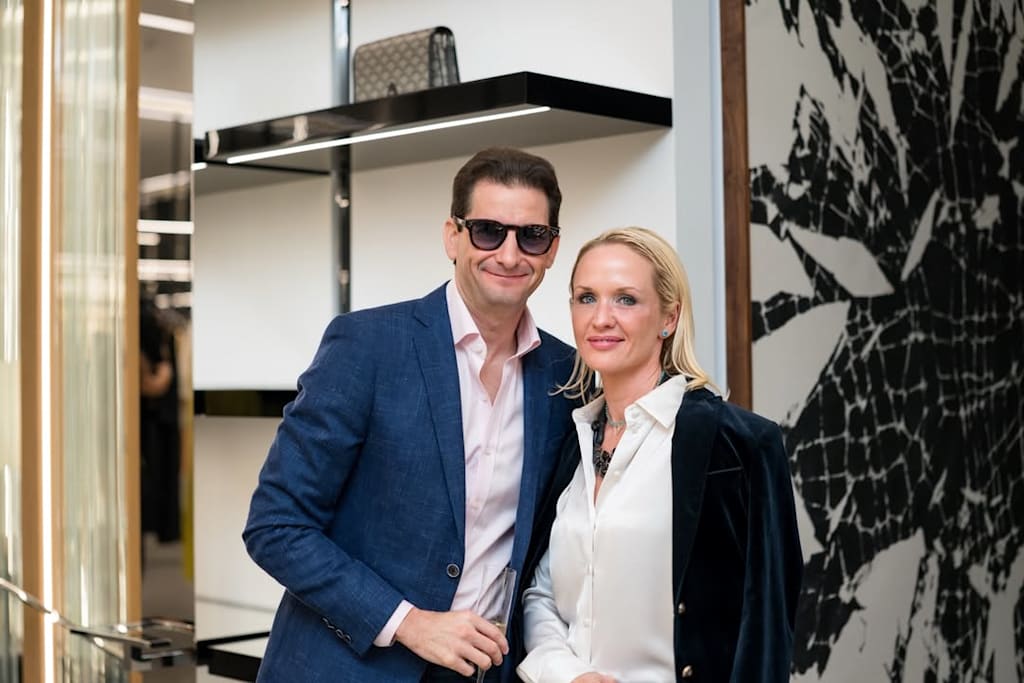
The traditional uniform of corporate authority — the dark suit, the conservative tie, the polished oxford — no longer commands the unquestioned consensus it once did. Across industries from finance to technology to media, the visual language of executive presence has diversified considerably over the past two decades. Yet the suggestion that professional dress has simply become “casual” misreads what has actually happened. The role of the men’s executive stylist has, if anything, become more relevant in this more ambiguous environment, precisely because the absence of fixed rules has created a more demanding, more nuanced set of judgment calls for men navigating formal and semi-formal professional contexts.
A men’s executive stylist is a professional advisor who helps male professionals and business leaders develop a wardrobe strategy aligned with their industry, role, and personal brand. Unlike general personal shopping, executive styling addresses how clothing choices communicate authority, credibility, and cultural fluency within specific professional and cultural contexts, particularly as traditional dress codes continue to evolve across industries.
The Collapse of the Single Dress Code
For most of the twentieth century, executive dress in the United States operated under a relatively unified code. The dark suit, white or pale blue shirt, and conservative tie functioned as a near-universal signal of professional seriousness across industries as varied as banking, law, manufacturing, and government. This uniformity had genuine practical value: it reduced the cognitive load of professional dressing to a narrow set of decisions and provided a stable, broadly legible signal of competence and trustworthiness.
That uniformity has fractured along industry lines in ways that are now well-established rather than emerging. Technology and venture capital normalized a far more casual register decades ago, one in which the absence of a tie, and often the absence of a jacket, signals innovation-oriented culture rather than professional laxity. Finance and law have retained more conservative baselines, though even these sectors have meaningfully relaxed in recent years, particularly outside client-facing contexts. Creative industries — media, design, architecture — have long operated under entirely separate visual logics where personal expression is itself a credential.
The practical consequence is that there is no longer a single answer to the question of how an executive should dress. The answer depends on industry, geography, seniority, and the specific context of any given professional interaction — a client meeting, an internal leadership presentation, an industry conference, a board appearance. This context-dependence is precisely the terrain in which a men’s luxury stylist or executive styling advisor provides genuine value: not by imposing a single correct answer, but by helping a client read the specific environment correctly and respond with appropriate precision.
What Has Genuinely Changed
Several shifts in executive dress are substantive rather than superficial. The near-total disappearance of the necktie outside formal or client-facing contexts represents one of the most significant changes in male professional dress in half a century. A garment that was once nearly mandatory for any man in a position of business authority has become optional even in many traditionally conservative settings, retained largely for its situational signaling value rather than as a daily default.
Fabric and construction preferences have also evolved meaningfully. The rigid, heavily structured suiting that dominated mid-century executive dress has given way to softer construction, lighter and more breathable fabrications, and a generally more relaxed silhouette — changes driven partly by comfort expectations and partly by the practical demands of warmer climates and more geographically distributed work patterns. Miami’s own professional dress culture reflects this shift distinctly: the city’s subtropical climate and its concentration of finance, real estate, and international trade professionals have produced a regional executive style that favors lighter fabrics, less structured tailoring, and a notably more relaxed relationship with traditional formality than is typical in New York or Chicago.
Footwear has undergone perhaps the most dramatic transformation. The strict division between business footwear and casual footwear has eroded substantially, with high-quality leather sneakers and minimalist loafers now appearing in executive contexts where they would have been unthinkable a generation ago. This shift reflects a broader cultural change in how authority is signaled — less through rigid formality and more through an overall impression of considered quality and self-assurance.
What Has Not Changed
Despite these shifts, certain principles governing executive dress have proven remarkably resistant to change, and understanding why illuminates something important about how clothing functions in professional contexts generally. Fit remains, as it always has been, the single most reliable signal of executive competence in dress. A well-fitted garment of moderate quality consistently reads as more authoritative than an expensive but poorly fitted one, a principle that has held constant even as acceptable garment categories have expanded dramatically.
The relationship between dress and perceived trustworthiness has also proven durable, even as its specific visual markers have shifted. Research within organizational psychology has long established that visual presentation influences perceived competence and trustworthiness in professional contexts, and this dynamic has not weakened with the loosening of formal dress codes — it has simply migrated to different visual cues. Where a tie once signaled seriousness, today the same signaling function is often performed by the quality of a blazer, the condition of one’s grooming, or the coherence of an overall outfit.
The Role of Cultural and Geographic Context
Executive dress norms vary meaningfully not only by industry but by region, and this geographic dimension has become increasingly important as business itself has globalized. Miami occupies a particularly interesting position in this regard, functioning as a genuine cultural crossroads where North American, Latin American, and European executive dress conventions intersect on a daily basis. The city’s prominence as a hub for Latin American finance, real estate, and trade has introduced sensibilities — a greater comfort with color, a different relationship with formality, distinct grooming and tailoring traditions — that distinguish its professional dress culture from other major American business centers.
This cross-cultural fluency creates genuine complexity for executives who move between these contexts. A presentation style that reads as appropriately polished in a Brickell Avenue boardroom may register differently in a meeting with European institutional partners or in a more conservative Northeastern American context. Men operating across these environments — international finance professionals, real estate developers with multinational client bases, executives at companies with significant Latin American operations — face a genuinely more complex styling challenge than executives operating within a single, culturally homogeneous business environment.
This is precisely the kind of complexity in which a men’s executive stylist offers value that extends well beyond garment selection. A stylist working with internationally mobile executives must understand not just current style trends but the specific cultural codes of authority and credibility operating in each environment a client navigates — a form of expertise that sits closer to cross-cultural professional advisory than to traditional fashion consulting.
Generational Divergence Within Executive Ranks
One of the more editorially underexplored dynamics in contemporary executive dress is the generational divergence now visible within leadership ranks themselves. Executives in their fifties and sixties, who came of age professionally under more rigid dress conventions, often retain a baseline formality even in environments that no longer strictly require it. Younger executives, particularly those who built their careers within more casually coded industries or who ascended rapidly through technology, finance, or entrepreneurial paths, frequently bring a different and more fluid relationship to formal dress into leadership positions that have traditionally demanded greater visual conservatism.
This divergence creates a genuinely interesting dynamic within many organizations, where dress code expectations are no longer handed down uniformly but negotiated, consciously or not, between generational cohorts occupying the same leadership tier. The practical effect is that there is frequently no single visual standard even within a single company’s executive ranks, which places additional weight on an individual executive’s judgment about how to calibrate personal presentation relative to peers, clients, and the specific occasion at hand.
This generational complexity has, in turn, expanded the client base for men’s luxury styling services considerably. Where executive styling was once associated primarily with older, more established business leaders seeking to project traditional authority, the client base has broadened to include younger executives seeking to navigate a more ambiguous set of expectations — men who recognize that dressing well still matters but who are genuinely uncertain what “well” means in their specific professional context.
The Enduring Logic Beneath the Surface Changes
What emerges from examining both the changes and the constants in executive dress is a consistent underlying logic: clothing in professional contexts functions as a form of communication, and the specific vocabulary of that communication evolves while its fundamental grammar remains stable. The tie has become optional, but the principle that visual presentation signals competence and seriousness has not weakened. The strict suit-and-tie uniform has fragmented, but the expectation that successful executives demonstrate visual coherence and intentionality in their self-presentation persists across virtually every professional context examined.
This is the conceptual territory in which the modern men’s executive stylist operates — not enforcing a fixed dress code that no longer exists in most industries, but helping clients understand the specific, often unstated visual grammar operating within their particular professional environment, and constructing a personal presentation strategy that communicates the intended signals of competence, authority, and cultural fluency within that environment. For executives navigating increasingly complex and geographically distributed professional lives, particularly in cosmopolitan business centers like Miami where multiple cultural codes of dress operate simultaneously, this kind of informed guidance addresses a genuine and growing need — one that has, if anything, become more rather than less relevant as the old certainties of executive dress have given way to a more fluid and demanding set of expectations.
About the Creator
Elsab Styling
At ElsaB Styling, we specialize in providing bespoke, high-end personal styling services for high-net-worth individuals, CEOs, executives, and VIPs.
Enjoyed the story? Support the Creator.
Subscribe for free to receive all their stories in your feed.
Comments
There are no comments for this story
Be the first to respond and start the conversation.