
Miami's Evolving Executive Dress Culture — and What's Driving It
How Latin influence, global finance, and a shifting professional class are quietly rewriting the rules of executive style in South Florida

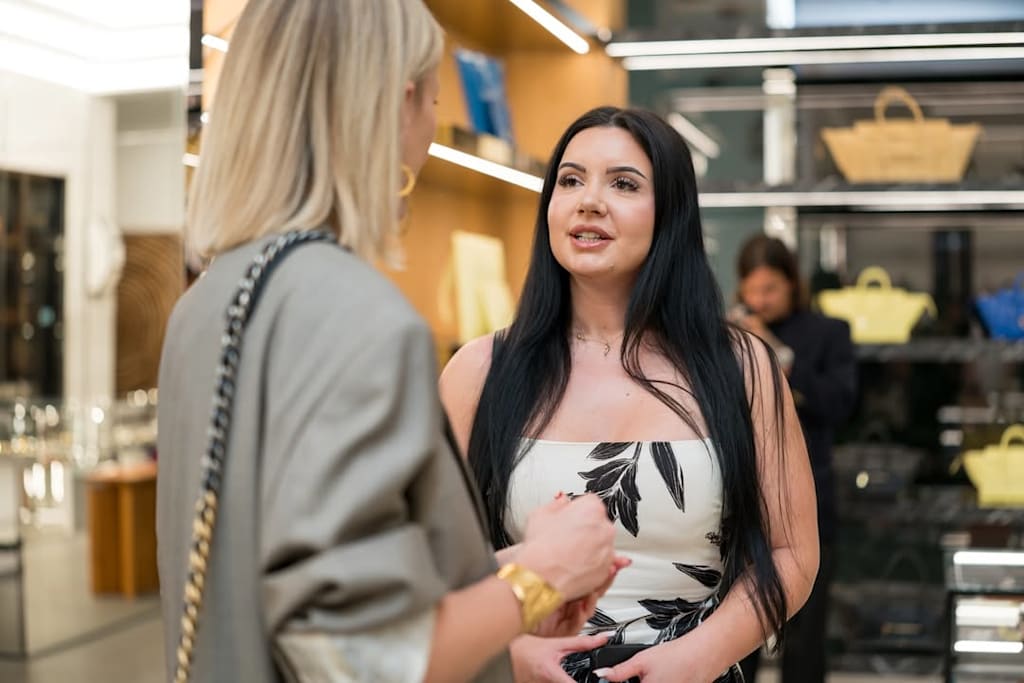
Professional dress codes have always reflected something deeper than corporate policy — they mirror the economic forces, cultural values, and social ambitions of the cities in which they take shape. In Miami, that reflection is particularly vivid. The city's executive wardrobe has undergone a quiet but meaningful transformation over the past decade, shaped by an unusual convergence of international finance, Latin American cultural sensibility, and a creative economy that resists easy categorization. For those navigating professional life in South Florida — and for the executive stylists and image consultants who serve them — understanding this shift requires looking beyond surface-level trend reports to the structural forces underneath.
An executive stylist in Miami operates at the intersection of multiple worlds: the formal expectations of global banking, the expressive aesthetics of Latin and Caribbean cultures, and the climate-driven practicality that every South Florida professional knows intimately. Miami's professional dress culture is defined not by one dominant aesthetic but by the productive tension between these competing influences — a tension that has produced something genuinely distinct from the professional dress norms of any other major American city.
Brickell and the Grammar of the Boardroom
Any serious discussion of Miami's executive dress culture must begin in Brickell. Often described as the "Manhattan of the South," Brickell Avenue functions as the financial spine of not just Miami but, in many respects, of Latin America. The neighborhood is home to more than sixty international banks and financial institutions, and its concentration of wealth management firms, hedge funds, and corporate law offices gives it a professional density that few American cities outside New York can match. The streets on weekdays draw professionals from across the globe — a fact that shapes the visual language of the district in ways that differ markedly from its northern counterparts.
What Brickell has never been, however, is a replica of Wall Street in either its culture or its dress. The northeastern model of executive presentation — muted palettes, heavy wool, the deliberate suppression of personality in favor of institutional gravity — never quite translated to a city where outdoor lunches in January are a routine occurrence and where the working day often extends into social environments that blur the boundary between business and hospitality. From its earliest emergence as an international financial hub in the 1980s, Brickell developed its own interpretive grammar of the boardroom: structured but lighter, polished but not austere, formal enough to command authority while acknowledging the subtropical context in which that authority was exercised.
This practical negotiation between formality and climate is not a recent innovation — it has been present in South Florida's professional culture for generations. What has changed is the degree of intentionality with which Miami's executive class now approaches it, and the emergence of a professional services industry — including specialized executive stylists and image consultants — dedicated to helping clients navigate it with precision.
Latin Influence and the Aesthetics of Authority
Perhaps no single factor distinguishes Miami's executive dress culture more clearly than the influence of Latin American and Caribbean sensibility on what professional authority is understood to look like. This influence operates on multiple levels simultaneously: through the cultural values that many of Miami's executives and clients bring from Brazil, Colombia, Venezuela, Argentina, and across the Caribbean; through the aesthetic frameworks that Latin American fashion has long championed — a willingness to engage with color, texture, and tailoring as expressions of confidence rather than distractions from it; and through the international business norms that Miami's position as the de facto financial capital of Latin America demands its professionals understand.
In many Latin American business cultures, the quality of one's presentation is read not as vanity but as a signal of seriousness. A precisely tailored suit, an impeccably chosen accessory, a wardrobe that reflects attention to fabric and fit — these are not departures from professionalism but constitutive elements of it. That framework, when brought into contact with Miami's existing professional culture, has produced an executive aesthetic that allows for a more expressive, fashion-forward sensibility than the studied minimalism associated with traditional northeastern corporate environments.
The result is visible in how Miami's senior executives actually dress: tailored pieces in lighter-weight fabrics suited to the climate; a broader engagement with color that would read as unconventional in Chicago or Boston but feels entirely natural in a city where Latin American, European, and Caribbean influences are woven into the fabric of daily commercial life. This is not a loosening of standards — it is a recalibration of what standards mean in a specific geographic and cultural context.
The Creative Economy and Professional Fluidity
Miami's economic diversification over the past fifteen years has introduced another significant pressure on executive dress norms. The city's creative industries — design, media, technology, architecture, art — have expanded substantially, anchoring themselves in neighborhoods like Wynwood, the Design District, and Edgewater. These sectors do not merely coexist with finance and real estate; they increasingly intersect with them, as investors, developers, and media entrepreneurs inhabit the same professional networks, attend the same events, and navigate the same rooms.
That intersection has consequences for how authority is communicated visually. A senior executive who moves between a morning meeting in Brickell, an afternoon conversation at a design firm in the Design District, and an evening industry event in South Beach is navigating multiple dress registers within a single working day. The wardrobe that functions effectively across all three contexts cannot rely on the rigid formulas of a single industry's dress code — it must be versatile, considered, and strategically composed.
This is precisely the challenge that has driven growing demand for executive stylists and image consultants in Miami specifically. The complexity of Miami's professional social landscape rewards wardrobe intentionality in ways that more homogeneous professional environments do not. A tailored blazer in a fabric that breathes in South Florida's humidity, that reads as appropriately formal in a financial context and as appropriately current in a creative one, represents a genuinely different problem from dressing for a single-industry city — and solving it well has become a recognizable competitive advantage for professionals who operate at the senior level.
The Rise of the Executive Stylist in South Florida
The image consulting and executive styling market has grown significantly as a professional service category in recent years, driven by an increasing recognition that visual presentation carries strategic weight in professional contexts. Global estimates place the image consulting market at several billion dollars and growing, with demand concentrated heavily among executives, entrepreneurs, and public-facing professionals who understand that how they appear in a boardroom, on a panel, or in media coverage is an extension of their professional communication, not a separate concern.
In Miami, that demand carries a particular intensity. The city's concentration of ultra-high-net-worth individuals, its international business ties, and the relative complexity of its professional social geography have made it a meaningful market for executive stylists who can operate at the intersection of image strategy and wardrobe expertise. The services this professional category provides go well beyond the selection of clothing — they encompass the alignment of visual identity with professional positioning, the curation of a wardrobe that functions across the specific contexts a given client inhabits, and the development of an executive presence that communicates the right signals before a word is spoken.
What distinguishes the executive stylist from the personal shopper or general fashion consultant is precisely this strategic orientation. Where a personal shopper curates purchases, and a personal stylist assembles outfits, an executive stylist works from an understanding of how visual presentation intersects with professional goals, industry norms, and the specific cultural contexts a client navigates. In a city as culturally complex as Miami — where those contexts might span Latin American business culture, global luxury norms, American corporate conventions, and the more fluid aesthetics of the creative economy — that distinction carries real consequence.
Climate, Fabric, and the Technical Dimension of Miami Dressing
One dimension of Miami's executive dress culture that is frequently underestimated in broader conversations about professional style is the genuinely technical challenge of dressing well in South Florida's climate. The combination of high heat, persistent humidity, and the rapid movement between air-conditioned interiors and outdoor environments places demands on fabric and construction that most traditional executive wardrobes are not designed to meet.
The heavy wool suiting that anchors professional dress in cooler climates performs poorly in Miami — it retains heat, resists breathability, and loses its structure in humidity. The executive who understands Miami's professional dress culture knows that fabric choice is not an aesthetic preference but a functional requirement: lightweight wool, high-twist fabrics, linen, and technical blends that maintain their appearance under South Florida conditions are not compromises but necessities. Similarly, the silhouette choices that work in the controlled environments of northeastern office buildings — structured shoulders, dense layering — require adaptation for a city where the transition from an air-conditioned car to an outdoor setting can involve a twenty-degree shift in ambient temperature.
Skilled executive stylists in Miami develop a working expertise in these technical dimensions that is specific to the city's environment. Building an executive wardrobe that reads as polished and authoritative in a Brickell boardroom while functioning comfortably in Miami's outdoor professional settings is a craft that draws on knowledge of both the aesthetic and the practical — and it is a craft that has real value in a market where the stakes of professional presentation are high.
What the Shift Signals
Miami's evolving executive dress culture reflects something broader than fashion trends or demographic change. It reflects the city's growing confidence in its own professional identity — an identity that is no longer measured primarily against the standards of northeastern financial centers but increasingly understood on its own terms.
The city's international orientation, its Latin American cultural depth, its blend of finance, creativity, and hospitality have together produced a professional class that dresses with a specificity that is genuinely Miami's own: structured but not rigid, expressive but not informal, climate-adapted but not casual. The growing presence of specialized executive stylists and image consultants in South Florida is both a response to this shift and a further driver of it — a professional ecosystem that helps the city's executives articulate their visual identity with increasing precision and strategic intent.
For professionals navigating Miami's boardrooms, its design studios, its international business relationships, and its distinctly South Florida social landscape, the way one shows up visually has never been a superficial concern. It is, in this city perhaps more than most, a form of communication that carries real professional weight.
About the Creator
Elsab Styling
At ElsaB Styling, we specialize in providing bespoke, high-end personal styling services for high-net-worth individuals, CEOs, executives, and VIPs.
Enjoyed the story? Support the Creator.
Subscribe for free to receive all their stories in your feed.
Comments
There are no comments for this story
Be the first to respond and start the conversation.