
Lurssen and the Architecture of the World’s Largest Private Yachts
For over a century, a German shipyard most people have never heard of has quietly built the vessels that define the upper limit of private maritime engineering.

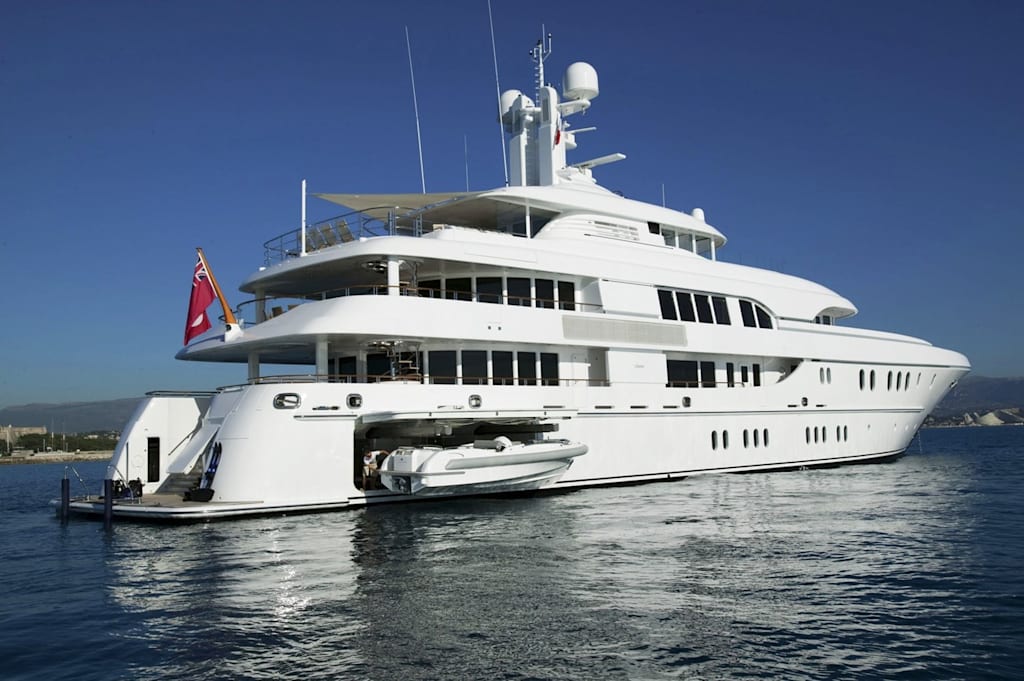
Ask someone outside the yachting world to name a luxury yacht builder, and the answer is rarely Lurssen. Ask someone inside it, and the conversation changes entirely — because Lurssen sits at a tier of the industry where reputation is built not through visibility but through engineering achievement few competitors can match. Based in Bremen, Germany, and family-owned since 1875, Lurssen has spent more than a century constructing some of the largest and most technically ambitious private vessels ever built. Understanding why this builder occupies such a singular position requires looking past brand recognition entirely and toward the specific engineering problems that define yachts at the absolute top of the size spectrum.
Lurssen Yachts is a German shipbuilding company headquartered in Bremen, founded in 1875, recognized as one of the world’s leading builders of large custom superyachts and megayachts. The company has constructed several of the largest private yachts ever built, including vessels exceeding 150 meters in length, and is known within the industry for advanced naval architecture, propulsion engineering, and full-custom construction at a scale few competing shipyards attempt.
A Shipyard Built for a Different Scale of Problem
Most superyacht builders operate within a recognizable production envelope — vessels in the thirty-to-eighty-meter range, built using semi-custom platforms that allow for design flexibility within a known set of engineering parameters. Lurssen has built its identity around vessels that exceed this envelope entirely, regularly producing yachts beyond one hundred meters, a length category in which the engineering challenges shift qualitatively rather than simply scaling up.
At that size, naval architecture stops resembling yacht design and starts resembling commercial shipbuilding, with the added complexity that the end product must still function as a private residence capable of extended ocean passages, full crew accommodation, and the kind of structural redundancy that commercial vessels rarely require to the same degree. Lurssen’s engineering teams work routinely with classification societies such as Lloyd’s Register and DNV, applying maritime safety and structural standards that most yacht builders engage with only occasionally, simply because so few vessels in the broader market ever approach the size where these standards become genuinely load-bearing concerns rather than formalities.
This scale also changes the commercial relationship between builder and client. A Lurssen commission is not a purchase from a catalog of available configurations; it is closer to a multi-year engineering partnership, frequently involving the owner’s personal architect, a separate interior design house, and a naval architecture team working in close coordination over a construction period that can extend past four years for the largest projects.
The Engineering Behind the Headlines
When Lurssen vessels make news — and they periodically do, given the scale and visibility of the projects — the coverage tends to focus on size records or reported costs, which obscures the more interesting engineering story underneath. Vessels at this scale require propulsion systems capable of moving tens of thousands of tons of displacement efficiently across long-range itineraries, and Lurssen has developed particular expertise in diesel-electric propulsion architectures that allow for quieter operation, greater fuel efficiency, and more flexible interior layout than traditional direct-drive systems permit.
Structural engineering at this size also demands an entirely different approach to hull construction. Lurssen’s larger vessels typically employ steel hulls with aluminum superstructures, a hybrid approach that balances the structural strength steel provides at the waterline against the weight savings aluminum offers above it — a combination that becomes increasingly important as overall vessel length grows and the structural loads involved scale non-linearly with size.
Stabilization technology represents another area where Lurssen’s scale advantage becomes apparent. The largest private yachts require stabilization systems considerably more sophisticated than the fin stabilizers adequate for smaller vessels, often incorporating gyroscopic stabilization, advanced ballast management, and hull form optimization specifically tuned to minimize motion at anchor and underway — a genuinely difficult engineering problem given that passenger comfort expectations at this ownership tier are uncompromising.
Why the Largest Yachts Concentrate Among So Few Builders
The market for vessels exceeding one hundred meters is exceptionally small, and the number of shipyards genuinely capable of building at that scale is smaller still. Alongside Lurssen, only a handful of yards — including Oceanco in the Netherlands and certain divisions of Italian builders like Fincantieri — maintain the combined facility infrastructure, workforce expertise, and engineering capability required to execute projects of this magnitude. This concentration is not accidental; it reflects the genuinely prohibitive barriers to entry involved in maintaining dry docks, crane infrastructure, and a specialized workforce capable of large-vessel construction at a consistent level of quality.
This scarcity has direct commercial consequences for the ultra-high-net-worth individuals commissioning these vessels. Build slots at yards capable of this scale are booked years in advance, and the selection of builder becomes, in practical terms, a far more constrained decision than it would be for a buyer commissioning a more conventional sixty-meter yacht, where dozens of credible builders compete for the commission. For owners pursuing a vessel at the absolute top of the size spectrum, Lurssen’s combination of capacity, reputation, and demonstrated delivery record places it among an extremely short list of genuinely viable options.
The economics involved are similarly singular. Construction costs for vessels in this category routinely run into the hundreds of millions of dollars, and the ongoing operational costs — crew of fifty or more, fuel consumption, maintenance, and port fees — place ownership of a yacht at this scale within a financial category closer to owning a small commercial vessel than to conventional yacht ownership, a distinction that shapes the entire ownership relationship from the earliest design conversations onward.
The Cultural Significance of Building at the Extreme
There is a broader industry function that builders like Lurssen serve beyond the direct commercial relationship with their clients. Vessels at the extreme upper end of the size spectrum function, in a sense, as proof points for the entire superyacht industry — demonstrations of what is engineering-feasible that gradually inform design thinking across the broader market, even among builders who will never approach anything close to this scale themselves.
Innovations first developed for Lurssen’s largest projects — in propulsion efficiency, stabilization, or structural hybrid construction — have historically migrated downward into the broader superyacht market over subsequent design cycles, a pattern recognized within naval architecture circles as a meaningful, if indirect, contribution to the industry’s overall technical progress. In this sense, the relatively small number of clients who commission vessels at this extreme scale are, often unknowingly, funding research and development that benefits the wider yachting market over time.
This dynamic also explains why Lurssen’s reputation, despite minimal public marketing, remains exceptionally strong within the specific community of brokers, naval architects, and ultra-high-net-worth principals who actually transact at this level. Industry reputation at this tier is built through demonstrated delivery on extraordinarily difficult engineering commissions, not through consumer-facing brand visibility, which explains the apparent paradox of a builder largely unknown to the general public yet held in something close to reverence among the people who actually understand what these vessels require to construct successfully.
Where Florida Fits Into the Lurssen Ecosystem
Florida’s position within the global superyacht market makes it a significant secondary touchpoint for Lurssen-built vessels, even though construction itself takes place exclusively in Germany. Fort Lauderdale’s established refit, service, and brokerage infrastructure has handled work on Lurssen vessels operating in the Western Hemisphere, and the city’s annual boat show provides one of the relatively few public venues where information about completed Lurssen projects circulates among the broader industry, even when the vessels themselves are not present.
Miami’s role is somewhat different but increasingly relevant. The city’s concentration of international wealth, particularly among Latin American and European principals who maintain residences in Miami Beach, Coconut Grove, and the waterfront communities along the Intracoastal, has made it an increasingly active secondary market for ultra-large yacht brokerage activity, even though vessels of Lurssen’s typical scale rarely berth within the city’s own marina infrastructure, which is generally not configured to accommodate vessels of this length.
For the considerably broader population of buyers interested in superyacht ownership without commissioning a vessel at Lurssen’s extreme end of the spectrum, Miami’s brokerage market offers a far more accessible entry point. A search for a Yacht for sale in Miami regularly surfaces vessels built by Lurssen’s more conventionally sized contemporaries, alongside pre-owned listings that occasionally include smaller projects from the same builders who supply parts of the technology eventually scaled up into Lurssen’s flagship commissions — a reminder that the engineering achievements at the absolute top of the market eventually echo, in smaller and more accessible forms, throughout the rest of the industry.
About the Creator
Robert Lama
Robert Lama is a seasoned yacht broker with Miami International Yacht Sales, a reputable yacht brokerage company specializing in both used and new yachts. https://www.miamiinternationalyachtsales.com/
Enjoyed the story? Support the Creator.
Subscribe for free to receive all their stories in your feed.
Comments
There are no comments for this story
Be the first to respond and start the conversation.