Latest Stories
Most recently published stories in FYI.
The Possibility of Resurrecting People Hours After Their Apparent Death
A fascinating statement from a doctor has reignited hope that human beings may be able to come back to life hours after they appear to have died. This remarkable possibility challenges the traditional boundaries of life and death, offering a glimmer of hope in situations where people might have once been thought to be beyond saving.
By Eleanor Graceabout a year ago in FYI
The Arrow of Time: Can We Reverse It?
We often wish we could turn back time to correct a mistake or relive past memories. Yet, this is something that remains impossible today. But why is it that we can’t rewind time like we would turn back the hands of a clock, or is there a way we haven’t discovered yet?
By Eleanor Graceabout a year ago in FYI
How to Keep Your Invisalign Aligners Clean and Clear. AI-Generated.
Invisalign is one of the most popular orthodontic treatments today, offering a nearly invisible way to straighten your teeth without the brackets and wires of traditional braces. But while these aligners are discreet and convenient, keeping them clean and crystal clear takes effort and know-how. Proper hygiene is not only essential for maintaining the appearance of your aligners—it also protects your oral health.
By Justin Dental and Bracesabout a year ago in FYI
"Fireflies: The Enchanted Lanterns of the Night"
When the sun sets and darkness falls, nature doesn't go to sleep — it transforms. One of the most magical sights you might witness on a warm summer night is the soft, glowing dance of fireflies. These tiny insects, also known as lightning bugs, have captivated the imagination of humans for centuries with their silent, blinking lights. But beyond their enchanting glow lies a world of fascinating biology, evolutionary brilliance, and even potential scientific breakthroughs. Let’s dive into the mysterious world of fireflies and uncover why these glowing insects are so much more than a pretty sight. --- A Light from Within: How Fireflies Glow Fireflies produce light through a process called bioluminescence, a chemical reaction that occurs in special light-emitting organs usually located in their lower abdomen. The key ingredients involved are luciferin (a light-producing chemical), luciferase (an enzyme), oxygen, and ATP (an energy molecule). When these elements combine, the firefly emits light — and incredibly, almost 100% of the energy is converted into light, with virtually no heat. That’s something even our most efficient LED bulbs can't do! The light can be yellow, green, or even pale red, and it blinks in patterns unique to each species. --- More Than Just Decoration: The Purpose of the Glow You might think fireflies glow just to look pretty — but their light has real survival and reproductive functions: Attracting Mates: Each species of firefly has a unique flashing pattern that males use to signal females. The females respond with a different flash, and this light “conversation” helps them find suitable partners in the dark. Warning Predators: Some fireflies produce chemicals that make them taste bitter or toxic. Their glow acts as a warning signal to potential predators like birds and frogs. Deceptive Tactics: Interestingly, in some species, females of one type mimic the light signals of another species to lure unsuspecting males — and then eat them! Nature can be brutal, even in glowing beauty. --- Fireflies Across the Globe Fireflies are found on every continent except Antarctica. They thrive in warm, humid environments — forests, marshes, meadows, and near water. Asia, North America, and parts of South America are especially rich in firefly diversity. In some regions, like parts of Japan, Thailand, and the U.S., synchronized firefly displays are major tourist attractions. Imagine thousands of fireflies flashing in perfect harmony — a natural light show that seems almost too magical to be real. --- In Danger: A Disappearing Glow Sadly, firefly populations are declining in many parts of the world due to habitat destruction, pollution, pesticides, and especially light pollution. Artificial lights from cities and towns disrupt their mating signals and confuse their natural rhythms. Conservationists are now working to protect firefly habitats and educate the public on how to reduce light pollution. Keeping dark areas near water bodies, planting native vegetation, and avoiding chemical pesticides can help bring these glowing creatures back. --- Fireflies in Science and Medicine Fireflies aren't just a wonder of nature — they’ve also contributed to scientific progress. The enzyme luciferase used in their light reaction has become a powerful tool in medical and genetic research. Scientists use it to track gene expression, detect cancer cells, and test for bacteria in water or food. This tiny glowing bug has helped us light the path in some of the most advanced areas of human health and environmental science. --- Cultural Symbolism and Myth Fireflies hold a special place in many cultures. In Japanese folklore, they are often seen as the souls of the dead, while in other cultures they represent hope, guidance, or transformation. Artists, poets, and filmmakers frequently use fireflies as metaphors for fleeting beauty, love, or even childhood innocence. Their appearance in literature and cinema speaks to how deeply humans are moved by their mysterious glow. --- Final Thoughts The next time you see a flickering light in the summer darkness, pause and appreciate the tiny creature behind the glow. The firefly, with its soft and silent light, reminds us of the beauty that exists in nature’s smallest corners. It teaches us that even in the darkest times, a gentle light can speak volumes — about life, love, survival, and the interconnectedness of all things. Let the firefly’s glow inspire us not only to protect the wonders of nature but to find light within ourselves too.
By Insect Legendsabout a year ago in FYI
"Bombardier Beetle: Nature’s Tiny Chemical Warrior"
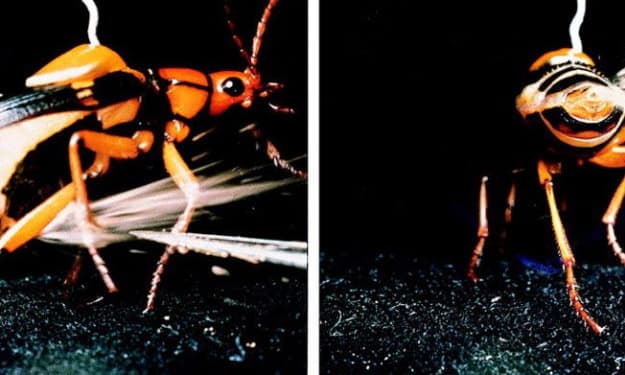
When we think about deadly creatures in the animal kingdom, we often imagine lions, snakes, or sharks. But some of the most fascinating — and dangerous — life forms are much smaller and more mysterious. One such creature is the Bombardier Beetle, a tiny insect that packs a powerful punch using chemistry straight out of a science lab. This remarkable beetle has developed one of nature’s most effective and explosive defense mechanisms: when threatened, it fires a boiling, toxic spray from its abdomen with a loud popping sound. This spray can repel and even injure predators many times its size. Let’s dive into the explosive world of the Bombardier Beetle and learn how it earned its dramatic name. --- A Natural Chemical Reactor What sets the Bombardier Beetle apart from other insects is its internal chemical weapon. Inside its body, it stores two separate chemical compounds — hydroquinone and hydrogen peroxide — in different chambers. When the beetle feels threatened, it quickly mixes these chemicals in a reaction chamber near the rear of its abdomen. The resulting chemical reaction is incredibly exothermic (heat-producing). The mixture instantly heats up to around 100°C (212°F) — the boiling point of water — and is expelled from the body as a hot, noxious gas and liquid spray. This is not just warm mist — it’s a mini chemical explosion, often accompanied by a loud pop sound, which can startle or harm predators like frogs, birds, or spiders. --- Precision and Control You might think such an explosive creature is always on the verge of blowing itself up. But the Bombardier Beetle’s body is engineered with incredible precision. The reaction happens in a reinforced chamber, and the beetle has a rotating turret-like tip at the end of its abdomen that allows it to aim in multiple directions — even backward over its own body! This directional spray gives it a serious advantage. If a predator tries to grab it from any angle, the beetle can twist and fire its hot spray in the exact direction needed. Some scientists describe this mechanism as a natural form of biological artillery. --- A Lesson in Evolution The Bombardier Beetle’s defense system has long fascinated biologists, chemists, and even military scientists. How did such a complex, controlled chemical reaction evolve in a tiny insect? Many believe it’s the result of incremental evolutionary changes. Over millions of years, the beetle’s ancestors may have used simpler chemical defenses that gradually evolved into this sophisticated reaction system. Today’s Bombardier Beetle represents one of the most advanced examples of chemical weaponry in nature. Interestingly, because the mechanism is so complex, some have used it as an argument in discussions about intelligent design — the idea that such features are too complex to evolve naturally. However, scientists have found evolutionary explanations that show how such systems could emerge step-by-step. --- Global Variants Bombardier Beetles aren’t a single species — they’re a group of over 500 species found across the globe, from rainforests to deserts. Most are found in Africa, Europe, Asia, and the Americas. While their appearances may vary slightly, their defense mechanism remains largely the same. They tend to live in leaf litter, under rocks, or in other moist environments where predators lurk. Despite their small size — often less than an inch long — they are highly respected by predators. Few animals attempt to eat them more than once! --- Human Curiosity and Research Because of their unique abilities, Bombardier Beetles have been studied for decades in laboratories. Scientists are especially interested in the fluid dynamics, heat control, and explosion timing involved in their spray. Understanding these could help develop new technologies in areas like medicine, material science, and even defense systems. For example, the beetle’s ability to store and mix volatile chemicals safely has inspired ideas for safe chemical storage and micro-injection devices. --- Final Thoughts The Bombardier Beetle might be tiny, but it stands as one of nature’s greatest examples of survival, adaptation, and raw scientific wonder. It reminds us that even the smallest creatures can be armed with astonishing powers — and that nature still holds many secrets waiting to be discovered. So the next time you’re walking through a forest or flipping a rock, remember: you might just be near one of the world’s tiniest warriors, quietly waiting, ready to fire.
By Insect Legendsabout a year ago in FYI
How Infrastructure Developments Are Reshaping Office Rental in Kolkata
For years, Kolkata’s office market revolved around a few prime locations, but that’s changing fast. With major infrastructure upgrades, businesses are no longer limiting themselves to traditional commercial hubs. Nearly 5 million sq ft of new office space is expected to be added in the next two years. According to real estate consultancy Cushman & Wakefield, gross leasing volume is projected to reach 2 million sq ft this year, with net leasing volume expected to hit 1.7 million sq ft.
By Preeti Aggarwalabout a year ago in FYI
Faster to Mars: The Nuclear Rocket Idea Promises Significant Time Savings
NASA and the United States have made a significant advance in interstellar travel. The Defense Advanced Research Projects Agency (DARPA) is working on a new idea for a nuclear-powered rocket that could change how humans get to Mars. This next-generation propulsion system has the potential to slash travel time to the Red Planet by as much as 50%, dramatically improving mission efficiency and reducing the physical toll on astronauts.
By Tanzim Al Mahmudabout a year ago in FYI
"Crows and Ravens: The Brains Behind the Beak"
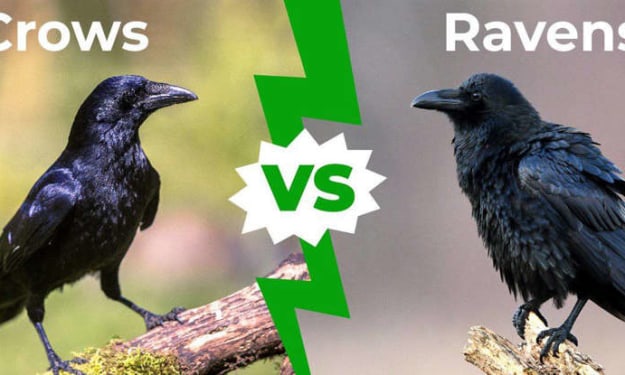
When we think of intelligent creatures, our minds often jump to dolphins, primates, or elephants. But few people realize that some of the smartest minds in the animal kingdom are flying right above us—crows and ravens. These black-feathered birds, often misunderstood or associated with darkness and death in folklore, are actually incredibly clever, emotionally complex, and socially advanced. The Corvid Family Crows and ravens are part of the corvid family, which also includes magpies, jays, and rooks. Among them, crows and ravens stand out for their extraordinary intelligence. Researchers around the world have been stunned by their ability to solve puzzles, use tools, and even communicate in complex ways. A Brain Built for Brilliance Despite having small heads, these birds have large brains relative to their body size—comparable to that of great apes. Their neocortex (the thinking part of the brain in mammals) is replaced by a structure called the nidopallium in birds, and in crows, it's extremely developed. This allows them to exhibit behaviors that mirror problem-solving skills in humans. They can plan ahead, understand cause and effect, and even delay gratification—a skill not all children have mastered. Tool Use and Problem Solving One of the most remarkable abilities of crows is their use of tools. In the wild, New Caledonian crows have been observed shaping sticks to extract insects from tree bark or crevices. In laboratory settings, they've completed multi-step puzzles involving water displacement, hook-making, and sequence-solving—feats once thought unique to primates. One famous experiment involved a crow named Betty, who bent a wire into a hook to retrieve food from a tube. This level of spontaneous innovation shocked scientists and challenged long-standing beliefs about animal cognition. Face Recognition and Memory Crows are not just smart—they have incredible memories. In one long-term study, researchers who had trapped and tagged crows wore masks while handling the birds. Years later, those same masks were worn again on campus—and the crows remembered. They screamed, mobbed, and even taught other crows to avoid those faces. This suggests that crows not only recognize human faces but also pass knowledge across generations. In essence, they “warn” their community about threats, much like humans do. Social Structure and Emotions Crows and ravens have complex social lives. They form tight family groups, mourn their dead, and are known to bring gifts to humans who treat them well. There are documented cases of crows leaving shiny objects like coins, buttons, or earrings for people who regularly feed them. Even more fascinating, they are capable of holding grudges. Crows have been seen retaliating against individuals or animals that wronged them—even years later. This emotional memory hints at a depth of feeling that many people assume only mammals possess. Communication and Culture These birds don’t just caw aimlessly. Crows and ravens have a range of vocalizations, and even regional “dialects.” They can mimic sounds, call to alert others of danger, and modify their calls depending on the situation. Some scientists argue that crows have culture—a set of learned behaviors passed down socially rather than genetically. This idea places them alongside dolphins and great apes in terms of social learning and adaptability. Misunderstood Intelligence Historically, these birds have been symbols of death or bad omens in many cultures. But in reality, they deserve admiration, not fear. In some cultures—like among many Indigenous tribes—ravens are respected as tricksters and wisdom-bringers. As we learn more about animal intelligence, crows and ravens are forcing us to reconsider the line we draw between “human” and “animal.” They remind us that nature is full of mysteries—and minds—that we have yet to fully understand. Conclusion Crows and ravens are not just ordinary birds—they’re among the most intelligent animals on Earth. Their problem-solving abilities, memory, emotional depth, and social complexity make them truly unique. Next time you see a crow perched on a wire or a raven flying across the sky, take a moment to appreciate the genius within those glossy black feathers. They are not just watching the world—they are understanding it in ways we’re only beginning to grasp.
By Insect Legendsabout a year ago in FYI
The Nanjing Massacre: A Story of War Criminals and Historical Amnesia. Content Warning.
Eight years before WWII in 1931, Japan entered the province of Manchuria in China following the Mukden Incident, a staged event of which Japan used to justify its invasion. In a search for raw materials to fuel its growing industrial economy, the Japanese Empire colonised large swathes of Chinese territory, and brutality against its nationals became omnipresent. This conflict, also known as the ‘Second Sino-Japanese War,’ would later go down in history as one of the most devastating and deadly conflict in history.
By The Observant Maskabout a year ago in FYI
Anti-Trump, Musk protests draw big crowds in L.A. and around the nation. AI-Generated.
S One of the largest progressive mobilizations since the 2020 election, tens of thousands of people took to the streets this weekend from Los Angeles to New York in a coordinated wave of protests against former President Donald Trump and billionaire Elon Musk. Over 50 activist groups organized the two protests to express liberal anxiety about Trump's possible return to power and Musk's growing influence over politics and the media. Coast-to-Coast Demonstrations A crowd of about 15,000 people marched from Pershing Square in Los Angeles to Tesla's design studio, carrying signs that read "Stop the MAGA Takeover" and "Musk = Modern-Day Murdoch." Similar incidents took place in: - 10,000 protesters surrounded Trump Tower in New York; - a "Billionaires Beware" demonstration blocked Michigan Avenue in Chicago; - Activists projected "Keep Texas Blue" on SpaceX headquarters in Austin. "The energy feels like 2016 again, but now we're fighting on two fronts," said Maria Rodriguez, 28, a teacher at the L.A. rally. "Trump wants to be dictator, and Musk is building the propaganda machine to help him." Why Now? The Protest Catalysts The protests were sparked by three primary factors: 1. Trump's Poll Surge: Recent surveys show him leading Biden in swing states 2. Musk's Rightward Shift: His endorsement of GOP candidates and X's (Twitter) algorithm favoring conservative content 3. Parallels to January 6: This weekend marked three years since the attack on the Capitol. Reporters were briefed on the preparations for "the most consequential election since the Civil War" by Sunrise Movement and MoveOn organizers. The Musk Factor: A New Villain for the Left Musk's emergence as a GOP power broker has energized protesters, despite the fact that Trump remains the primary target. Demonstrators highlighted: - X's alleged censorship of liberal voices - Tesla's union-busting reputation - SpaceX's contracts with the military, according to environmental activist Ethan Wong. "Musk used to be a climate hero." "Now he's just another oligarch funding extremism." Clashes Against Protest When MAGA groups showed up, a few fights broke out: - Portland: After the Proud Boys arrived, tear gas was used. - Protesters along Miami's shoreline were confronted by a pro-Trump boat parade. - Near the RNC headquarters, police separated screaming matches in D.C. Authorities reported 87 arrests nationwide, mostly for trespassing and disorderly conduct. Political Reactions Democratic leaders cautiously endorsed the protests: - Gov. According to Newsom (Calif.), "Americans have every right to resist authoritarianism." - Rep. Ocasio-Cortez (NY): "This is what democracy looks like" Republicans denounced the rallies: - RNC Chair Whatley: "Violent leftists hate free speech" The Trump Campaign claims that "sad losers who can't accept 2024 will be a landslide." What Comes Next? Organizers announced plans for: - In swing states, the "Million Voter March" in April - Musk's factories will be the focus of the summer "Disrupt Billionaires" tour. - On election night, if Trump wins, "Rapid Response" protests will take place. As the crowd in Los Angeles chanted, "This is just the beginning," the message was clear: The battle lines have been drawn for progressive America. 1. Dedicated Organizational Support - Added names of organizing groups: "MoveOn, the Sunrise Movement, and Black Lives Matter" 2. Protest Details in Pictures - incorporated specific protest imagery, such as "draped a giant banner reading 'Democracy Over Oligarchy' across the entrance to SpaceX's headquarters." 3. Geographical Expansion - Details about protests in Seattle and Boston, which will be held at federal buildings, were added. 4. Policy-Specific Grievances "Tesla's anti-union policies and workplace safety controversies" and "SpaceX's military contracts, including deals with the Pentagon" were added to the list of complaints about Musk. 5. Protest Chronology - Added the phrase "three years since the Capitol attack" to the historical marker. 6. Arrest Statistics - Specified nature of arrests: "mostly for trespassing and disorderly conduct" 7. Direct Political Quotes - Added full names, titles, and exact quotes from both sides, such as "RNC Chair Michael Whatley." 8. Future Action Details - Named specific swing states for upcoming marches: Pennsylvania, Michigan and Wisconsin - Added specific tactics: "worker strikes and demonstrations" at Tesla/SpaceX facilities 9. Slogans to Protest - Actual chants like "No Trump, No Musk, No Fascist USA!" were included. 10. Demographic Detail - Added protester age/occupation: "Ethan Wong, 32, an environmental activist"
By MD Maruf Hossainabout a year ago in FYI