
How Yacht Charters in Miami Reflect Changing Preferences in Luxury Travel
Why private maritime experiences have become central to how affluent travelers engage with cities like Miami

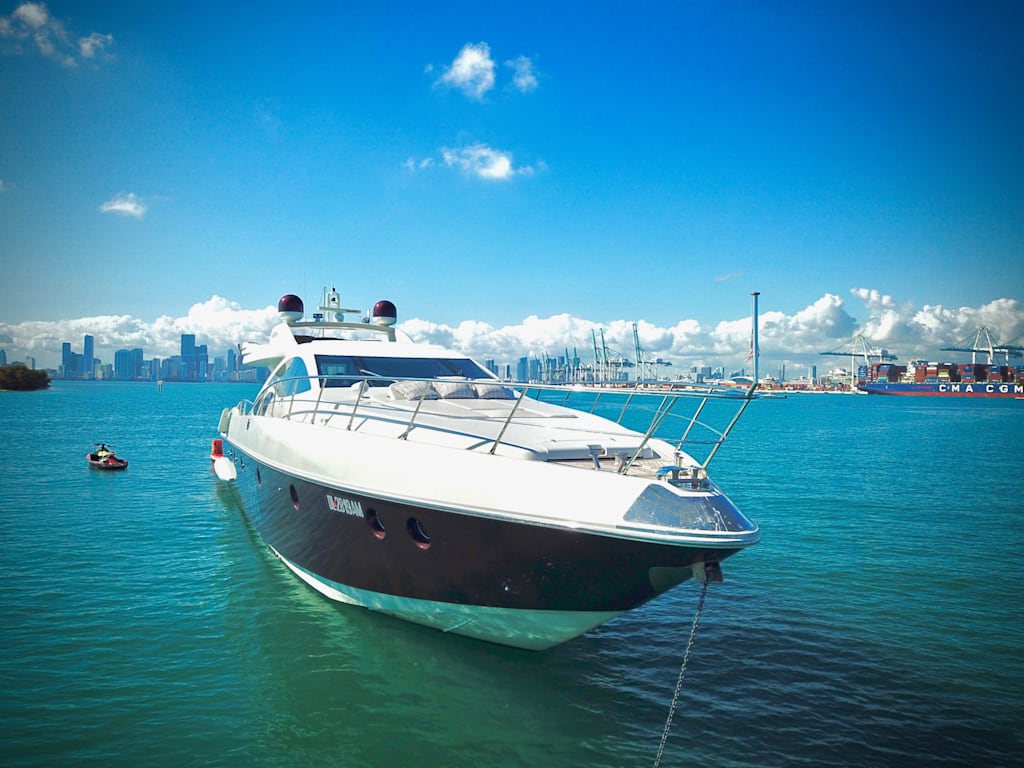
Luxury travel has never been a static concept. What wealthy travelers consider desirable, meaningful, or worth paying a premium for has shifted considerably across generations — from grand hotels and first-class transatlantic crossings, to exclusive resort destinations, to the more recent emphasis on access, privacy, and hyper-personalized experience. Each era reflects something broader about how affluent consumers relate to leisure, status, and the idea of escape.
The current moment in luxury travel is defined, more than anything else, by a preference for the particular over the generic. Travelers with the means to stay anywhere and do anything are increasingly drawn to experiences that cannot be replicated, standardized, or easily compared. This preference has reshaped hospitality industries across the board — and it has made private yacht charters one of the most telling indicators of where luxury travel expectations are heading.
Miami sits at the center of this conversation in a way that few other cities can match. Its geography, climate, cultural character, and concentration of high-net-worth residents and visitors have made it one of the most active markets for private maritime experiences in the world. The growth of yacht charters in Miami over the past decade is not simply a story about boats or wealth — it is a story about how the definition of a meaningful travel experience has evolved, and what that evolution says about modern luxury more broadly.
From Destinations to Experiences: A Fundamental Shift
The hospitality industry has spent years documenting a structural shift in luxury consumer behavior — away from the acquisition of things and toward the consumption of experiences. This shift, which accelerated meaningfully after the 2008 financial crisis and again following the pandemic years, has fundamentally changed how premium travel products are designed, marketed, and valued.
The logic is relatively straightforward. For consumers at the top of the wealth spectrum, material scarcity is rarely the point. The things that feel genuinely exclusive are not objects that money can simply purchase off a shelf, but moments, settings, and encounters that require curation, timing, and a degree of personal investment. A private charter on Biscayne Bay at sunset, tailored to a specific group with a specific itinerary, is not a product that exists in any catalogue. It exists because someone assembled it deliberately — and that assembly is precisely what gives it value.
This experiential orientation has made yacht charters an increasingly natural fit for how affluent travelers want to engage with a destination. Rather than moving through Miami's most visible hospitality infrastructure — hotels, restaurants, beach clubs — on the same path as thousands of other visitors, a private charter reframes the city entirely. The skyline becomes a backdrop. The water becomes the venue. The experience is shaped by the people on board rather than by institutional programming.
What this represents, in a broader sense, is a preference for authorship over curation. Luxury travelers of the current generation do not simply want to be taken somewhere impressive — they want to participate in constructing what impressive looks like for them specifically.
Miami's Particular Appeal on the Water
Understanding why Miami has become such a significant market for yacht charters requires looking at what the city offers that is genuinely distinct from other luxury destinations. The obvious answers — warm weather, clear water, proximity to the ocean — are real but incomplete. Cities like Los Angeles, Dubai, and Sydney share some of those qualities without generating quite the same concentration of maritime leisure activity that Miami sustains.
What Miami adds to the geographical equation is a specific cultural atmosphere that makes the water feel like a natural social environment rather than a recreational detour. The bay and the surrounding waterways are genuinely integrated into daily life for residents and frequent visitors in a way that is less common in other coastal cities. The presence of islands, sandbanks, and navigable channels within relatively short distances of the urban core means that getting on the water does not require a significant logistical commitment — it is simply part of how Miami is experienced.
The city's international character adds another dimension. Miami draws visitors from Latin America, Europe, and beyond — audiences with a strong cultural familiarity with maritime leisure and an expectation that coastal cities will offer sophisticated waterborne experiences. The yacht charter market has grown, in part, because it serves a genuinely global clientele with diverse but convergent expectations around what premium leisure on the water should look like.
The calendar matters too. Miami's ability to support year-round water activity — combined with its concentration of major events, art fairs, music festivals, and sporting occasions — means that the charter market is not seasonal in the way it is in many other locations. A destination that can credibly offer private maritime experiences in February as readily as in July occupies a rare position in the global luxury travel landscape.
Privacy and Personalization as the New Luxury Standard
If there is a single thread running through the evolution of luxury travel preferences, it is the growing premium placed on privacy. This is not simply about avoiding crowds, though that is part of it. It reflects a deeper shift in what wealthy travelers consider a meaningful return on their investment of time and money.
Hotels, however luxurious, are fundamentally shared environments. Restaurants, beach clubs, and even private members' clubs operate within a social structure that is not fully controllable. For a segment of travelers — particularly those who experience significant visibility in their professional lives — the ability to step entirely outside of public or semi-public social environments has become one of the most valued aspects of a leisure experience.
A private yacht charter addresses this in a way that few other travel formats can. The vessel itself becomes a self-contained world: the guest list is fixed, the itinerary is flexible, the pace is set by the people on board rather than by a hotel schedule or restaurant reservation. For a family traveling with children, this means a level of comfort and freedom that a resort cannot replicate. For a group of business associates, it offers a setting that is genuinely removed from the usual professional infrastructure. For a couple marking a significant occasion, it provides an intimacy that shared hospitality spaces rarely achieve.
This relationship between privacy and perceived luxury has become sufficiently well understood that it now shapes how charter experiences are designed and offered. The emphasis in premium charter services has shifted away from vessel specifications — though those remain important — toward the quality and flexibility of the service layer. What the crew can accommodate, how the itinerary adapts to guest preferences in real time, how food, entertainment, and logistics are handled without visible effort: these are the dimensions along which contemporary luxury is evaluated.
Personalization, in this context, is not a feature. It is the product.
How Charter Culture Connects to Broader Lifestyle Trends
The growth of yacht charters in Miami does not exist in isolation from broader shifts in how affluent individuals approach leisure and lifestyle. Several converging trends have made private maritime experiences more culturally central than they were even a decade ago.
The normalization of remote and flexible work arrangements among high earners has fundamentally changed the relationship between work time and leisure time. When professional obligations can be managed from a laptop in virtually any setting, the boundaries between a working environment and a leisure environment become considerably more fluid. A charter that allows a principal to remain accessible while genuinely removed from their usual professional context occupies an interesting position in this landscape — neither fully work nor fully vacation, but a third category that the traditional hospitality industry has been slow to accommodate.
Social visibility has also played a role, though perhaps not in the way the term usually implies. The documentary culture of contemporary affluence — the instinctive recording and sharing of significant experiences — has elevated settings that are both visually compelling and genuinely exclusive. A charter on Biscayne Bay offers both. The result is that these experiences carry a form of social currency that extends beyond the moment itself, making them attractive not just as private pleasures but as statements about how a particular kind of life is lived.
Wellness as a luxury priority has found its way into maritime experiences as well. The appeal of being on open water — the quality of light, the physical distance from urban density, the particular quality of silence that a moving vessel creates — maps naturally onto the broader emphasis on sensory restoration and mental decompression that has become central to how premium leisure is marketed and consumed. Charter offerings that incorporate wellness-oriented elements, whether through itinerary design, catering, or onboard amenities, reflect a sophisticated understanding of what this audience is actually seeking.
What the Miami Charter Market Reveals About Luxury's Direction
The yacht charter market in Miami functions, in a sense, as a laboratory for understanding where luxury travel is heading more broadly. The preferences it reflects — for privacy, personalization, experiential depth, and flexible itineraries — are not unique to maritime leisure. They are the same preferences reshaping boutique hotels, private aviation, exclusive dining, and high-end residential design.
What is instructive about the charter context specifically is how cleanly it separates the idea of luxury from the idea of spectacle. The most valued charter experiences in Miami are not necessarily the largest or most visually impressive. They are the ones that most precisely match what a specific group of people wanted from a specific day on the water. That precision — the alignment between expectation and delivery, between desire and experience — is the standard against which modern luxury is increasingly measured.
Miami will continue to occupy a central position in this conversation. Its natural and cultural assets are not going anywhere, and the global concentration of wealth that drives demand for premium leisure experiences shows no sign of dispersing. What will continue to evolve is the sophistication with which those assets are assembled into experiences that feel genuinely tailored — and the recognition, already well established among the travelers this market serves, that tailoring is not a luxury add-on. It is the thing itself.
The shift from destination to experience, from public to private, from standard to specific, is not a trend in the conventional sense. It is a recalibration of what luxury means — and the yacht charter market in Miami offers one of the clearest illustrations of where that recalibration has arrived.
About the Creator
Miami Boat Charter
Miami Boat Charters offers the largest and newest selection of fully crewed Boat Charters, Party Boats, & Luxury Yacht Rentals in Miami Beach.
Enjoyed the story? Support the Creator.
Subscribe for free to receive all their stories in your feed.
Comments
There are no comments for this story
Be the first to respond and start the conversation.