
How Remote Patient Monitoring Solutions Support Value-Based Care
Healthcare providers that successfully integrate remote monitoring into their care delivery models can improve patient engagement.
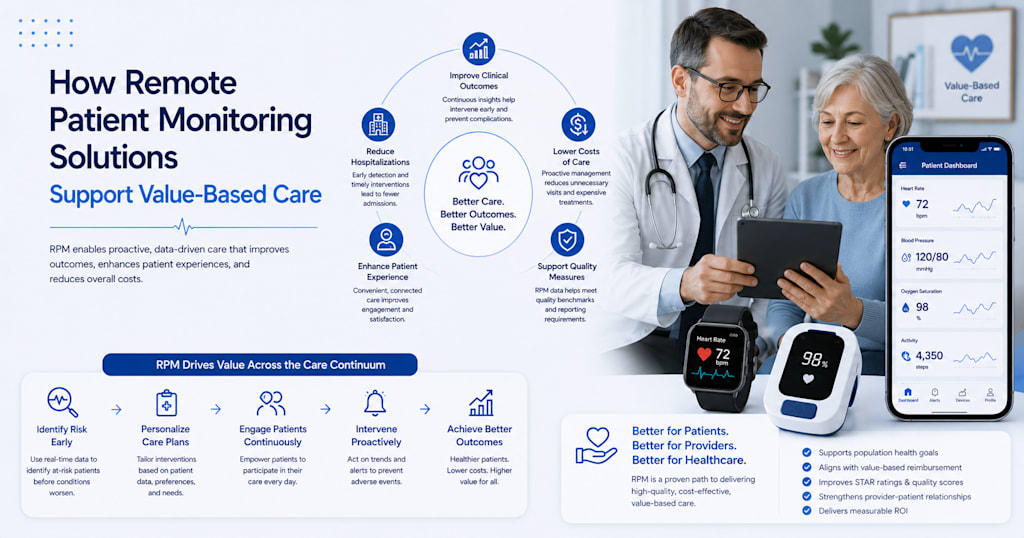
The healthcare industry is moving away from traditional fee-for-service models and embracing value-based care as a more sustainable approach to healthcare delivery. Under value-based care, providers are rewarded for improving patient outcomes, reducing unnecessary costs, and delivering high-quality care rather than simply increasing the number of services provided. This shift has encouraged healthcare organizations to adopt technologies that support proactive care management and long-term patient wellness.
One of the most impactful technologies supporting this transformation is remote patient monitoring solutions. These systems allow healthcare providers to continuously track patient health data outside traditional clinical environments. By collecting real-time information from connected devices and transmitting it securely to healthcare teams, remote monitoring helps providers make informed decisions and intervene earlier when health concerns arise.
As value-based care continues to gain momentum, healthcare organizations are looking for tools that improve patient outcomes while optimizing operational efficiency. Remote monitoring platforms play a critical role in achieving these objectives by enabling more personalized, data-driven, and preventative healthcare strategies.
Healthcare providers that successfully integrate remote monitoring into their care delivery models can improve patient engagement, reduce readmissions, enhance chronic disease management, and strengthen overall care quality.
Understanding the Fundamentals of Value-Based Care
Value-based care represents a significant change in how healthcare services are delivered and evaluated. Instead of focusing primarily on the volume of treatments and procedures, this model emphasizes measurable health outcomes and patient satisfaction.
Healthcare organizations operating under value-based care agreements must continuously seek ways to improve efficiency while maintaining high standards of care. Technology has become an essential component of achieving these goals.
What Makes Value-Based Care Different?
Traditional healthcare reimbursement models often reward providers based on the number of services delivered. In contrast, value-based care focuses on improving patient health outcomes while reducing avoidable healthcare expenses.
Providers are encouraged to prevent complications, improve treatment adherence, and deliver coordinated care that leads to better long-term results.
Why Healthcare Organizations Are Adopting Value-Based Models
Healthcare systems worldwide are facing rising costs, growing patient populations, and increasing rates of chronic disease. Value-based care helps address these challenges by prioritizing prevention and outcome-driven treatment strategies.
Many healthcare organizations are implementing remote patient monitoring solutions as part of their broader value-based care initiatives because these technologies provide continuous visibility into patient health and support proactive interventions.
The Role of Remote Patient Monitoring in Modern Healthcare
Remote monitoring has become an important component of connected healthcare ecosystems. It enables providers to maintain ongoing relationships with patients while reducing the need for frequent in-person visits.
By collecting health information continuously, providers gain access to valuable insights that support better clinical decision-making and improved patient outcomes.
Continuous Monitoring Beyond Clinical Settings
Traditional healthcare often relies on periodic appointments that provide only a limited snapshot of patient health. Remote monitoring allows providers to observe health trends over time rather than relying on isolated data points.
This continuous visibility helps clinicians identify changes in patient conditions earlier and respond before complications become severe.
Supporting Data-Driven Healthcare Decisions
Modern remote patient monitoring solutions provide healthcare professionals with real-time access to patient information, enabling more informed and timely decisions.
This data-driven approach aligns closely with value-based care objectives by supporting preventive care and reducing unnecessary interventions.
Improving Chronic Disease Management Through RPM
Chronic diseases account for a significant percentage of healthcare spending and are a major focus area within value-based care programs. Effective management of chronic conditions is essential for improving patient outcomes and controlling costs.
Remote monitoring provides healthcare teams with tools that support continuous oversight and early intervention.
Managing Diabetes More Effectively
Patients with diabetes require ongoing monitoring of blood glucose levels, medication adherence, and lifestyle factors. Remote monitoring systems help providers track these metrics and identify issues before they become serious complications.
Continuous oversight allows clinicians to make timely adjustments that improve long-term disease management.
Supporting Cardiovascular Health
Heart disease remains one of the leading causes of hospitalization and healthcare expenditures. Remote patient monitoring solutions enable providers to monitor blood pressure, heart rate, and related health indicators remotely.
This proactive approach helps reduce cardiovascular risks while supporting better patient outcomes.
Enhancing Respiratory Disease Management
Patients with asthma, COPD, and other respiratory conditions benefit significantly from continuous health monitoring. Providers can track oxygen levels, breathing patterns, and symptom progression without requiring frequent clinic visits.
Early identification of worsening conditions helps prevent emergency interventions and hospital admissions.
Reducing Hospital Readmissions and Emergency Visits
Hospital readmissions are a major concern for healthcare providers operating under value-based reimbursement models. Readmissions often indicate gaps in care and contribute significantly to healthcare costs.
Remote monitoring technologies help organizations address these challenges through continuous patient oversight.
Identifying Risks Before They Escalate
Remote monitoring platforms can detect warning signs that may indicate deteriorating health conditions. Automated alerts notify healthcare teams when intervention may be necessary.
This proactive approach allows providers to address concerns before they result in hospitalization.
Strengthening Post-Discharge Care
Modern remote patient monitoring solutions help healthcare organizations maintain visibility into patient recovery after discharge. Continuous monitoring provides reassurance for both providers and patients during critical recovery periods.
Improved transitional care reduces readmission rates and supports better long-term outcomes.
Enhancing Patient Engagement and Participation
Patient engagement is a core principle of value-based care. Engaged patients are more likely to follow treatment plans, maintain healthy behaviors, and participate actively in managing their health.
Remote monitoring technologies create opportunities for stronger patient-provider relationships and greater involvement in care decisions.
Encouraging Self-Management
Patients who can view their health metrics and track progress often become more invested in their treatment plans. This increased awareness encourages healthier lifestyle choices and greater accountability.
Remote monitoring empowers patients to take a more active role in managing their health.
Strengthening Communication Channels
Advanced remote patient monitoring solutions provide secure communication tools that allow patients and providers to stay connected between appointments.
Regular communication helps build trust, improve satisfaction, and strengthen adherence to treatment recommendations.
Supporting Preventive Healthcare Strategies
Preventive care is one of the most effective ways to improve patient outcomes while reducing healthcare costs. Value-based care models place significant emphasis on prevention rather than reactive treatment.
Remote monitoring technologies support this approach by helping providers identify health risks before they develop into serious medical issues.
Early Detection of Emerging Health Concerns
Continuous monitoring allows healthcare providers to identify subtle changes in patient health that might otherwise go unnoticed. These insights support earlier interventions and more effective treatment plans.
Early detection often results in lower treatment costs and better patient outcomes.
Promoting Long-Term Wellness
Healthcare organizations using remote patient monitoring solutions can encourage healthier behaviors through personalized recommendations, reminders, and ongoing support.
This focus on wellness aligns closely with value-based care objectives and contributes to improved population health.
Improving Care Coordination Across Healthcare Teams
Value-based care often requires collaboration between multiple healthcare professionals, departments, and organizations. Effective coordination is essential for delivering consistent and high-quality care.
Remote monitoring technologies support this collaboration by providing shared access to patient information.
Centralizing Patient Data
Providers can access monitoring information, treatment histories, and clinical insights through centralized dashboards that support coordinated care delivery.
Shared visibility improves communication and reduces duplication of effort.
Facilitating Collaborative Decision-Making
Modern remote patient monitoring solutions help healthcare teams work together more effectively by providing timely and accurate patient information.
Improved collaboration leads to more comprehensive care plans and stronger patient outcomes.
Conclusion
The transition to value-based care is reshaping healthcare delivery and encouraging organizations to adopt technologies that prioritize outcomes, efficiency, and patient engagement. Remote monitoring has emerged as one of the most valuable tools for achieving these objectives.
Remote patient monitoring solutions support value-based care by improving chronic disease management, reducing hospital readmissions, strengthening preventive care efforts, and enhancing patient engagement. These capabilities help healthcare organizations deliver higher-quality care while controlling costs and improving operational performance.
As healthcare continues moving toward outcome-focused models, remote monitoring technologies will play an increasingly important role in helping providers achieve success. Organizations that invest in these solutions today will be better positioned to deliver patient-centered care and thrive in the future of healthcare.
About the Creator
Enjoyed the story? Support the Creator.
Subscribe for free to receive all their stories in your feed.
Comments
There are no comments for this story
Be the first to respond and start the conversation.