
How Personal Styling Services Have Evolved Beyond Fashion Into Lifestyle Management
Why Today's High-End Stylists Are Less About Clothes and More About How Life Gets Organized

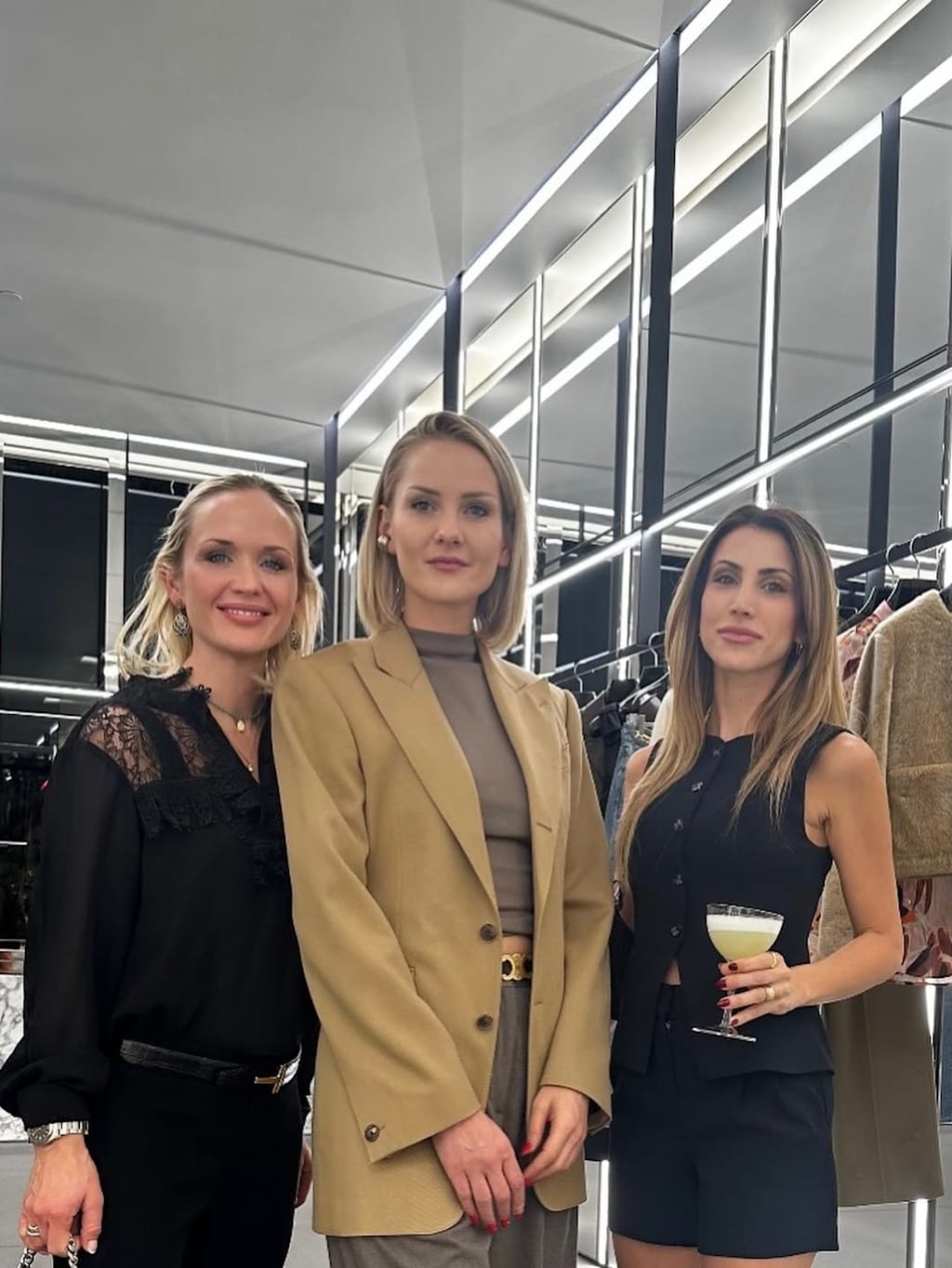
Personal styling, in its traditional form, was a relatively contained service. A stylist helped clients build a wardrobe — selecting pieces, coordinating outfits, shopping on their behalf, and occasionally accompanying them to events. The relationship was fundamentally transactional, centered on clothing, and bounded by the edges of what someone wore. That model still exists, but at the upper end of the market, it has been largely superseded by something considerably more expansive.
For ultra-high-net-worth individuals, globally mobile executives, and public figures whose lives operate at a scale and velocity that few people outside those circles fully appreciate, personal styling has evolved into a form of lifestyle management. The wardrobe remains the foundation, but the service built on top of it now encompasses image strategy, travel preparation, event coordination, cultural advisory, and in some cases the management of an entire public-facing identity. The reasons this evolution happened are worth examining — because they reveal as much about how the demands of a certain kind of life have changed as they do about the styling profession itself.
The Limitations of the Traditional Model
The conventional personal styling arrangement was designed for a simpler relationship between a person and their wardrobe. It assumed a relatively stable home base, a predictable social calendar, and a wardrobe that could be managed from a single location. It also assumed, implicitly, that clothing decisions could be cleanly separated from everything else — that what someone wore was a discrete category of concern rather than one thread in a much larger operational picture.
For most clients, those assumptions held. But for individuals operating across multiple time zones, appearing in different cultural and social contexts within the same week, managing a public profile that requires consistent visual coherence, and dealing with a schedule that leaves almost no margin for friction or inefficiency, the traditional model began to reveal its gaps.
A stylist who selects beautiful clothing but doesn't understand that a client has three consecutive international trips over the next month, each requiring different dress codes across different cultures, is providing an incomplete service. A stylist who builds a wardrobe without accounting for how it photographs, how it reads on camera, or how it will be interpreted by different audiences in different settings is solving only part of the problem. The gap between what the traditional model offered and what complex, high-visibility lives actually required became the space into which a new kind of service expanded.
What Lifestyle Management Actually Means in This Context
The phrase "lifestyle management" can sound vague to the point of meaninglessness, so it is worth being specific about what it encompasses when applied to high-end personal styling.
At its most direct, it means that the stylist's frame of reference has expanded from "what will this person wear" to "how does this person present themselves across every context in which they operate." That expanded frame pulls in a much wider set of considerations.
Image strategy is perhaps the most significant addition. For public figures, executives in visible industries, and individuals whose professional standing is tied to their personal brand, appearance is not simply a matter of personal preference — it is a communication tool with measurable consequences. The stylist working at this level thinks about how a client's visual presentation serves or undermines their professional objectives, how consistency of image builds recognition and trust, and how shifts in appearance signal changes in positioning or circumstance. This is closer to brand consulting than to traditional fashion advice, and it requires a fundamentally different kind of thinking.
Travel preparation has become another core component. Globally mobile clients move through environments with dramatically different cultural norms, climate conditions, dress codes, and social expectations. A week that moves from London boardroom meetings to a Middle Eastern investment conference to a private social event in Monaco requires a wardrobe that is not merely packed but strategically assembled — coordinated for the specific demands of each context, travel-appropriate in terms of fabric and portability, and arranged so that transitions between settings require minimum time and decision-making. This kind of preparation blends wardrobe knowledge with logistical management in ways that have no real precedent in traditional styling.
Cultural intelligence has become an increasingly valued dimension of the service at the highest levels. Understanding the visual signals that communicate respect or authority in different cultural settings — the right level of formality for a state dinner versus a private family gathering, the nuances of dress that read appropriately in different religious or regional contexts — is specialized knowledge that genuinely affects outcomes for clients operating internationally. A stylist who brings this knowledge reduces risk and eliminates a category of concern that would otherwise fall to the client or their broader support team.
The Role of Technology and Global Mobility
The expansion of personal styling into broader lifestyle management has not happened in a vacuum. Several converging forces have accelerated the transformation, and technology is prominent among them.
Digital wardrobe management tools have changed how collections are catalogued and accessed, allowing stylists to maintain complete inventories across multiple residences and make informed decisions about any context without physically handling every garment. These platforms support the kind of systematic, comprehensive management that complex wardrobes require — a development that has professionalized the operational side of the role considerably.
Video and photography have fundamentally altered how appearance is experienced and evaluated. A generation ago, most people's visual presentation was assessed primarily in person, in real time. Today, images circulate globally and permanently. A single photograph from a private event may reach audiences the subject has never met and contexts they never anticipated. For individuals who appear regularly in media — whether traditional, social, or business — the understanding that every appearance has potential permanence changes how visual decisions are made. Stylists working with media-facing clients now think in terms of how something photographs, how it reads at scale, and how it holds up across different image formats and screens.
Global mobility itself has placed new demands on the service. When a client's wardrobe needs to be equally functional in New York, Geneva, Singapore, and Dubai over the course of a single month, the challenge is not simply having the right clothes — it is having the right clothes in the right place at the right time, in the right condition. Managing that logistics puzzle requires the kind of systematic organizational thinking that was once the exclusive domain of operations management, not personal styling.
How the Client Relationship Has Changed
The evolution of the service has been accompanied by a corresponding evolution in the client relationship. What was once a relatively episodic engagement — a seasonal shopping trip, occasional event preparation — has become, for many UHNW clients, an ongoing and deeply integrated professional relationship.
At the most developed level of this engagement, the personal stylist functions more like a chief of staff for a specific domain than like an external vendor. They have deep knowledge of the client's social and professional calendar, understand the expectations and sensitivities of different environments the client moves through, and are embedded enough in the principal's operational life to anticipate needs rather than simply respond to requests.
This level of integration requires a degree of trust that takes considerable time to build and is not easily transferred. A stylist with this kind of access knows not just what a client owns but how they think about their own presentation, what they are comfortable with, where they feel uncertain, and what their visual identity is designed to communicate. The relationship carries significant personal and professional weight, which is why discretion is not merely an expected professional attribute at this level — it is foundational to the entire arrangement.
The expanded scope of the service has also changed how stylists are compensated and contracted. Retainer arrangements — monthly fees for ongoing access and management — have largely replaced the project-by-project or commission-based models that dominated traditional styling. For clients who need consistent, responsive service that operates in the background of a demanding life, the retainer model provides the predictability and availability the relationship requires. For stylists, it creates the kind of professional stability that allows them to function as genuine partners rather than occasional contractors.
The Broader Cultural Context
The transformation of personal styling into lifestyle management reflects something larger than a shift in service design. It reflects a broader cultural reality about how the most demanding professional and social lives are now organized and supported.
Ultra-high-net-worth households have, over the past two decades, increasingly moved toward specialist staffing — hiring experts in specific domains rather than generalists who cover multiple areas broadly. This approach has touched everything from household management and nutrition to security and personal finance. Personal styling's evolution into lifestyle management is consistent with this trend. As the complexity of the lives being supported has grown, so too has the specificity of the support required.
There is also a generational dimension to this shift. Clients who came of age in a media-saturated, image-conscious culture have an inherently different relationship with their own visual identity than previous generations. For them, presentation is not an occasional concern — it is an ongoing one, with permanent implications. The demand for a service that manages that concern at a consistent, professional level is, in a sense, a natural product of the environment in which they operate.
What has emerged from all of this is a profession that is genuinely more demanding, more specialized, and more consequential than its origins would suggest. Personal styling at the highest level no longer begins and ends with clothing. It begins with a deep understanding of a client's life — its rhythms, its audiences, its ambitions, and its pressures — and extends to every visual dimension of how that life is presented to the world. That transformation is not a feature of a particular stylist's ambition. It is a response to the real complexity of the lives that the modern luxury service economy is organized to support.
About the Creator
Elsab Styling
At ElsaB Styling, we specialize in providing bespoke, high-end personal styling services for high-net-worth individuals, CEOs, executives, and VIPs.
Enjoyed the story? Support the Creator.
Subscribe for free to receive all their stories in your feed.
Comments
There are no comments for this story
Be the first to respond and start the conversation.