
How Luxury Fashion Consulting Differs from Personal Shopping
The distinction between a transactional service and a strategic style relationship is reshaping how affluent consumers engage with fashion at the highest level.

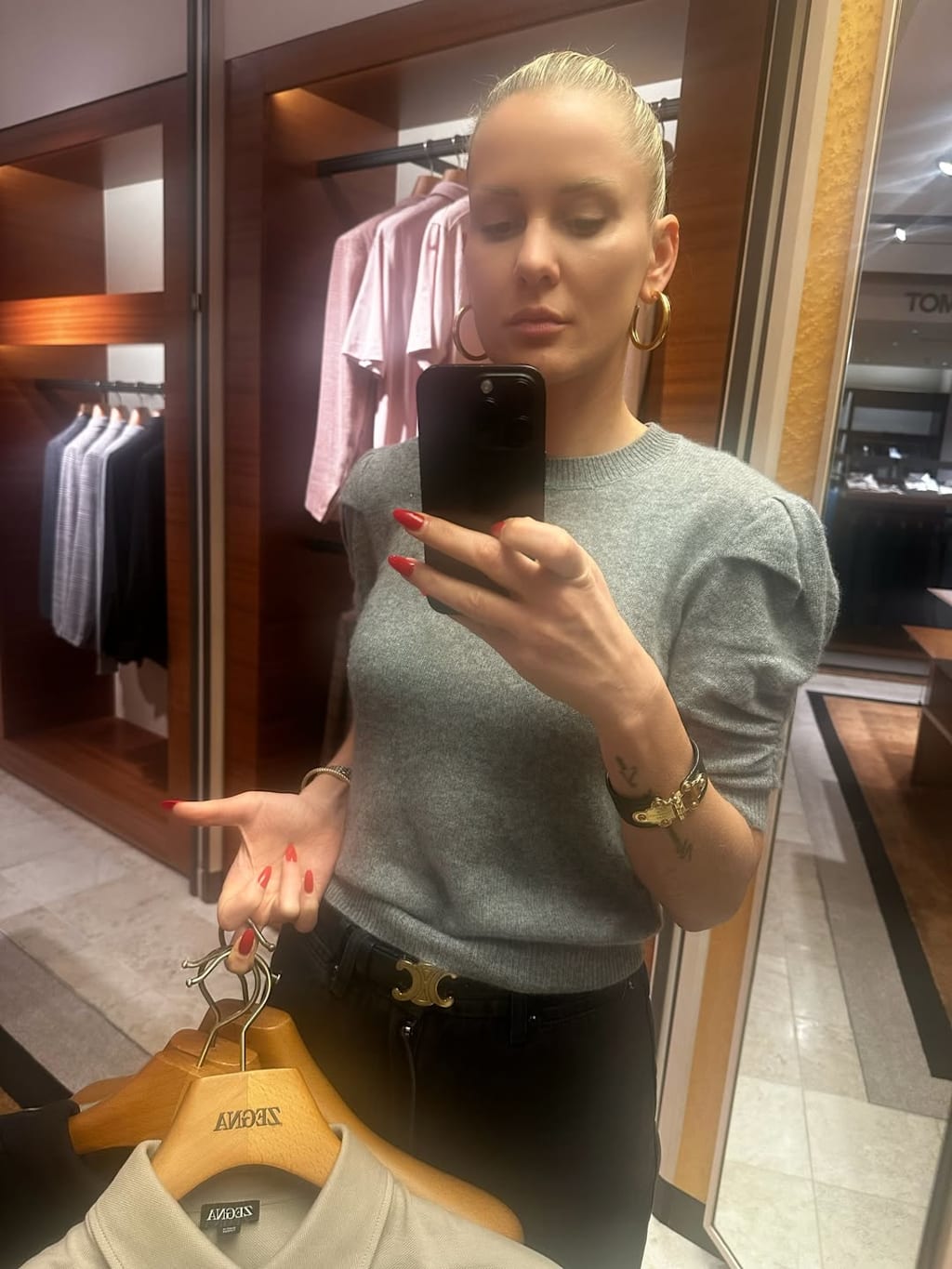
In the rarefied world of high-net-worth dressing, two terms are often used interchangeably — and almost always incorrectly. The luxury fashion consultant and the luxury personal shopper both operate within the upper echelons of the style industry, but they represent fundamentally different professional disciplines. One facilitates access; the other shapes identity. As the global luxury fashion market continues its post-pandemic expansion, understanding this distinction has become increasingly relevant for affluent consumers, private clients, and the luxury houses themselves.
A luxury fashion consultant is a strategic style advisor who develops a client’s long-term wardrobe identity, brand alignment, and personal image across professional and social contexts. A luxury personal shopper, by contrast, is a service professional who sources, selects, and procures specific garments or accessories based on immediate client needs. The former is advisory and relational; the latter is transactional and task-oriented.
The Architecture of a Consulting Relationship
Luxury fashion consulting is, at its core, a long-form engagement. The relationship between a consultant and a high-net-worth client typically begins not with a shopping appointment but with an extended discovery process — an audit of existing wardrobe holdings, a mapping of lifestyle demands, and a strategic assessment of how the client’s current presentation aligns with their professional role, public-facing identity, or personal aspirations. This is less retail and more advisory, closer in structure to a brand consultancy than a styling session.
The luxury fashion consultant operates with a broader mandate. Beyond sourcing, they advise on the cultural language of dress — how a particular house’s aesthetic communicates within specific social environments, how color palette and silhouette interact with different professional contexts, and how wardrobe investment can be approached with the same deliberateness applied to any significant capital allocation. For clients who attend international events, board meetings, galas, or diplomatic engagements, wardrobe decisions carry reputational weight that transcends individual garments.
This consulting relationship is ongoing rather than episodic. Seasonal reviews, pre-travel planning, event preparation, and brand evolution form the recurring rhythm of engagement. The consultant becomes deeply familiar with the client’s lifestyle, values, and aesthetic sensibility over time — a familiarity that cannot be replicated in a single-session transaction, however well-executed.
What a Luxury Personal Shopper Actually Does
The luxury personal shopper — or luxury shopping concierge, as the role is sometimes positioned within hotel and private members’ club contexts — excels in a different and entirely legitimate professional domain: access, sourcing, and logistics. Their expertise lies in market knowledge, supplier relationships, and the capacity to procure specific items, often under time pressure, across international markets. They know which boutiques hold waitlisted inventory, which buyers will prioritize a call, and which seasonal collections are worth moving quickly on.
For clients who are clear on their aesthetic direction but simply lack the time or market access to execute purchases efficiently, the personal shopper provides genuine, high-value service. A senior executive requiring a complete wardrobe refresh before an extended international posting, or a private client seeking a specific limited-edition piece, benefits enormously from a professional with deep trade relationships and the operational capacity to move through luxury markets at a pace a private individual typically cannot match.
Major luxury retailers — among them Harrods, Net-A-Porter, and Bergdorf Goodman — have institutionalized this role within their clienteling departments, offering dedicated personal shopping services to their most significant accounts. In this retail context, the personal shopper operates as an extension of the brand relationship, facilitating access while reinforcing customer loyalty. The role is defined by service delivery excellence rather than independent advisory positioning.
Where the Lines Blur — and Why It Matters
The confusion between the two roles is, in part, a product of the market itself. Many independent professionals now describe themselves as luxury fashion consultants while functioning primarily as personal shoppers. The distinction carries commercial implications: consultants typically command retainer arrangements, project-based fees, or annual advisory agreements, whereas personal shoppers more commonly operate on commission structures tied to purchases, or as salaried employees of retail institutions. The naming matters because it signals the nature of the relationship a client is entering.
A consultant whose income depends on the volume of purchases facilitated faces an inherent structural conflict. Advisory objectivity — the capacity to recommend restraint, redirect investment, or suggest wardrobe consolidation rather than expansion — is compromised when remuneration is tied to sales. True luxury fashion consulting operates independently of retail commission, which is precisely what positions it as a professional service analogous to financial or legal advisory.
High-net-worth clients navigating this market would benefit from asking a direct question before engaging any style professional: does their compensation depend on what is purchased, or on the quality of the advice given? The answer determines the structural dynamics of the relationship that follows.
The Strategic Dimension of Luxury Fashion Consulting
Among the more sophisticated engagements in the luxury fashion consulting space, the work extends well beyond wardrobe composition into territory that overlaps with personal brand management, reputation advisory, and cultural literacy. For public figures, executives, and high-profile private individuals, dress functions as a communication medium — one that operates whether or not the wearer is consciously directing it. The fashion consultant at this level understands how visual presentation intersects with media perception, social capital, and sector-specific professional norms.
This dimension of the work requires genuine knowledge of fashion history, contemporary house trajectories, and the cultural semiotics of dress. It is not sufficient to know which label is prestigious; the consultant must understand why particular aesthetics resonate within particular environments, how luxury fashion has historically functioned as a signaling mechanism across different cultural contexts, and how current market shifts — the rise of quiet luxury, the renegotiation of logomania, the increasing influence of heritage positioning — should inform long-term wardrobe strategy.
The most skilled practitioners in this field also provide coherence across time. A wardrobe assembled piece by piece, season by season, without strategic oversight often becomes a collection of disconnected acquisitions rather than a unified expression. The consultant’s role includes the editorial function: knowing not only what to add, but what to retire, what to invest in at the couture level, and how to balance novelty with the kind of considered permanence that defines genuinely elevated dressing.
How the Market Is Evolving
The independent luxury fashion consulting sector is experiencing a period of significant professionalisation. Driven in part by the increasing sophistication of ultra-high-net-worth consumers — many of whom have global lifestyles, complex professional identities, and high levels of fashion literacy — demand for genuinely advisory, non-transactional style counsel has grown. This demand exists in parallel with, rather than in replacement of, the personal shopping market, which remains robust within the luxury retail ecosystem.
Digital commerce has, paradoxically, intensified rather than diminished this demand. When access to luxury inventory is increasingly possible through a phone, the logistical value proposition of the traditional personal shopper weakens for self-sufficient, digitally fluent clients. What remains genuinely scarce — and therefore genuinely valuable — is the expertise, editorial perspective, and informed judgment that a skilled consultant provides. Curation in conditions of abundance requires a quality of discernment that no algorithm currently replicates.
There is also a growing appetite among younger ultra-high-net-worth consumers — those whose wealth has arrived at an earlier age than earlier generations — for professional guidance that is not embedded within a retail or brand relationship. Independent luxury fashion consulting, structured as a pure advisory service, aligns with the same preference for unconflicted professional counsel that this demographic applies to wealth management, legal advice, and strategic communication.
Making the Right Engagement Decision
The practical question for an affluent consumer is not which service is superior — both fulfill genuine needs — but which service addresses the specific situation at hand. Clients who know precisely what they want and need support in sourcing, timing purchases, or accessing restricted inventory are well served by a luxury personal shopper or luxury shopping concierge with strong market relationships. Clients who are navigating a significant life or career transition, building a new wardrobe framework from first principles, or seeking an ongoing strategic partner for their visual presentation will find that a fashion consultant offers a qualitatively different kind of value.
The clearest signal that a luxury fashion consultant is warranted is the presence of complexity: multiple professional contexts demanding distinct but coherent wardrobe registers, significant travel obligations across different cultural environments, a public profile that invites scrutiny, or simply a recognition that previous wardrobe decisions have lacked coherence or strategic direction. Where complexity is low and the immediate need is product-focused, the personal shopper is the more precisely matched professional.
What both roles share is a foundation in deep luxury market knowledge and a genuine understanding of how clothes function in the lives of people operating at the highest levels of professional and social engagement. The services are distinct, but their value rests on the same underlying premise: that for certain clients, in certain circumstances, professional expertise in the language of dress is not an indulgence but a considered investment in how one moves through the world.
About the Creator
Elsab Styling
At ElsaB Styling, we specialize in providing bespoke, high-end personal styling services for high-net-worth individuals, CEOs, executives, and VIPs.
Enjoyed the story? Support the Creator.
Subscribe for free to receive all their stories in your feed.
Comments
There are no comments for this story
Be the first to respond and start the conversation.