
How Heesen Yachts Built a Distinct Identity in a Crowded Superyacht Market
In an industry defined by heritage and competing pedigrees, the Dutch shipyard has earned its standing on engineering merit — and a clearer understanding of what serious buyers actually want.

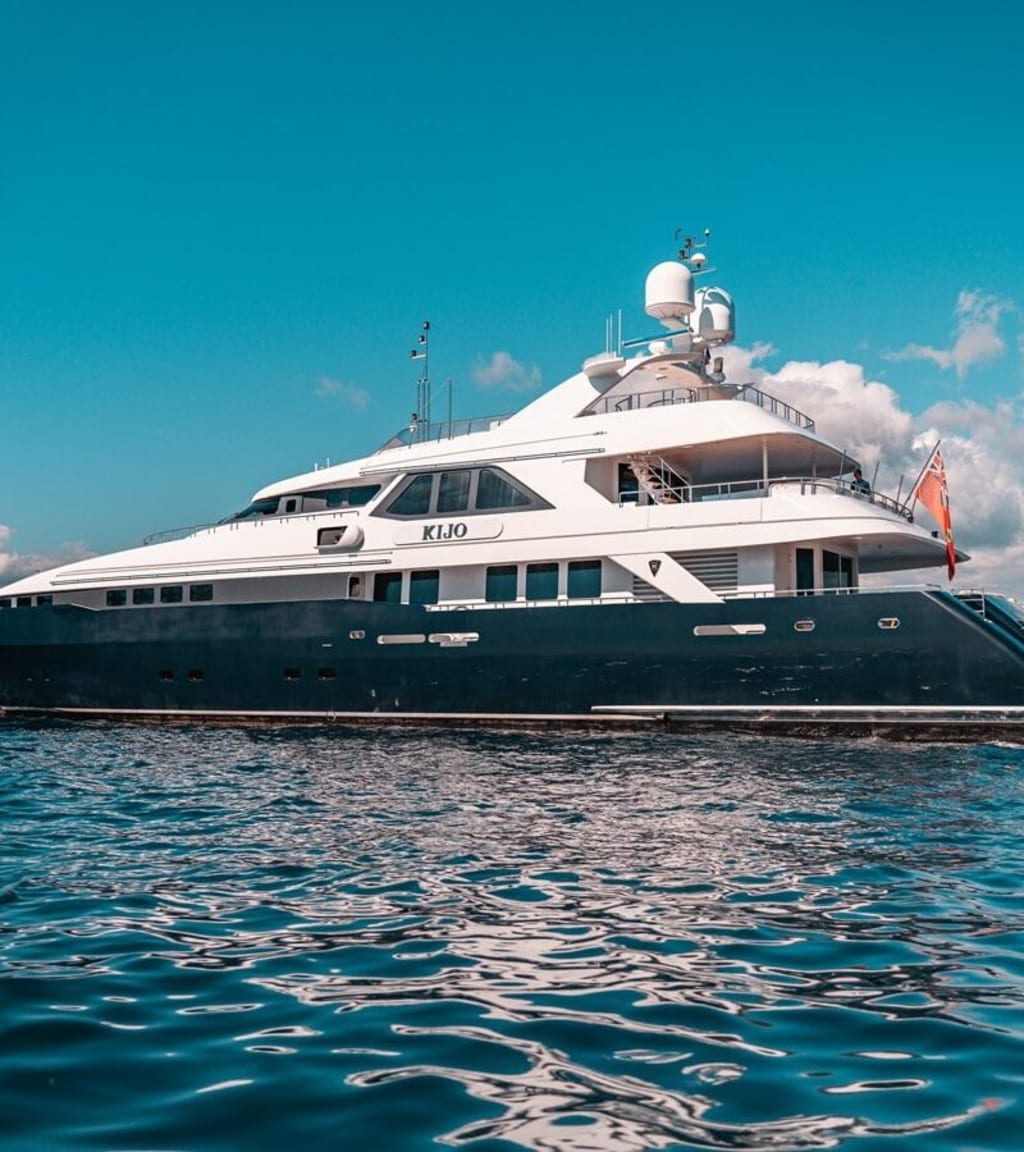
The superyacht industry rewards history. Yards with generations of celebrated commissions behind them carry an authority in the market that newer or less prominent builders spend decades trying to replicate. Against this backdrop, Heesen Yachts has achieved something genuinely distinctive: a position of recognized credibility built not on dynastic lineage but on technical innovation, delivery consistency, and an unusually precise understanding of its buyer. For those currently navigating the superyacht acquisition process — whether through established brokerage networks in South Florida or through international channels — understanding what makes Heesen different is inseparable from understanding what its vessels are actually worth.
Heesen Yachts is a Dutch superyacht shipyard founded in 1978 and headquartered in Oss, Netherlands, specializing in semi-custom motor yachts ranging from approximately 30 to 90 meters. The yard builds in both steel and aluminum, operates a stock hull program that reduces delivery timelines while preserving meaningful owner customization, and has developed proprietary Fast Displacement Hull Form technology that sets its vessels apart on performance and operational efficiency grounds.
That founding date places Heesen in a specific moment for Dutch maritime industry — a period when the Netherlands held genuine respect in commercial and naval shipbuilding but had not yet consolidated the luxury yacht reputation it carries today. Frans Heesen, who established the yard, operated from a conviction that performance and refinement were not competing values but mutually reinforcing ones. That belief shaped every consequential decision the shipyard made in the decades that followed: its choice of materials, its investment in naval architecture, and the kind of clientele it actively cultivated.
An Engineering Philosophy That Became a Market Position
Few shipyards in the superyacht segment have made technical innovation as central to their identity as Heesen. Where many competitors lead with interior volume, celebrated interior designers, or the gravitational pull of famous past builds, Heesen has consistently positioned its engineering capabilities as the primary argument — and the market has responded by directing toward it a buyer profile that tends to be more analytically engaged with what they are purchasing than the industry average.
The development of Fast Displacement Hull Form technology is the clearest expression of this orientation. The conventional semi-displacement hull involves an accepted compromise: meaningful speed gains require disproportionately greater fuel consumption, and most owners simply adjust their cruising speeds downward to manage operating costs. Heesen's hull geometry was designed to challenge that trade-off directly — achieving higher performance figures without the corresponding energy penalty. The result is a vessel that operates more efficiently across a broader range of conditions, with extended range, lower running costs, and a reduced environmental footprint that has become a genuine purchasing consideration for the contemporary HNWI buyer.
The yard's emphasis on aluminum construction reinforces this performance orientation. Building large yachts in aluminum demands greater fabrication precision and more exacting engineering standards than steel, but the structural weight savings are substantial. Those savings translate into improved speed, better fuel economics, and — in many configurations — a shallower draft that meaningfully expands the range of accessible anchorages. For owners planning to cruise the Bahamas, the Florida Keys, or the shallow-water destinations of the wider Caribbean, draft is not a specification footnote. It shapes the actual experience of owning and operating the vessel.
The Stock Hull Program and Its Strategic Logic
Among the more consequential decisions in Heesen's commercial evolution has been the development and expansion of its stock hull program. The structure is straightforward in concept but nuanced in execution: the yard initiates construction of hulls before a buyer is committed, advancing vessels to a defined structural stage and then opening a customization dialogue with the eventual owner. Interior layout, cabin configuration, design language, and systems specification all remain genuinely adjustable within the completed hull envelope.
The commercial advantage this creates is real and consistently cited by buyers and brokers alike. Delivery timelines — one of the most reliably frustrating variables in the new-commission process — compress significantly under this model. A buyer entering at the stock hull stage can anticipate delivery within a timeframe that fully bespoke commissions from comparable yards cannot approach, while retaining meaningful influence over how the finished vessel reflects their preferences and requirements.
For the brokerage community, the program carries its own advantages. A hull in active construction presents with a concreteness that renders and specification documents cannot match, and the negotiation process benefits from that tangibility. In Miami's active international market — where buyers from Latin America, Europe, and the Middle East regularly make significant acquisition decisions across considerable geographic and logistical distance — the ability to demonstrate physical progress rather than projected timelines changes the texture of buyer engagement in ways that close transactions.
Competitive Positioning in a Defined Segment
The superyacht market organizes itself, imperfectly but usefully, along a spectrum from full custom construction to semi-standardized production platforms. At one end, yards like Lürssen and Feadship build entirely around individual owner requirements, with price structures and timelines that reflect the full weight of that process. At the other end, production-oriented builders offer accessible price points with limited variation. Heesen occupies the semi-custom middle ground in this spectrum — deliberately and with evident strategic clarity.
That positioning maps well onto where serious buyer volume actually concentrates. The 40-to-70-meter range represents the active core of the superyacht transaction market: sufficient scale to offer genuine offshore capability, extended range, and substantial accommodation without narrowing the qualified buyer pool to a vanishingly small group. Within this range, Heesen competes primarily against Amels, Sanlorenzo, Benetti, and the smaller end of Feadship's output — each with its own design signature and market emphasis.
The consistent differentiator that emerges in broker conversations and comparative buyer research is engineering credibility. Buyers who arrive having done serious research know that Heesen hulls perform measurably differently from vessels of comparable length from other yards — and that the yard's technical investment is ongoing rather than historical. That reputation is not the product of positioning statements. It is the accumulated result of sea trial data and owner experience across decades of operational use.
South Florida as a Market Lens
Miami and the broader South Florida waterfront occupy a particular position in the international superyacht transaction landscape. The region functions as one of the primary gateway markets for large vessel acquisitions in the Western Hemisphere — a consequence of its concentration of high-net-worth individuals, its natural relationship to Caribbean cruising grounds, and the depth of professional infrastructure its brokerage community has developed over decades of active transacting.
For buyers working with a yacht broker in Miami to explore the pre-owned segment, Heesen is a consistently present name in inventory across the 30-to-65-meter range. The yard's vessels hold their values with notable reliability relative to comparably aged builds from competing shipyards — a pattern that reflects sound original construction, the longevity of the yard's engineering approach, and continued buyer recognition of the Heesen name across successive ownership generations. Vessels commissioned in the early 2000s, maintained properly, remain competitive in the current market. That kind of secondary market durability is not universal in this industry.
South Florida brokers who work regularly in this segment tend to carry genuine platform-specific familiarity with Heesen's various hull families — each representing a distinct generation of engineering standards, interior volume characteristics, and systems infrastructure. That contextual knowledge matters considerably when evaluating vessels at this price level, where the difference between a well-maintained example and a vessel facing significant deferred maintenance can represent millions of dollars in post-acquisition expenditure.
Due diligence on any pre-owned vessel at this scale follows a consistent professional standard: independent technical survey by a qualified marine surveyor, thorough review of classification society records, careful examination of maintenance history, and rigorous assessment of major system condition. Heesen's practice of maintaining ongoing owner relationships throughout the life of its vessels frequently means that well-documented service records accompany boats into secondary ownership — a meaningful advantage in the verification process that not all yards can match.
What the Heesen Trajectory Reveals
The arc of Heesen's rise across four decades of superyacht production is instructive beyond the specifics of one shipyard's commercial story. It reflects a broader evolution in how serious buyers at this level approach acquisition decisions. The superyacht buyer of an earlier era was often primarily motivated by scale and interior luxury — the vessel as a visible expression of financial achievement. That motivation has never disappeared, but it now coexists with a more technically sophisticated buyer who engages seriously with hull performance data, operational cost structures, and the engineering rationale behind the choices a yard makes.
Heesen built its identity precisely for this buyer — not by anticipating a trend, but by following its own engineering convictions consistently over time and allowing the market to find them. The result is a yard whose reputation rests on something more durable than brand recognition or historical association: it rests on the measurable performance of vessels in active use, validated across thousands of offshore hours and multiple ownership cycles.
For anyone currently considering a Heesen acquisition — whether a new commission through the stock program or a pre-owned example found through boats for sale listings in South Florida or elsewhere — that foundation is the essential context. The vessel under consideration is the product of a specific, coherent engineering philosophy maintained with unusual discipline over a long institutional history. In a market where reputation is constructed slowly and where the stakes attached to individual decisions are genuinely high, that consistency is not a minor detail. It is the central argument.
About the Creator
Robert Lama
Robert Lama is a seasoned yacht broker with Miami International Yacht Sales, a reputable yacht brokerage company specializing in both used and new yachts. https://www.miamiinternationalyachtsales.com/
Enjoyed the story? Support the Creator.
Subscribe for free to receive all their stories in your feed.
Comments
There are no comments for this story
Be the first to respond and start the conversation.