
How Health Care Monitoring Is Quietly Transforming Everyday Life
Healthcare used to begin in hospitals. Today, it starts at home.

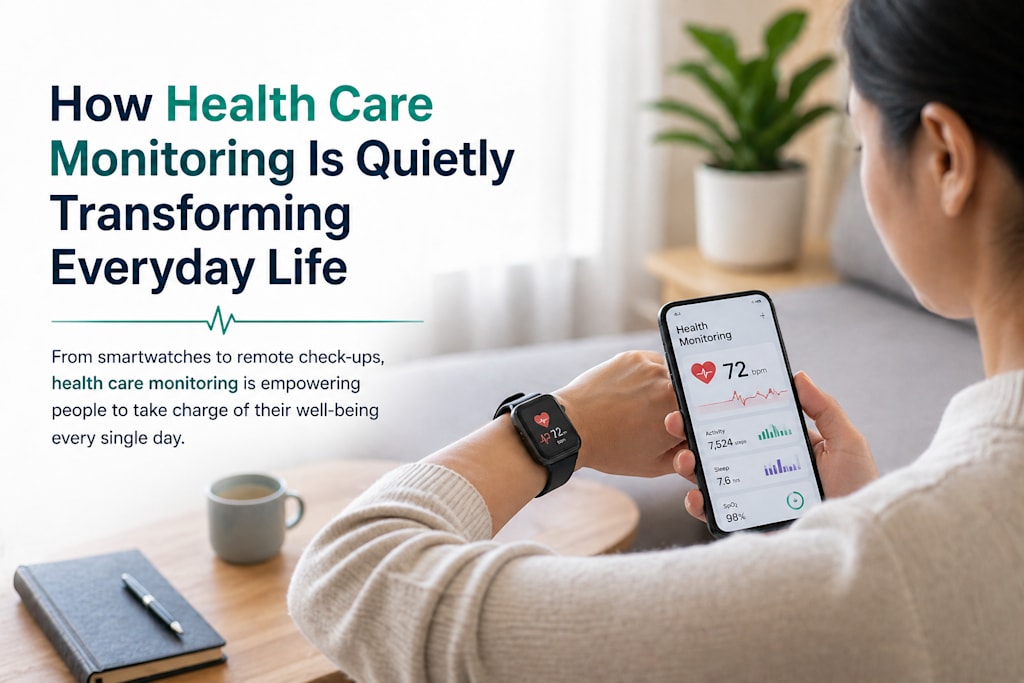
From smartwatches tracking heart rate to apps reminding people to take medication, health care monitoring has moved beyond clinical walls into daily routines. What once required specialized equipment and frequent hospital visits is now embedded in devices many people wear or carry every day.
This shift is not just technological; it’s behavioural.
The Rise of Continuous Health Awareness
Traditionally, people only engaged with healthcare systems when something went wrong. Symptoms appeared, appointments were booked, and treatment followed. But health care monitoring is changing that reactive model into a proactive one.
Now, individuals can:
* Track sleep cycles and stress levels
* Monitor heart rate and physical activity
* Receive alerts for irregular health patterns
This continuous feedback loop encourages awareness, helping people recognize patterns that were previously invisible.
Why Monitoring Matters More Than Ever
Modern lifestyles have introduced new health challenges sedentary habits, irregular sleep, and increased stress levels. In this context, health care monitoring acts as an early warning system.
For example, subtle changes in heart rate variability or sleep disruption can indicate deeper issues. Identifying these signals early can lead to faster intervention and better outcomes.
More importantly, it empowers individuals to take ownership of their health, rather than relying entirely on external systems.
Technology Meets Daily Habits
The real strength of health care monitoring lies in its integration with everyday life. It doesn’t demand drastic changes; instead, it quietly fits into existing routines.
A person checking their step count might gradually become more active. Someone tracking sleep may start prioritizing rest. Over time, these small adjustments compound into meaningful improvements.
This is where monitoring becomes more than just data it becomes behavior change.
The Balance Between Data and Overload
While access to health data is beneficial, it also introduces a new challenge: information overload.
Not every fluctuation in metrics is meaningful, and excessive tracking can sometimes create unnecessary anxiety. The key lies in interpretation understanding which signals matter and when to act on them.
Effective health care monitoring is not about constant tracking but about meaningful insights.
Privacy and Trust Considerations
As more personal health data is collected, questions around privacy and security become increasingly important. Users need to trust that their information is handled responsibly.
Transparency, data protection, and ethical usage are critical factors shaping the future of health care monitoring. Without them, adoption may slow despite technological advancements.
Looking Ahead: A More Personalized Approach
The future of health care monitoring is moving toward personalization. Instead of generic benchmarks, systems are evolving to understand individual baselines and provide tailored insights.
This means recommendations that adapt to:
* Personal health history
* Lifestyle patterns
* Environmental factors
Such an approach shifts healthcare from generalized treatment to individualized care.
Conclusion
Health care monitoring is not just a trend it’s a shift in how people relate to their own well-being. By bringing healthcare into everyday life, it encourages awareness, prevention, and informed decision-making.
The real impact isn’t in the technology itself, but in how it subtly changes behavior over time.
And that’s where the transformation begins.
About the Creator
Enjoyed the story? Support the Creator.
Subscribe for free to receive all their stories in your feed.
Comments
There are no comments for this story
Be the first to respond and start the conversation.