
How Fashion Wardrobe Stylists Balance Aesthetics and Functionality
Where Creative Vision Meets the Demands of Real Life

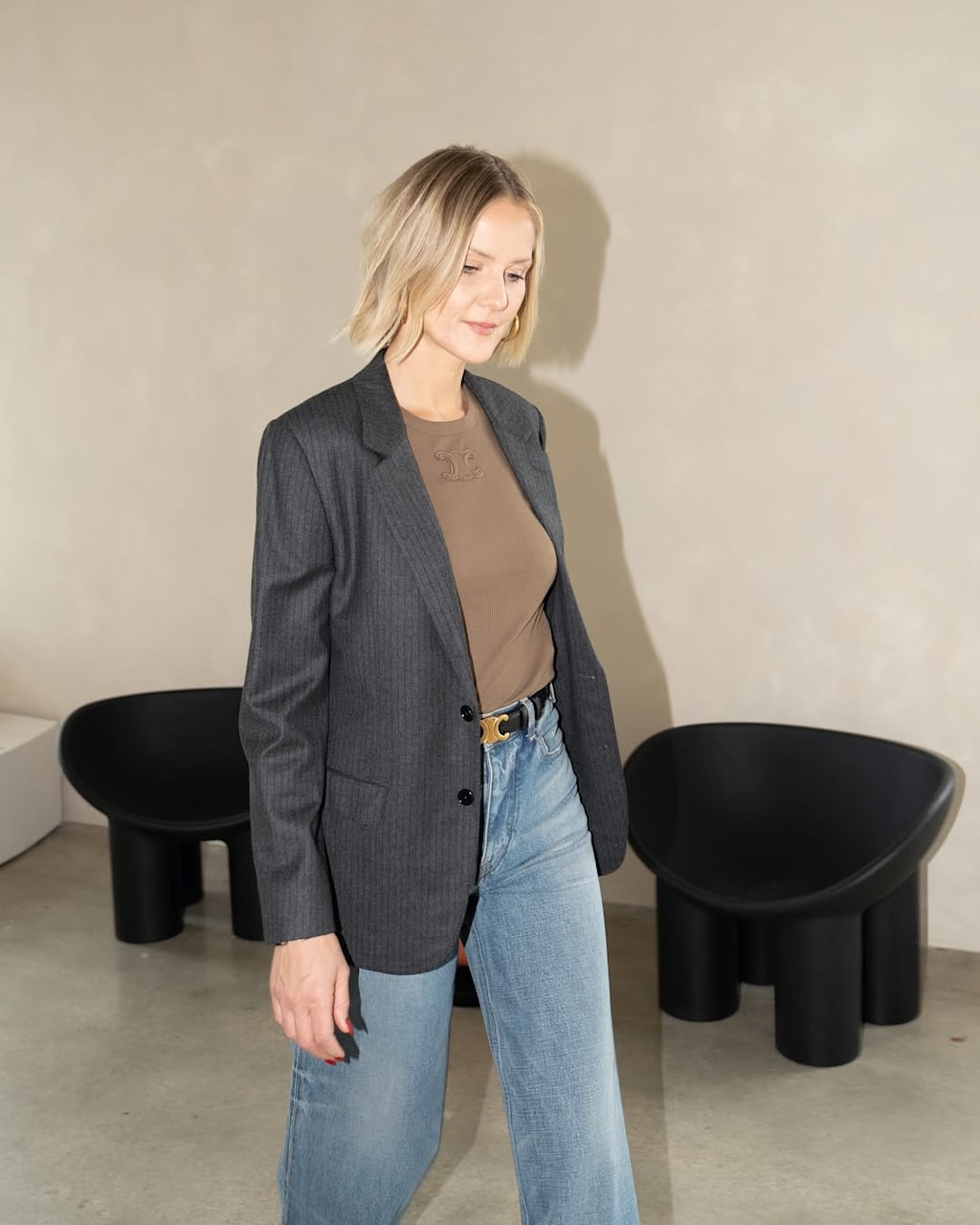
Fashion wardrobe styling occupies a curious position in the broader world of design. It is simultaneously a creative discipline and a deeply practical one — a field where beauty must negotiate constantly with constraint. The clothes on a rack may be remarkable in their own right, but it is the stylist's task to determine whether they will hold up under stage lights, serve an actor through a twelve-hour shoot, or express a client's identity without restricting their movement through an ordinary workday. That tension — between what looks extraordinary and what actually functions — is where the profession's most interesting work takes place.
The public perception of wardrobe styling tends to lean toward the glamorous side: mood boards, runway references, showroom appointments. What gets less attention is the structural thinking beneath those choices. Every wardrobe decision involves a set of competing priorities, and the stylists who navigate them most effectively are those who have learned to treat aesthetics and functionality not as opposing values but as design criteria that must coexist.
The Foundation: Understanding Context Before Making Choices
Before any garment is selected, experienced wardrobe stylists engage in a process of contextual mapping. This means understanding not just who someone is, but where they will be, what they will be doing, and what the clothing needs to communicate without saying a word.
In editorial and commercial settings, context might mean understanding the emotional register of a campaign — whether the brand wants to project authority, ease, innovation, or nostalgia — and then identifying pieces that carry those qualities visually while still photographing well under specific lighting conditions. In film and television, context becomes even more layered. A costume must read correctly on screen, survive repeated takes, accommodate harnesses or microphone packs, and often be duplicated across multiple identical versions to allow for damage or continuity needs.
For personal clients, the contextual work is different but no less rigorous. A wardrobe stylist working with an executive, a public speaker, or a performer needs to understand the range of environments that person moves through in a given week — boardrooms, casual social settings, media appearances, travel — and build a wardrobe architecture that responds to each one without requiring the client to become a different person depending on the occasion.
This phase of the work is largely invisible to an outside observer, but it determines the quality of every choice that follows. Stylists who skip it — who lead with aesthetics before establishing context — tend to produce wardrobes that look impressive in isolation but fail in practice.
Reading the Body as a Design Element
One of the core skills in wardrobe styling is the ability to look at a person and understand their body not as something to be hidden or exaggerated, but as a design element to be worked with. This involves an understanding of proportion, silhouette, and how different cuts and fabrics interact with different body types in motion.
Functionality here is inseparable from aesthetics. A jacket that sits beautifully on a hanger might pull awkwardly across the shoulders when someone reaches forward. Trousers that look perfectly tailored in a standing position may bunch uncomfortably when someone sits. These are not merely comfort issues — they affect the visual outcome of the styling as much as the original selection did.
Skilled wardrobe stylists tend to think about clothing in terms of movement and wearability from the very beginning of the selection process. They understand that a person carries themselves differently depending on how comfortable they are, and that discomfort — even mild discomfort — changes the way a garment reads. A beautiful piece worn with tension or self-consciousness will not achieve the same visual result as a piece the wearer has forgotten about entirely because it simply fits.
This is why tailoring remains central to professional wardrobe styling even in an era of widely available ready-to-wear fashion. A garment that has been altered to a specific body closes the gap between how something looks on a model or mannequin and how it functions in actual wear. It is one of the clearest examples of how investing in fit serves both the aesthetic and the functional goal simultaneously.
The Material Question: Fabric, Durability, and Environment
Beyond cut and silhouette, fabric choice is one of the most consequential decisions a wardrobe stylist makes — and it is one that requires balancing visual appeal with performance characteristics that have nothing to do with appearance.
Natural fibers like wool, silk, and linen photograph and present beautifully, but they respond differently to heat, humidity, sweat, and repeated wear than their synthetic counterparts. A wool blazer will hold its shape exceptionally well in a controlled environment but may behave differently during an outdoor shoot in warm weather. Silk communicates luxury and fluidity but requires careful handling and is vulnerable to a wide range of staining agents. These are not reasons to avoid these materials — they are reasons to understand where they belong and where they don't.
In performance and broadcast contexts, fabric choice intersects with technical requirements. Certain synthetic fabrics create noise when they move, which is an issue for sound recording. Highly reflective materials can cause problems under particular lighting setups. Fine horizontal stripes may create a moiré effect on camera. A wardrobe stylist working in these environments needs to understand these constraints as well as any visual designer would understand theirs.
For everyday personal styling, the material question becomes one of lifestyle alignment. There is a meaningful difference between a wardrobe that looks aspirational in theory and one that fits the actual rhythms of how someone lives. A person who travels frequently needs fabrics that pack well and resist wrinkling. Someone who is physically active through much of their day needs clothing that allows full range of movement without compromising its appearance. Recommending a garment without accounting for these factors is an aesthetic choice that works against the functional outcome.
Color, Pattern, and the Psychology of Perception
Color and pattern are among the most powerful tools in a wardrobe stylist's kit, and they are also among the most technically demanding to deploy with precision. The way color reads in photographs differs from how it reads in person. The way pattern behaves on a moving human body differs from how it looks in a flat lay. Understanding these variables is part of what distinguishes a technically proficient stylist from one who is simply following visual instinct.
Color theory in professional styling goes well beyond personal preference. Color communicates mood, social context, and cultural associations. It interacts with skin tone and lighting in ways that are predictable if you understand the underlying principles. A wardrobe stylist who works regularly with public figures understands, for instance, that certain color choices carry implicit signals — that the choice of navy versus black versus charcoal in a professional context is not purely aesthetic but communicative.
Pattern presents its own layer of complexity. Scale matters enormously: a large graphic print that works well at editorial scale may become visually overwhelming in a close-up portrait. A fine texture that adds depth and interest in person may disappear entirely on camera. Stylists who work across different mediums develop an intuitive sense of how to translate visual interest across contexts — often choosing pieces that read slightly differently in person than they do in photographs, precisely because the photographic result is what the client or project ultimately requires.
The functional dimension of color and pattern is subtler but real. Dark colors and tonal dressing tend to be more forgiving across a range of environments and pairing scenarios. Neutral foundations are more versatile wardrobe building blocks than statement pieces, however beautiful those pieces may be individually. A wardrobe that functions well over time is one that has been assembled with internal coherence — where individual pieces work together rather than existing only in isolation.
Sourcing, Sustainability, and the Long View
The material conditions of wardrobe styling have shifted meaningfully in recent years, with growing attention to where clothing comes from, how it is made, and what its longevity looks like in practice. This has become part of the professional conversation in ways it wasn't a decade ago, and it represents another dimension of the balance between aesthetic aspiration and practical responsibility.
Sourcing decisions in professional styling now increasingly involve considerations around sustainable production, ethical manufacturing, and the ecological cost of fast fashion cycles. Many stylists — particularly those working with personal clients on long-term wardrobe building — have moved toward investment-based approaches that prioritize fewer, better pieces over large-volume acquisition. This approach tends to align aesthetic and functional goals quite naturally: well-made clothing holds its shape longer, survives cleaning and wear more gracefully, and often presents better than its cheaper counterparts.
For project-based work in editorial, film, or commercial contexts, the conversation around sustainability has introduced practices like sourcing vintage and archival pieces, returning loaned items rather than retaining them, and working with brands whose production values align with responsible standards. These are not purely ethical positions — they often result in more distinctive visual outcomes, since archival and vintage sourcing tends to produce less predictable, more characterful selections than pulling from current commercial inventory.
The Invisible Work of Collaboration
Wardrobe styling rarely happens in isolation. In almost every professional context, it is a collaborative practice — with photographers, directors, hair and makeup teams, clients, and brand representatives all bringing their own requirements and perspectives to the process. Part of what makes a stylist effective is the ability to hold a clear creative vision while remaining genuinely responsive to the needs of others in the room.
This collaborative dimension adds another layer to the aesthetics-versus-functionality question, because the functional requirements often come from outside the stylist's immediate domain. A director may need a garment to communicate a character's psychology. A photographer may have strong preferences about how color and texture will interact with their lighting approach. A client may have professional or personal constraints that narrow the field of workable options considerably. The stylist's task is to find the solution that works for all of those conditions simultaneously — which requires not just creative skill, but the kind of structured thinking that takes all variables into account from the start.
The best wardrobe stylists describe their work not as imposing a vision but as creating the conditions for the right outcome — identifying the intersection where aesthetic intention, functional necessity, and the specific requirements of the context all point in the same direction. When that intersection is found and executed well, the result tends to look effortless. Which is, in most cases, precisely the point.
The balance between aesthetics and functionality in wardrobe styling is not a problem to be solved once and filed away. It is a continuous negotiation that recurs with every new client, every project, and every shifting set of circumstances. What makes the profession compelling — and genuinely difficult — is that this negotiation rarely has a single right answer. It requires judgment that is part technical knowledge, part visual sensibility, and part an understanding of how people move through the world in the clothes they wear. That combination, more than any individual skill, is what defines professional wardrobe styling at its most effective.
About the Creator
Elsab Styling
At ElsaB Styling, we specialize in providing bespoke, high-end personal styling services for high-net-worth individuals, CEOs, executives, and VIPs.
Enjoyed the story? Support the Creator.
Subscribe for free to receive all their stories in your feed.
Comments
There are no comments for this story
Be the first to respond and start the conversation.