
How Dogs in South Korea Went From Food to Family
How changing attitudes toward animals, generational differences, and new legislation are bringing an end to South Korea's dog meat industry.
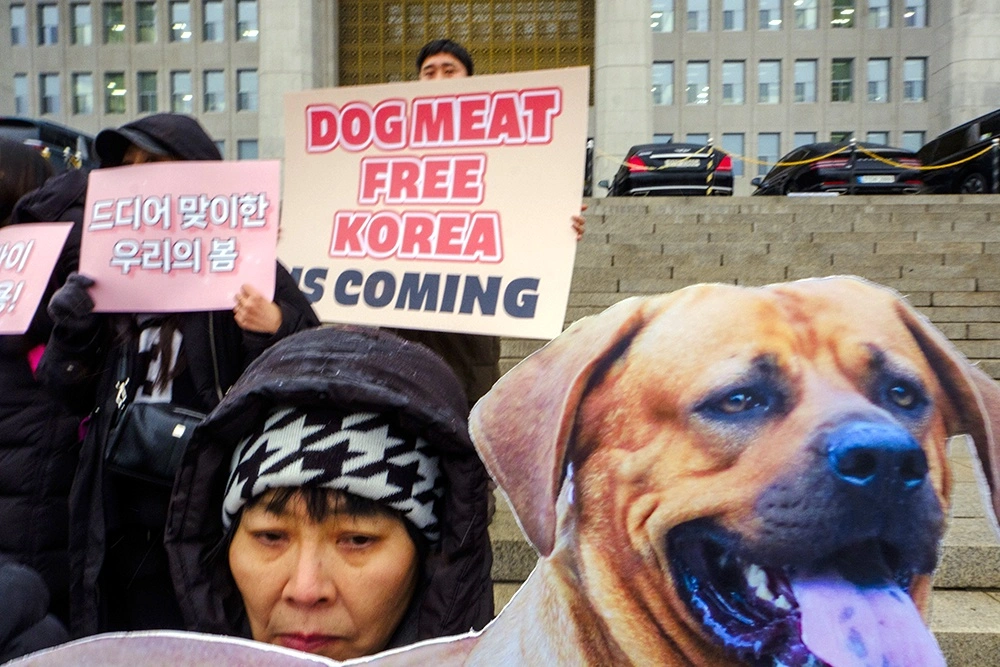
In January 2024, South Korea passed a law that would have seemed almost unimaginable just a few years earlier. The country decided to gradually phase out the dog meat industry: by 2027, breeding, slaughtering, distributing, and selling dogs for human consumption must come to an end.
The law does not specifically punish people for eating dog meat. Instead, it targets the industry itself—farms, slaughterhouses, suppliers, and restaurants.
At first glance, it may look like a simple debate about animal welfare. In reality, the issue runs much deeper. For some Koreans, dog meat is a traditional food associated with difficult times, hot summers, and the customs of an older generation. For others, it is a painful reminder of the past that no longer fits modern South Korea, where dogs are increasingly seen as members of the family.
A centuries-old tradition is disappearing as South Korean society undergoes profound cultural and generational change.
Where the Tradition Came From
The consumption of dog meat on the Korean Peninsula has a long history. However, it is important to understand that dog meat was never a staple of Korean cuisine in the same way as rice, vegetables, fish, or pork.
Instead, it existed as a separate culinary tradition alongside everyday foods. It was particularly associated with the hottest days of summer, when many people believed that dog meat soup could restore strength and help the body cope with extreme heat.
The best-known dish is bosintang, a soup made with dog meat, herbs, and spices. It was not an everyday meal but rather a seasonal specialty, especially during Sambok, the hottest period of the Korean summer.
In earlier centuries, attitudes toward animals were generally more practical. Dogs served as guards, working animals, or companions around the home, and in some cases they were also considered a source of meat. The modern idea that dogs should be regarded exclusively as pets simply did not exist for many people.
Why the Tradition Began to Disappear
The main reason is that South Korea itself changed. The country became wealthier, more urban, and increasingly modern. People were no longer dependent on traditional sources of protein. Beef, pork, chicken, seafood, and imported foods became widely available, making dog meat unnecessary as a food source.
At the same time, pet ownership grew rapidly. More and more families began keeping dogs purely as companions rather than working or farm animals. For younger generations, dogs became family members rather than livestock.
Public opinion surveys show a sharp decline in interest in eating dog meat. While older generations were more likely to have eaten it at least occasionally, most younger Koreans say they have no intention of trying it in the future.
For many of them, it is no longer viewed as a tradition worth preserving but as something the country should leave behind.
A Generational Divide
The sharpest disagreement exists between generations.
For many older Koreans, the ban feels like an attack on their traditions and way of life. They remember a time when the country was much poorer, life was harder, and food choices were very different. For them, bosintang is not a political symbol but a familiar part of the past.
Their argument is straightforward: if society accepts eating beef, pork, and chicken, why should dogs be treated differently?
Younger Koreans often answer that society itself has changed. Today, dogs live inside homes, sleep on couches, visit veterinarians, wear collars with their names, and are often treated almost like relatives.
As a result, the debate has become about much more than food. It is really a debate over what modern Korean society should look like.
Many Young People Ate It Because of Social Pressure
There is another important aspect to the story.
Even among younger Koreans who have tried dog meat, not everyone did so willingly.
Korean society places great emphasis on hierarchy, respect for elders, and shared meals. If a father, grandfather, employer, or senior colleague invited someone to a restaurant to eat a "traditional dish," refusing could be socially uncomfortable.
For some younger people, eating dog meat became less a personal choice than an act of social conformity.
Why the Law Was Passed in 2024
Attempts to regulate or ban the dog meat trade had been discussed for years, but the issue remained politically sensitive.
Some politicians feared backlash from farmers and older voters. Others worried about appearing to abandon Korean traditions under pressure from international animal-rights campaigns. The industry itself also resisted change and demanded financial compensation.
By the 2020s, however, the situation had changed.
Consumption had fallen sharply, and the industry was no longer a significant part of the country's food economy.
At the same time, pet ownership expanded dramatically, making it increasingly difficult for politicians to ignore public attitudes toward animal welfare.
President Yoon Suk Yeol and First Lady Kim Keon Hee, both well known for their interest in animal welfare and their own pet dogs, also helped bring greater political attention to the issue.
As a result, the legislation received rare bipartisan support. In January 2024, South Korea's National Assembly approved the ban by an overwhelming majority.
What the Law Actually Prohibits
The law does far more than ban restaurants from serving dog meat.
It targets every stage of the industry, including:
• breeding dogs for meat production;
• slaughtering dogs for food;
• distributing and supplying dog meat;
• selling dog meat;
• operating businesses connected with the industry.
A transition period lasting until 2027 was introduced to allow farmers and business owners time to close their operations or move into other industries.
Penalties are substantial. Slaughtering dogs for meat may result in prison sentences of up to three years or significant fines. Similar penalties apply to breeding, distributing, and selling dogs for human consumption.
Importantly, the law does not criminalize individuals simply for eating dog meat. Its goal is to eliminate commercial production rather than punish consumers.
What Will Happen to Hundreds of Thousands of Dogs?
Perhaps the greatest challenge is not the law itself but the fate of the animals.
Official estimates indicated that hundreds of thousands of dogs were being raised for the meat industry. Government figures referred to approximately 468,000 dogs on 1,537 farms, while some estimates placed the number above 520,000.
As farms close, these dogs must be housed, treated, sterilized, socialized, and eventually adopted.
Many are large breeds that have had little contact with family life and are not accustomed to living indoors. Finding suitable homes for them is difficult, while animal shelters are already overcrowded.
Animal welfare organizations warn that without careful planning, thousands of dogs could remain in limbo for years.
This is one of the greatest paradoxes of the ban: legislation designed to protect animals also creates an enormous challenge in caring for those very animals.
The Human Cost of the Ban
The legislation also affects the people whose livelihoods depended on the industry.
The South Korean government has promised compensation and transition assistance. Farmers are being offered financial support for closing their operations early, along with programs to help them move into other lines of work.
Many within the industry, however, argue that the available support is insufficient.
What Happens After 2027?
By February 2027, the commercial dog meat industry is expected to disappear from legal operation in South Korea.
Even then, three major challenges will remain.
The first is the welfare of the dogs themselves. Rescuing them is only the beginning; they must also receive medical care, rehabilitation, and permanent homes.
The second concerns former farmers. If compensation proves inadequate, some may struggle financially or attempt to continue operating illegally.
The third is enforcement. Any ban is only as effective as the government's ability to monitor and enforce it. Otherwise, the trade could simply move underground, potentially creating even worse conditions for the animals.
For that reason, 2027 will not mark the end of the story. It will be the true test of whether South Korea has succeeded not only in passing an ambitious law but also in putting it into practice.
About the Creator
Enjoyed the story? Support the Creator.
Subscribe for free to receive all their stories in your feed.
Comments
There are no comments for this story
Be the first to respond and start the conversation.