
Floating Ceremonies: Why Water-Based Weddings Are Redefining Celebration in Coastal Cities
The growing appeal of yacht weddings reflects a deeper shift in how modern couples think about intimacy, place, and the meaning of a memorable day

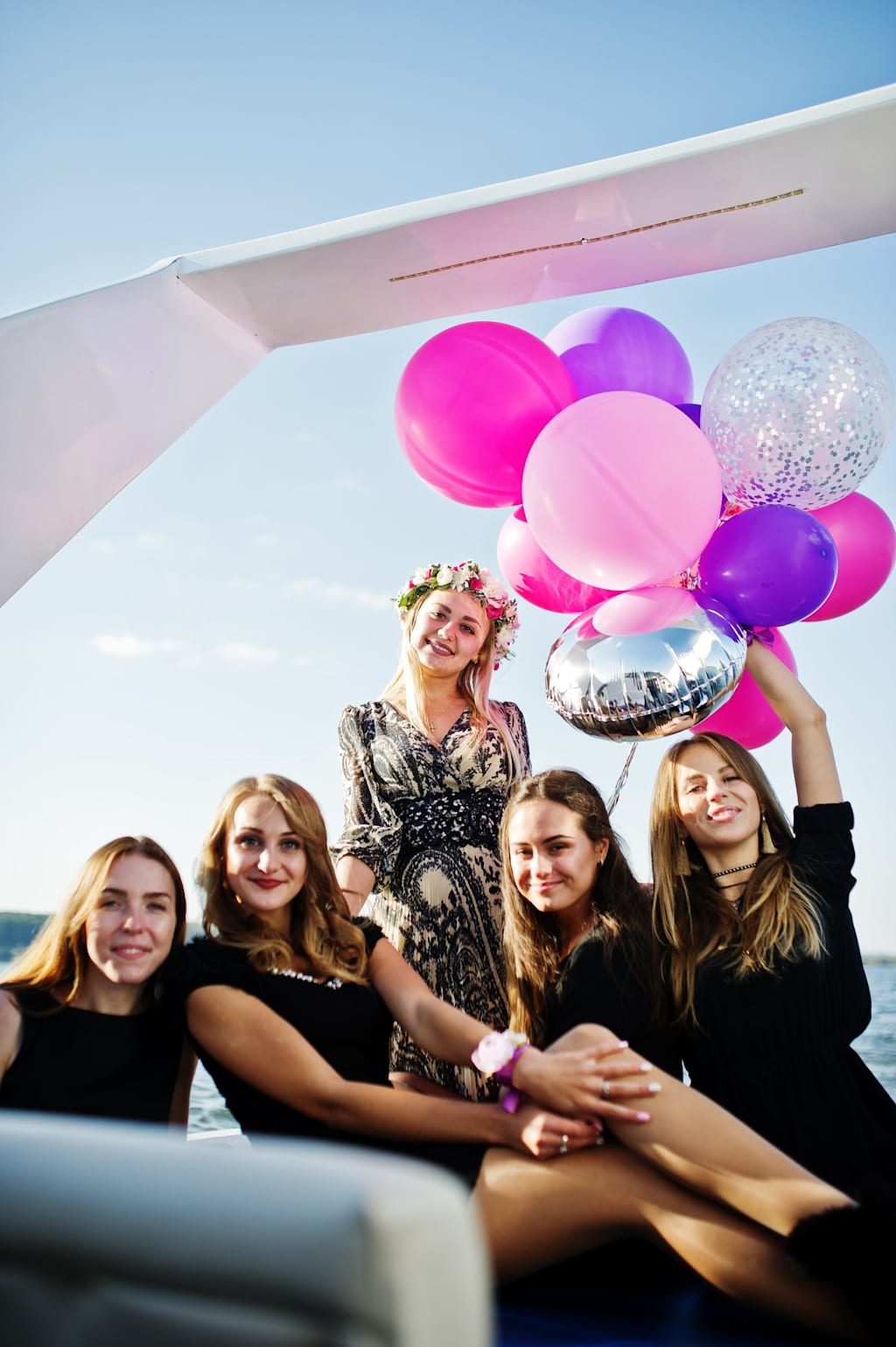
In the broader conversation about how contemporary couples approach matrimonial celebration, one trend has moved quietly but steadily from the margins into mainstream consideration. Water-based weddings — ceremonies and receptions held aboard private vessels on open bays, harbors, and coastal waterways — have emerged as one of the more substantive departures from conventional venue culture. In cities where geography and lifestyle naturally converge, yacht weddings are no longer a novelty. They are a legitimate and increasingly well-understood alternative to the ballroom, the estate, and the rooftop terrace.
A yacht wedding is a ceremony and reception conducted aboard a privately chartered vessel, typically navigating a harbor, bay, or coastal waterway during the event. The format combines the exclusivity of a private venue with the sensory richness of an open-water environment, offering guests a shared experience that unfolds against a continuously shifting natural backdrop. Guest capacity varies by vessel, commonly ranging from intimate gatherings of twenty to celebrations exceeding one hundred guests.
The Venue Question Has Changed
For much of the twentieth century, the wedding venue conversation was largely settled before it began. Couples selected from a familiar and finite category of spaces — hotel ballrooms, religious halls, garden estates, country clubs — and the energy of planning flowed into decoration, catering, and entertainment rather than the fundamental question of where. That default has eroded meaningfully over the past decade and a half.
The shift is not arbitrary. It reflects a generation of couples who approach major life events with a different set of priorities than their predecessors. Experiences carry more cultural weight than spectacle. Intimacy is valued over scale. The setting of a celebration is understood not merely as a backdrop but as an active participant in the emotional character of the day. These values have opened the wedding venue conversation in ways that were structurally unlikely even twenty years ago.
Water-based ceremonies sit at an interesting intersection of these preferences. They are inherently experiential in a way that static venues are not — guests don't simply occupy a space, they move through one, sharing a journey that begins at departure and ends at return. The vessel imposes its own rhythm on the event, one that no amount of event design can fully replicate on land. That rhythm, unhurried and tied to the movement of water rather than the clock on a banquet room wall, shapes the emotional texture of the gathering in ways that couples and guests consistently describe as distinctive.
What Open Water Does to a Gathering
The social dynamics of a water-based celebration differ from those of land-based events in ways that are worth examining carefully. A vessel has defined, finite space. That constraint — which might initially read as a limitation — functions in practice as a powerful social organizer. Guests cannot drift into separate rooms or disengage from the gathering. The shared experience of open water, the common visual focal point of the surrounding seascape, and the physical containment of the vessel produce a social cohesion that larger, more diffuse venues rarely achieve naturally.
Conversations happen across tables in ways they don't in sprawling banquet spaces. The celebration becomes, almost by structural necessity, more collective and more present. Guests who might otherwise spend a conventional reception orbiting their own social clusters find themselves drawn into a shared experience that the environment itself generates.
There is also the matter of the guest list. A vessel's capacity constraint functions as a curatorial tool — one that helps couples navigate the often politically complex process of limiting invitations. The finite nature of the space provides a socially legible explanation for a smaller gathering, one that removes the interpersonal friction that can accompany selective invitation decisions. The result is frequently a celebration that more accurately reflects the couple's actual relationships rather than the accumulated obligations of extended family and professional networks.
This dynamic has particular cultural resonance in cities with strong traditions of large, multigenerational celebrations. Couples navigating between inherited expectations of expansive hospitality and personal preferences for something more intimate find in the vessel format a middle ground that is both practically defensible and experientially meaningful.
The Sensory Dimension of Water
Any honest discussion of water-based weddings must acknowledge what open water actually contributes to the sensory experience of a celebration — and why that contribution is difficult to replicate through design alone. The quality of light over open water is genuinely unlike that of any interior or manicured outdoor space. At golden hour, when the sun descends toward the horizon and its angle flattens across the surface of a bay, the illumination it produces is warm, diffuse, and extraordinarily flattering — a natural photographic condition that photographers spend considerable effort and expense trying to recreate in other environments.
The soundscape of open water is similarly distinctive. The ambient presence of water moving against a hull, the absence of urban noise, the wind as a textural element rather than an intrusion — these combine to create an acoustic environment that is simultaneously intimate and expansive. Guests at water-based celebrations frequently remark on a quality of presence and attentiveness that they attribute, often without being able to fully articulate why, to the environment itself.
The visual dimension extends beyond light. A celebration that unfolds against a continuously changing backdrop — coastline, open water, returning harbor at dusk — provides a narrative arc that static venues structurally cannot offer. The ceremony that begins in one visual context and concludes in another, with the reception unfolding across the transition between them, creates a natural progression that guests experience as a complete and memorable event rather than a series of scheduled segments in a fixed location.
Coastal cities with significant bay or harbor geography — where the waterfront is genuinely accessible and the maritime environment is part of daily civic life rather than a distant amenity — offer the fullest expression of what water-based celebration can provide. In these environments, the vessel is not a novelty imported from elsewhere. It is an extension of the landscape that defines the city itself.
The Operational Reality Couples Should Understand
The romantic appeal of open-water ceremonies is well established. The operational reality deserves equal attention, because couples who approach water-based weddings without adequate preparation frequently encounter avoidable complications that affect the quality of the experience.
Charter vessels operating for private events are governed by maritime safety regulations that establish firm parameters around passenger capacity, safety equipment, and operational standards. These requirements are non-negotiable and exist independently of event preferences. Understanding them before finalizing guest counts and event design prevents the misaligned expectations that are among the most common sources of disappointment in water-based event planning.
Catering in a marine environment is a specialized discipline that differs substantially from conventional event catering. Galley facilities aboard charter vessels are not commercial kitchens. The most successfully executed water-based receptions involve catering teams with direct experience in marine environments — professionals familiar with spatial constraints, the absence of conventional staging areas, and the logistical considerations that affect food quality and service timing when a kitchen is moving. The distinction between a catering team experienced in marine contexts and one that is not becomes apparent quickly during service.
Audiovisual production presents its own set of marine-specific considerations. Open-air acoustic environments on moving vessels behave very differently from enclosed spaces. Wind, ambient engine sound, and the absence of reflective surfaces all affect sound quality in ways that require purpose-built solutions rather than adaptations of land-based equipment configurations. Ceremonies where vows are clearly audible to every guest require microphone and speaker systems designed specifically for outdoor marine conditions — not standard event audio transposed onto a boat.
Photography in a marine environment rewards professionals with genuine experience on the water. The movement of the vessel, the variability of natural light across an open-water setting, and the absence of fixed compositional reference points require both technical and creative adaptations that not all event photographers are equally prepared to make. The results, when the photographer is well-matched to the environment, tend toward imagery of uncommon visual richness — compositions that incorporate sky, water, and landscape simultaneously in ways that are structurally unavailable to any fixed venue.
What This Trend Reflects About Contemporary Celebration
The sustained and growing interest in water-based yacht weddings in Miami is not reducible to aesthetics, though the visual appeal is real and significant. It reflects something more substantive about how a generation of couples understands the purpose of a wedding celebration and what they want it to produce.
The most resonant weddings, across cultures and across time, tend to share a common characteristic: the setting participates actively in the emotional experience rather than serving as a neutral container for it. A ceremony held in a landscape of genuine beauty and sensory richness — one that guests must travel to, that imposes its own conditions, that cannot be fully controlled or predicted — tends to produce memories of a different quality than one held in a space designed primarily for logistical convenience.
Water-based ceremonies succeed, when they do, because the environment itself does meaningful work. The open water creates conditions — of presence, of shared experience, of sensory engagement — that amplify the human significance of what is happening aboard the vessel. The celebration becomes inseparable from its setting in a way that remains in memory long after the details of decoration and catering have faded.
The broader shift toward non-traditional venues in contemporary wedding culture is unlikely to reverse. The values driving it — authenticity, experience, intimacy, meaningful place — are deeply held and culturally reinforced across the demographic currently driving wedding market decisions. Within that shift, water-based celebrations occupy a distinctive and enduring position: not as a trend with a defined lifespan, but as an expression of something genuinely timeless about the human desire to mark important moments in places that feel equal to their significance.
About the Creator
Miami Boat Charter
Miami Boat Charters offers the largest and newest selection of fully crewed Boat Charters, Party Boats, & Luxury Yacht Rentals in Miami Beach.
Enjoyed the story? Support the Creator.
Subscribe for free to receive all their stories in your feed.
Comments
There are no comments for this story
Be the first to respond and start the conversation.