
Effective Ways to Use Scaffolding Temporary Roof in Construction
Smart planning and safe installation methods for temporary roof scaffolding in construction projects.

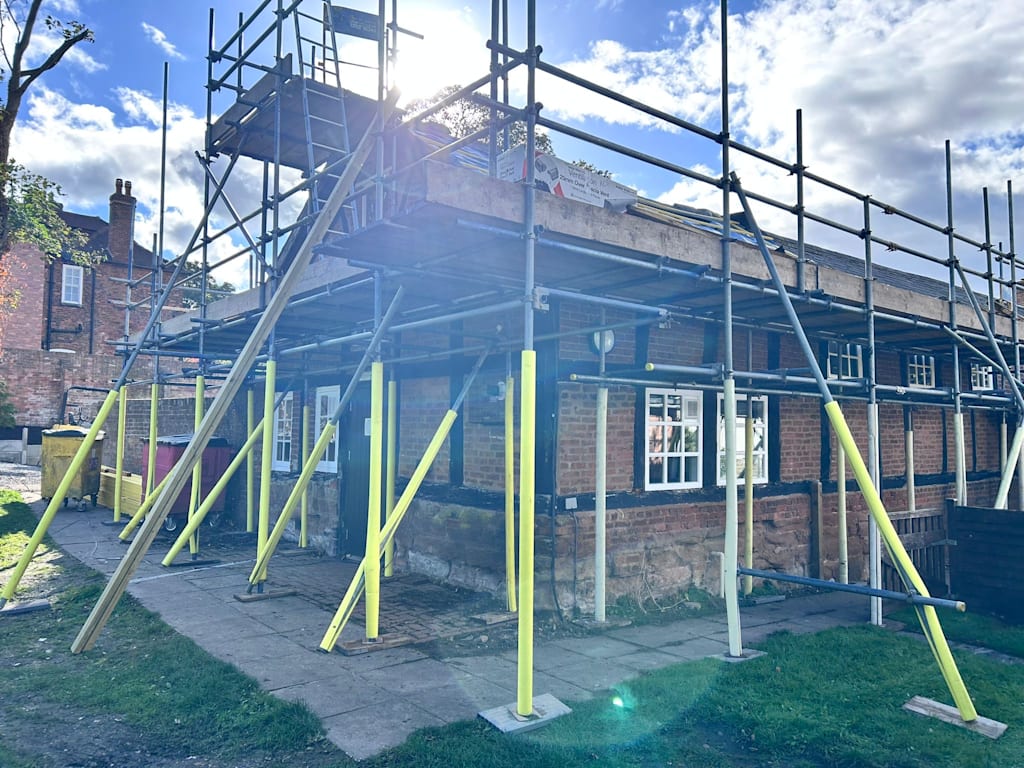
Construction sites have always battled the same stubborn weather. Rain slows progress, and the wind damages materials. Heat dries things too fast, and cold stops work. For years, a temporary scaffolding roof has been seen as a basic shield.
Today, leading contractors treat temporary roofing as part of a bigger idea. Total Site Enclosure is not about comfort. It is about control. When a site is enclosed, work does not pause every time the sky changes. Teams move forward without waiting for better conditions.
The Narrative
Think of Total Site Enclosure as a productivity shortcut. Instead of reacting to the weather, you remove it from the equation. Work becomes steady, and the schedules become realistic. As a result, the pressure drops across the board.
The Problem
Stop-start construction cycles are expensive. Not in obvious ways, but in hidden ones too. A sudden rainstorm can ruin insulation. Timber can warp overnight, and the fresh concrete may weaken. This happens if curing conditions are not stable. Workers lose time packing up, waiting, and restarting. Each pause breaks momentum.
Weather patterns are less predictable. Sudden downpours, heat spikes, and strong winds are more common. Many projects fall behind not because of poor management. It happens because conditions shift too often.
The Goal
This guide moves beyond the idea of simple shelter. It looks at how a scaffolding temporary roof can improve the entire project. Scheduling, cost control, and quality let the roof stay dry.
Where Do Temporary Roofing Changes the Game
1. Facilitating Complex Vertical Extensions and “Over-Roofing”
Cities are growing upward at a limited speed. Instead of building outward, developers add floors to existing structures. This is a vertical extension.
Many of these buildings remain occupied during construction. Removing the existing roof without protection would expose everything below. This is where a scaffolding temporary roof becomes critical.
It acts as a second layer. A protective shell above the original structure. Workers can remove the old roof safely while keeping the interior secure. Rain stays out. Dust is controlled. Noise can even be reduced.
This method is often called “over-roofing.” It allows construction to continue without displacing tenants. That alone saves time, money, and stress.
2. Accelerating Internal Fit-Outs and Sensitive Curing
Timing matters in construction. Some tasks cannot start until others are complete. But with a temporary roof, that sequence can change. One key concept is the “Dry-In” date. This is the point when a building is sealed from the weather, allowing interior work to begin. Normally, this happens after the permanent roof is installed.
A temporary roof moves this milestone forward. With protection in place, internal teams can begin earlier. Drywall installation, electrical work, and joinery no longer need to wait. Many teams can work at the same time instead of one after another.
There is also the issue of curing. Certain materials need stable conditions. High-performance concrete, for example, reacts poorly to sudden temperature changes. Heritage lime mortars need careful moisture control. A covered environment helps maintain the right balance. The result is stronger materials and fewer defects.
3. Safeguarding Heritage Restorations and Structural Stabilisation
Restoring old buildings is delicate work. Many structures include materials that cannot handle modern exposure levels. Timber frames may crack if they dry too quickly. Historical masonry can be damaged by freeze-thaw cycles. Once damaged, these materials are hard to replace.
A scaffolding temporary roof provides a controlled space. It shields the structure during repairs. Workers can take their time without rushing against the weather.
This is especially important for heritage projects. Preserving original features requires patience. A stable environment makes that possible.
Advanced Engineering: Choosing the Right “System” for the Task
Mobile and Rolling Roof Systems for Crane Integration
Not all roofs stay still. Some need to move. Mobile or rolling roof systems are built on tracks. Sections can slide open and closed as needed. This creates flexibility on-site. Imagine needing to lift heavy equipment into a building. A fixed roof would block access. But a rolling system can open briefly, allow the lift to pass, and close again.
This “open-and-shut” strategy keeps the site protected most of the time. It allows large operations and blends safety with practicality.
Keder Sheet Systems vs. Traditional Corrugated Iron
Material choice affects performance. Traditional corrugated iron sheets are strong, but they take time to install. They can also look rough, which may not suit high-visibility projects.
Keder sheet systems use PVC-based materials that slide into tracks. Installation is faster. The sheets are tensioned and create a smooth surface.
There are clear advantages. Water runoff improves, and wind resistance increases. The look is cleaner and more professional. For commercial sites where appearance matters, Keder systems are often preferred.
Clear-Span Engineering for Wide-Area Protection
Large sites need extensive coverage. But internal support pillars can get in the way. Clear-span systems solve this problem. They use aluminium lattice beams to create wide spaces without internal supports. The entire area remains open.
This is useful for warehouses, industrial buildings, or large refurbishments. Equipment can move freely, and workers are not restricted by columns. The design requires careful engineering, but the benefits are significant.
The Financial Case: Calculating ROI and Risk Mitigation
Reducing Material Waste and Re-Work Costs
Weather damage is not always obvious at first. A stack of insulation may look fine after light rain, but its performance could drop. Timber may bend slightly, leading to alignment issues later.
These problems lead to re-work. Materials are replaced, and labour is repeated. Costs rise quietly. Industry studies suggest that a significant part of project budgets is lost this way. Even a small percentage can add up to large sums on major builds.
A scaffolding temporary roof reduces this risk. Materials stay dry, and the quality remains consistent. Less waste means better margins.
Workforce Retention and Labor Efficiency
People work better in stable conditions. A wet, cold, or hot site drains energy. Workers take more breaks, and productivity drops. Some may even leave for better conditions elsewhere.
A covered site improves comfort. It does not make work easy, but it removes major stressors. As a result, teams stay longer and perform better.
Many contractors report noticeable gains in output. In difficult weather, efficiency can improve by 20 to 30 per cent when proper protection is in place.
Insurance and Liquidated Damages (LDs)
Delays are costly. Contracts often include penalty clauses known as liquidated damages. If deadlines are missed, the contractor pays.
Weather is a common reason for delays, but it does not always excuse them. Disputes can arise, and the claims take time.
Temporary roofing acts as a form of protection against these risks. By keeping the project on schedule, it reduces the chance of penalties. Insurance claims may also decrease. Fewer incidents mean fewer complications.
Best Practices for Implementing Temporary Roofing in 2026
Early-Stage Integration in the Pre-Tender Phase
Many teams consider temporary roofing too late. They add it after problems appear. This approach limits its value. Instead, planning should begin during the pre-tender phase. The scaffold designer should be involved early. Together, the team can decide how the roof fits into the strategy.
Costs can be estimated accurately, and the designs can be optimised. The result is a smoother process from the start.
Proactive Wind-Load and Snow-Load Monitoring
Modern systems are not passive. They can include sensors that track conditions in real time. Wind loads, snow weight, and structural stress can all be monitored. Data is collected and analysed continuously.
If conditions change, the system provides alerts. Adjustments can be made before issues arise. This “live loading” approach improves safety and builds confidence among workers and managers.
Conclusion: Turning a Necessity into a Competitive Advantage
A scaffolding temporary roof is a tool for control, efficiency, and reliability. It keeps work moving when conditions are unpredictable. It protects materials and people and helps projects stay on track and within budget.
In a competitive industry, small advantages matter. A stable site can be the difference between profit and loss, between delay and delivery. Re-evaluating that risk may change how you plan your next build.
Here are some quick interactive answers to solve your doubts:
Q: “Do I really need a scaffolding temporary roof for my project?”
A: If weather delays can affect your timeline or materials, then yes, it quickly pays for itself.
Q: “Will it slow down my setup time?”
A: Not at all. Most modern systems are installed quickly and save more time than they take.
Q: “What about cost, worth it or not?”
A: When you factor in fewer delays, less damage, and better workflow, the value becomes clear.
Q: “Is it only for large construction sites?”
A: No. Even mid-sized projects benefit, especially during unpredictable weather.
About the Creator
Lucas
Hi, I’m Lucas, a content writer passionate about real estate, security services, and business topics. I create clear, engaging, and reader-friendly content that helps brands connect with audiences and build trust online.
Enjoyed the story? Support the Creator.
Subscribe for free to receive all their stories in your feed.
Comments
There are no comments for this story
Be the first to respond and start the conversation.