
Ebola Outbreak Surges in Eastern Congo as Cases Climb Past 780
A fast-growing Ebola outbreak in the Democratic Republic of the Congo spreads across new health zones, raising urgent concerns as health workers race to contain transmission.

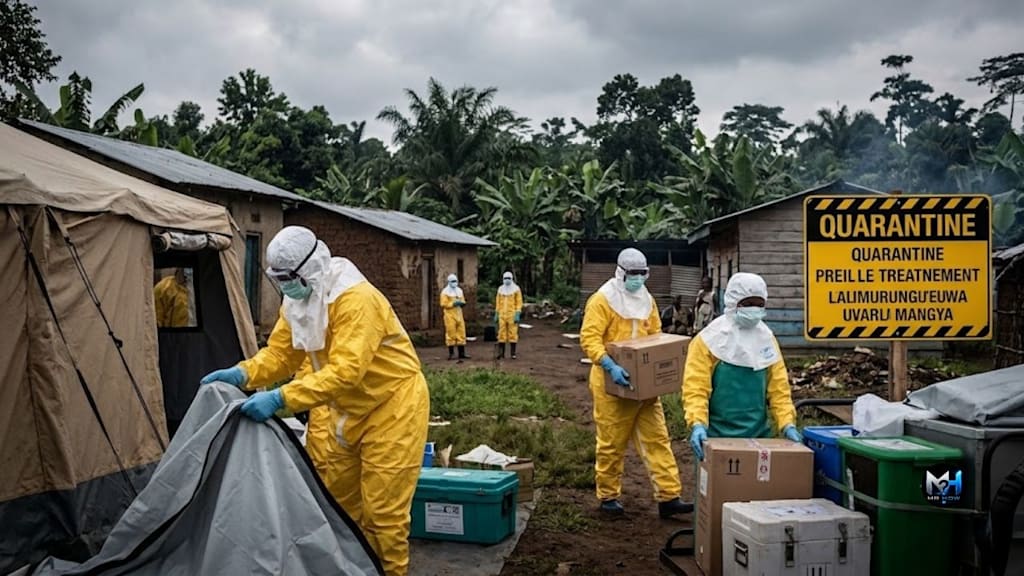
Ebola Outbreak Intensifies in Eastern Congo as Cases Surpass 780
Health authorities in the Democratic Republic of the Congo are facing a rapidly evolving Ebola outbreak that continues to expand across the country’s eastern region. The situation has drawn renewed attention from public health agencies as new infections emerge in multiple health zones, increasing concern about wider transmission.
Officials report that confirmed Ebola cases have now reached 782, following a sharp increase in new infections recorded within a single day. Among these, 72 new cases were confirmed in a 24-hour period, marking one of the most significant daily spikes since the outbreak began. The surge has placed additional pressure on already stretched healthcare services in affected areas.
The outbreak has resulted in 181 confirmed deaths, underscoring the severity of the virus and its continued threat to communities in remote and conflict-affected regions. Health teams are working to strengthen surveillance, improve contact tracing, and expand treatment capacity in order to slow the spread of the disease.
This current outbreak is the 17th recorded Ebola outbreak in the Democratic Republic of the Congo, a country that has experienced repeated episodes of the viral disease over several decades. Despite this experience, each outbreak presents new challenges, particularly when cases spread to previously unaffected areas.
The virus remains concentrated in eastern provinces, specifically Ituri, North Kivu, and South Kivu. These regions are geographically vast and logistically difficult to access, which complicates rapid response efforts. Limited infrastructure and population movement across borders further increase the risk of transmission.
Recently, health officials confirmed that the outbreak has reached two additional health zones: Nia-Nia and Mabalako. These new detections indicate that the virus is continuing to spread beyond initially identified clusters, prompting expanded response measures from local and international health organizations.
In Ituri province, confirmed cases are now reported across 20 of 36 health zones. In North Kivu, 10 of 34 health zones have recorded infections, while South Kivu has reported cases in at least one health zone. These figures highlight the geographic spread of the outbreak and the challenges involved in containing it within limited areas.
Public health responders are focusing on early detection, vaccination campaigns, and community awareness programs to reduce transmission. Previous Ebola outbreaks in the region have shown that rapid response and community cooperation are essential to controlling the spread of the virus.
Ebola is a severe and often fatal illness transmitted through direct contact with infected bodily fluids or contaminated materials. Symptoms typically begin with fever, weakness, muscle pain, and headache, and can progress to severe internal bleeding and organ failure in advanced cases. Early medical intervention significantly improves survival chances.
International health organizations are supporting national efforts by providing medical supplies, technical expertise, and logistical assistance. Treatment centers are being reinforced, and vaccination efforts are being prioritized for frontline workers and high-risk populations.
Despite progress in outbreak response strategies over the years, health experts warn that continued vigilance is necessary. The combination of remote geography, population movement, and limited healthcare infrastructure means that Ebola can still spread quickly if not contained early.
As the situation develops, authorities continue to monitor new cases and adapt response strategies. The goal remains to contain the outbreak, prevent further loss of life, and strengthen preparedness for future public health emergencies in the region.
Health officials stress community engagement to control the outbreak. In past Ebola responses in the Democratic Republic of the Congo, misinformation and mistrust have slowed efforts. Teams are now working with local leaders and volunteers to encourage early reporting and improve awareness of symptoms.
Infection prevention is being strengthened in health facilities. Hospitals are receiving protective equipment such as gloves, gowns, and disinfectants to reduce transmission risks. Staff training is underway to ensure safe handling of suspected cases.
Vaccination remains central to containment efforts. Ring vaccination is being used to protect contacts of confirmed cases and frontline workers, creating buffers around infection clusters. This strategy has proven effective in previous outbreaks.
Surveillance has been expanded to detect new cases quickly. Health workers monitor communities for symptoms including fever, vomiting, and bleeding. Rapid testing and isolation remain critical to stopping further spread.
The wide geographic distribution across multiple health zones has complicated coordination. Difficult terrain, limited infrastructure, and occasional insecurity hinder access for response teams, requiring close cooperation with local authorities and humanitarian partners.
Despite these challenges, the country’s prior outbreak experience has strengthened its response capacity. Established emergency teams, laboratories, and vaccination systems are now being mobilized to respond more efficiently.
International partners continue to provide technical and logistical support. Health agencies are coordinating closely to ensure resources are deployed where most needed.
Experts say the coming weeks will be crucial in determining whether the outbreak can be contained or spreads further. Sustained cooperation and rapid response will be key to limiting its impact.
Continued monitoring and preparedness remain essential for protecting vulnerable communities across the region overall.
About the Creator
Enjoyed the story? Support the Creator.
Subscribe for free to receive all their stories in your feed.
Comments
There are no comments for this story
Be the first to respond and start the conversation.