
Celebrating on the Water: Why Miami's Boat Parties Have Become the New Bachelor Weekend Standard
How South Florida's coastal geography quietly reshaped the way people mark life's biggest milestones

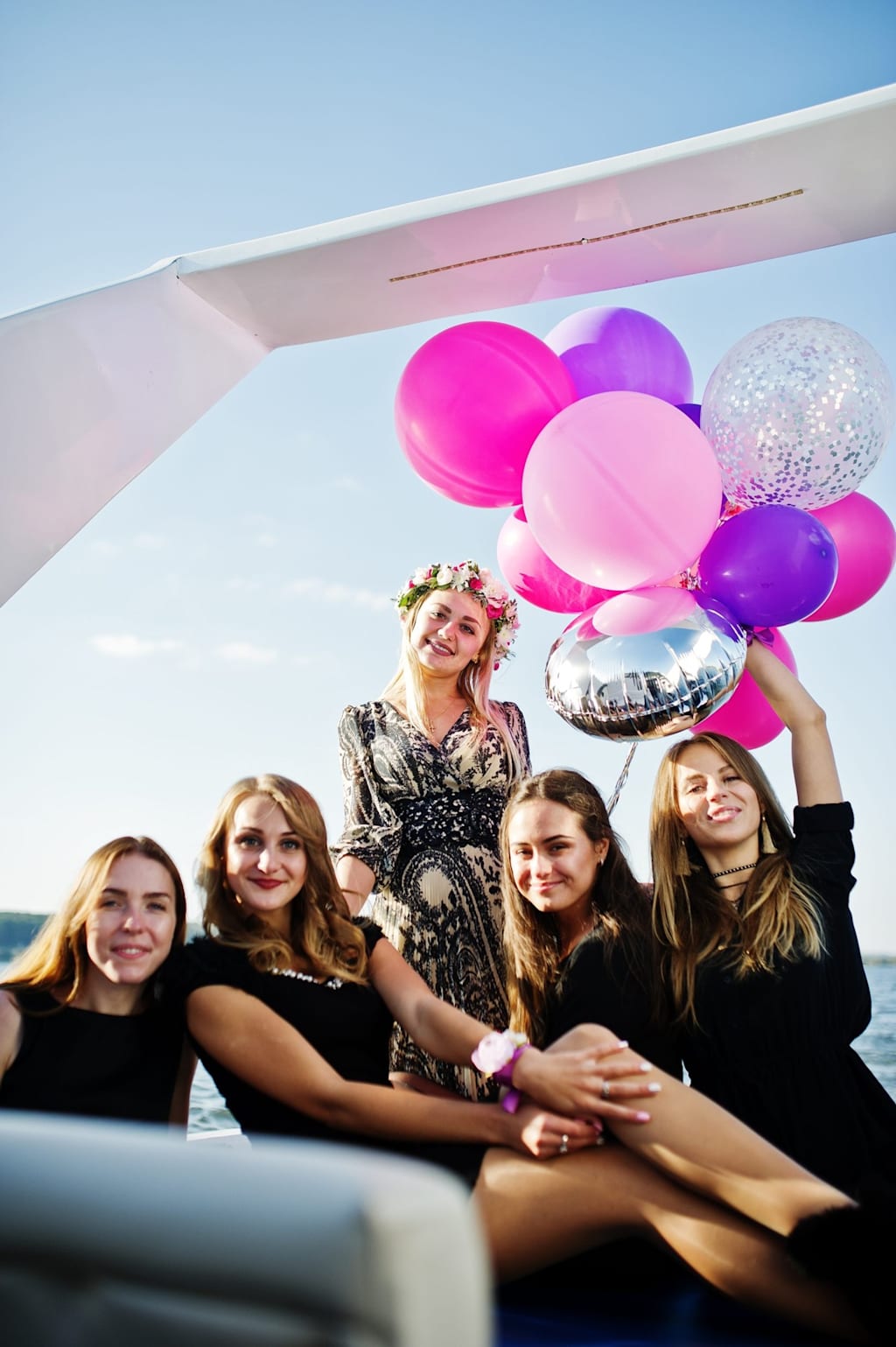
There is something about open water that changes the character of a celebration. The usual social friction of crowded venues dissolves. Time moves differently. Conversation deepens. Miami — with its year-round warmth, turquoise bay waters, and unmistakable energy — has become the backdrop against which a growing number of people are choosing to mark their most significant life transitions. The bachelor party boat and bachelorette party boat experience in Miami has shifted, over the past decade, from an occasional luxury indulgence into something approaching a cultural norm for groups seeking a more deliberate and genuinely memorable pre-wedding weekend.
A Miami bachelor party boat or bachelorette party boat experience centers on a privately reserved vessel — ranging from a motor yacht to a wide-deck catamaran — used exclusively by a single group for a set period on Biscayne Bay or the surrounding South Florida waterways. These gatherings typically unfold over several hours, incorporating open-water anchoring, sandbar stops, water activities, and unstructured social time in an environment that land-based venues simply cannot replicate.
The Cultural Turn Away from Traditional Celebration Formats
The shift in how Americans celebrate bachelor and bachelorette weekends did not happen as a sudden departure. It accumulated gradually, driven by a broader generational reorientation toward experience over spectacle. The club-and-hotel formula — loud, impersonal, expensive in ways that rarely translated into lasting memories — began losing ground not because it stopped existing, but because the expectations placed on milestone celebrations grew more sophisticated.
What younger generations increasingly want from a bachelor or bachelorette weekend is specificity. Not a night that looks like every other night, but one that could only have happened in this particular place, with these particular people, in this precise configuration of circumstance. Water has a natural capacity to deliver that quality of experience. It removes a group from the familiar social landscape of bars and hotel lobbies and places them somewhere that feels genuinely apart — governed by different rhythms, different sounds, and a horizon that refuses to be ignored.
Miami's social culture has absorbed and amplified this shift. The city has long been a destination for groups marking major life events, and its waterways have gradually become as central to that identity as its nightlife ever was. Biscayne Bay, which runs along the eastern edge of the city and opens southward past the Florida Keys, provides the primary stage for this kind of gathering. Its shallow, vivid waters — dotted with private islands, natural sandbars, and wide channels flanked by Miami's most iconic residential neighborhoods — create a setting of effortless visual drama that requires no embellishment.
Why Miami's Waterways Produce a Different Kind of Memory
The specific geography of Miami matters more than it might initially appear. Biscayne Bay is not merely a body of water adjacent to a city. It is, in a genuine sense, a parallel version of Miami — one that most visitors and even many residents never fully encounter. Seen from the water, the city reveals a different face: the backs of Star Island estates glimpsed from the channel, the quiet stretches between the causeway bridges, the way the downtown skyline recedes and then reappears as a vessel moves through different passages.
For a group gathered to celebrate a friend's last chapter of unmarried life, this geographic shift carries real psychological weight. The physical act of leaving shore — of being in motion on water, watching the urban landscape recede — creates a mental transition that the best land-based venue cannot manufacture. The celebration begins not when the first drink is poured but when the dock disappears behind the stern.
Sandbar culture, which is deeply embedded in Miami's recreational marine scene, adds another dimension unavailable anywhere else in the contiguous United States at the same scale. The sandbars of Biscayne Bay — shallow, warm, and open to the sun and sky — have become social gathering points for groups who anchor nearby and wade in waist-high water for hours at a stretch. For visitors experiencing this for the first time, it tends to be disarmingly joyful in a way that is difficult to articulate in advance. There is no parallel experience available in a hotel ballroom or rooftop bar.
The Bachelorette Boat as a Distinct Social Phenomenon
While bachelor and bachelorette celebrations on the water share obvious structural similarities, the bachelorette boat experience in Miami has developed a cultural identity specific enough to merit separate consideration. The contemporary bachelorette weekend has become, in the broader social imagination, one of the most elaborately curated forms of group travel — shaped not only by the desires of the people involved but by the visual and social languages of the platforms through which such events are now universally documented.
The Miami waterfront is almost uniquely suited to what this kind of documentation demands. The contrast between the vessel's intimate social atmosphere and the scale of the surrounding landscape — the bay stretching away in every direction, the city skyline visible in the middle distance, the light shifting across the water throughout the day — produces images that feel genuinely cinematic without requiring any staging. This is not a superficial observation. The relationship between the visual quality of an experience and its emotional resonance for participants is real, and the bachelorette boat in Miami consistently delivers both.
Beyond aesthetics, there is a structural reason why a private vessel suits the bachelorette format particularly well. Nightlife environments, however well-designed, are fundamentally public. The energy of the room is shared with strangers, subject to the mood of the broader crowd, and contingent on factors entirely outside the group's control. A private boat inverts this arrangement entirely. The group becomes its own environment — controlling the music, the pace, the itinerary, the atmosphere. For a celebration centered on a specific person and her closest relationships, that degree of sovereignty over the experience is not a luxury refinement. It is the entire point.
How Vessel Choice Shapes the Nature of the Experience
Not all watercraft produce the same kind of gathering, and the choice of vessel type has genuine consequences for how a celebration unfolds. This is a consideration that groups approaching their first boat party in Miami often underestimate, assuming that the water itself will do the work regardless of what floats on it.
Wide-deck catamaran-style vessels are the most commonly encountered format for larger groups, typically accommodating anywhere from fifteen to thirty guests. The dual-hull design creates a broad, stable deck that functions as a social space in ways reminiscent of a very well-situated terrace — plenty of room to move, to break into smaller conversations, to lie in the sun or stand at the rail. The trade-off is pace: catamarans are measured, deliberate vessels, better suited to anchoring and socializing than to swift movement across the bay.
Motor yachts in the middle to upper range of the Miami fleet offer a different proposition entirely. Sleeker, faster, and typically more amenity-rich — interior lounges, multiple deck levels, and, on the finer examples, features like sun pads and deck Jacuzzis — these vessels communicate a specific intentionality about the occasion. For groups where the aesthetic register of the celebration matters alongside its actual enjoyment, a well-appointed yacht signals that distinction convincingly.
Smaller center-console vessels and deck boats, designed for groups of eight to twelve, offer agility and intimacy that larger vessels cannot match. They reach shallower sandbars, navigate narrower passages, and respond to changing group energy with a flexibility that suits tightly-knit friend groups who want a more active, less structured day on the water.
Miami's Year-Round Advantage and the Practical Calendar
One of the less discussed but most practically significant aspects of Miami's position as a premier destination for water-based celebrations is the calendar advantage its climate provides. While coastal cities across the Northeast, Pacific Northwest, and upper Midwest offer beautiful waterways, their usability for outdoor water gatherings is sharply seasonal. A bachelorette weekend planned for March or April — prime time, given that peak wedding season begins in late spring — is a weather gamble in Boston or Seattle in a way that it simply is not in Miami.
Miami's subtropical climate extends the practical celebration window across virtually the entire year. The warmest and most reliably clear conditions tend to fall between November and May, which maps almost exactly onto the planning cycle for spring and summer weddings. Groups scheduling a pre-wedding celebration during those months find Miami's waterways not merely accessible but genuinely at their most photogenic — lower humidity, calmer bay conditions, and the particular quality of winter light that makes South Florida's palette of blue, green, and white especially vivid.
Summer months introduce the consideration of afternoon thunderstorms, which are a consistent meteorological feature of South Florida between June and September. These storms are typically brief and well-forecasted, and experienced captains navigate around them as a matter of routine. But groups planning summer celebrations benefit from an awareness that the day's timing may shift to front-load activities and allow for afternoon flexibility — a practical reality that rarely diminishes the overall experience.
The Broader Shift This Represents
Miami's emergence as a defining destination for bachelor and bachelorette boat celebrations reflects something genuine about how the culture of milestone commemoration has evolved. The question being asked — consciously or not — when a group plans this kind of celebration is no longer simply "where should we go?" It has become "what kind of experience do we want to have created, and what kind of memory do we want to carry forward from this moment?"
The answer that open water provides is a distinctive one. It is immersive without being overwhelming, social without being impersonal, visually rich without requiring any effort to manufacture that richness. Miami's particular version of that answer — Biscayne Bay, the Florida light, the sandbars and the skyline and the sense of being genuinely apart from the ordinary world for a few hours — has proven durable in a way that trend-driven alternatives have not.
The bachelor party boat and bachelorette party boat scene in Miami keeps growing not because it is fashionable but because it consistently delivers what milestone celebrations are ultimately supposed to deliver: the feeling, shared among a group of people who matter to each other, that something real happened here, and that it could not have happened anywhere else.
About the Creator
Miami Boat Charter
Miami Boat Charters offers the largest and newest selection of fully crewed Boat Charters, Party Boats, & Luxury Yacht Rentals in Miami Beach.
Enjoyed the story? Support the Creator.
Subscribe for free to receive all their stories in your feed.
Comments
There are no comments for this story
Be the first to respond and start the conversation.